The Cheremkhovsky coal area, often referred to in English as the Cheremkhovo coal basin or the Cheremkhovsky mine region, is an important part of Siberia’s long-standing coal industry. Located in the southern part of Irkutsk Oblast in the Russian Federation, this coal-producing region has played a role in regional development, energy supply and local employment for more than a century. The following article provides a detailed overview of the location, geology, production characteristics, economic and logistical significance, environmental and social impacts, and prospects for the Cheremkhovsky coal operations. Where precise up-to-date production numbers are not publicly available, the discussion relies on regional context and historically known patterns to present a realistic portrait of the field and its role in Russia’s coal sector.
Location, geology and resource characteristics
The Cheremkhovsky coal area is situated in the southern portion of Irkutsk Oblast, roughly between the cities of Cheremkhovo and Shelekhov and within reach of the Trans-Siberian transport corridor. The coal-bearing strata in this region form part of what is commonly described as the Cheremkhovsky or Irkutsk-Cheremkhovsky coal basin, a set of Carboniferous–Permian and younger deposits that were formed during complex geological processes involving sedimentary basins in Siberia.
Geologically, the basin contains layered sequences of coal seams interbedded with sandstones, shales and siltstones. Coal ranks in the basin typically range from sub-bituminous to high-volatile bituminous in different seams and horizons, with variability in calorific value, ash and sulfur content depending on seam depth and local conditions. The coal is used primarily for energy generation but some seams can be blended for metallurgical uses. Typical properties encountered in similar Siberian deposits include:
- Calorific value: commonly in the range of about 15–25 MJ/kg for sub-bituminous to bituminous seams (values vary significantly by seam and washing).
- Ash content: variable, often moderate, and a key factor in determining the need for coal washing and beneficiation.
- Sulfur and moisture: many Siberian coals have relatively moderate sulfur but elevated moisture for lower-ranked coals; this affects shipping economics and combustion performance.
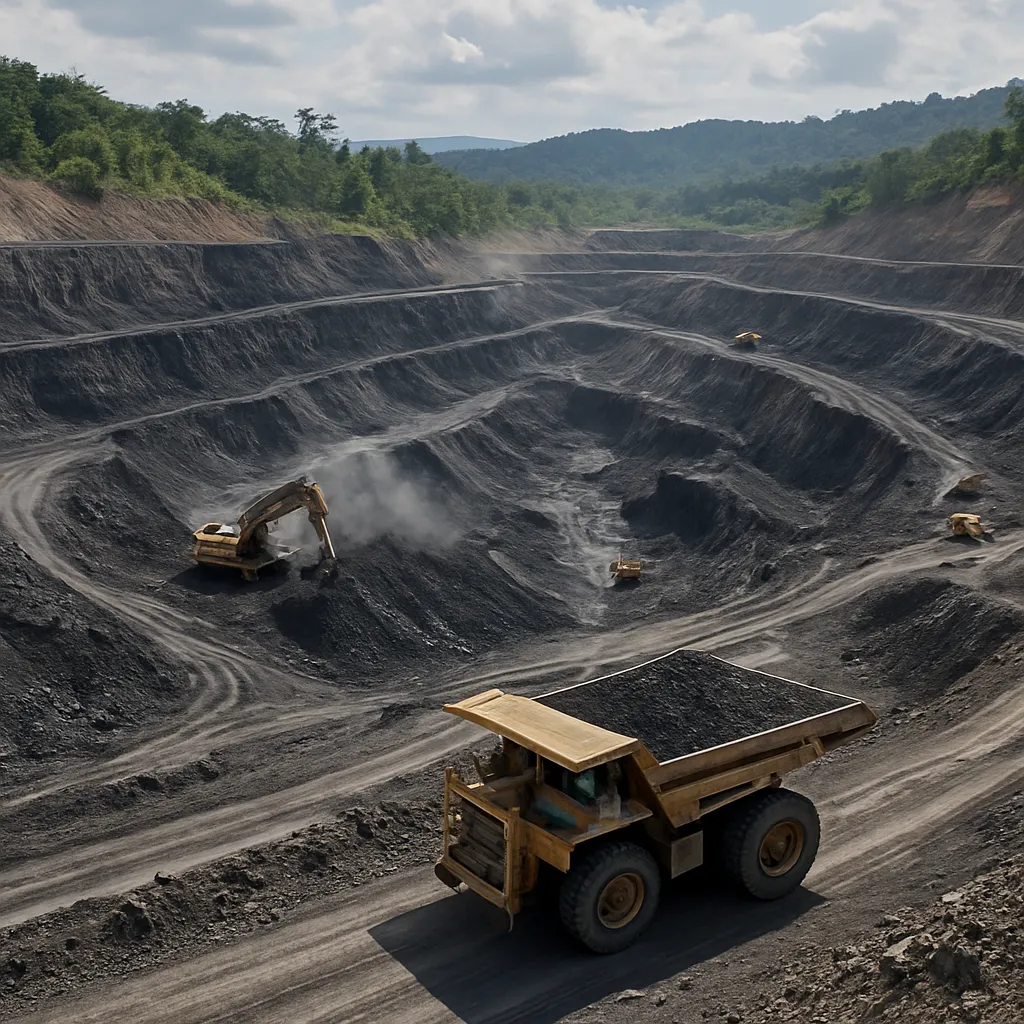
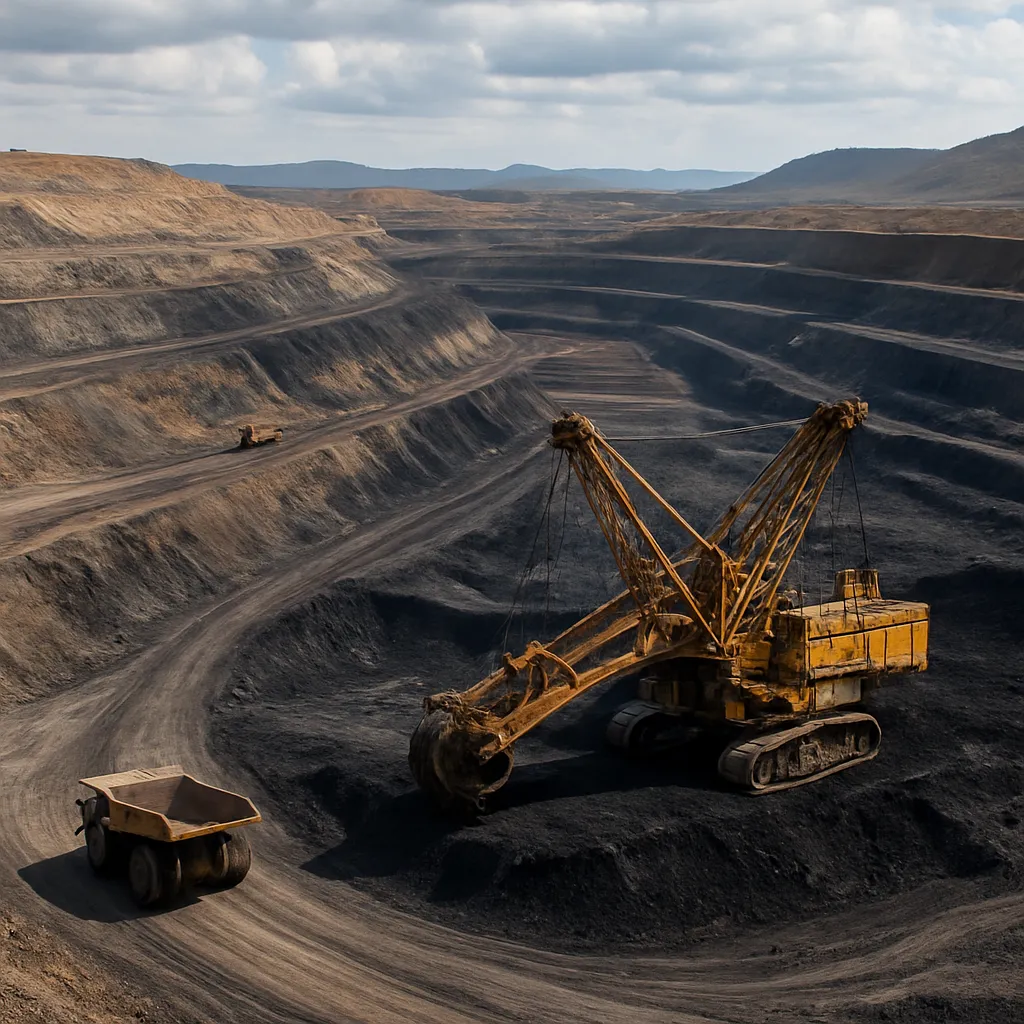
The structure of the basin and seam geometry means the region supports both open-pit and underground mining methods, although many of the more accessible deposits historically have been exploited by large surface mines. Over time, improvements in geological surveying and modern mining techniques have allowed for more efficient extraction and targeted use of higher-value seams.
Mining operations, methods and infrastructure
Mining operations in the Cheremkhovsky area reflect a mix of legacy Soviet-era development and later modernization. Typical operations include:
- Large-scale open-pit mines where seam thickness and overburden ratios make surface mining economical.
- Smaller underground workings for deeper or thinner seams that are uneconomic for stripping.
- Coal preparation and washing facilities to reduce ash and improve heating value for key markets.
Key infrastructure that supports the mines includes regional roads, truck haulage systems inside mining complexes, and crucially the Trans-Siberian Railway and its spur lines. Rail connectivity is essential for moving coal to regional power plants, industrial consumers, and export terminals on the Pacific coast. Coal forwarding can be directed east to Pacific ports (for example, long-established export outlets such as Vanino, Vladivostok-area terminals, and recently developed deep-water ports) or west across Siberia to domestic steel plants and thermal power stations.
Modernization efforts in many Russian coal fields have focused on mechanization, improved pit planning, better waste handling, and upgraded beneficiation. Such improvements raise throughput, reduce per-ton mining costs and help meet stricter environmental regulations for emissions from associated coal-fired facilities.
Economic and industrial importance
The Cheremkhovsky coal operations contribute to the regional economy of Irkutsk Oblast in several interconnected ways. Coal is both an energy commodity and an employer, and in remote Siberian regions these effects are amplified:
- Employment: mining and related services (transport, maintenance, beneficiation) are significant employers locally, providing skilled and unskilled jobs and supporting towns and settlements.
- Energy supply: regional thermal power plants rely on locally produced coal to balance electricity supplies, particularly in cold months when heating demand is high.
- Industrial feedstock: coal from the region can be used directly by metallurgical plants or blended for coking-related processes when seam quality allows.
- Regional revenues: taxes, royalties and lease payments from mining operations supply local budgets, funding infrastructure, social services and municipal investments.
At the national level, the Cheremkhovsky area is a small but meaningful part of Russia’s vast coal portfolio. Russia’s coal sector supplies domestic power generation, industrial heat and a substantial export market to Asia–Pacific countries. While major production centers like the Kuzbass (Kemerovo), Pechora and Far Eastern fields dominate national totals, deposits such as Cheremkhovsky support diversification of supply and provide strategic regional resilience.
Logistics, markets and trade
Logistics are a central feature of the coal business in Siberia. The Cheremkhovsky mines are integrated into the broader transport network that enables coal to reach both domestic consumers and export markets:
- Rail access connecting to the Trans-Siberian and Baikal-Amur Mainline routes for westward and eastward movement.
- River transport has historical importance on Siberian rivers in warmer months but is less central in modern bulk coal exports compared with rail and sea shipping.
- Exports: coal can be shipped to Asia-Pacific markets—primarily China, Korea, Japan and increasingly Southeast Asia—through Pacific terminals. Domestic power plants and industrial users remain steady buyers.
Pricing and market demand for Cheremkhovsky coal follow broader dynamics: global thermal coal price swings, freight costs from land-locked Siberian mines to ports, and competition from higher-quality coking coals and alternative energy sources. For lower-grade thermal coal, the proximity to domestic power generators is often crucial to maintaining favorable economics.
Environmental and social impacts
Coal mining inevitably brings environmental challenges, and the Cheremkhovsky area is no exception. Key concerns include:
- Land disturbance: open-pit mining produces significant overburden and altered landscapes that require progressive and post-mining reclamation.
- Air quality: dust from mining, haulage and coal handling, along with emissions from coal combustion in local power plants, are longstanding issues that local authorities and companies must manage.
- Water quality: mine drainage and runoff can alter water chemistry and sediment loads in local streams unless appropriately treated by modern water management systems.
- Social impacts: while mining supports local economies, boom-bust cycles, health impacts and community displacement are social risks that require active planning and community engagement.
Russian federal and regional regulations, along with company-level environmental programs, set standards for emissions, mine reclamation and water protection. In recent decades, several operators in Siberia have adopted dust suppression, water treatment and progressive reclamation to reduce long-term environmental liabilities. However, consistent enforcement and investment remain challenges, particularly for remote operations with tight margins.
Statistical context and production estimates
Precise, current production statistics for a single mine or a cluster of small mines in remote Siberian basins are sometimes not publicly detailed in international databases. Nevertheless, several contextual facts help situate Cheremkhovsky’s scale:
- Russia is among the world’s largest coal producers, with yearly output in the hundreds of millions of tonnes. Major basins like Kuzbass account for a very large share of national production, while fields in Irkutsk Oblast contribute a smaller but consistent share.
- The Cheremkhovsky basin historically produced several million tonnes cumulatively over decades, with annual output at specific operations varying by mine scale and market conditions.
- Mine-level output tends to range widely: larger surface mines in Siberia can produce several million tonnes per year; smaller operations may produce hundreds of thousands of tonnes annually. Cheremkhovsky-related operations typically fall on the small-to-medium side of this spectrum compared with national giants.
Because public reporting practices differ and corporate disclosures may be consolidated under larger holding companies, readers looking for up-to-the-minute production or employment numbers are encouraged to consult:
- Regional statistical offices (Irkutsk Oblast economic reports)
- Company annual reports of operators active in the Cheremkhovo area
- Industry overviews by Russian and international energy analysts
Historical notes and regional development
Coal development in the Cheremkhovo area dates back to the late 19th and early 20th centuries when Siberia’s mineral potential began to be systematically explored. The growth of the Trans-Siberian Railway made large-scale exploitation economically viable and stimulated the creation of mining towns and processing facilities. Throughout the Soviet era, centralized planning ensured that coal resources were allocated to regional power and industrial needs, and the post-Soviet period brought privatization, consolidation and varying levels of investment.
Regional development linked to coal included housing, schools, hospitals and other municipal infrastructure tied to company towns. Over time, as mines age and seams are exhausted or become uneconomic, communities face transitions. Some regions have pursued economic diversification into forestry, light manufacturing and services, while maintaining mining as a core economic activity.
Challenges and future prospects
The Cheremkhovsky coal area faces a number of challenges common to many mature mining regions:
- Resource depletion in some easily accessible seams, requiring investment to develop deeper or lower-grade deposits.
- Competition from higher-quality coals and alternative fuels on export and domestic markets.
- Infrastructure needs, including rail upgrades and port capacity, which influence delivered cost competitiveness.
- Increasing environmental and social expectations, including progressive reclamation, emissions controls and community transition planning.
At the same time, there are reasons for continued relevance. Coal will remain a part of Russia’s energy mix for years to come, particularly for domestic thermal generation and industrial heat. If global market access remains favorable, and if operators invest in efficiency, beneficiation and lower-emission technologies, Cheremkhovsky deposits can continue to supply local and regional demand. Potential areas of investment and innovation include:
- Improved coal washing facilities to increase value of mined coal and reduce transport costs by lowering ash content.
- Mechanization and digitization of mining operations to lower unit costs and improve safety.
- Carbon management—efforts to reduce greenhouse-gas intensity via efficiency gains, methane capture in underground workings, and cleaner combustion technologies at end-use facilities.
- Economic diversification programs in mining towns to reduce socioeconomic risks associated with future mine closures.
Interesting facts and regional particularities
Some notable features of the Cheremkhovsky area and Siberian coalmining in general include:
- The interplay of historic development and modern extraction techniques—many mines still operate under layouts established decades ago but benefit from contemporary equipment and planning software.
- The significance of rail logistics—railway access has been, and remains, a determinative factor in which deposits are exploited.
- Climatic challenges—Siberian winters impose operational constraints, from frozen ground affecting stripping to increased energy needs for processing facilities.
- Community culture—mining towns often have strong social ties to the industry, with multiple generations of families employed in the sector.
Concluding perspective
The Cheremkhovsky coal area is an important regional contributor to Siberia’s coal supply chain. While not among Russia’s largest basins on a national scale, its deposits and operations support local economies, regional energy systems and—through rail and port connections—broader market linkages. The future of the region will depend on balancing continued economic utility with environmental stewardship and social transition planning. With targeted investment in beneficiation, logistics and emissions control, Cheremkhovsky operations can remain a viable part of the Russian coal landscape even as global energy systems evolve.
Key words highlighted for emphasis: Cheremkhovsky, Irkutsk, coal, basin, thermal coal, coking, Trans-Siberian, open-pit, employment, exports.