The Kuznetsk Basin, commonly referred to as the Siberian Kuzbass, is one of the world’s most important and extensive coal mining regions. Located in southwestern Siberia, it has shaped the industrial, economic and social landscape of Russia for more than a century. This article explores where the basin is located, the types of coal produced, the geology and mining methods, economic statistics, industrial importance, infrastructure, environmental and social impacts, key companies, and prospects for the future.
Location, geology and geological setting
The Kuznetsk Basin occupies a large portion of the Kemerovo Oblast in southwestern Siberia, stretching across the Kuznetsk Depression between the Tom and the Inya rivers. It lies to the west of the Altai-Sayan mountain system and east of the West Siberian Plains. The basin’s coal-bearing formations developed in the Carboniferous and Permian periods, creating thick and laterally continuous seams that make large-scale extraction commercially viable.
Geological characteristics
- The basin contains multiple stratified coal seams of varying thickness, depth and quality.
- Coal seams in the Kuzbass occur in both shallow and deep settings — some are suitable for open-pit open-pit extraction while others require underground methods.
- Mineralogical composition ranges from high-grade bituminous coals to weaker thermal coals; some seams contain coking coal suitable for metallurgical use.
Geographic footprint and main mining districts
The Kuzbass extends over thousands of square kilometers and contains numerous individual mining districts and towns, including industrial centers such as Novokuznetsk, Kemerovo, Prokopyevsk, Mezhdurechensk, Leninsk-Kuznetsky and Belovo. The basin’s size and clustered deposits have allowed a dense network of mines and processing facilities to develop, plus rail and logistic hubs that connect the region to domestic and international markets.
Coal types, quality and mining methods
Coal from the Kuzbass is diverse in quality and use. Two broad categories dominate commercial production: high-grade metallurgical (coking) coal and thermal coal for power generation and industrial heating.
Types and quality
- Coking coal: Certain seams in the Kuzbass produce low-ash, low-sulfur coking coals that are vital feedstock for steelmaking. These coals are processed into coke in coke ovens and used in blast furnaces and other metallurgical operations.
- Thermal coal: The basin also yields significant volumes of steam and thermal coal used by power plants in Russia and for export markets.
- Other grades: Intermediate quality coals, and some gas-rich coals used for specialized industrial processes, are also present across the basin’s seams.
Mining techniques
Mines in the Kuzbass employ a mixture of surface and underground techniques, chosen according to seam depth, thickness and economic considerations.
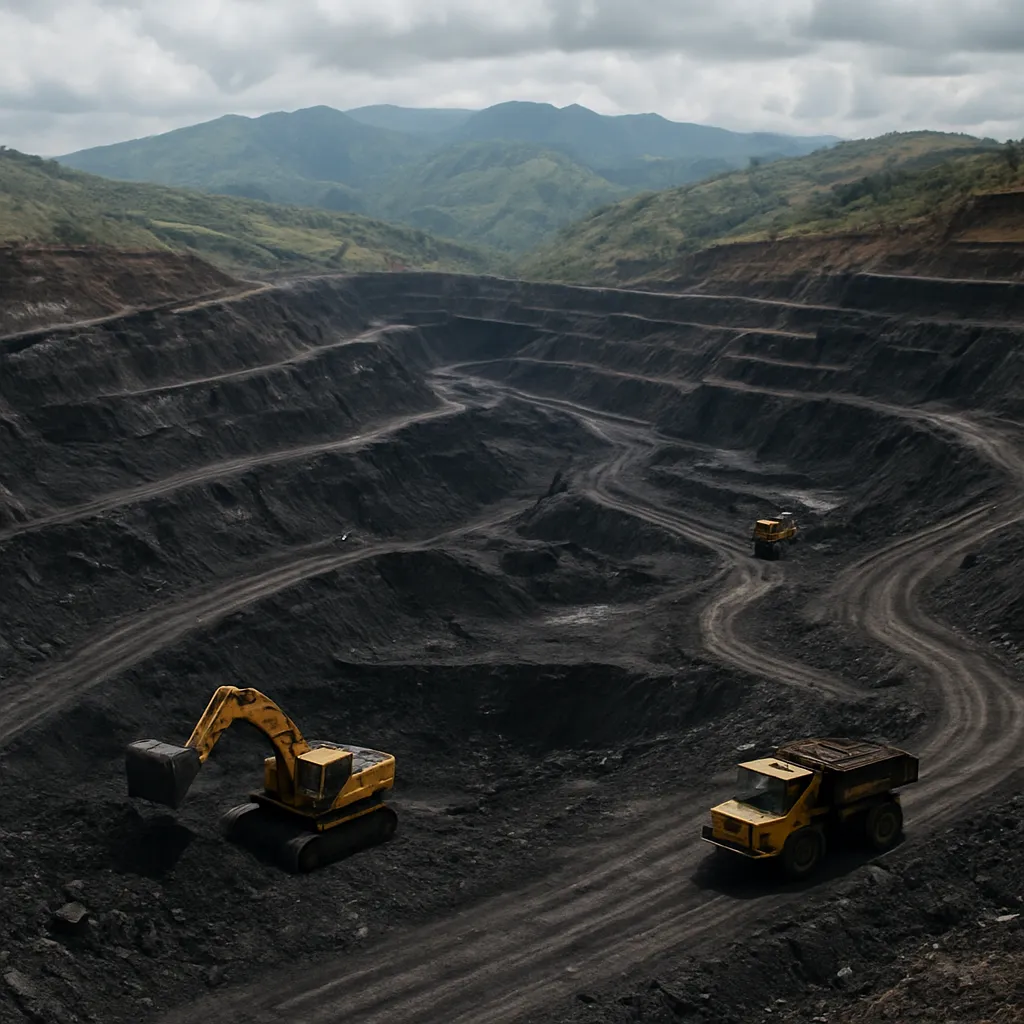
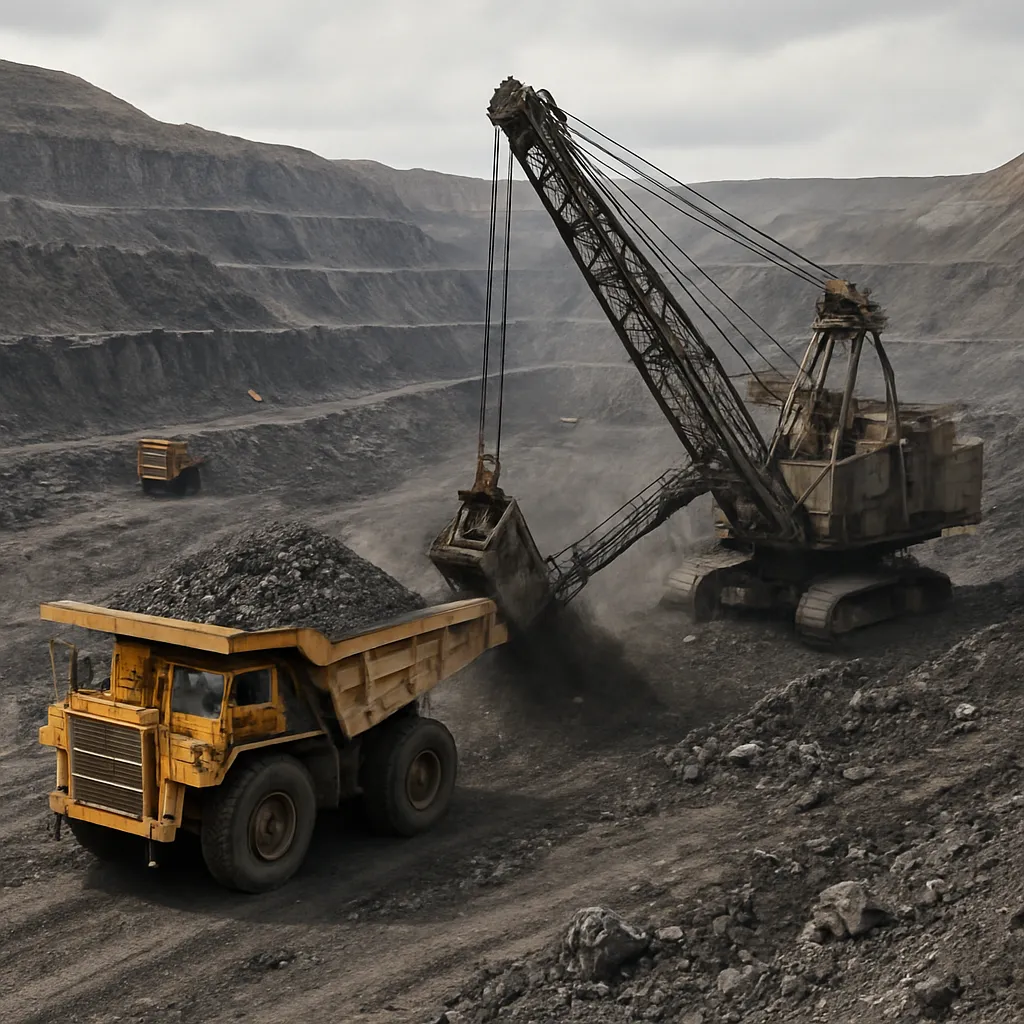
- Open-pit mining: Large-scale surface mines remove overburden and extract coal where seams are near the surface. This method enables high throughput and lower unit costs but has a large environmental footprint.
- Underground mining: Longwall and room-and-pillar systems are used for deeper seams. The longwall method is prevalent for its efficiency in extracting large continuous panels of coal.
- Coal preparation: Coal washing and sorting facilities are widespread, upgrading product quality (reducing ash and sulfur) to meet steel industry specifications or export grades.
Economic importance and industrial role
The Kuzbass is a cornerstone of Russia’s coal industry and a critical supplier of coal for domestic power generation and metallurgical processes. Its economic role spans local employment, regional GDP contribution, national energy security and export revenues.
Regional economic impact
- Employment: Coal mining and associated industries (transport, equipment manufacturing, processing) are major employers in the region, supporting hundreds of thousands of direct and indirect jobs in Kemerovo Oblast and adjoining areas.
- Fiscal contributions: Mining companies contribute taxes and payments that fund local and regional budgets, public services and infrastructure projects.
- Industrial clusters: Steel mills, chemical plants and machine-building enterprises are vertically and horizontally linked to Kuzbass coal supplies, creating industrial clusters with local added value.
National and international significance
At the national level, Kuzbass coal supports Russia’s energy mix, industrial base and export earnings. Many of the country’s metallurgical plants rely on Kuzbass coking coal, and a significant proportion of Russian coal exports originates in the basin and is routed to ports serving Europe and Asia.
Production statistics, reserves and trends
Quantifying exact production and reserve figures is complicated by year-to-year variation and differing reporting standards, but certain broad patterns are stable: the Kuzbass remains one of the largest coal-producing regions in Russia and the world, with large explored and estimated reserves and substantial annual output.
Production volumes and trends
- Annual production in the Kuzbass has historically represented a substantial share of Russia’s total coal output. In recent decades the basin has produced on the order of tens to hundreds of millions of tonnes per year, depending on market demand and operational capacity.
- Production trends reflect global coal demand, domestic energy policies, and investment cycles. Growth in metallurgical coal demand can drive increased output of higher-grade seams, while global pressure to decarbonize can affect thermal coal markets.
Reserves and resource base
The Kuzbass holds very significant coal resources, with estimates of explored and inferred coal deposits running into the multiple billions of tonnes. These reserves make it a strategic long-term asset for Russia, ensuring availability of feedstock for steelmaking and energy.
Export and domestic consumption
Kuzbass coal serves both domestic needs — power generation, heating and industry — and export markets. Export routes include rail lines to Baltic and Black Sea ports for European markets and routes eastward to Pacific ports for Asian buyers. Exports are a key revenue source for major mining firms and contribute to Russia’s balance of trade in the commodity sector.
Infrastructure, logistics and transportation
Efficient transportation is essential for a basin of Kuzbass’s scale. The region is integrated into national rail networks and benefits from logistical corridors that link mines to processing hubs and export terminals.
Rail network and terminals
- Railways: The Trans-Siberian Railway and regional feeder lines provide the backbone for moving bulk coal to domestic customers and ports. Dedicated coal trains and marshalling yards support high-volume shipments.
- Ports and export corridors: For Asian markets, coal is transported eastward to Pacific ports; for European and Mediterranean markets, westward corridors and Baltic/Black Sea ports are used.
- Inland logistics: Conveyor systems, washing plants, storage yards and rail-loading facilities streamline the flow from mine face to final shipment.
Processing and value-added facilities
Washing plants, coke ovens and rail-linked processing facilities add value to raw coal, producing coke for metallurgy and washed coal that meets stringent export specifications. Some integration with steel plants reduces transport costs and increases operational efficiency.
Environmental and social impacts
Large-scale coal mining inevitably brings environmental and social consequences. Kuzbass has a long history of mining-related impacts that influence policy, community life and operational practice.
Environmental issues
- Land disturbance: Open-pit mining transforms landscapes, removes topsoil and creates spoil heaps that require reclamation.
- Water and air quality: Coal dust, particulate emissions and potential contamination of surface and groundwater are persistent challenges. Tailings, acid mine drainage and sedimentation can affect local waterways.
- Greenhouse gas emissions: Coal usage for power and industrial processes contributes to CO2 emissions; methane release from underground workings is also a notable greenhouse gas source.
Social and public health impacts
Communities near mines face health risks from air pollution and dust, occupational hazards for miners, and socio-economic dependencies on a single industry. Mining towns have historically benefited from employment and infrastructure, but they also bear the costs of environmental degradation and health burdens. Reclamation, improved working conditions and diversification of local economies are ongoing policy priorities.
Key companies and industrial players
A number of large mining and industrial companies operate in the Kuzbass, ranging from vertically integrated conglomerates to regionally focused coal companies. These firms manage mine fleets, processing plants and transport logistics.
- SUEK (Siberian Coal Energy Company) is among the largest Russian coal producers with significant operations in the Kuzbass and other basins.
- Other major players include large vertically integrated steel and mining groups that maintain coking coal operations and supply internal metallurgy divisions.
- Regional companies and private operators manage a mix of open-pit and underground mines, often focusing on specific seams or niches of the market.
Historical background and socio-economic development
The Kuzbass’s modern development began in the late 19th and early 20th centuries, accelerating massively during Soviet industrialization when coal and heavy industry were prioritized. Towns and cities grew around mines, coke plants and steelworks, creating a network of industrial settlements whose culture and identity are closely tied to mining.
Soviet-era expansion
Under Soviet planning, Kuzbass received large-scale investment, building integrated complexes of mining, processing and metallurgy. The legacy infrastructure and urbanization remain visible today, even as market reforms and corporate consolidation reshaped the sector in the post-Soviet era.
Challenges and future prospects
The Kuzbass faces a complex mix of challenges and opportunities as the global energy transition, market dynamics and domestic policy evolve.
Market pressures and diversification
- Demand for coking coal is tied to steel production — a sector that may see changes with new technologies (electric arc furnaces, recycling) but still requires primary feedstock in many applications.
- Thermal coal demand faces uncertainty due to decarbonization policies in many importing markets, pushing producers to seek efficiency gains, diversify products or find new markets.
- Value-added processing (coking, briquetting, coal chemicals) and integration with steelmaking can help preserve demand for high-quality Kuzbass coal.
Technological and environmental pathways
Improved mining technology, methane capture and utilization, reclamation, and pollution controls are key to mitigating environmental impacts. Investment in automation and safety can improve productivity and reduce occupational risks. Policy measures and corporate strategies that align with climate commitments will influence investment and operational choices in the coming decades.
Interesting facts and lesser-known aspects
- Scale: The Kuzbass is among the world’s largest coal basins, with a long history of continuous production and large identified deposits.
- Urban mining culture: Several large industrial cities in Kemerovo Oblast formed primarily because of the basin, showcasing the social imprint of coal development.
- Transport engineering: Specialized rail corridors and heavy-haul systems have been developed to move massive coal volumes across the vast distances of Siberia to ports and users.
- Reclamation experiments: Some mining companies are experimenting with land reclamation, reforestation and conversion of former pits into lakes or industrial parks — a mix of success stories and ongoing challenges.
Summary
The Siberian Kuzbass is a strategic, high-capacity coal mining complex that has been central to Russia’s energy and metallurgical industries for more than a century. Its abundant reserves, diverse coal qualities (including significant coking supplies), extensive transport linkages, and concentration of mining expertise make it a globally significant mining region. At the same time, Kuzbass faces environmental, social and market challenges that will shape its trajectory in the decades ahead. How companies, governments and communities respond to decarbonization pressures, technological change and local development needs will determine whether the basin remains a competitive and sustainable coal province or undergoes major structural transformation.