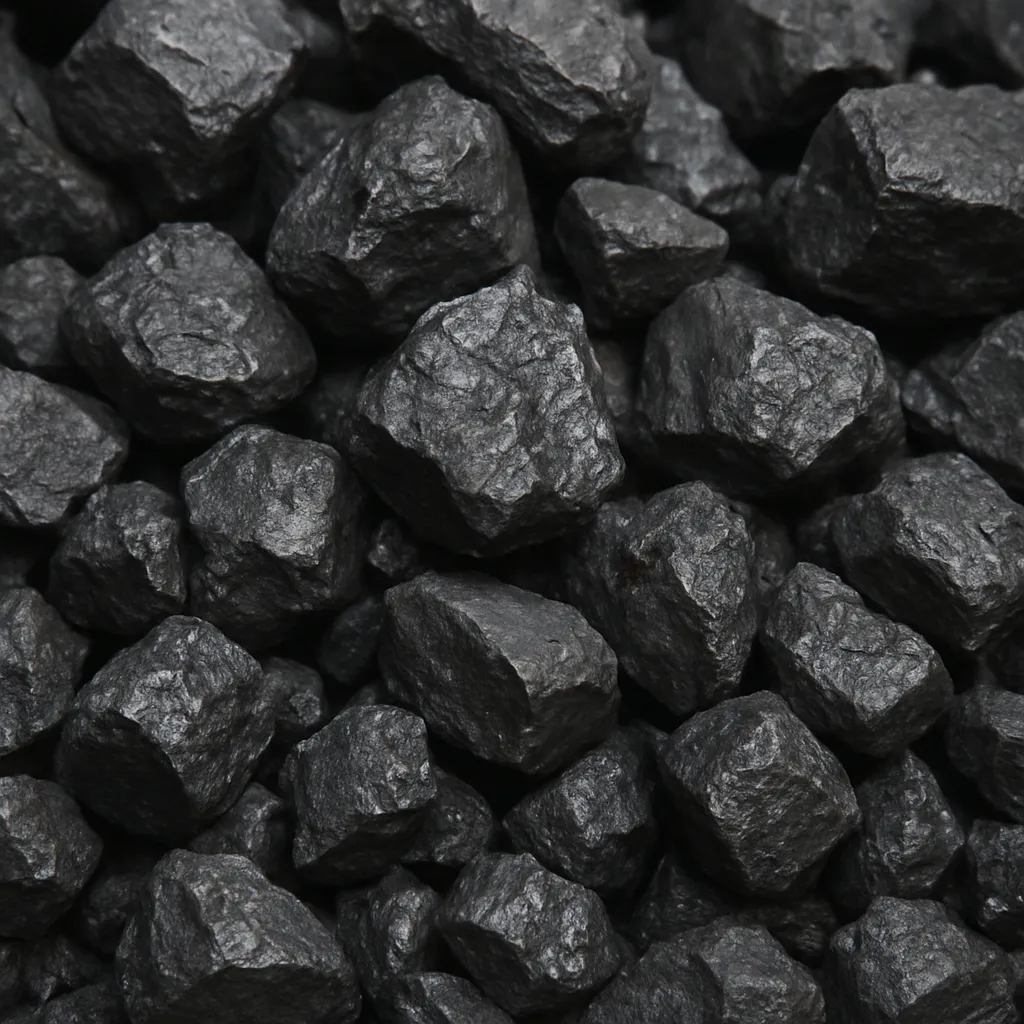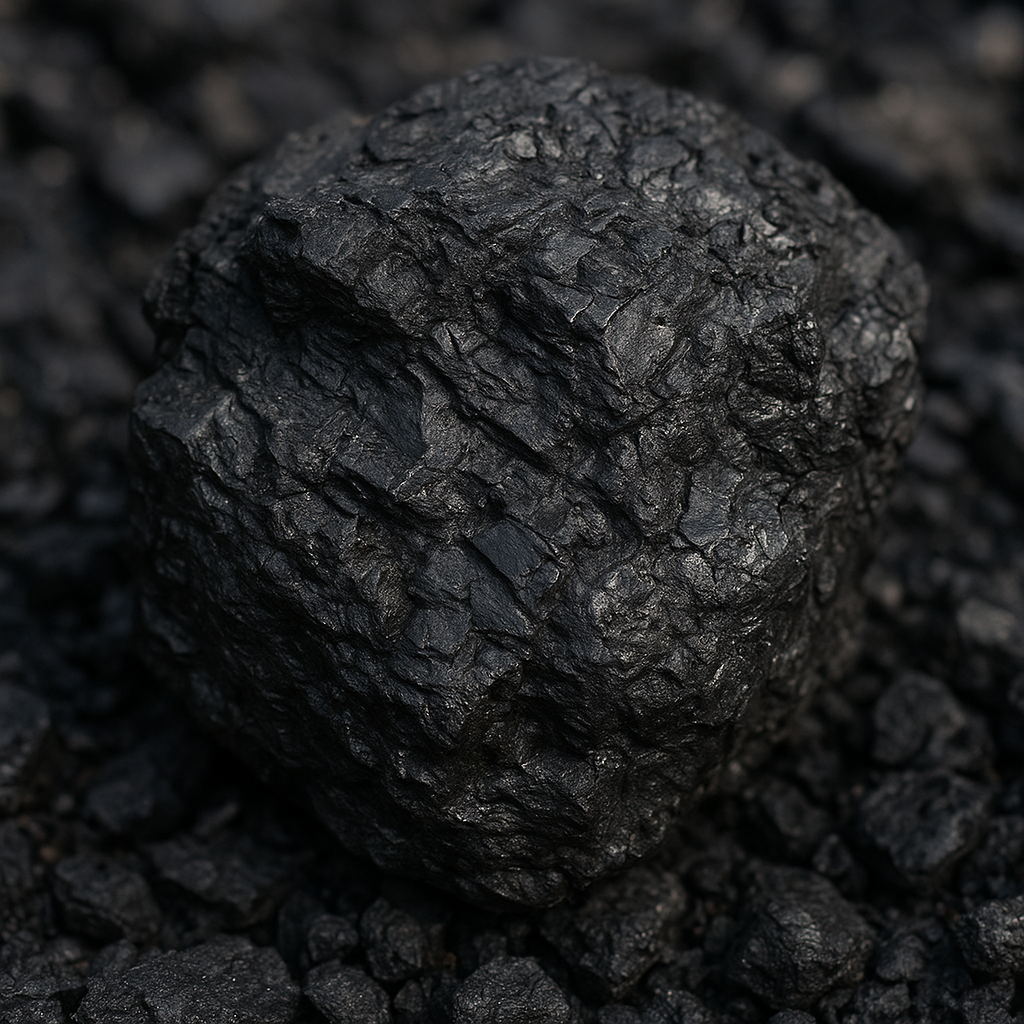
This article examines the nature, occurrence, processing and economic importance of carbonized coal — the coal that has undergone carbonization to yield high-carbon materials such as coke and other carbon products — and the raw coals most suitable for that process. It covers geological origin, global distribution, mining practices, the carbonization process and its by-products, the role of carbonized coal in the steel and chemical industries, market and statistical perspectives, and environmental and technological trends that shape its future. The goal is to provide a comprehensive, up-to-date overview useful for industry professionals, students and policymakers.
Geology, Types and Formation of Carbonized Coal
Coal is a sedimentary rock formed from ancient plant material that accumulated in peat-forming environments and was subsequently buried and transformed by heat and pressure. The principal ranks of coal — lignite, sub-bituminous, bituminous and anthracite — reflect increasing carbon content, calorific value and decreasing volatile matter. Not all coals are equally suitable for carbonization: the best feedstocks for producing metallurgical coke are specific bituminous coals with favorable caking, plasticity and swelling properties.
Coal rank and coking properties
- Low-rank coals (lignite, sub-bituminous) have high moisture and volatile matter and are generally unsuited for producing dense metallurgical coke without blending or upgrading.
- High-volatile and medium-volatile bituminous coals can possess caking properties; certain blends produce strong coke with high mechanical strength and reactivity characteristics required by blast furnaces.
- Anthracite has very high fixed carbon and low volatiles but typically does not coke well because it does not become plastic and bind during carbonization; however, it can be used as a carbon additive or in pulverized coal injection (PCI).
Petrographic and chemical indicators
Petrographic indices such as vitrinite reflectance (Ro), total vitrinite content and maceral composition are used to assess coal behavior during carbonization. Coking coals are evaluated by test methods that determine free swelling index (FSI) and coke strength after reaction (CSR). These parameters directly affect the quality of industrial coke and the efficiency of iron- and steelmaking processes.
Extraction, Global Distribution and Major Producers
Coal-bearing strata occur on every continent except perhaps Antarctica in economically extractable volumes, though major reserves and production are concentrated in several regions. Coal for carbonization (metallurgical or coking coal) is produced in a narrower set of basins than thermal coal, often in geological settings that yield higher-rank bituminous types.
Key producing regions
- China: the world’s largest coal producer and consumer. China extracts both thermal and metallurgical coals across numerous basins (e.g., Shanxi, Inner Mongolia) and produces the majority of global coke for domestic steelmaking.
- Australia: a major exporter of high-quality hard coking coal (HCC), shipped primarily to Asia. Australian mines in Queensland and New South Wales are important sources of premium metallurgical coal.
- Russia: substantial metallurgical coal reserves, with exports to Europe and Asia. Key regions include the Kuzbass.
- United States: large production, with metallurgical coal concentrated in Appalachia and western basins producing thermal coal (e.g., Powder River Basin).
- Colombia, South Africa, Canada and Mongolia: notable producers/exporters of coking coal and thermal coal.
- India: significant domestic production of both thermal and metallurgical coal; the country is a major steel producer and therefore a major consumer of coking coal and coke.
Mining methods
Coal for carbonization is mined using both underground and open-pit (surface) methods. Metallurgical coal is frequently extracted from underground longwall or room-and-pillar operations in mountainous basins (e.g., Appalachia), while large thermal coal volumes are produced from surface mines (e.g., Powder River Basin). Mining method choice affects cost structure, environmental footprint and the size/grading of the coal produced.
Carbonization Process and Products (Coke and By-products)
Carbonization — the thermal decomposition of coal in the absence of oxygen — converts appropriate coals into coke, a porous, high-carbon solid used primarily in blast furnaces. The process also yields significant chemical by-products (coal tar, light oils, ammonia, coal gas) and forms the basis for many older and continuing chemical industries.
Industrial carbonization technologies
- By-product coke ovens: traditional batteries that capture volatile by-products (tar, light oils, coal gas, ammoniacal liquor) for further chemical processing.
- Non-recovery ovens: simple ovens producing coke but burning off volatile matter, sometimes used where chemical by-products are not economical to collect.
- Modern process variations: improved oven designs, continuous coking plants and emission controls to reduce environmental impact and increase yield and uniformity.
Yields and material characteristics
Coke yield depends on coal blend and process conditions; high-quality coking coals can yield around 65–75% coke by mass after carbonization. The coke produced is characterized by fixed carbon content, porosity (which affects reactivity and gas permeability in blast furnaces), and mechanical strength (important to support burden in a furnace). By-products of the coking process include coal tar (a feedstock for chemicals like naphthalene and phenols), benzol (benzene, toluene, xylene), light oils and coal gas (used as fuel or feedstock).
Alternative carbonized products
Beyond metallurgical coke, carbonization routes lead to a range of carbon products: activated carbon (produced by carbonization followed by activation for filtration and adsorption applications), carbon black substitutes, and precursors for graphite, carbon electrodes and specialty carbons used in batteries and electrodes. These products broaden the economic importance of carbonized coal beyond steelmaking.
Economic and Industrial Importance
Carbonized coal — primarily in the form of coke — remains a cornerstone of traditional iron and steelmaking. The global steel industry’s health directly influences demand for metallurgical coal and coke. Because coke provides both the chemical reducing agent and a physical support medium in blast furnaces, its role cannot be easily removed from conventional steelmaking without major shifts in technology or feedstock.
Steelmaking and demand drivers
- Global crude steel production exceeded approximately 1.8 billion tonnes per year in recent years; the majority has historically been produced in blast furnace–basic oxygen furnace (BF-BOF) routes that require coke.
- Growing steel demand in developing economies supports sustained requirements for coking coal and coke, while developed economies often shift to scrap-based electric arc furnaces (EAF) that use less or no coke.
- Policies targeting decarbonization and adoption of greener steelmaking (e.g., hydrogen-based direct reduced iron, DRI) will gradually reduce coke consumption where adopted, but the transition is uneven and capital-intensive.
Trade, pricing and market structure
Metallurgical coal markets are global, with significant export flows from Australia, the United States, Canada and Colombia to Asian steelmakers. Prices for different grades (hard coking coal, semi-soft coking coal, PCI coal) can be volatile and are influenced by steel demand cycles, mine supply disruptions, logistics and geopolitical events. Coke markets are more regional because coke is relatively bulky and most steelmakers produce coke domestically to ensure supply security.
Value chain economics
The economics of carbonized coal involve mining costs, beneficiation and blending, coking oven capital and operating costs, handling and transport, and the value of by-products recovered. In many cases, by-product recovery (tar, ammoniacal liquor, coal gas) contributes materially to the economics of older coking plants; when those chemical markets are weak or environmental controls force changes, coke-making economics can be adversely affected.
Statistical Overview and Market Dynamics
Statistical measures for coal and coke markets give a sense of scale and trends. The figures below are approximations based on industry and international agency publications up to the early 2020s; exact numbers fluctuate annually due to demand cycles and reporting methodologies.
Global production and reserves
- Global coal production has been in the range of roughly 7.5–8.5 billion tonnes per year in the early 2020s, with China producing around 45–50% of the global total, followed by India, the United States, Indonesia and Australia as major producers.
- Proven global coal reserves are commonly cited at around one trillion tonnes of recoverable coal (on the order of 1,000 billion tonnes), sufficient for many decades at current consumption rates, though accessible and economically recoverable portions vary by region.
- Global coke production is smaller in scale than raw coal production; estimates have ranged from several hundred million tonnes per year. China produces the majority of global coke output owing to its large integrated steel industry.
Consumption by sector
Around two-thirds of global coal consumption historically has been for power generation, with industry (iron and steel), cement and other industrial uses accounting for the rest. The iron and steel sector is the primary consumer of metallurgical coal and coke; thus regional steel output patterns strongly determine metallurgical coal demand.
Price trends and historic volatility
Prices for high-quality coking coal and metallurgical coke have experienced significant volatility. Supply-side disruptions (weather events, mine accidents, export restrictions), surges in steel demand and logistical bottlenecks can cause sharp price spikes. Conversely, slower steel markets, inventory overhangs and substitute technologies (PCI, scrap-based EAF) place downward pressure on prices.
Environmental, Regulatory and Technological Trends
Carbonization and coke-making are energy-intensive processes with historically significant environmental impacts: emissions of CO2, particulates, volatile organic compounds, polycyclic aromatic hydrocarbons (PAHs) and other pollutants. Regulations aimed at air quality and greenhouse gas mitigation have reshaped technology choices and investment in cleaner processes.
Emissions and controls
Modern coking plants apply emission control technologies (e.g., coke oven gas cleaning, tar recovery, particulate filters) to reduce local pollutants. However, CO2 emissions from the blast furnace route (in which coke is used) are a central challenge for the industry’s decarbonization: ironmaking via BF-BOF remains carbon-intensive. Policy mechanisms such as carbon pricing, emissions trading and direct regulation are accelerating interest in lower-carbon steelmaking routes.
Technological responses
- Process improvements: better oven designs, heat recovery and by-product utilization reduce energy intensity and local pollution.
- Blast furnace efficiency: measures such as pulverized coal injection (PCI) reduce coke consumption by partially replacing coke with pulverized coal.
- Fuel and feedstock substitution: hydrogen-based DRI, increased use of scrap in EAFs and biomass co-processing aim to reduce reliance on coke and lower lifecycle emissions.
- Carbon capture, utilization and storage (CCUS): some integrated steelmakers and coking facilities are evaluating CCUS to mitigate process emissions, though such projects are capital-intensive and still at varying stages of commercial maturity.
Regional Case Studies and Industrial Practices
Different regions have distinct industrial structures and practices that shape carbonized coal use and production economics.
China
China’s integrated steel industry, combined with domestic coking capacity, makes the country largely self-sufficient in coke. China also faces severe air quality and CO2 emission constraints in many regions, prompting plant consolidation, modernization of older coking batteries and investments in emission controls. The government’s steel and energy policies strongly influence both domestic coke production and global metallurgical coal trade flows.
Australia
Australia is a major export-oriented supplier of high-quality hard coking coal. Its mining sector is capital-intensive and oriented toward global seaborne markets, especially in Asia. Australian producers are sensitive to changes in global steel demand and pricing, and production decisions often respond to long-term contract and spot market dynamics.
Europe and the United States
In developed economies, the rise of scrap-based steelmaking (EAF) reduced coke demand compared with past decades, though integrated BF-BOF mills remain important. Environmental regulation, aging coke plants and the economics of scrap availability influence the pace of transition away from coke-dependent routes. The U.S. metallurgical coal industry, particularly Appalachian producers, supplies both domestic coke plants and exports.
Future Outlook and Strategic Considerations
The outlook for carbonized coal and coke depends on multiple interacting trends: global steel demand growth (driven largely by emerging economies and infrastructure investment), the pace of decarbonization in steelmaking, technology adoption (DRI, EAF, CCUS) and the evolution of coal markets and prices.
Short- to medium-term
In the near term, demand for coking coal and coke will remain linked to traditional steelmaking in large parts of Asia and other developing regions. Infrastructure projects and urbanization will sustain demand, while efficiency improvements and PCI can moderate coke intensity per tonne of steel.
Long-term transition
Long-term scenarios consistent with deep decarbonization foresee substantial reduction in BF-BOF dominance as low-emission steelmaking routes (hydrogen-DRI, electrified processes) scale up. In such scenarios, global coke demand could fall significantly over decades. However, the transition will be uneven geographically and will require large capital investments, stable policy frameworks and development of new supply chains (e.g., low-carbon hydrogen). For the foreseeable future, a mixed system with both traditional and emerging steel routes is likely.
Interesting Technical and Historical Notes
Coal carbonization and coke use are among the oldest large-scale industrial chemical/thermal processes: coking technology matured in the 18th and 19th centuries with the rise of ironmaking and industrialization. Historic coke ovens were central to the development of chemical by-product industries (coal-tar chemicals), which later fed synthetic dyes, pharmaceuticals and other specialty chemicals. Today, remnants of this chemical heritage persist in modern integrated plants and in older industrial regions.
Technically interesting features include the plastic stage of coal during carbonization (a transient molten phase that enables particle coalescence and formation of coherent coke), the critical role of porosity for gas flow in blast furnaces, and the art of blending multiple coals to achieve target coke properties. Advances in coke quality testing (CSR, coke reactivity index) and in numerical modeling of oven heat transfer and coke behavior have improved process control and product consistency.
Summary
Carbonized coal in the form of coke remains a fundamental material for traditional iron and steelmaking and continues to support ancillary chemical industries. While global coal resources are large and production remains significant, the future of carbonized coal is shaped by the evolving structure of steelmaking, environmental regulation and technological innovation. Regions dominated by blast furnace steelmaking will continue to demand metallurgical coal and coke in the near term, but the long-term decline in coke use is possible under aggressive decarbonization scenarios. Understanding geological characteristics of coking coals, the economics of the coking process and the interplay of policy and technology is essential for stakeholders across mining, steelmaking and policy sectors.
Key terms emphasized in this article: coke, steel, carbonization, anthracite, lignite, China, Australia, emissions, reserves, blast furnace.