This article provides a detailed overview of the El Cerrejón Norte coal mining complex in northern Colombia: its location, geology, extraction methods, economic significance, environmental and social impacts, infrastructure, and contemporary developments. The mine is one of the most prominent coal operations in Latin America and has long attracted global attention for its scale, export role and local controversies. The following sections explore the site from multiple perspectives and highlight statistics and facts where available.
Location, Geological Setting and History
El Cerrejón is located in the department of La Guajira in the extreme north of Colombia, within the Serranía del Perijá and the broader Caribbean coastal plain region. The mine sits in an area characterized by semi-arid climate, unique ecosystems and the traditional territory of indigenous communities, especially the Wayuu. Geologically, the coal deposits exploited at Cerrejón are part of the Cerrejón Formation, composed of Paleocene-age sedimentary sequences containing thick layers of coastal plain and fluvial coal seams interbedded with clays, silts and sandstones.
Development of Cerrejón as a large-scale mining complex began in the late 20th century. The field was progressively opened up and converted into one of the world’s largest open-pit coal operations through consolidation and investment during the 1980s and 1990s. Over the decades the site has been continuously expanded with multiple pits, large waste dumps, and an extensive transport link to the export terminal at Puerto Bolívar.
Type of Coal, Quality and Mining Methods
Cerrejón produces primarily thermal coal (steam coal) intended for electricity generation and industrial heat applications. The coal from Cerrejón is generally valued for having relatively low sulfur content and favorable combustion properties compared to some other thermal coals, making it attractive to international markets. Coal grades from Cerrejón are typically marketed as mid- to high-energy thermal coal, though exact calorific values vary by seam and processing.
Mining Methods and Processing
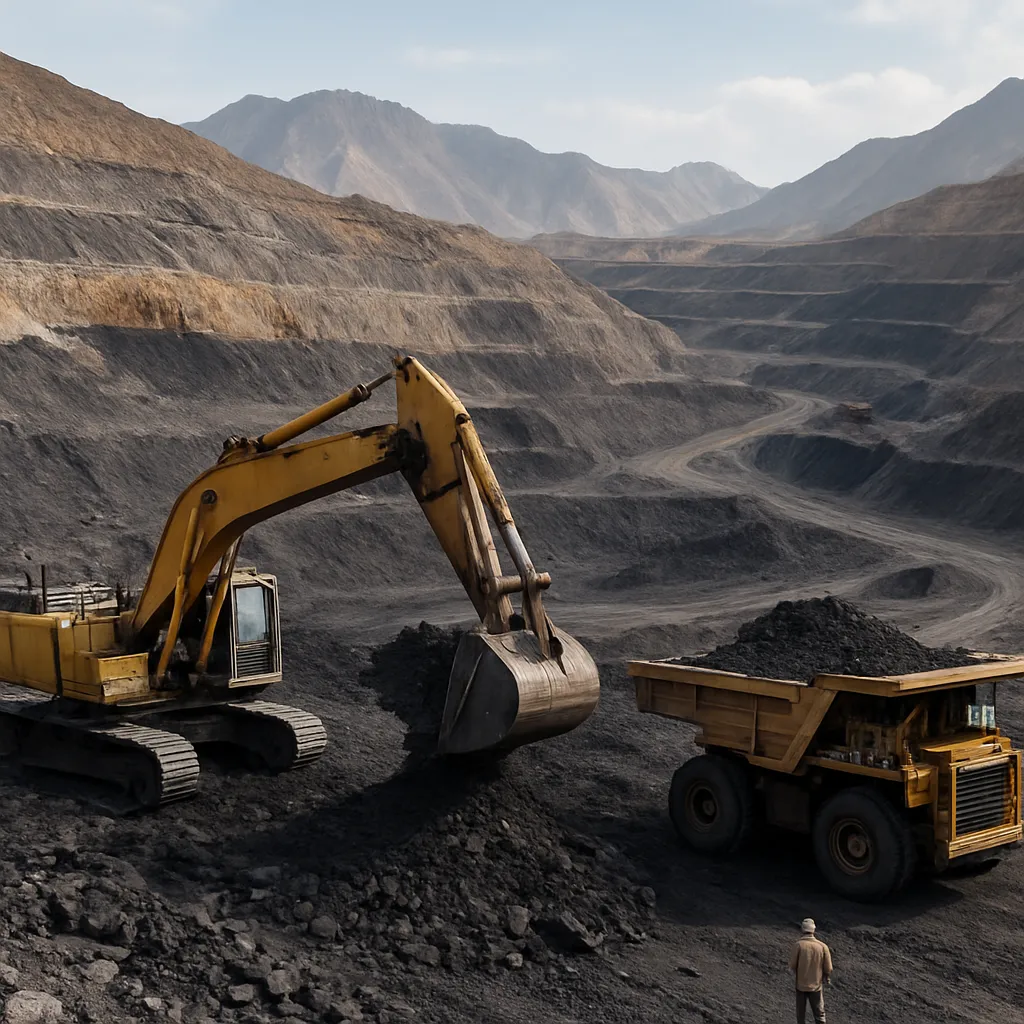
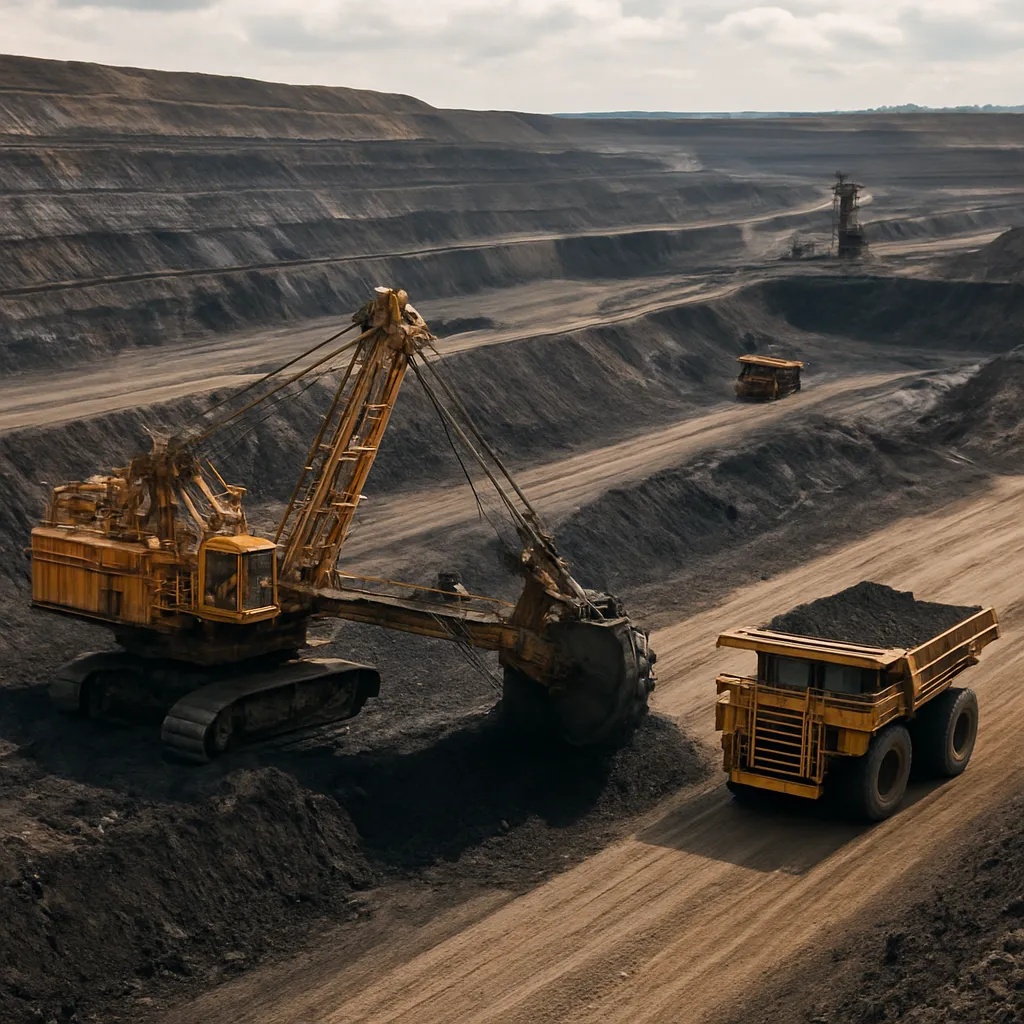
- The operation is dominated by large-scale surface mining techniques: multi-bench open-pit extraction, using hydraulic shovels, large haul trucks, and other heavy earthmoving equipment.
- Material handling is supported by extensive conveyor systems, centralized processing facilities (screening and washing), and large waste-rock dumps and tailings management areas.
- A dedicated logistics chain links the pits to the export port, including a private rail and conveyor infrastructure and the port terminal at Puerto Bolívar.
Cerrejón implements coal beneficiation to meet buyer specifications: washing and sizing to reduce ash and impurities and to match calorific value targets demanded by thermal power plants and industrial clients.
Production, Reserves and Statistical Overview
El Cerrejón is internationally recognized for its scale. While precise figures fluctuate year by year—depending on markets, operational adjustments and investment cycles—historically the complex has produced on the order of tens of millions of tonnes of coal per year. Annual production has commonly been cited in the range of approximately 20–30 million tonnes, making Cerrejón one of the largest single-site coal producers in the world.
Reserve estimates also put Cerrejón among major global deposits: overall reserves and resources are often reported in the order of billions of tonnes, supporting long-term production horizons. These large numbers explain why Cerrejón has been an enduring strategic asset for owners and a key part of Colombia’s mining portfolio.
Key statistics and economic indicators related to Cerrejón’s contribution (typical figures and roles, recognizing annual variability):
- Production: Historically c. 20–30 Mt/year (subject to market conditions and operational changes).
- Reserves: Estimated in the billions of tonnes (proven and probable plus measured and inferred resources across the Cerrejón Formation).
- Exports: A substantial share of Colombia’s coal exports has originated from Cerrejón; at times the mine has accounted for roughly a quarter or more of national thermal coal export volumes.
- Markets: Major export destinations have included countries in Latin America, Europe and Asia, depending on freight economics and buyer demand.
Ownership, Investment and Economic Importance
El Cerrejón’s ownership structure has evolved: for many years the operation was a joint venture among large international miners. In recent years global industry consolidation and portfolio changes have altered that arrangement, with the operation now controlled by major global commodity players. The mine has required and attracted substantial foreign direct investment for its development, ongoing capital equipment purchases, environmental management projects, and logistics infrastructure.
Economically, Cerrejón has been important at multiple levels:
- At the local and regional level, Cerrejón provided employment, public and private investment, and contracting opportunities for local suppliers and service companies.
- At the national level, the mine contributed to Colombia’s export earnings, foreign exchange inflows, and national tax and royalty revenues. Coal remains one of Colombia’s most significant mineral exports by volume and value.
- The mine has supported downstream logistics and infrastructure, including port operations and shipping services, which have wider economic effects beyond the mine itself.
Financial performance is sensitive to global coal prices, freight costs, and regulatory or social disruptions. During boom periods in global thermal coal demand, Cerrejón’s revenues and contribution to Colombia’s trade balance are enhanced; during price troughs, margins and investment plans are adjusted accordingly.
Logistics, Infrastructure and Export Chain
One of the defining features of Cerrejón is its integrated logistics chain. Coal is moved from the open pits to the processing and stockyard areas, then transported via a dedicated rail and conveyor system to the terminal at Puerto Bolívar on the Caribbean coast. Puerto Bolívar is a specialized coal export terminal equipped to load large bulk carriers and handle high throughput.
The logistics chain includes:
- On-site mining and crushing/washing facilities.
- Internal haul roads, conveyors and stockyards for inventory management.
- A private rail and loading system linking the mine area to Puerto Bolívar.
- Port berths, ship loaders and associated port operations to load vessels for export.
This vertical integration reduces some transport costs and provides Cerrejón with flexibility in meeting international contracts. It also concentrates environmental and social impacts along a linear corridor linking mine, communities and port.
Social and Environmental Issues
Cerrejón’s scale and location have made it central to numerous social and environmental debates. Key concerns include water management, displacement and resettlement of communities, impacts on traditional livelihoods, land use change, dust and air-quality issues, and biodiversity loss or habitat fragmentation. The operation overlaps areas used by the Wayuu people, and there have been longstanding tensions over land, water, and cultural impacts.
Resettlement and Community Relations
Large-scale open-pit expansion necessitated resettlement programs at multiple times. Resettlement processes, compensation mechanisms, and the adequacy of livelihood restoration have been contested by affected communities and civil-society groups. Legal and political pressures, including litigation and public campaigns, have pushed the company and regulators to adapt policies on consultation, compensation and community development. The relationships between the mine, local municipalities and indigenous populations remain a critical factor in Cerrejón’s social license to operate.
Water, Dust and Ecosystems
- Water: Groundwater extraction and changes in surface drainage can affect local wells, wetlands and agricultural plots. Water management programs and monitoring are required to mitigate impacts.
- Air quality: Dust control measures (watering, covered conveyors, and emission controls at crushing plants) are standard mitigation measures but community complaints about dust persist.
- Biodiversity: The region contains unique arid-adapted flora and fauna; habitat loss and fragmentation from pits and infrastructure have prompted biodiversity offset measures and restoration programs in some areas.
Legal, Regulatory and Human Rights Context
Cerrejón’s operations have unfolded in a complex legal and regulatory environment. Colombia’s mining laws, environmental licensing procedures and indigenous rights frameworks impose obligations on large projects, but enforcement and interpretation can be uneven. Over the past two decades, the mine has been the subject of litigation and scrutiny related to human rights, ethnic minority protections, environmental monitoring and compliance with resettlement commitments.
International scrutiny, NGO reports and domestic legal actions have increased emphasis on transparency, community consultation and impact mitigation. These pressures have sometimes led to negotiated agreements, community development programs, and independent oversight mechanisms, but challenges remain.
Technological and Operational Innovations
Operating at such a large scale has required Cerrejón to deploy modern mining technologies and large-capacity equipment. Innovations and investments have focused on:
- Heavy earthmoving fleet optimization and maintenance programs to maximize uptime and safety.
- Conveyor and logistics efficiency to reduce unit transport costs and bottlenecks between mine and port.
- Environmental control systems for dust suppression, water treatment and tailings management.
- Digitization and automation in operations planning, asset monitoring and safety systems.
Continuous improvement in these areas is essential to maintain competitiveness, reduce unit costs and respond to increasingly stringent environmental and safety expectations from host communities, regulators, insurers and lenders.
Economic and Industrial Significance
El Cerrejón has been a strategic asset for Colombia’s mining sector and for global thermal coal supply chains. Its significance can be summarized across several dimensions:
- Job creation and local procurement: The mine supports thousands of jobs directly and indirectly through services, logistics, and supply chains.
- Export earnings: As one of Colombia’s major coal exporters, Cerrejón has contributed to foreign exchange inflows and national revenues.
- Industrial linkages: The operation supports port activity, shipping contracts, and regional infrastructure development.
However, the long-term industrial role of large thermal coal mines is under pressure from global decarbonization trends and energy transition policies. Demand for thermal coal is projected to decline in many regions over coming decades, though shorter-term demand and regional power needs sustain markets for operations like Cerrejón.
Recent Developments and the Future Outlook
Recent years have seen shifts in ownership, market strategies and corporate commitments. The company has pursued operational efficiencies, continued community and environmental programs, and navigated changing regulatory and market environments. The broader context of coal demand—driven by global energy policies, competition from other suppliers, and logistics costs—will shape Cerrejón’s production plans and investment strategies in the coming decade.
Key factors that will influence Cerrejón’s future:
- Global thermal coal demand trajectories and price cycles.
- Domestic and international regulatory changes, including environmental standards and financial-sector pressures on coal financing.
- Community relations and successful mitigation of social and environmental impacts.
- Investment in efficiency and potential diversification into rehabilitation, alternative land uses and local economic development projects.
Concluding Observations
El Cerrejón remains a landmark mining complex in Colombia and the global coal industry: a site of considerable production capacity, strategic export logistics, and substantial economic impact for the region and nation. At the same time, the mine exemplifies the tensions inherent in large-scale extractive projects—balancing revenue and employment benefits against social displacement, environmental change, and evolving global energy priorities. The coming decades will test how operations like Cerrejón adapt to shifting markets, stricter environmental expectations and the needs of affected communities while managing legacy impacts and pursuing sustainable transitions.
Selected highlighted terms
Cerrejón, open-pit, thermal coal, Puerto Bolívar, Glencore, reserves, employment, exports, Wayuu, environment