The following article provides a detailed overview of the Shubarkol Komir mining complex in Kazakhstan — its location, geology, methods of extraction, economic role, statistics where available, environmental and social issues, and prospects for the future. The goal is to give a comprehensive, well-structured picture of one of Kazakhstan’s important coal-producing assets and to place it in the broader context of the national and regional coal industry.
Location and Geological Setting
The Shubarkol Komir operation is located in central-southern Kazakhstan within the broader coal-bearing provinces of the country. The mine sits in a region that forms part of Kazakhstan’s extensive coal-bearing basins and has been developed to exploit large near-surface deposits amenable to open-pit methods. The deposit’s geological profile is typical for regional coal occurrences: layered sedimentary sequences with interbedded clays and sandstones, containing seams of varying thickness and continuity.
Regional geology
- The area lies within one of Kazakhstan’s principal coal-bearing regions, where sedimentary basins preserve multiple coal seams formed during the Mesozoic and Cenozoic eras.
- Coal seams at Shubarkol vary in rank and quality across the field; seam thickness and depth make it economically viable for large-scale surface mining.
- Local geology determines key operational factors such as strip ratios, groundwater management, and the ease of mechanized extraction.
Why the site is significant geologically
Unlike narrow underground seams, the Shubarkol deposit’s continuity and near-surface position permit high-efficiency surface mining, allowing operators to mobilize large fleets of heavy equipment and extract coal at relatively low unit cost. The distribution of seams and overburden provides a predictable mining environment, which is a major factor in long-term planning and the estimation of reserves.
Mining Operations, Coal Types and Quality
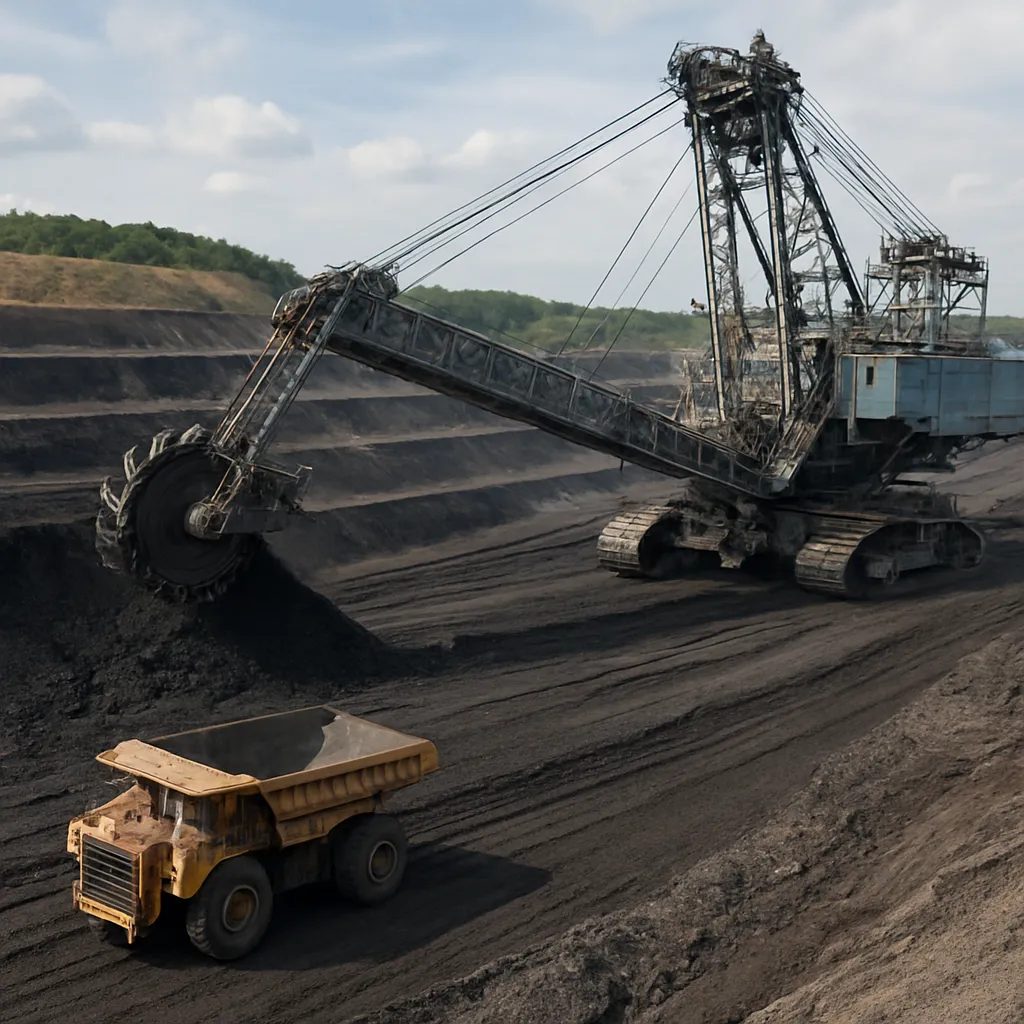
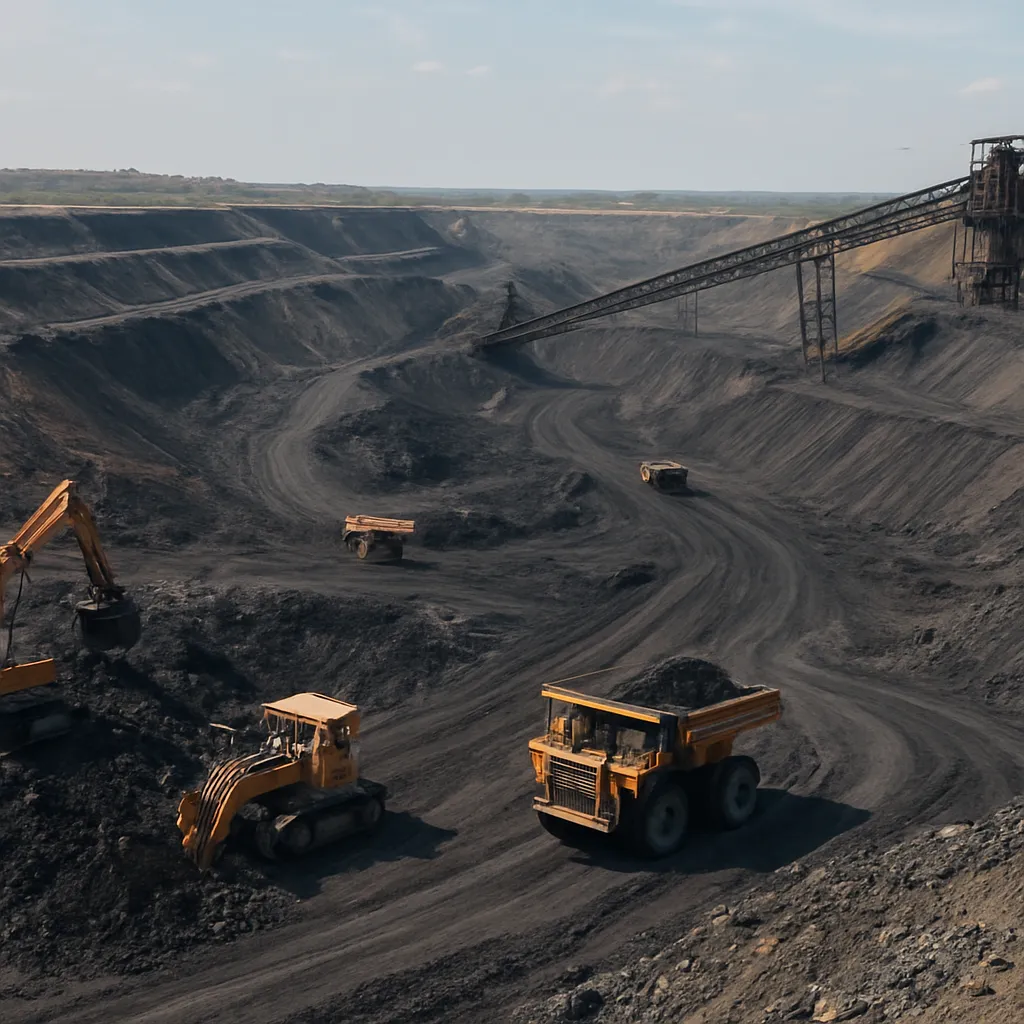
Shubarkol Komir is principally an industrial-scale mining enterprise configured to supply both domestic power generation and external markets. The operation uses modern open-pit mining techniques: drill-and-blast in harder horizons, large shovels and excavators, high-capacity trucks, and conveyor systems where suitable. Processing and screening facilities on-site improve product consistency before dispatch.
Types of coal produced
- The mine mainly produces coal intended for thermal applications (steam or thermal coal) used by power plants and industrial boilers.
- Depending on the seam and wash processes, product grades may range from lower-ash, higher-energy fractions suitable for power generation to higher-ash blends used for industry and domestic heating.
- Coking or metallurgical coal is not the core product at Shubarkol; the operation’s strength lies in supplying bulk energy coal rather than premium metallurgical grades.
Processing and quality control
Typical processing steps include crushing, screening, and in some cases, simple washing to lower ash and improve calorific value. Quality control focuses on calorific value (energy content), moisture, ash content, sulfur, and size distribution to meet the contractual requirements of power plants and export customers. Continuous sampling and laboratory analyses guide blending strategies to deliver consistent shipments.
Economic Role and Market Orientation
Shubarkol Komir plays a significant role in Kazakhstan’s coal economy by supplying energy to local and regional consumers and contributing to export volumes. The mine’s economic footprint includes direct employment, procurement of services and goods from regional suppliers, and contributions to local budgets through taxes and royalties.
Production scale and contribution
While Kazakhstan’s overall annual coal production historically exceeds 100 million tonnes, single large mines can account for multiple millions of tonnes per year. Shubarkol Komir is among the notable producers: in recent years, public reports and industry summaries have indicated that the mine’s production typically falls in the lower- to mid-single-digit millions of tonnes per year (for example, often reported in the range of roughly 3–10 million tonnes annually depending on the year and operational schedule). This places Shubarkol as an important regional supplier though smaller than the very largest Kazakh fields.
- Contribution to national output: a measurable single-digit percentage of Kazakhstan’s total coal output in most years.
- Contribution to regional economy: provides fuel for nearby thermal power plants and industrial consumers, reducing transport costs and supporting energy security.
- Employment: hundreds to a few thousand direct jobs depending on the mine’s activity level and contractor workforce.
Markets and logistics
Coal from Shubarkol is primarily destined for domestic power generation and industrial consumption, with a portion allocated for export to neighboring countries where logistical routes permit. Kazakhstan’s rail network is the principal transport mode for large volumes; coal is typically railed to regional power stations or to international export gateways. Exports from Kazakhstan commonly target markets in Russia, Central Asia, and increasingly China, subject to bilateral trade agreements and price competitiveness.
Statistical Indicators and Financial Aspects
Available statistical information on Shubarkol Komir is a mix of company disclosures, government energy reports, and independent market analyses. Exact annual figures vary from year to year. Observations and commonly cited metrics include production, sales volumes, and reserve estimates.
Production and sales
- Reported annual production: typically in the range of a few million tonnes (estimates often cited between 3 and 10 million tonnes depending on source and year).
- Sales split: majority to domestic power/industrial customers; a variable minority for export sales when market prices and logistics align.
- Price sensitivity: revenue and profitability are strongly linked to international thermal coal prices, domestic regulated tariffs for power generation, and transport costs.
Reserves and life of mine
Reserve estimates for the Shubarkol deposit have historically indicated significant remaining coal endowment—enough to support operations for several decades at current extraction rates. Companies routinely publish proven and probable reserve figures (in million tonnes) based on geological surveys; where publicly quoted, these figures often underline the long-term nature of the project. Exact reserve numbers can vary with new exploration, changes in economic cutoff grades, and mine planning.
Economic multipliers and fiscal contribution
The mine generates fiscal revenues through corporate taxes, royalties on extracted resources, and payroll taxes. Indirect benefits arise from procurement of goods and services (fuel, spare parts, transport, catering, and accommodation), which support local small and medium enterprises. Investment in infrastructure (roads, power connections, water supply) required for mining activity often benefits surrounding communities.
Environmental Management and Social Impact
Large-scale surface coal mining poses environmental and social challenges. Shubarkol Komir, like other modern mines in Kazakhstan, operates under national environmental regulations and implements mitigation measures to limit adverse impacts.
Key environmental concerns
- Dust and particulate emissions from blasting, crushing and transport, addressed by water spraying, covered conveyors, and progressive site reclamation.
- Water management: control of surface runoff, sedimentation ponds, and managing groundwater inflows to prevent contamination.
- Land disturbance: progressive rehabilitation plans to restore contours and re-vegetate disturbed areas after mining.
- Greenhouse gases: coal production and consumption contribute to CO2 emissions; mines may also monitor methane release and follow national reporting obligations.
Social programmes and workforce issues
Mining companies typically invest in local skills development, health and safety training, and community infrastructure. Employment brings higher incomes and business opportunities, but also requires careful management of social expectations, timely payments, and worker safety. Occupational health programs and safety management systems are central to modern operations, and companies often report their performance indicators such as lost-time injury frequency rates.
Logistics, Infrastructure and Supply Chain
Efficient transport and logistics are critical to the economic viability of a large-scale coal mine. Shubarkol Komir’s supply chain integrates pit-to-plant operations, rail loading facilities, and long-haul transport corridors that connect the mine to domestic consumers and export nodes.
Rail and road connections
- Rail is the dominant mode for moving bulk coal; proximity to mainlines, loading terminals and transshipment points dictates market access.
- Ancillary infrastructure such as paved access roads, weighbridges, storage yards, and tipplers ensure continuous dispatch and inventory control.
- Seasonal weather conditions (freeze-thaw cycles) require maintenance planning to keep logistics reliable year-round.
Supply chain resilience
Given the volatility in global coal markets and potential disruptions in transport, companies typically diversify their customer base, maintain strategic stockpiles, and invest in coal handling flexibility (ability to supply different product sizes and qualities). Coordination with national rail operators is an ongoing necessity to secure wagon allocations and competitive freight tariffs.
Industrial Significance and Strategic Importance
Shubarkol Komir is strategically important for regional energy security and for the broader industrial base that depends on coal for electricity and process heat. Coal remains a central element of Kazakhstan’s energy mix, and reliable domestic supply reduces dependence on imports and stabilizes energy costs for households and industry.
Role in energy mix and industry
- Provides base-load fuel for thermal power plants, which are essential for grid stability and peak demand coverage in colder months.
- Supports industrial consumers such as cement, brick-making, and other heat-intensive sectors.
- Through taxes and employment, contributes to regional socio-economic stability.
Challenges, Trends and Future Outlook
The future for Shubarkol Komir will be shaped by global and national energy trends, commodity prices, regulatory changes, and the pace of technological adaptation in both mining and environmental management.
Short- and medium-term challenges
- Market volatility: thermal coal prices and demand can fluctuate with global energy shifts and policy changes in key importing countries.
- Logistics constraints: rail capacity and infrastructure investments are necessary to maintain and expand export potential.
- Environmental regulation: stricter emissions and reclamation requirements increase compliance costs and may require capital investment.
Long-term trends and opportunities
- Energy transition: while global decarbonization creates headwinds for thermal coal, coal demand in some regions remains robust for years to come; strategic diversification into value-added coal products or alternative minerals could be considered.
- Technological modernization: automation, fleet electrification, and improved processing can lower unit costs and reduce environmental footprint.
- Rehabilitation and legacy planning: progressive reclamation and community reinvestment can enhance social license to operate and provide post-mine land use options.
Interesting Facts and Contextual Notes
Some broader points help put Shubarkol Komir into perspective:
- Shubarkol is one of several major coal operations in Kazakhstan; the country’s aggregate coal production has historically been over 100 million tonnes per year, demonstrating the strategic scale of the sector.
- Coal from the region has traditionally supported Kazakhstan’s large thermal generation fleet; changes in domestic demand patterns (e.g., energy efficiency, fuel switching) influence mine planning.
- Large open-pit operations like Shubarkol often have lifespans measured in decades because of significant reserves and economies of scale that favor long-term planning.
In summary, the Shubarkol Komir enterprise is an important player in Kazakhstan’s coal industry, producing bulk thermal coal from an open-pit deposit with substantial reserves and a clear role in regional energy supply. The mine’s operations link geology, large-scale mechanized mining, and an integrated supply chain to serve domestic and international markets. While facing the common challenges of logistics, market volatility and environmental expectations, Shubarkol Komir exemplifies the type of modern coal operation that continues to shape Kazakhstan’s economic landscape.