The Rolleston Coal Mine is one of the significant coal operations in Central Queensland, Australia. Located within the prolific Bowen Basin, the mine contributes to both domestic energy needs and international coal markets. This article outlines the mine’s location and geology, the types of coal produced, operational and economic details, environmental and social considerations, and broader industry implications. The goal is to provide a comprehensive portrait of Rolleston’s role in Australia’s coal sector and the local economy.
Location and Geological Setting
The Rolleston Coal Mine sits in Central Queensland, near the township of Rolleston, within the greater Bowen Basin — one of Australia’s premier coal-producing regions. The mine lies roughly between the regional centres of Emerald and Blackwater and is connected to Queensland’s state rail network that feeds major export ports. The Bowen Basin is known for extensive Permian and Jurassic coal measures and is a key source of both thermal and metallurgical coal.
The geology of the Rolleston area comprises layered sedimentary sequences with coal seams of varying thickness and quality. These seams were formed in ancient peat-swamp environments and subsequently buried and compressed through geological time to form bituminous and sub-bituminous coals. Local stratigraphy and seam geometry determine the mining method (predominantly surface mining), the presence and thickness of overburden, and the nature of coal processing required on-site.
Rolleston is therefore positioned in a context of strong geological endowment: a basin that supplies large volumes of export coal to international markets and fuels to domestic industries.
Mining Method, Facilities and Process Flow
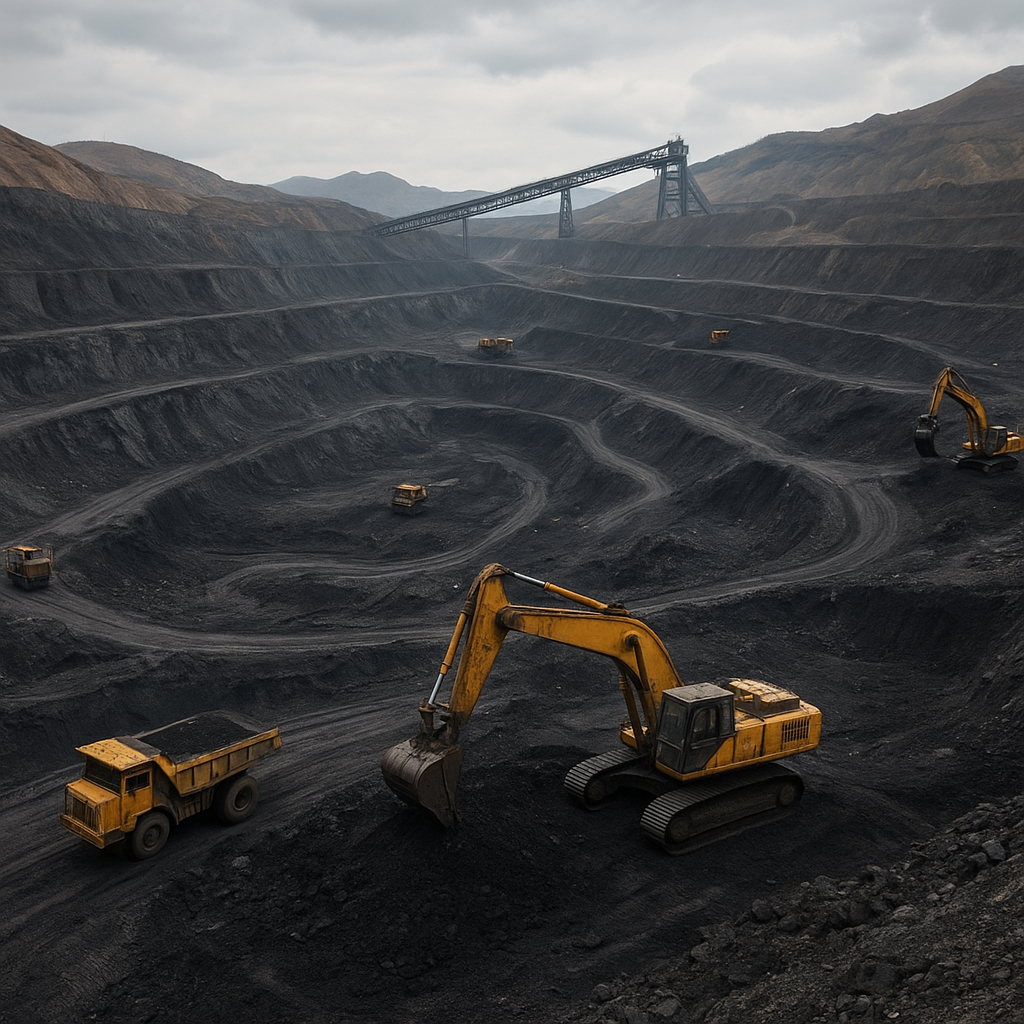
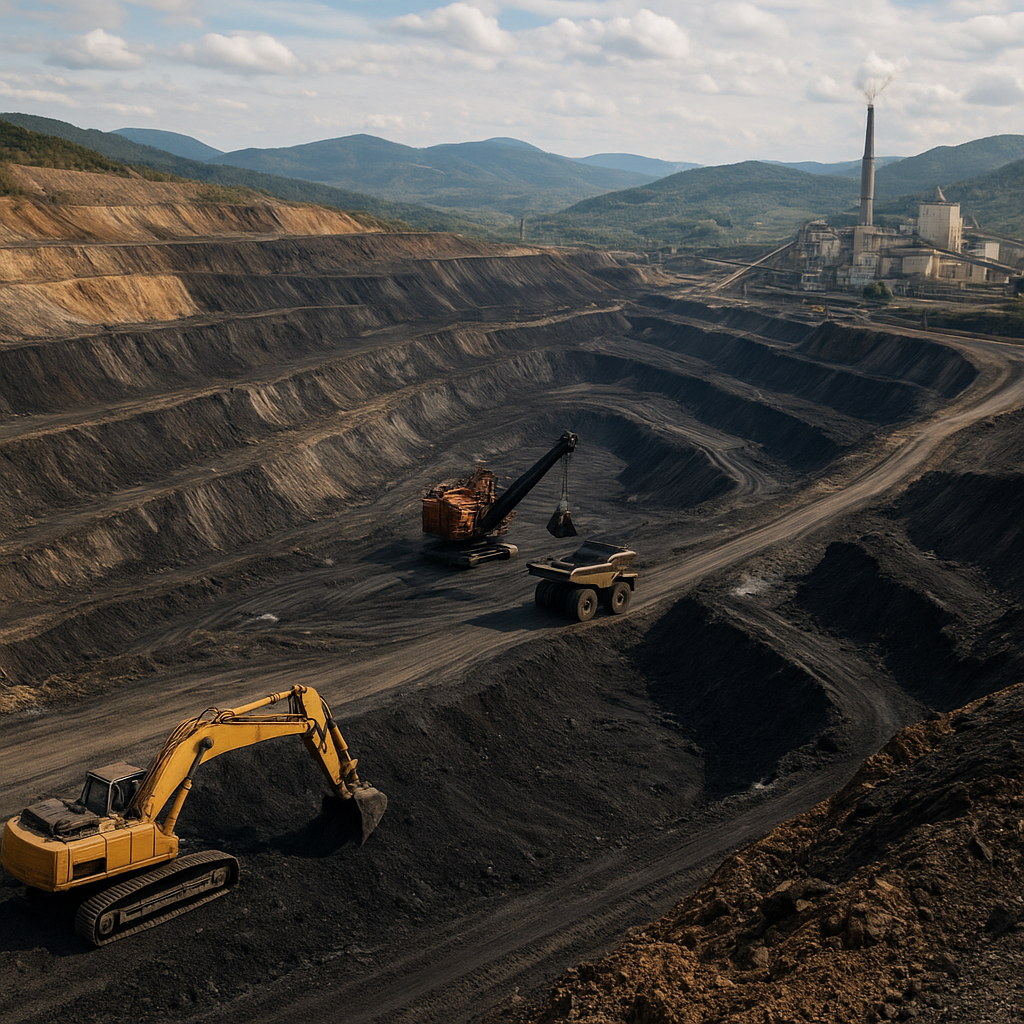
Rolleston is an open-cut (surface) coal mine. Typical surface mining techniques are employed, such as staged removal of overburden with excavators and haul trucks, followed by coal extraction using truck-and-shovel fleets. After mining, the coal is fed to on-site processing facilities — commonly known as a Coal Handling and Preparation Plant (CHPP) — where it is washed, sized, blended and prepared for transport.
Key elements of the operational chain include:
- Pre-stripping and overburden management (earthmoving, sequencing, and progressive rehabilitation planning).
- Coal extraction by conventional heavy mobile equipment (shovels, loaders, haul trucks).
- On-site coal handling and processing (screening, washing to reduce ash/sulfur, stockpiling and blending).
- Rail load-out infrastructure for transport to port via the Queensland rail system (Blackwater/Goonyella rail corridors feeding major coal terminals).
- Progressive site rehabilitation and closure planning concurrently with mining activities.
Many Bowen Basin operations use high-capacity haulage and continuous improvement programs to optimize unit costs and throughput. Rolleston has historically implemented industry standard systems for mine planning, safety, and environmental management.
Coal Types and Product Markets
Rolleston primarily produces coal destined for the thermal (power generation) market, with qualities that can include a range of calorific values, ash contents and sulfur levels depending on seam and wash plant outputs. The coal produced is commonly exported to key Asian markets — notably Japan, South Korea, China, India and southeast Asian nations — and may also supply domestic power stations and industrial consumers.
The exported coal generally falls into the thermal category, used mainly to generate electricity. Depending on blending and preparation, some product streams may have improved calorific values suitable for specific customers or for use as a lower-volatile product in particular markets. Quality control and product specification are essential elements of Rolleston’s commercial operations to meet buyer requirements and retain long-term offtake relationships.
Production, Reserves and Economic Footprint
Rolleston has been a mid-to-large scale coal producer in Central Queensland since it commenced operations in the mid-2000s. Reported annual production volumes have typically ranged in the single-digit to low double-digit millions of tonnes per annum (Mtpa), depending on the stage of mine life and any expansions or operational adjustments. Historical figures have commonly cited production in the approximate range of 8–12 Mtpa, though annual outputs can vary year-to-year due to market demand, maintenance, and operational constraints.
Proven and probable reserves at Rolleston are substantial enough to support multiple decades of mining at steady production rates, with overall resources and reserves reported in the order of millions to hundreds of millions of tonnes (estimates vary with exploration success and reclassification). These reserves are part of the larger Bowen Basin resource base that underpins Queensland’s coal export capability.
Economic significance can be summarised across several dimensions:
- Exports: Coal from Rolleston contributes to Australia’s coal export earnings. Australia remains one of the world’s largest coal exporters, and Bowen Basin mines are central to that role.
- Employment: The mine provides direct employment for hundreds of workers and supports many more indirect or contractor jobs across services, maintenance, logistics and local supply chains. Workforce numbers including contractors have historically been in the several hundreds to low thousands, depending on the stage of the operation.
- Local and regional procurement: The mine purchases goods and services from the surrounding communities and regional centres, supporting businesses in transport, catering, equipment hire, and professional services.
- Government revenue: Royalties, taxes and fees paid to state and federal authorities contribute to public finances and infrastructure funding, although specific figures vary with commodity prices and production levels.
Ownership, Governance and Market Relationships
Rolleston has historically operated as a joint venture between international and Australian mining interests, with professional mine operations and commercial teams managing production and customer contracts. Like other Bowen Basin mines, the mine’s products are sold under a mix of contract offtake agreements and spot market sales, reflecting the global thermal coal market dynamics.
Commercial relationships are critical: long-term contracts with utility and industrial buyers help stabilize revenue, while access to rail and port capacity is essential for reliable export performance. Governance frameworks include regulatory compliance with Queensland’s mining approvals, environmental management conditions, and commitments to indigenous and local community engagement.
Transport, Logistics and Ports
Transport logistics for Rolleston involve rail haulage to Queensland export terminals. The mine utilises the regional coal rail system—often referred to collectively as the Blackwater/Goonyella and associated corridors—to move product to major ports on the Queensland coast such as Hay Point, Dalrymple Bay, and Gladstone terminals. Efficient rail scheduling, maintenance of rail wagons, and coordination with port operations are key to preserving shipment reliability and minimizing demurrage costs.
Coal is typically stockpiled at dedicated load-out points and then railed in unit trains to port where it is loaded onto bulk carriers. Seasonal weather, cyclones, and port capacity constraints can affect export schedules and require contingency planning.
Environmental Management and Community Relations
Like all modern mining operations, Rolleston operates under a suite of environmental conditions and regulatory requirements intended to manage impacts on air, water, land and biodiversity. Key environmental management areas include:
- Water management: controlling runoff, seepage and managing water balances to minimise impacts on regional aquifers and surface water systems.
- Air quality and dust control: dust suppression systems, monitoring networks and operational practices to limit particulate emissions.
- Biodiversity and offsets: surveys and management plans to protect ecological values, with rehabilitation and offset programs where biodiversity impacts are unavoidable.
- Progressive rehabilitation: reshaping and revegetating disturbed land progressively during the life of the mine to reduce long-term liabilities and restore land capability.
- Greenhouse gas emissions: coal mining and associated processing and transport result in emissions; mines manage energy use, fuel efficiency and may participate in broader corporate sustainability initiatives.
Community engagement is another central pillar. Mining operations typically maintain consultation processes with local councils, landholders, indigenous groups and community organisations. These engagements cover impact mitigation, local employment initiatives, community investment programs (e.g., education, health, and infrastructure support) and grievance mechanisms.
Safety and Workforce
Safety management is a continuous priority. The mine operates under Australian occupational health and safety regulations and industry best practice in mining safety. Programs typically focus on hazard identification, training, fatigue management (due to remote operations and fly-in fly-out rosters), vehicle and mobile equipment safety, and incident response capability.
The workforce structure includes a combination of on-site operational staff, maintenance crews, engineers, environmental specialists, and administrative personnel, plus a substantial contingent of contractors providing specialised services. Employment levels can fluctuate with operational demands and commodity market conditions.
Data and Selected Statistics (Indicative)
The following figures are indicative and reflect historical and typical ranges for a mine like Rolleston. Exact values change over time with production plans, expansions, and market conditions.
- Approximate annual production: typically in the range of 8–12 million tonnes per year (Mtpa) in normal operating years, though this can vary.
- Reported mine life and reserves: resources and reserves potentially supporting multiple decades of operation at typical production rates (measured in tens to hundreds of millions of tonnes).
- Workforce: direct employees and contractors commonly number in the several hundreds; combined direct and indirect employment impact extends regionally.
- Export markets: primary customers in Asia (Japan, Korea, China, India, southeast Asia), along with occasional domestic supply to Australian power stations and industrial users.
- Logistics: connection to Queensland’s coal rail network, with exports loaded at major east coast ports.
Because commodity markets fluctuate, revenue and profitability are heavily influenced by global thermal coal prices and by exchange rates, freight costs, and contract structures. The mine’s contribution to regional economic output is therefore linked to market cycles.
Significance in the Industry and Broader Economic Context
Rolleston is part of the Bowen Basin’s network of mines that together make Queensland—and Australia—a dominant global supplier of coal. Its significance includes:
- Supporting global energy supply: supplying thermal coal to countries where coal-fired generation remains a major electricity source.
- Contributing to Australia’s export earnings: coal exports are a substantial component of Australia’s mineral export receipts.
- Providing regional employment and business opportunities: the mine supports supply chains and service industries in Central Queensland.
- Enabling infrastructure development: royalty and tax payments, along with corporate community investment, contribute to local services and infrastructure.
Within the mining industry, Rolleston exemplifies a typical modern, large-scale open-cut operation with integrated processing and logistics chains. It also represents the economic trade-offs faced by communities and governments balancing resource development with environmental management and transition planning.
Challenges, Opportunities and Future Outlook
Rolleston, like other coal mines, faces a mix of immediate operational challenges and long-term structural trends:
- Market volatility: international thermal coal demand is influenced by energy transitions, economic growth in importing countries, and competition from alternative fuels.
- Environmental and climate policy: global and domestic policies aimed at reducing greenhouse gas emissions affect long-term demand for thermal coal, pushing producers toward efficiency gains and diversification strategies.
- Operational cost pressure: continuous improvement initiatives and technology adoption (automation, digital mine planning, fuel efficiency) are vital to maintaining competitiveness.
- Social license and community expectations: delivering tangible local benefits, minimizing environmental impacts and demonstrating credible rehabilitation outcomes are essential to retaining community support.
- Potential for diversification: opportunities exist for mines and communities to plan for post-mining economies, including land uses compatible with rehabilitation and new industries.
From an operational perspective, ongoing investment in equipment, training, and environmental management will shape the mine’s productivity and resilience. Strategic decisions by owners and joint-venture partners about capital expenditure, life-of-mine planning and market positioning will determine the scale and timing of activity through the coming decades.
Interesting and Notable Points
A few additional points that give context to Rolleston’s profile include:
- Operational maturity: having been developed in the mid-2000s, Rolleston benefits from established infrastructure and a history of adapting to market fluctuations.
- Regional integration: the mine’s reliance on rail and port infrastructure underscores the importance of coordinated logistics across producers in the Bowen Basin.
- Technological adoption: like many Australian mines, Rolleston has adopted modern planning and fleet management systems to optimise productivity and safety.
- Rehabilitation as a continuous process: progressive rehabilitation reduces the disturbed footprint and demonstrates commitment to post-mining land use, often involving native vegetation restoration and landform recontouring.
- Education and training pathways: mining operations frequently collaborate with regional training providers to develop local skills and career pathways in heavy industry.
Summary
The Rolleston Coal Mine is a well-established open-cut operation in the Bowen Basin, producing primarily thermal coal for export and domestic use. It operates a conventional mining and processing chain with rail export logistics and supports regional employment and economic activity. While specific annual figures vary with market conditions, the mine has historically produced in the multi-million tonnes per year range and holds significant reserves. Environmental management, community engagement, and adapting to changing energy markets are central to its ongoing operations and strategic outlook. As part of Australia’s broader coal industry, Rolleston remains an important contributor to regional economic activity and global coal supply, while facing the same structural challenges and transition pressures confronting thermal coal producers worldwide.