The Korba Coalfield is one of India’s most important coal-producing regions, underpinning heavy industrial activity and power generation in central India. Situated in the heart of the state of Chhattisgarh, the coalfield hosts several large mines that supply fuel to thermal power stations, metallurgical and cement industries, and a range of smaller manufacturing units. This article provides a comprehensive overview of the Korba Coalfield: its location and geology, major mining operations, coal characteristics and uses, economic and statistical profile, environmental and social considerations, and prospects for the future. The narrative highlights both well-established facts and contextual analysis to offer a rounded picture of a coalfield that remains central to India’s energy and industrial landscape.
Location, Geological Setting and Historical Development
The Korba Coalfield lies in the Korba district of central-eastern India, within the basin that drains into the Hasdeo and Mand rivers. The area is administratively part of the state of Chhattisgarh, a state created in 2000 that has since emerged as a national center for mineral extraction and power generation. Geographically the coalfield is located on undulating terrain with elevations generally between 200 and 600 meters above sea level, and it occupies a strategic position near major rail and road links that facilitate coal transport to power plants and industrial consumers.
Geologically, the coal seams of the Korba Coalfield belong to the Indian Gondwana sequences — a set of Permian-to-Triassic aged sedimentary formations that hold the bulk of India’s economically extractable coal. Coal-bearing strata are typically interbedded with sandstones, siltstones and shales, forming relatively thick, laterally extensive seams that are well-suited to large-scale surface mining. The depositional environment and subsequent geological history have produced coal that is primarily intended for thermal use rather than metallurgical coke production.
The discovery and progressive development of Korba’s coal resources occurred during the 20th century, accelerating after India’s independence in 1947 and further intensifying with the establishment of state-driven and later central-government-led mining enterprises. In the post-liberalization era, the field’s proximity to new industrial projects and power plants helped drive expansions in production and infrastructure.
Major Mines and Mining Methods
Korba Coalfield comprises several large mines, many of them operated by South Eastern Coalfields Limited (SECL), a subsidiary of Coal India Limited (CIL). The most notable mines include:
- Gevra – often cited as one of the largest opencast coal mines in India and Asia; it is a flagship producing unit in the Korba area.
- Kusmunda – another major opencast operation with significant output and established infrastructure for loading and transport.
- Dipka – a large-scale open-cast mine that supplies both regional power plants and industrial consumers.
- Pali and other smaller pits that together complement the production profile of the region.
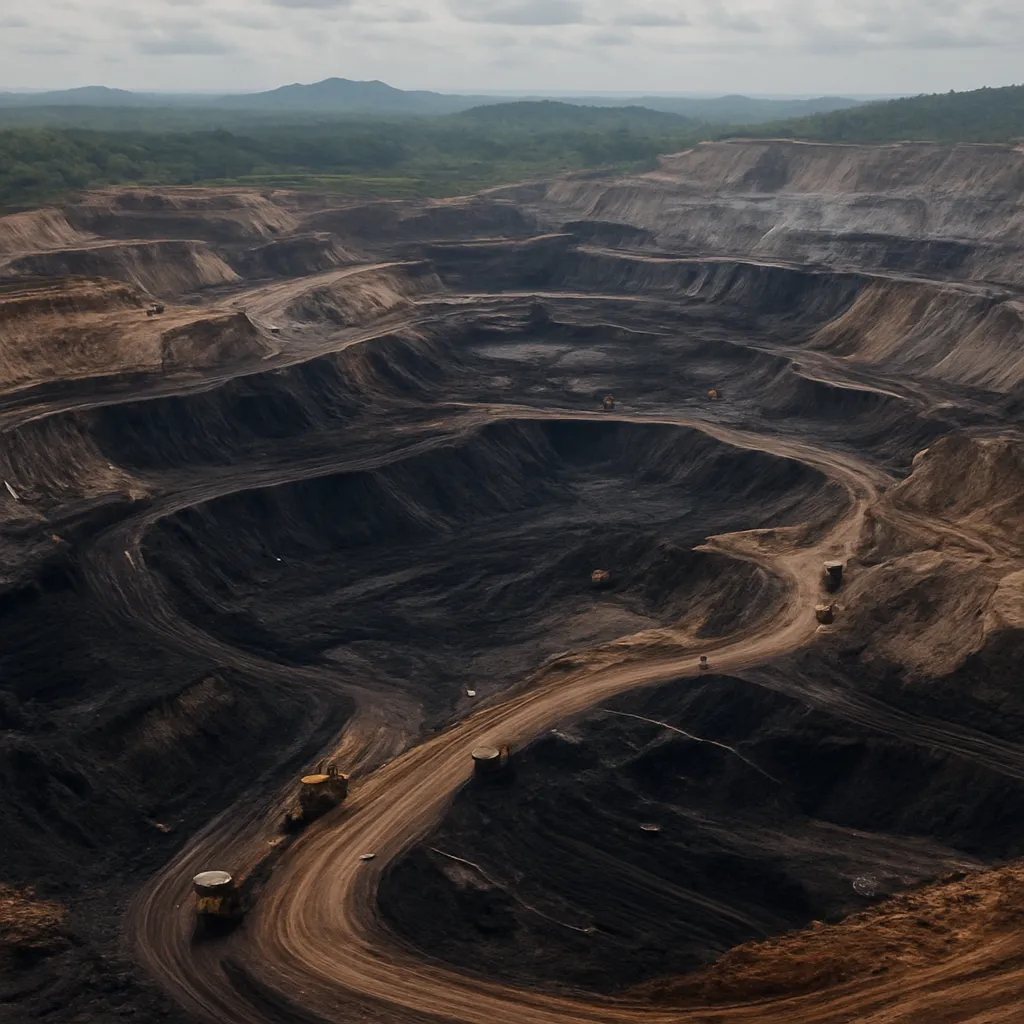
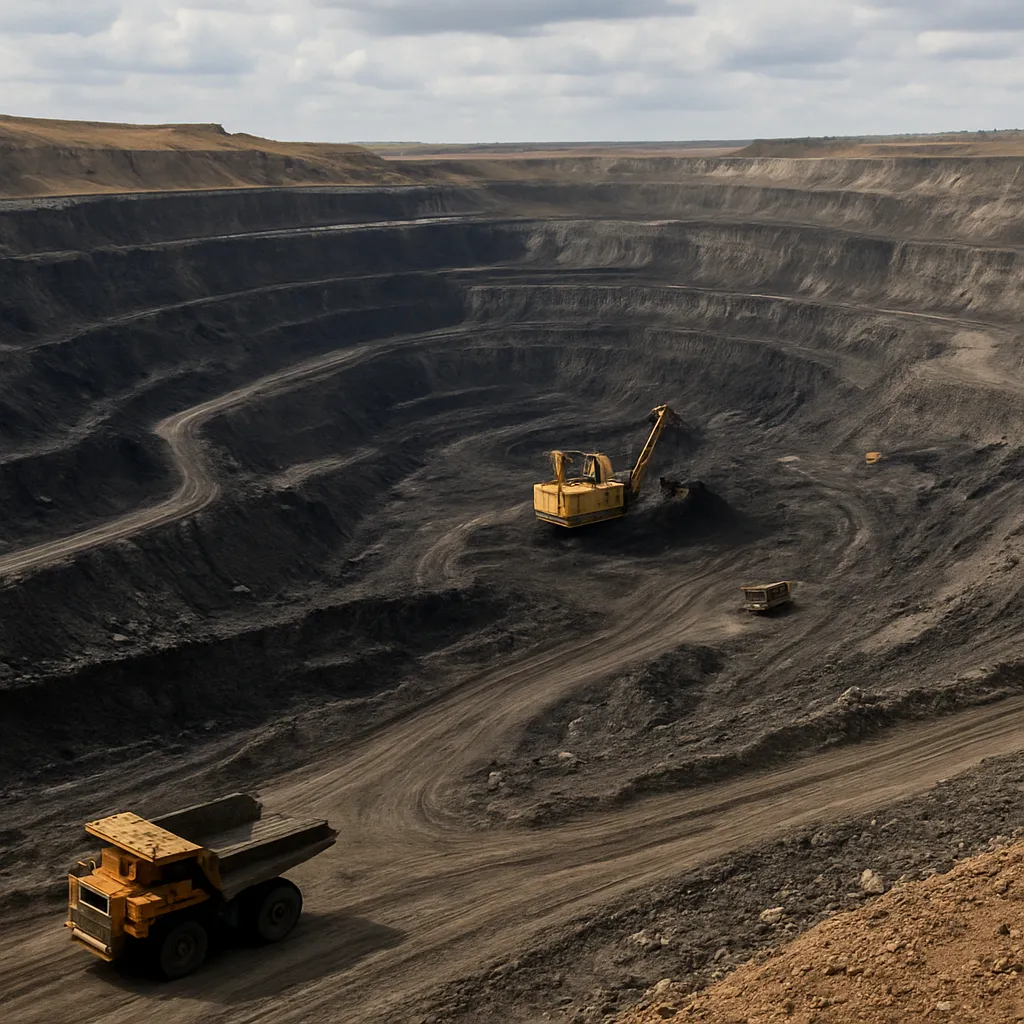
Most of the Korba mining activity is dominated by open-cast or surface mining methods. Open-cast mining is favored because the coal seams are relatively near the surface and are laterally extensive, allowing for large-scale mechanized extraction with relatively low unit costs. Typical equipment includes bucket-wheel excavators, draglines, high-capacity shovels, heavy haul trucks, conveyor belts, and large-scale drilling and blasting systems where needed. These mines frequently operate 24/7 during peak phases to meet contractual obligations to thermal power plants.
Washing and beneficiation facilities are integral to some operations. Because much of the coal has relatively high ash content, coal washeries are used to improve calorific value and reduce impurities for sensitive end-users such as thermal power stations with higher emission and efficiency standards. Rail sidings and dedicated freight corridors link the mines to local and national grids to ensure dependable movement of bulk cargo.
Coal Quality, Classification and End Uses
The coal extracted from Korba is principally thermal coal, intended for combustion in steam turbines rather than for coking in steel production. In terms of Indian coal classification, Korba coals are often categorized as sub-bituminous to medium-volatile bituminous varieties, with the following general characteristics:
- Calorific value: typically ranging from about 2,800 to 5,000 kcal/kg on an as-received basis (values vary by seam and washery treatment).
- Ash content: often high by global standards, commonly in the range of 25–40% or more in raw form, though washery-treated coal can have substantially lower ash.
- Moisture and volatile matter: variable, generally consistent with Gondwana coals of central India.
- Sulfur content: usually moderate to low, which helps limit certain types of emissions but does not offset ash-related issues.
Primary end uses center on electricity production. The Korba region itself hosts several large thermal power stations — including central- and state-operated plants — which are often the primary recipients of locally produced coal. Industries in the area include aluminium smelters, cement plants, ferroalloy units and other energy-intensive manufacturing, all of which rely heavily on steady coal supplies. While most of the coal is consumed domestically, limited quantities may be allocated for interstate transfer by rail to meet demand elsewhere, but exports from Korba are minimal due to lower calorific values and high ash levels compared with seaborne coal benchmarks.
Economic and Statistical Profile
Korba is widely recognized as one of the economic hubs of Chhattisgarh because its coal mines feed the power generation capacity and energy-intensive industries that underpin regional development. The coalfield contributes to employment, public revenue, and industrial growth in several ways:
- Direct employment in mines and ancillary units (maintenance, haulage, logistics, washeries, safety and environmental operations).
- Indirect employment generated by supporting services: transport, hospitality, retail, and small-scale manufacturing.
- Contributions to state and central revenues through royalties, taxes, and production-linked payments.
- Supply security for base-load thermal power plants, which in turn power industry, agriculture and households across the grid.
Statistically, the Korba Coalfield is among the higher-producing coalfields within the SECL portfolio. While production figures fluctuate year to year depending on demand, maintenance, and environmental constraints, commonly reported ranges for major mines are as follows (note these are indicative ranges and may change with new planning or expansions):
- Gevra Mine: historically reported annual production in ranges that have approached 30–50 million tonnes in peak years, making it one of the largest single-mine contributions to coal output in the region.
- Kusmunda Mine: annual production commonly reported in the order of 8–15 million tonnes, depending on phased expansions and dispatch requirements.
- Dipka Mine: production has varied but has been significant, often in the low tens of millions of tonnes in capacity terms when operating at full tilt.
At the aggregate level, the Korba mining area — combining all major pits — supplies a substantive fraction of Chhattisgarh’s coal output and a meaningful share of SECL’s total production. Coal produced in Korba feeds both nationally administered plants operated by entities such as NTPC and state or corporate captive plants (including private aluminium smelters and other heavy industries). The economic multiplier effect of coal production in the region is substantial: electricity availability attracts industry, which in turn creates jobs and broadens the tax base.
Revenue flows from coal include royalties and taxes, as well as corporate spending on local procurement, land resettlement and social investment programs. For many years, state authorities and Coal India subsidiaries have recorded Korba as a strategic producer supporting India’s growing baseline electricity demand, although the precise fiscal contribution varies annually with market and policy conditions.
Environmental, Social and Regulatory Considerations
Large-scale open-cast mining in Korba has brought economic benefits but also environmental and social challenges. Key impacts and mitigation measures include:
- Land use and displacement: Surface mining requires large areas, and acquisition of agricultural or forestland has led to displacement of communities. Rehabilitation and resettlement programs have been implemented with varying success; modern practice emphasizes rehabilitation plans, livelihood programs, and community engagement.
- Air quality: Dust from excavation, haul roads and coal handling contributes to local particulate pollution. Mines use measures such as water spraying, covered conveyors, and greenbelt development to limit dust. Nearby power plants can also contribute to air emissions if flue gas treatment systems are lacking or underperforming.
- Water resources: Mining operations alter local hydrology and can affect groundwater levels and water quality. Controlled dewatering, treatment of mine effluents and measures to prevent siltation are commonly applied.
- Waste management: High ash content means coal combustion and processing yield large volumes of ash and reject material. Proper ash disposal, use of ash in cement and construction, and long-term management of tailing ponds are critical environmental tasks.
- Biodiversity and forest cover: Mining in and near forested areas necessitates compensatory afforestation and biodiversity management plans as part of environmental clearances.
- Occupational health and safety: Mechanized mines have reduced some historic hazards but other risks remain: heavy machinery accidents, dust-related respiratory diseases, noise, and heat stress. SECL and other operators maintain safety protocols, but continuous monitoring is required.
Regulatory oversight by central and state environmental bodies shapes how mines operate, with environmental clearances often dependent on proposals for mitigation and community development. Corporate social responsibility (CSR) programs are also a major channel through which mining companies invest in local health, education, water supply and infrastructure projects to offset adverse impacts and build local goodwill.
Strategic Importance and Future Outlook
Korba’s coal output remains strategically important for India’s energy security. Several factors shape the future outlook for the coalfield:
- Domestic energy demand: Despite a strong national push to expand renewables, the Indian power system continues to rely on coal for a major share of base-load generation. As long as this demand persists, Korba will remain a key supplier.
- Modernization and efficiency: Investments in equipment upgrades, digitalization, predictive maintenance and improved mine planning can raise productivity and lower unit costs while reducing environmental footprints.
- Coal quality improvements: Coal washing and blending can improve calorific value and reduce ash. The development of additional beneficiation capacity could enhance the value of coal from the region and expand its market reach.
- Clean-coal technologies: Adoption of technologies such as flue gas desulfurization, electrostatic precipitators, and more advanced emission controls at receiving power stations helps reduce the environmental externalities associated with Korba coal consumption.
- Alternative uses and value addition: Potential exists for increased utilization of coal-to-chemical pathways, coal gasification for syngas production, and exploration of coal-bed methane (CBM) reserves where geology permits. However, these require capital investments and supportive policies.
- Policy and transition pressures: Long-term policy goals for decarbonization and renewed focus on renewables create downward pressure on coal demand. Nevertheless, the transition is expected to be gradual; coalfields like Korba will likely be part of the energy mix for decades, albeit with a shifting role and possibly lower absolute volumes over time.
Investments in mine rehabilitation, community development and cleaner technology at both the mine and plant ends can prolong the productive life of the coalfield while reducing environmental impacts. A key balancing act for policymakers and operators will be to reconcile short-to-medium-term energy and economic needs with long-term climate and sustainability objectives.
Interesting Facts and Local Context
Beyond the technical and economic descriptions, Korba has a cultural and social identity shaped by its industrial profile. Some notable points:
- Korba is often described as one of Chhattisgarh’s industrial heartlands, sometimes called the “power capital” of the state, because of the concentration of thermal power stations and allied industries.
- The Gevra mine’s scale has attracted attention in national and international discussions about large surface mining operations, both for its productivity and for the challenges such operations pose for landscape management and community relations.
- Local economies are diversified around mining: while a substantial share of jobs and incomes link to coal, agriculture, small businesses and service industries provide livelihoods for many households.
- Efforts at corporate social responsibility by mine and plant operators have supported health camps, schools, road improvements, and skill-training centers, though community opinion on effectiveness varies.
Summary
The Korba Coalfield occupies a central place in India’s coal economy: it provides large volumes of thermal coal to neighboring power plants and industries, supports local and regional employment, and contributes to the fiscal base of Chhattisgarh. Major mines such as Gevra, Kusmunda and Dipka exemplify large-scale open-cast mining operations run by entities such as SECL. While Korba’s coal is generally high in ash compared with international benchmarks, local beneficiation and the proximity of heavy consumers make it economically valuable. Environmental and social challenges are significant and require ongoing mitigation, improved governance and investment in cleaner technologies. Looking forward, Korba is likely to remain important for India’s energy needs during the transition to a lower-carbon future, provided that modernization, environmental management, and community engagement continue to evolve alongside production.