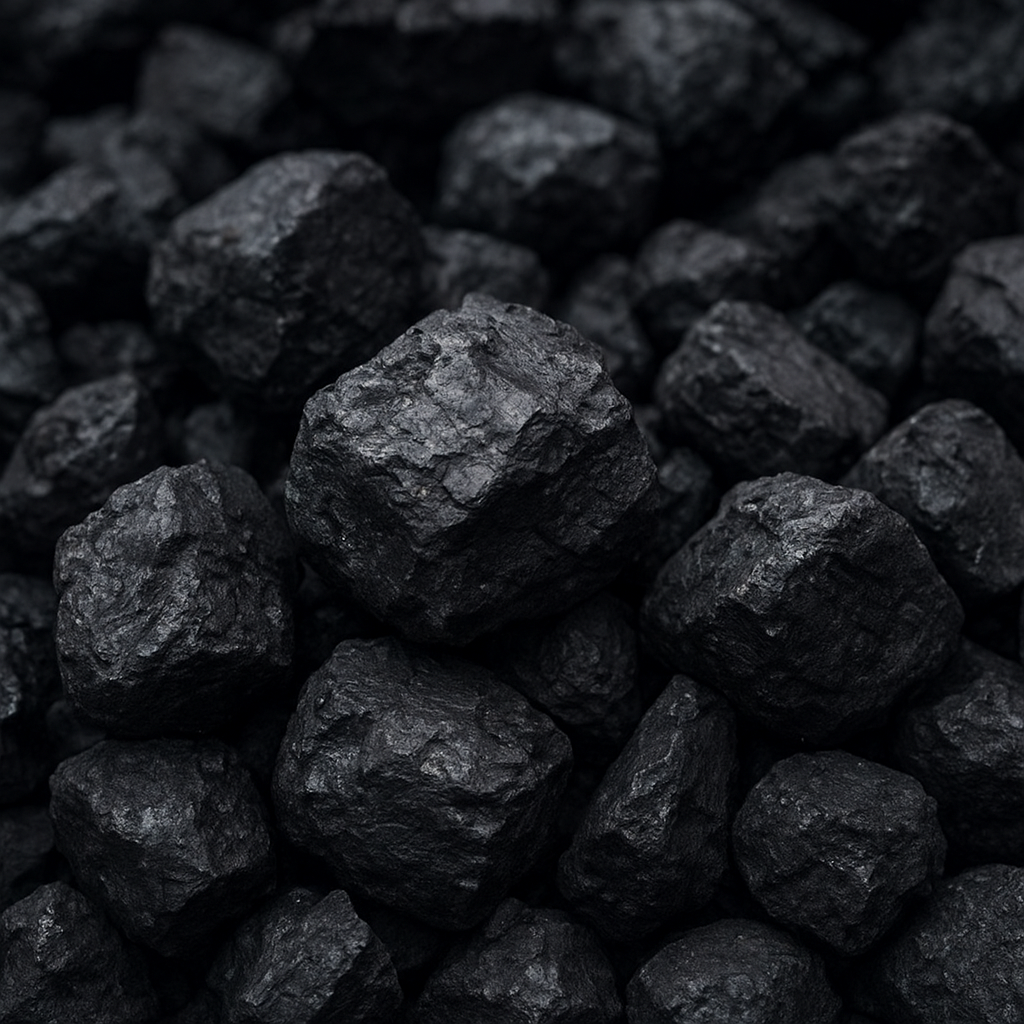
Industrial steam coal — commonly called thermal coal — remains a cornerstone of global energy systems and heavy industries despite growing pressure from decarbonisation policies. This article examines what industrial steam coal is, where it occurs and is mined, its economic and statistical footprint, its industrial applications, environmental implications, and technological responses shaping its future. The analysis draws on global trends and regional specifics to give a comprehensive view of the role steam coal plays in the modern economy.
What is industrial steam coal and how is it classified?
Industrial steam coal is a grade of coal primarily used to generate heat and electricity in power plants and for various industrial processes. Unlike metallurgical (coking) coal used in steelmaking, steam coal is burned to produce thermal energy. Key measurable properties that define steam coal quality include calorific value (energy content), volatile matter, ash content, and sulfur content. Typical energy values for steam coal fall roughly in the range of 15–30 MJ/kg (about 3,600–7,200 kcal/kg), with many commercially traded grades concentrated between 18–25 MJ/kg.
Steam coal is often classified by:
- Calorific value (high, medium, low energy)
- Ash content (affecting disposal and boiler slagging)
- Sulfur content (affecting SO2 emissions and flue gas treatment needs)
- Moisture and volatile matter (affecting combustion characteristics)
Geology and major producing regions
Coal forms in sedimentary basins from accumulated plant matter subjected to heat and pressure over geological time. Steam coal deposits are widely distributed in sedimentary basins across the world, often in layers (seams) of varying thickness. Major geological provinces and basins that host industrial steam coal include:
Asia
- China — extensive coalfields in Shanxi, Inner Mongolia, Shaanxi and Ningxia. China is by far the largest producer and consumer of coal globally and relies heavily on steam coal for electricity generation and industrial heat.
- India — coal basins such as Jharkhand, Odisha, Chhattisgarh and West Bengal supply primarily domestic power and industry demand.
- Indonesia — significant thermal coal production for export from Kalimantan and Sumatra.
Oceania
- Australia — major steam coal basins in Queensland and New South Wales (e.g., Bowen Basin) that supply both domestic use and large export volumes, especially to Asian markets.
North America
- United States — key thermal coal basins include the Powder River Basin (PRB), Appalachian Basin and Illinois Basin. PRB steam coal is known for low sulfur and low cost per unit energy.
Europe and Central Asia
- Russia — Kuznetsk Basin (Kuzbass) and other regions produce significant volumes of thermal coal for domestic use and export.
- Poland and the Czech Republic — historically important coal-producing countries with many steam coal mines tied to power generation.
Africa
- South Africa — Mpumalanga and other provinces supply both domestic power stations and some exports.
These regions underpin global supply chains; countries such as China and India are the largest consumers, while Australia, Indonesia, Russia and the United States are among the major exporters of thermal coal.
Global production, trade and reserves — statistics and trends
At a global scale, coal remains one of the most extracted fossil fuels. While exact figures vary by source and year, key trends observed through the early 2020s include a period of stable-to-rising production and heightened market volatility associated with energy crises, geopolitical events and demand shifts in Asia and Europe.
- Global coal production: Worldwide production of coal (both thermal and metallurgical) has been on the order of several billion tonnes annually. Estimates around the early 2020s commonly place annual production in the range of approximately 7–8 billion tonnes. A substantial portion of this is thermal (steam) coal, which typically accounts for the majority of consumption by mass.
- Major producers: China is the largest producer by a wide margin (producing multiple billion tonnes annually), followed by India, the United States, Indonesia and Australia. These five account for a very large share of global output.
- Trade flows: Thermal coal is a major commodity in international trade. Top exporters include Australia, Indonesia, Russia and the United States, while major importers are China (despite large domestic production, China also imports steam coal for specific grades), India, Japan, South Korea and some European countries when market conditions require.
- Reserves: Proven recoverable coal reserves globally are measured in the order of around 1 trillion tonnes (on the order of 10^12 tonnes). At current consumption rates, these reserves represent several decades — in many assessments over 100 years — of supply, although the economic, environmental and political viability of accessing all reserves varies significantly.
Important market indicators for industrial steam coal include benchmark indices such as API2 (ARA, for Northwest Europe) and API4 (Richards Bay, South Africa) prices, as well as spot prices and freight conditions that reflect short-term supply-demand balances. In the early 2020s, coal prices experienced spikes due to post-pandemic demand recovery, supply constraints, and the energy supply shock following Russia’s invasion of Ukraine, which briefly increased European demand for coal as an alternative to curtailed natural gas supplies.
Economic significance and industrial applications
Steam coal supports multiple sectors of the economy and provides a reliable source of baseload and dispatchable power in many systems. Key economic and industrial roles include:
- Electricity generation: The dominant use of steam coal is in thermal power plants. In several countries coal-fired generation remains the single largest source of electricity. Coal’s role varies by region — in some advanced economies coal’s share has declined due to renewables and gas, while in other regions growing demand has kept coal central.
- District heating and industrial heat: Steam coal supplies heat for manufacturing processes, cement production, brick kilns, and district heating networks.
- Fertilizer, chemicals and other industries: Some process heat applications rely on coal directly or on power generated from coal.
- Employment and regional economies: Coal mining can be a major employer and forms the economic base for many mining towns and regions, creating complex social and political considerations for transition policies.
From a macroeconomic perspective, thermal coal trade contributes to export revenues for producing countries such as Australia and Indonesia. Price swings can significantly affect national incomes in export-dependent regions and alter the economics of domestic power generation where coal competes with gas, hydro and renewables.
Environmental impacts and regulatory context
Combustion of steam coal produces carbon dioxide (CO2), oxides of sulfur (SOx), nitrogen oxides (NOx), particulate matter and ash residues. Consequently, coal is a major contributor to air pollution and climate forcing. Some high-level points:
- CO2 emissions: Coal is the largest single fossil fuel source of energy-related CO2 emissions. Although the relative share moves with fuel switching and efficiency gains, coal-fired generation historically accounts for a large portion of the global energy-sector carbon footprint.
- Local air quality: Emissions of sulfur dioxide and particulates from coal plants can harm health, driving regulatory limits and investment in flue gas desulfurisation (FGD), selective catalytic reduction (SCR) and particulate control technologies.
- Ash and waste: Combustion produces fly ash and bottom ash that require disposal or utilisation (e.g., cement blending), with environmental management challenges.
Policy landscapes are changing: many high-income countries have schedules to phase out or sharply reduce coal in power generation, while emerging economies balance energy security, affordability and development objectives. Carbon pricing, emissions standards, and finance restrictions on coal projects are increasingly shaping investment decisions and operational lifetimes of coal assets.
Technological responses — efficiency, flexibility and mitigation
To reduce the environmental footprint of coal-fired systems and improve competitiveness, a range of technologies and operational practices are used:
- Efficiency improvements: Supercritical and ultra-supercritical steam cycles raise thermal efficiency of coal plants, reducing CO2 per MWh compared with older subcritical plants.
- Flexibility measures: As variable renewables increase, coal plants are retrofitted to operate flexibly (faster ramp rates, cycling capability) to complement renewable generation rather than run baseload-only.
- Emissions controls: FGD for SO2, SCR for NOx, and advanced particulate capture are widely employed in regions with stringent air quality rules.
- Carbon Capture and Storage (CCS): CCS applied to coal plants can abate CO2 emissions substantially. However, CCS deployment remains limited due to cost, infrastructure and storage challenges. Demonstration and commercial projects exist, and CCS is often discussed as part of strategies to decarbonise industrial heat and power where alternatives are constrained.
- Co-firing and fuel blending: Co-firing coal with biomass or waste-derived fuels can reduce net CO2 intensity and is used experimentally or operationally in some plants.
Market dynamics and recent trends
Market behaviour for industrial steam coal is influenced by several interacting factors:
- Demand-side drivers: Economic growth, electrification rates, industrial activity (cement, chemicals), and seasonal weather all affect demand for thermal coal.
- Supply-side factors: Mine output constraints, regulatory approvals, transport bottlenecks (rail and ports), and labor issues can tighten supply and push prices up.
- Fuel competition: Liquefied natural gas (LNG), domestic gas, renewables and storage technologies influence coal’s competitiveness for power generation. Regions with cheap gas or rapid renewable buildout tend to reduce coal consumption faster.
- Geopolitics and trade policy: Export restrictions, bans, or tariffs can reshape trade flows; for instance, temporary export curbs or changes to rail allocation can have immediate price effects in importing regions.
In the early-mid 2020s, coal markets showed resilience in parts of Asia where demand continued or even grew, while in many OECD countries coal use contracted. Price volatility has been a defining feature, sometimes driven by short-term weather shocks, fuel substitutions and geopolitical events.
Socioeconomic and policy challenges: transition and just transition
Moving away from coal raises complex socioeconomic challenges. For many communities, coal mining and coal-fired power are major employers and tax bases. Effective policy approaches often include:
- Just transition policies to support displaced workers through retraining, income support and local economic diversification.
- Investment in alternative industries and infrastructure to replace jobs and tax revenues.
- Phased closures coordinated with energy system planning to ensure reliability (especially in regions where replacements for dispatchable coal generation are limited).
- Financial and technical assistance for developing countries to modernise plants, adopt emissions controls or transition to lower-carbon alternatives.
Balancing climate commitments, development needs, and energy affordability is the core policy dilemma in countries where coal remains central.
Interesting facts and sectoral relationships
- Steam coal is sometimes blended with other fuels in industry to optimise costs and emissions.
- Coal remains a widely available resource in many countries, which is why it continues to appear in national energy strategies as a tool for energy security.
- Technologies developed for coal plants — such as large-scale boilers, turbines and flue gas treatment — have driven advances in heavy engineering and large-scale project execution.
- Large coal-fired plants often form part of integrated industrial clusters (power, chemicals, mining) where logistics and shared services increase economic efficiency.
- International benchmarks and shipping costs mean that coal grades with special characteristics (e.g., low sulfur, high energy) can command premium prices in specific markets.
Outlook — near-term and long-term perspectives
Near-term outlooks typically foresee continued regional divergence: in advanced economies, a steady decline in coal-fired power accelerated by renewables and gas; in parts of Asia and Africa, coal use may persist or grow as governments prioritise reliable, affordable energy for development. Over the longer term, strong climate policies, falling costs for renewables and storage, and potential deployment of CCS will determine how much coal can remain in the energy mix consistent with international climate targets.
Key factors to watch include:
- Rates of renewable energy deployment and grid integration measures
- Affordability and availability of alternative fuels such as natural gas and hydrogen
- Policy decisions on carbon pricing and plant retirement schedules
- Investment flows into coal mining and coal-fired generation versus low-carbon alternatives
- Technological advances and cost trajectories for CCS and negative emissions technologies
Concluding summary
Industrial steam coal remains a pragmatic, widely used source of thermal energy underpinning power systems and industry in many parts of the world. It is characterised by regional geological endowments, a significant global production and trade network, and substantial implications for economies and environments. While long-term trends point toward structural decline in many markets due to clean energy transitions, steam coal will likely continue to play a role for years to come — shaped by policy choices, technological change and the pace of economic development in coal-dependent regions.


