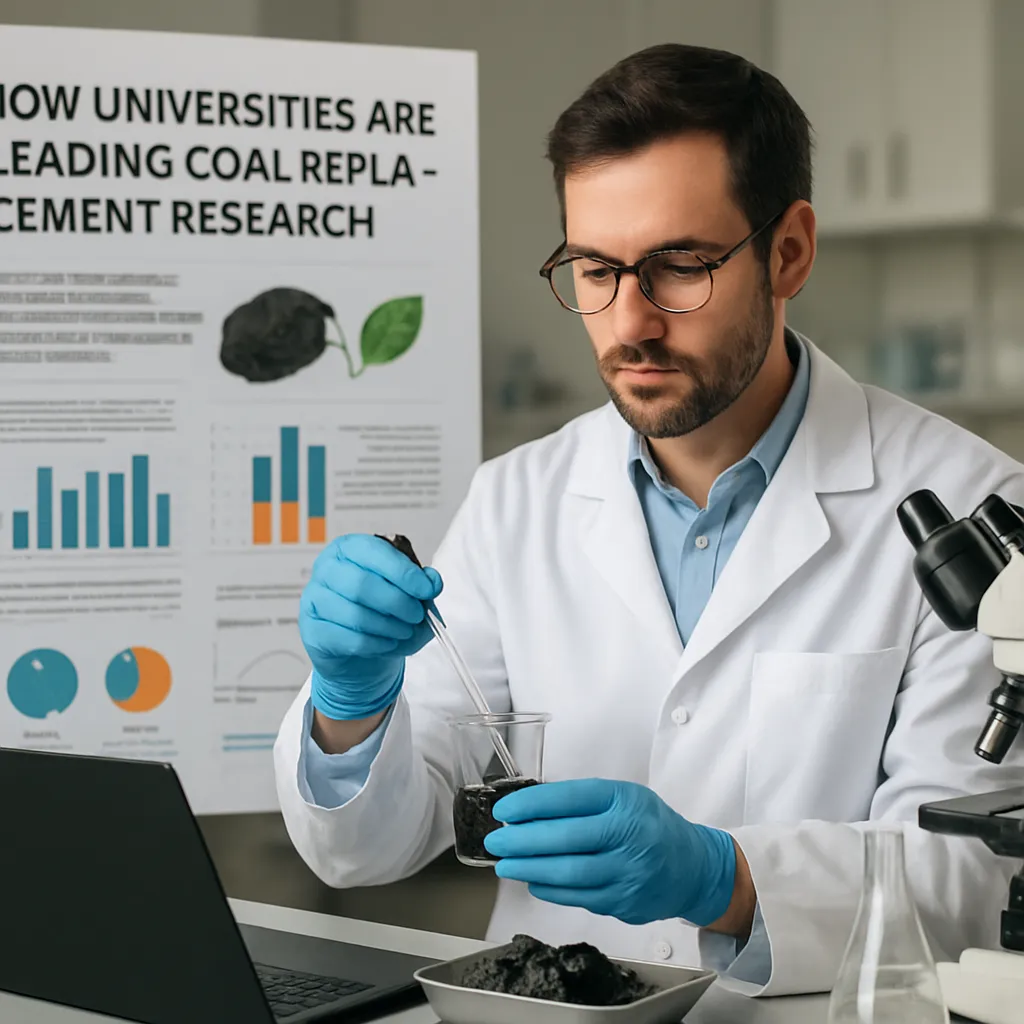
Universities around the globe are transforming the dialogue on coal by spearheading initiatives that identify alternatives, optimize existing stocks, and minimize the environmental footprint of power generation. Collaboration across academic departments, government agencies, and industry partners has led to breakthroughs in materials science, renewable integration, and socio-economic analysis. This article explores how higher education institutions are driving change in the coal sector, assessing current stock management practices, and charting a path toward low-emissions futures.
Coal’s Historic Role and Environmental Impacts
Coal has played a pivotal role in the development of modern industrial societies. From powering factories during the Industrial Revolution to fueling large-scale energy grids in emerging economies, its abundance and energy density made coal the backbone of growth for centuries. However, this reliance has come at a high cost:
- Air pollution leading to respiratory illnesses and premature deaths.
- Greenhouse gas emissions driving global climate change.
- Land degradation from mining operations and waste disposal.
- Socio-economic disruptions in communities dependent on coal.
With coal still accounting for roughly 35% of global electricity generation, the need to balance sustainability objectives with energy security is more urgent than ever. Universities have seized this challenge by employing multidisciplinary teams to evaluate the full life cycle of coal—from extraction and shipping to combustion and carbon capture.
Universities Pioneering Coal Replacement Strategies
Higher education institutions have access to cutting-edge laboratories, computational resources, and student talent, all of which fuel innovation in coal replacement research. Key areas of focus include:
- Advanced Materials: Developing catalysts for efficient gasification and sorbents for carbon capture, leveraging nanotechnology to boost performance and reduce costs.
- Bio-coal Substitutes: Converting agricultural and forestry residues into briquettes or pellets that mimic coal’s energy density while lowering life-cycle emissions.
- Renewable Integration: Designing hybrid systems where solar, wind, or hydropower complement existing coal plants to smooth out intermittency and reduce overall coal consumption.
- Energy Storage: Innovating battery chemistries and thermal storage solutions tailored to power plants, enabling flexible, dispatchable alternatives to coal baseload.
By testing prototypes in real-world pilot plants and validating strategies under operational conditions, universities are closing the gap between fundamental science and commercial deployment. Partnerships with national labs accelerate technology transfer and pave the way for demonstration projects at utility scale.
Financial Markets and Coal Stock Valuation
As the energy transition gains momentum, investors are reevaluating coal companies’ prospects. University-led economic analyses and risk models are helping stakeholders understand:
- Stranded asset potential under varying policy scenarios (carbon taxes, emissions trading schemes, renewable mandates).
- Price volatility drivers, including regulatory shifts, supply chain constraints, and geopolitical factors.
- Long-term profitability forecasts for coal producers versus diversified energy firms.
- Sustainability criteria in environmental, social, and governance (ESG) frameworks.
Academic research centers dedicated to economics and finance are publishing whitepapers and hosting symposiums that bring together analysts, fund managers, and company executives. These dialogues inform capital allocation trends, influence stock valuations, and shape the risk profiles of coal portfolios. Equipped with robust data and scenario tools, investors can gauge which assets are on a path to obsolescence and which may adapt through clean technologies or service diversification.
Emerging Technologies and the Path Forward
The transition away from coal hinges on scalable, cost-effective innovations. Universities are at the forefront of several promising avenues:
- Green Hydrogen Production: Utilizing biomass gasification or renewable-powered electrolysis to produce hydrogen that can replace coal-derived syngas in steelmaking and power generation.
- Carbon Capture, Utilization, and Storage (CCUS): Engineering advanced solvents, membranes, and mineralization processes that lock away CO₂ or convert it into useful products such as concrete additives and synthetic fuels.
- Digitalization and AI: Applying machine learning to optimize plant operations, predict maintenance needs, and integrate variable renewables with legacy coal infrastructure.
- Geothermal Hybrid Systems: Investigating the co-location of geothermal wells with retiring coal facilities, leveraging existing grid connections while providing baseload renewables.
These technologies not only address the technical hurdles of coal replacement but also consider community impacts. Universities conduct social science research to ensure that workforce redeployment, economic diversification, and environmental justice issues are central to project design. Engaging with local stakeholders, indigenous groups, and labor unions ensures that the benefits of transition are shared equitably.
Conclusion
By uniting expertise in engineering, environmental studies, public policy, and economics, universities are charting a comprehensive approach to coal replacement. Their work on research and development, combined with financial modeling and community engagement, lays the groundwork for a cleaner, more resilient energy landscape. As their findings move into pilot and commercial phases, coal-fired power’s dominance will dwindle in favor of diversified, low-emission solutions that ensure both energy security and environmental stewardship.