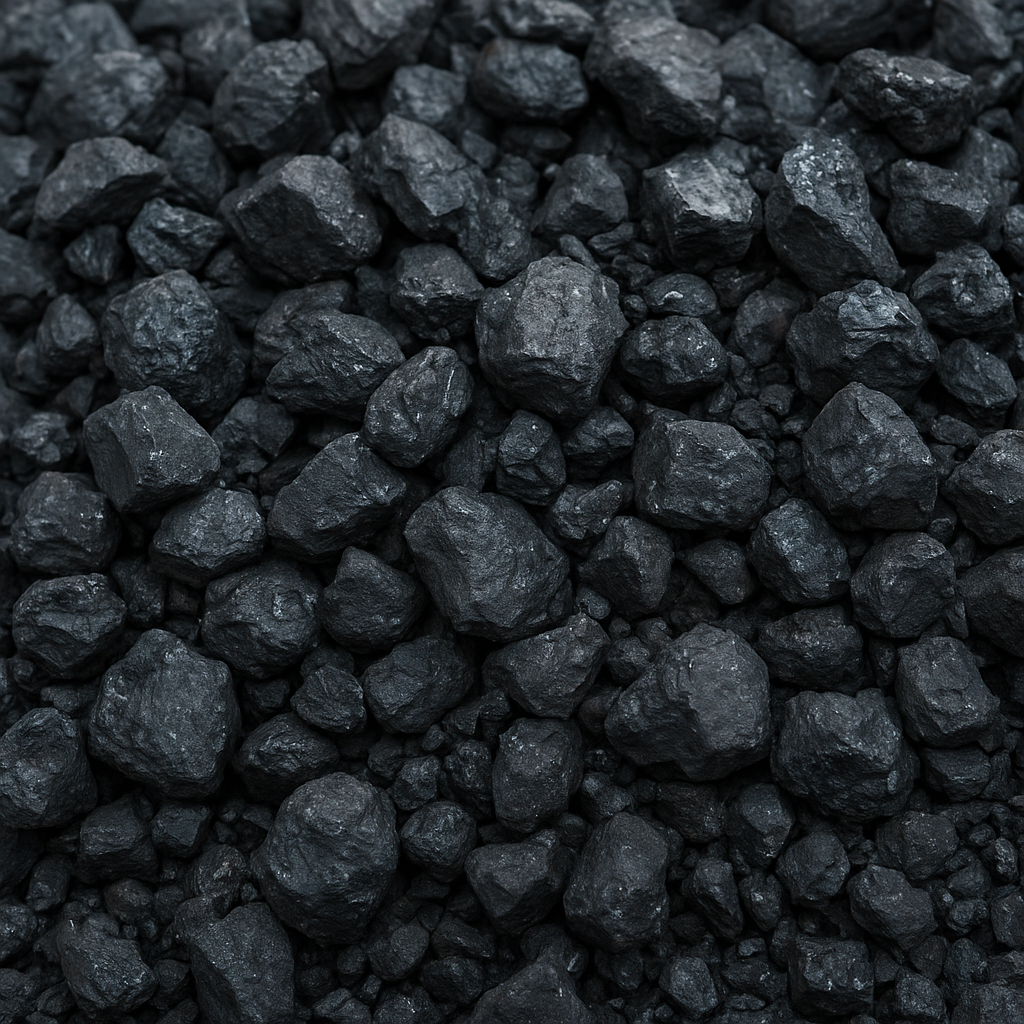
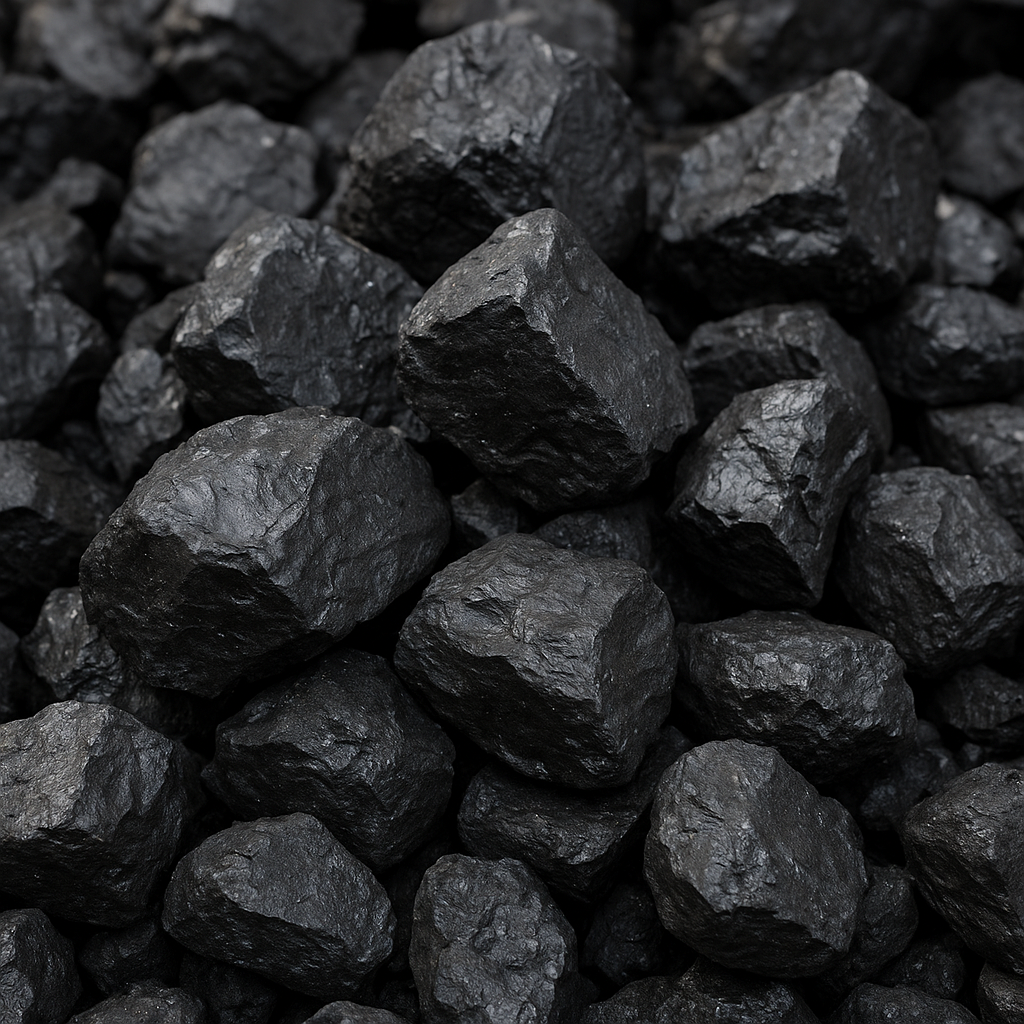
Hard coking coal is one of the most important raw materials in traditional iron- and steelmaking. Unlike thermal coal used mainly for power generation, this specialised grade of coal is processed into strong, porous solid fuel called coke, which provides both the chemical reducing agent and the physical support required in a blast furnace. The following article examines the geological nature, global distribution, mining and processing methods, economic significance, and the technological and environmental trends shaping the future of hard coking coal. Throughout the text several technical and commercial aspects are highlighted to give a comprehensive picture for industry professionals, policy makers and interested readers.
Geological characteristics and coke-making properties
What is hard coking coal?
Hard coking coal is a rank of bituminous coal characterised by specific physical and chemical properties that enable it to soften, swell and resolidify during heating to form a coherent, porous, and mechanically strong mass called coke. This coke is vital for the blast furnace route to iron production because it provides both a metallurgical reducing agent (carbon) and a rigid, permeable bed through which gases can move.
Chemical and physical indices
Quality assessment of hard coking coal relies on a set of technical indices derived from standardised laboratory tests. Important parameters include:
- Fixed carbon and volatile matter percentages (volatile matter is typically lower than in lower-grade coals, often in the range of roughly 15–30% depending on coal origin).
- Ash content and sulphur content (low ash and low sulphur are preferred to reduce impurities in coke and iron).
- Gieseler plastometer fluidity — measures plastic range and maximum fluidity during heating.
- Free swelling index (FSI) and the coke quality indices: Coke Reactivity Index (CRI) and Coke Strength after Reaction (CSR), which together indicate how coke resists chemical reactivity and mechanical degradation in the blast furnace environment.
Premium “hard coking coal” ranks above “semi-soft” and “weak” coking coals in terms of ability to yield high-strength coke with good CSR values. Blending of different coals is common to achieve target coke properties.
Where it occurs and major producing regions
Global geological settings
Most coking coals are found in Carboniferous, Permian and younger basins where ancient plant material accumulated and under went burial, compaction and coalification. Hard coking coal deposits are commonly located in deeper, higher-grade strata of bituminous basins.
Major producing regions and basins
Hard coking coal is mined in many countries; some of the most notable sources include:
- Australia — especially Queensland’s Bowen Basin and New South Wales’ Hunter Valley. Australia is the dominant supplier on the seaborne market and exports large volumes to East Asian steelmakers.
- Russia — significant volumes originate in the Kuznetsk Basin (Kuzbass), the Far East and parts of Siberia. Russia has historically been a major exporter of metallurgical coal.
- United States — Appalachian region and Illinois Basin produce coking coals serving local integrated steel plants and export markets.
- Canada — metallurgical coal operations primarily in British Columbia (e.g., Elk Valley).
- Colombia — important seaborne exporter of both thermal and metallurgical coals.
- China — large domestic production is consumed by local steel industry; China also imports high-quality coking coals to supplement domestic grades.
- Ukraine and Poland — traditional European sources located in Donbas and Upper Silesia respectively; these coals supported large regional steel industries.
- South Africa and Mongolia — both have deposits that feed domestic steelmaking and, in Mongolia’s case, exports to China.
Seaborne trade is dominated by a few exporters (notably Australia and Russia), while a handful of importers (China, Japan, South Korea, India) take the bulk of cross-border shipments. Many steel-producing countries also rely on domestic coking coal resources to reduce exposure to volatile global markets.
Mining methods and coke production
Extraction: open-pit and underground
Mining techniques for hard coking coal are chosen based on geology, seam depth and economics:
- Open-pit (surface) mining is used where seams are shallow and lateral continuity permits removal with large-scale earthmoving equipment; common in parts of Australia and Colombia.
- Underground mining (longwall, bord-and-pillar) dominates in deeper, more structurally complex basins such as Poland, Ukraine and parts of Russia and the U.S. Appalachians.
Processing and coking
Once extracted, coking coal undergoes beneficiation to remove impurities (washing to reduce ash and sulphur) and size classification. The treated coal is then blended to meet the stringent feed specifications of cokemaking plants. Traditional coke manufacture occurs in by-product or non-recovery coke ovens, producing:
- Metallurgical coke — the essential solid reducing agent used in blast furnaces.
- Coke oven by-products — coal tar, ammonia liquor, benzene, toluene and coke oven gas (often used as a fuel or chemical feedstock).
Modern cokemaking plants aim for high process efficiency and environmental control (treatment of oven gases, recovery of chemicals, dust and wastewater management).
Economic and trade aspects
Market size and trade flows
The global coking coal market is closely linked to the iron and steel industry. While precise figures vary year to year, a useful distinction is between total production (including domestic consumption) and the seaborne trade (cross-border shipments). Recent market estimates indicate that:
- Seaborne trade of metallurgical coal commonly ranges in the low hundreds of millions of tonnes per year. Estimates for the tradeable seaborne market in the 2020–2023 period typically span roughly 150–230 million tonnes annually, driven by demand from Asian steelmakers and global trade patterns.
- Australia accounts for the largest share of seaborne exports — commonly exceeding half of global seaborne shipments in many years — serving customers in China, Japan, South Korea and India.
- Other notable exporters include Russia, Canada, the United States and Colombia; importers are led by China, Japan, South Korea and India, each with large integrated steel industries that rely on stable coking coal supplies.
Because much steel production uses locally sourced coal (especially where integrated mines and plants are co-located), global consumption figures exceed the seaborne numbers significantly. Local production and internal logistics are therefore key to national steel competitiveness.
Prices and volatility
Coking coal prices are notoriously volatile. Price drivers include:
- Steel demand cycles: expansions in construction, automotive and infrastructure increase steel output and boost coking coal demand.
- Supply disruptions: mine accidents, weather events (floods), geopolitical actions (sanctions, export controls) can tighten supply rapidly.
- Shifts in trade flows: changes in importing strategy or freight costs can re-route supplies and affect local market prices.
Price spikes occurred in various years (notably post-2016 and in periods around 2021–2023) due to a combination of growing post-COVID steel demand, Chinese restocking, and constraints on supply. Long-term fundamentals, however, are influenced by structural changes in steelmaking as well as energy and environmental policies.
Economic impact
For resource-exporting countries, high-quality hard coking coal is a valuable export commodity that contributes to export earnings, local employment and regional development. For steel-producing economies, a secure and affordable supply of coking coal underpins competitiveness—supply shortages or sudden price rises can increase production costs across downstream industries and influence global steel prices.
Industrial significance and technological trends
Role in steelmaking
Hard coking coal is central to the traditional blast furnace-basic oxygen furnace (BF-BOF) route to steel:
- It is carbonised to produce coke, which acts as a chemical reductant (removes oxygen from iron ore) and as a structural support for the burden in the furnace.
- Coke quality affects furnace permeability, productivity and final iron quality; poor coke increases fuel consumption and can lead to operational problems.
Alternative steelmaking technologies
The steel sector is undergoing technological shifts that could reduce long-term reliance on hard coking coal:
- Electric arc furnaces (EAFs) use scrap steel and electricity; where scrap availability and electricity costs permit, EAFs reduce dependence on coking coal.
- Direct reduced iron (DRI) processes using natural gas or hydrogen produce metallic iron without coke; hydrogen-based DRI is a promising low-carbon pathway but currently limited by hydrogen supply, cost and plant investment needs.
- Pulverised coal injection (PCI) reduces but does not eliminate coke demand by injecting finely ground coal into the blast furnace, lowering the amount of coke required.
Transition scenarios and carbon pricing will play a major role in the pace at which BF-BOF routes are replaced or retrofitted; in many regions BF-BOF remains the dominant process due to existing capital stock and the need for high metallurgical performance.
Environmental, social and regulatory considerations
Emissions and air quality
Cokemaking and blast furnace ironmaking are energy- and carbon-intensive processes. Environmental concerns include:
- CO2 emissions from carbon used in reduction and from fuels—metallurgical coal is a significant source of process CO2.
- Local air pollutants from cokemaking (particulate matter, volatile organic compounds) and mining (dust).
- Water management: both mine water and by-products from cokemaking require treatment.
Regulations in many jurisdictions impose controls on emissions, wastewater and solid wastes from mines and cokemaking plants; these regulations raise compliance costs but also drive innovation in pollution control and recovery of chemical by-products.
Social impacts and mine closure
Coal mining communities can be heavily dependent on mines for employment and local economic activity. Closure or downsizing of hard coking coal operations—whether due to resource depletion, market shifts or decarbonisation policies—poses social challenges requiring careful planning for economic diversification, reskilling and site rehabilitation.
Statistical snapshots and notable recent developments
Contemporary market context (2020s)
The early 2020s saw swings in demand and supply that illustrate the market’s sensitivity:
- Strong post-pandemic recovery in global steel demand, particularly in Asia, led to robust coking coal demand and periods of elevated prices and tight supply.
- Geopolitical events and logistical constraints (e.g., port congestion, rail bottlenecks) intermittently disrupted flows, increasing the premium for high-quality hard coking coal.
- Policy signals on decarbonisation pushed investment interest toward low-emission steel technologies, raising questions about the medium- to long-term structural demand for coking coal.
Indicative numbers and shares (rounded)
While precise annual figures vary, the following ballpark indicators help to frame the market:
- Global primary steel production is in the order of 1.7–1.9 billion tonnes per year in recent years; the BF-BOF route accounts for a large majority of this production, and thus a large share of coking coal consumption.
- Seaborne metallurgical coal trade typically ranges from roughly 150 to 230 million tonnes per year (depending on demand and supply conditions), with Australia often supplying well over half of that total.
- Major importers like China, Japan and South Korea absorb substantial shares; China remains both a major producer and importer to match the quality mix required by its steel industry.
These numbers are indicative and vary annually. Industry publications, national statistical agencies and commodity analysts publish detailed, year-by-year data for operators and analysts requiring precise figure sets.
Challenges, opportunities and the outlook
Short- to medium-term prospects
In the near term, demand for high-quality hard coking coal will continue to be shaped by global steel demand, cyclical economic factors and short-term disruptions to supply. Key opportunities and risks include:
- Investment in mine productivity and logistics can improve supply reliability and reduce unit costs for producers.
- Continued volatility in shipping and energy costs may keep prices variable, motivating steelmakers to secure long-term contracts and diversify supply sources.
- Environmental regulation may increase operational costs for cokemaking and mining, but it also incentivises co-benefit investments in efficiency and emissions control.
Long-term structural change
Over decades, structural shifts could materially reduce the role of hard coking coal in steelmaking:
- Adoption of EAFs and increased recycling reduces the need for virgin iron and therefore coking coal demand.
- Scaling up of hydrogen-based DRI and other low-carbon ironmaking technologies could replace significant BF-BOF capacity if costs and hydrogen supply economics improve.
- Carbon pricing and strict emissions targets may accelerate transitions away from coke-intensive routes in jurisdictions pursuing deep decarbonisation.
However, the capital intensity and long life of existing BF-BOF plants imply the transition will be gradual in many regions; hard coking coal will likely remain relevant for decades, especially where high-quality coke is required and alternative technologies are slow to deploy.
Interesting historical and technical notes
The development of coke-fired iron smelting in the early 18th century (often associated with pioneers such as Abraham Darby in England) was a watershed that enabled higher-scale iron production and powered the industrial revolution. Modern steelmaking has evolved with sophisticated controls on coal blending, cokemaking and furnace operation to improve efficiency and product quality. Advances in sensors, modelling and material science continue to refine the use of coking coal and coke in integrated plants.
Concluding remarks
Hard coking coal remains a strategically significant commodity for the traditional steel industry. Its unique ability to produce strong, reactive coke ties it to the BF-BOF route that continues to supply the majority of global crude steel. Market dynamics are shaped by geological endowments, mining capability, trade logistics and macroeconomic cycles, while the medium- and long-term outlook will be influenced by decarbonisation policies and technology shifts such as electric arc furnaces and hydrogen-based ironmaking. For producers, customers and policymakers, balancing immediate commercial realities with long-term sustainability goals is the central challenge as the steel sector adapts to a lower-carbon future.