The Grootegeluk Coal Mine is one of South Africa’s most significant mining operations, both in terms of scale and strategic importance. Located in the vast Waterberg Coalfield, the mine supplies coal for domestic power generation, regional industry and, to a lesser extent, export markets. Over the decades it has grown from a regional open-pit operation into an integrated complex combining large-scale excavation, beneficiation and logistics. This article examines where Grootegeluk is situated, the types of coal it produces, how it operates, its economic and industrial role, environmental and social impacts, and the longer-term outlook for the mine and the Waterberg basin.
Location, geology and regional context
The Grootegeluk Coal Mine lies in the northern part of South Africa’s Limpopo Province, near the town of Lephalale (formerly Ellisras). It is entrenched in the Waterberg Coalfield, a geologically distinct basin that has become the focus of late-20th and early-21st century coal development in South Africa. The Waterberg differs from the older, more intensively mined Highveld coalfields (in Mpumalanga) because deposits are generally deeper, often thicker and less weathered, and the basin has a lower historical rate of prior disturbance.
Geologically, the Waterberg coal seams are part of a Permian to Early Triassic stratigraphic package. Coal seams in the Grootegeluk area typically vary in thickness and quality across the mine concession, with multiple workable seams that allow selective mining and product tailoring. The coal is generally used as thermal coal for power generation, although some product streams are upgraded through beneficiation to meet varying specifications for industrial or export customers.
Mining methods, processing and infrastructure
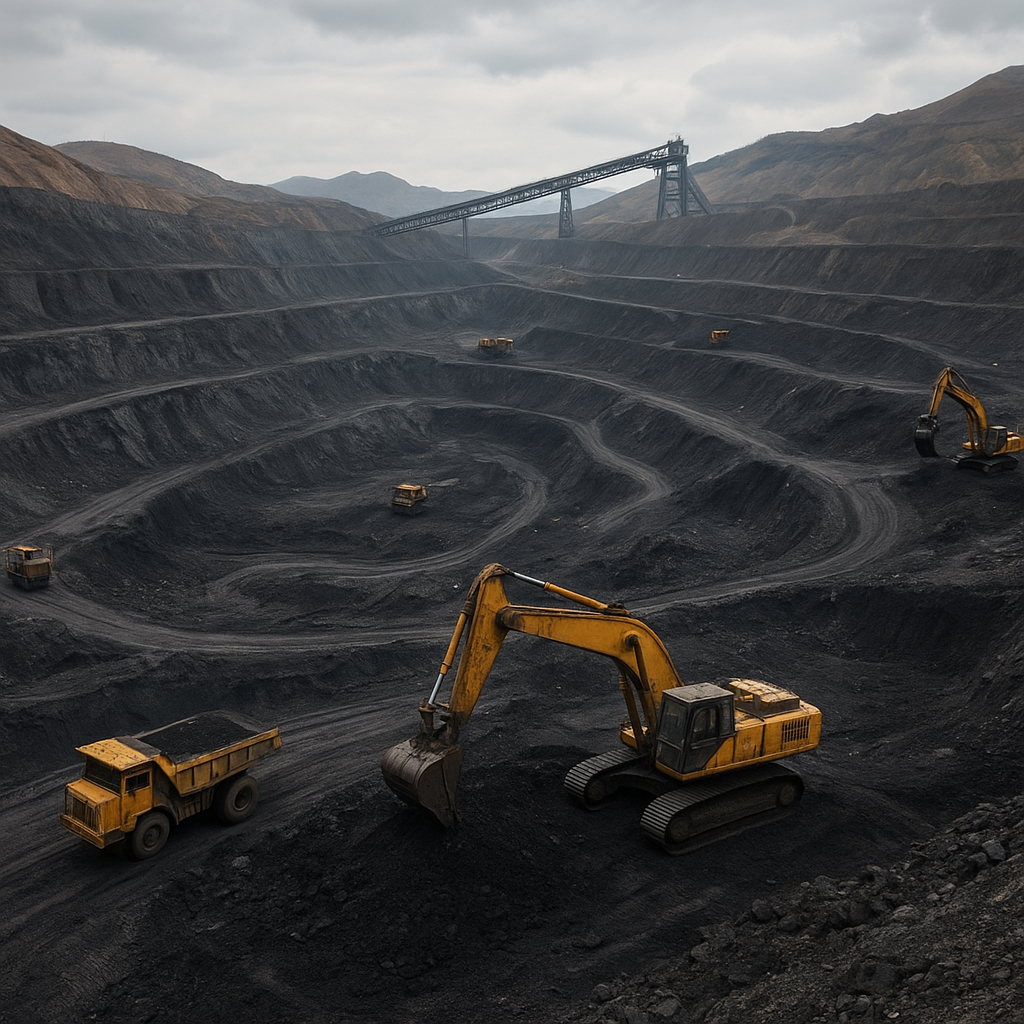
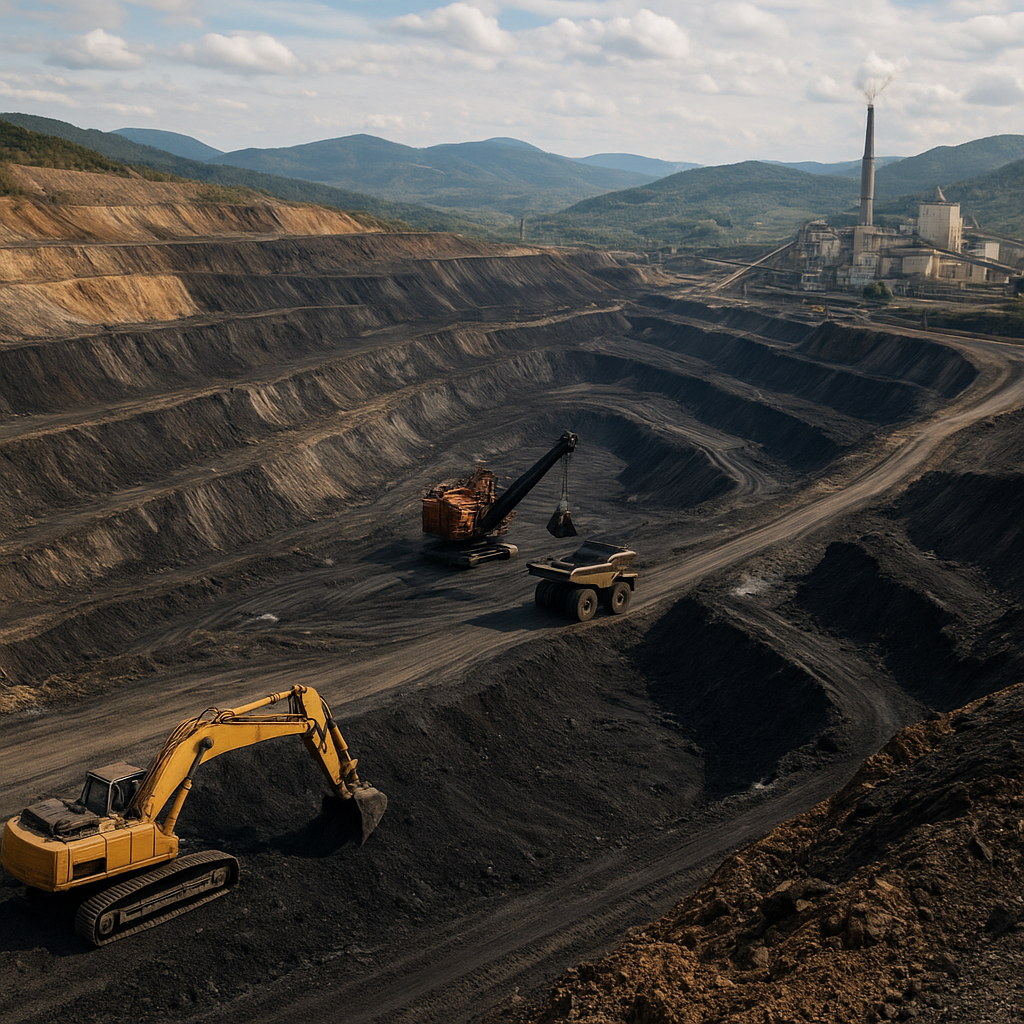
Grootegeluk is an open-pit (opencast) operation using large-scale surface mining techniques. The mine deploys heavy earthmoving fleets — including draglines, large shovels, haul trucks and dozers — to remove overburden and extract coal. Mining is planned on benches with careful sequencing to manage waste rock, water control and rehabilitation obligations. Key operational elements include:
- Overburden removal and pit development using large mechanical equipment.
- Selective excavation of multiple coal seams, allowing blending to meet client calorific and ash specifications.
- On-site beneficiation and washing plants that upgrade run-of-mine coal to varied product grades (sized thermal coal, medium-ash and low-ash products).
- Extensive rail and road logistics enabling supply to large domestic consumers, notably Eskom power stations, and to ports when export is required.
- Stockpile management, dust suppression and water treatment facilities integrated with processing units.
To support South Africa’s power generation, Grootegeluk supplies nearby large-scale coal-fired power stations through rail and conveyor systems. The mine’s logistical network includes dedicated rail links connecting to the national rail network, bulk handling facilities, and internal conveyors for short-distance transfer to adjacent customers or processing plants.
Coal types, quality and product streams
The coal produced at Grootegeluk is primarily used for electricity generation and can be characterized broadly as thermal coal. However, within that category, there are multiple product streams:
- Run-of-mine (ROM) coal: As mined, comprising a mix of seam qualities and sizes.
- Washed or sized thermal coal: Processed to lower ash and moisture and to meet specific calorific value ranges for power station boilers.
- Low-ash, higher-grade fractions: Separated through beneficiation for customers requiring improved combustion properties or lower emissions.
Typical product attributes vary by seam and processing, but Waterberg coal, including Grootegeluk’s output, is often described as having a moderate to high gross calorific value compared with lower-grade coals, with ash and sulphur characteristics that can be managed through blending and washing. Product tailoring at the mine is a key part of meeting the contractual specifications for large utility customers — especially for large baseload stations that require consistent fuel performance.
Economic significance and industrial role
The Grootegeluk Mine has become a cornerstone of regional development and a critical supplier to South Africa’s energy matrix. Its economic significance is multifaceted:
- Energy security: Grootegeluk supplies coal to major coal-fired power stations, supporting baseload electricity generation. This role is especially notable because the Waterberg basin provides an inland source of coal that reduces pressure on older Mpumalanga mines.
- Industrial supply chain: Coal produced and processed at Grootegeluk supports local industry, employment in logistics and ancillary services, and regional beneficiation activity.
- Investment and capital expenditure: Over several decades the mine has attracted significant capital investment in machinery, processing plants and transport links. Expansion projects and infrastructure upgrades have been a recurring feature of Grootegeluk’s lifecycle.
- Regional economic development: The presence of the mine has stimulated growth in Lephalale and surrounding communities through jobs, procurement of services, and infrastructure improvements (roads, housing, power connections).
Employment and socioeconomic contributions are important. Grootegeluk and its associated operations employ thousands of people directly and support a wider pool of contractors, suppliers and service businesses. Pay structures, procurement policies and community investment programs associated with the mine are major components of its local footprint.
Statistical perspective and production figures
Precise production and reserve numbers can fluctuate due to investment cycles, market demand and internal planning. Available public information and industry reporting typically characterize Grootegeluk as a multi-million tonne per annum operation. Key statistical points often cited in industry literature include:
- Annual production: Grootegeluk’s output has been reported in the order of tens of millions of tonnes per year, serving both utility and industrial customers.
- Reserves and resources: The Waterberg Coalfield contains very large coal resources, measured in the billions of tonnes. Grootegeluk’s concession area contains substantial economically mineable reserves, providing a multi-decade production horizon under current extraction rates.
- Workforce: The mine, along with its processing and logistics operations, typically provides employment to several thousand workers, including contractors. The exact number varies by project phase and expansion activity.
- Capital intensity: Large pit development, beneficiation plants and dedicated rail/handling infrastructure make Grootegeluk a capital-intensive operation, with periodic capital expenditure for equipment replacement, plant upgrades and environmental compliance.
Because statistics change year to year, it is common to see Grootegeluk described qualitatively as “one of South Africa’s largest single-site coal producers” rather than with a single fixed number. Financial contributions to company-level revenue and national coal supply are likewise significant: sales contracts to major utilities and long-term off-take arrangements underpin a stable revenue stream for the operator.
Industrial linkages: power stations and downstream users
Grootegeluk’s strategic importance is amplified by proximate large-scale coal-fired power projects and industrial users. These linkages include:
- Supplying baseload power stations: Grootegeluk provides coal to major regional power plants, reducing logistics distances and ensuring feedstock reliability.
- Supporting industrial clients: Steel, cement and other heavy industries rely on consistent coal supplies for process heat and power generation.
- Integration with national infrastructure: The mine feeds into rail networks and port chains when coal is exported, and into internal conveyor systems and loading facilities for domestic distribution.
These relationships make Grootegeluk a lynchpin in the supply chain for energy-intensive sectors and a critical node in South Africa’s overall energy strategy, particularly while coal-fired power remains a central part of the generation mix.
Environmental management, rehabilitation and social impact
Large-scale open-pit coal mining inevitably raises environmental and social challenges. Grootegeluk has developed a range of mitigation and management measures to address these, including:
- Progressive rehabilitation: Stripping, storage and reuse of topsoils, progressive backfilling of worked-out benches where feasible, and revegetation programs to restore landform and biodiversity values.
- Water management: Treatment plants, sedimentation ponds and careful groundwater monitoring to manage impacts on local water resources and comply with regulatory standards.
- Air quality control: Dust suppression programs on haul roads and stockpiles, monitoring networks, and practices to limit fugitive dust emissions, especially important for communities downwind of operations.
- Community engagement: Local procurement, skills training, social investment projects (education, health and infrastructure) and consultation processes aimed at building local benefits and managing social impacts.
- Compliance and monitoring: Environmental Impact Assessments (EIAs), licensed discharge limits and ongoing stakeholder reporting are integral to keeping operations within legal and social licence frameworks.
Even with mitigation, critics point to ongoing concerns: greenhouse gas emissions from coal combustion, land-use change, water stress in semi-arid regions, and the long-term legacy of tailings and altered landscapes. The mine’s operators and regulators continuously balance economic imperatives against these environmental and social responsibilities. Decarbonization trends globally increase scrutiny on coal mining, and Grootegeluk is part of broader industry discussions about transition planning and economic diversification for mining regions.
Community, employment and local development
Grootegeluk is a major local employer and a significant source of procurement for regional businesses. Typical community- and employment-related elements include:
- Direct employment: Skilled and unskilled positions across mining, processing, maintenance and administration.
- Contractor network: A substantial number of jobs are created through contractors supplying services such as drilling, blasting, haulage, catering and security.
- Skills development: Apprenticeships, learnerships and on-the-job training are common features of workforce development strategies, aiming to build local capacity.
- Social investment: Initiatives typically focus on education, healthcare, community facilities and small-business support to foster local economic multipliers.
While benefits to local communities are tangible, ensuring sustained and inclusive gains — particularly as mines mature and production phases change — requires long-term planning and active collaboration between operators, government and civil society.
Market dynamics, risks and future outlook
The future of Grootegeluk depends on a mix of local demand for coal, global coal market dynamics, regulatory frameworks and energy transition policies. Important factors that shape the outlook include:
- Domestic electricity demand and policy: Continued reliance on coal-fired generation in South Africa maintains demand for reliable coal supplies. However, policy shifts toward renewables and emissions reductions can alter long-term baseload requirements.
- Export markets: When international markets offer attractive pricing for certain product grades, the mine can allocate volumes to exports, but this depends on freight, port capacity and product specification.
- Operational life: Large reserves in the Waterberg permit multi-decade operations, but the speed and scale of extraction, economic cutoffs and reclamation plans influence the actual life of the mine.
- Environmental and social licence: Regulatory pressures, community expectations and investor scrutiny on climate risk and sustainability play an increasing role in financing and permitting decisions.
To remain viable, mines like Grootegeluk face the dual challenges of optimizing short- and medium-term production while preparing for a longer-term transition that may include diversification of the local economy, carbon management and remediation commitments.
Interesting facts and notable features
- Grootegeluk is often cited as one of the largest single coal mining complexes in South Africa by production capacity and capital infrastructure.
- Its location in the Waterberg gives it strategic importance because the basin is less depleted than older coalfields and offers the potential for long-term mining activity.
- The mine’s integrated beneficiation facilities allow flexible product outputs to meet specific energy customers’ needs.
- Large-scale partnerships between the mine, utilities and transport providers highlight the interdependence of mining, energy and logistics in South Africa’s economy.
Concluding perspective
The Grootegeluk Coal Mine occupies a central role in South Africa’s coal landscape. Its combination of sizeable reserves, integrated processing and logistics, and proximity to major power users makes it economically and strategically important. At the same time, evolving environmental priorities and the global energy transition present both challenges and opportunities. How Grootegeluk adapts — through operational efficiency, environmental stewardship, social investment and strategic planning — will shape not only the mine’s future but also that of the Waterberg region and the communities that depend on it.