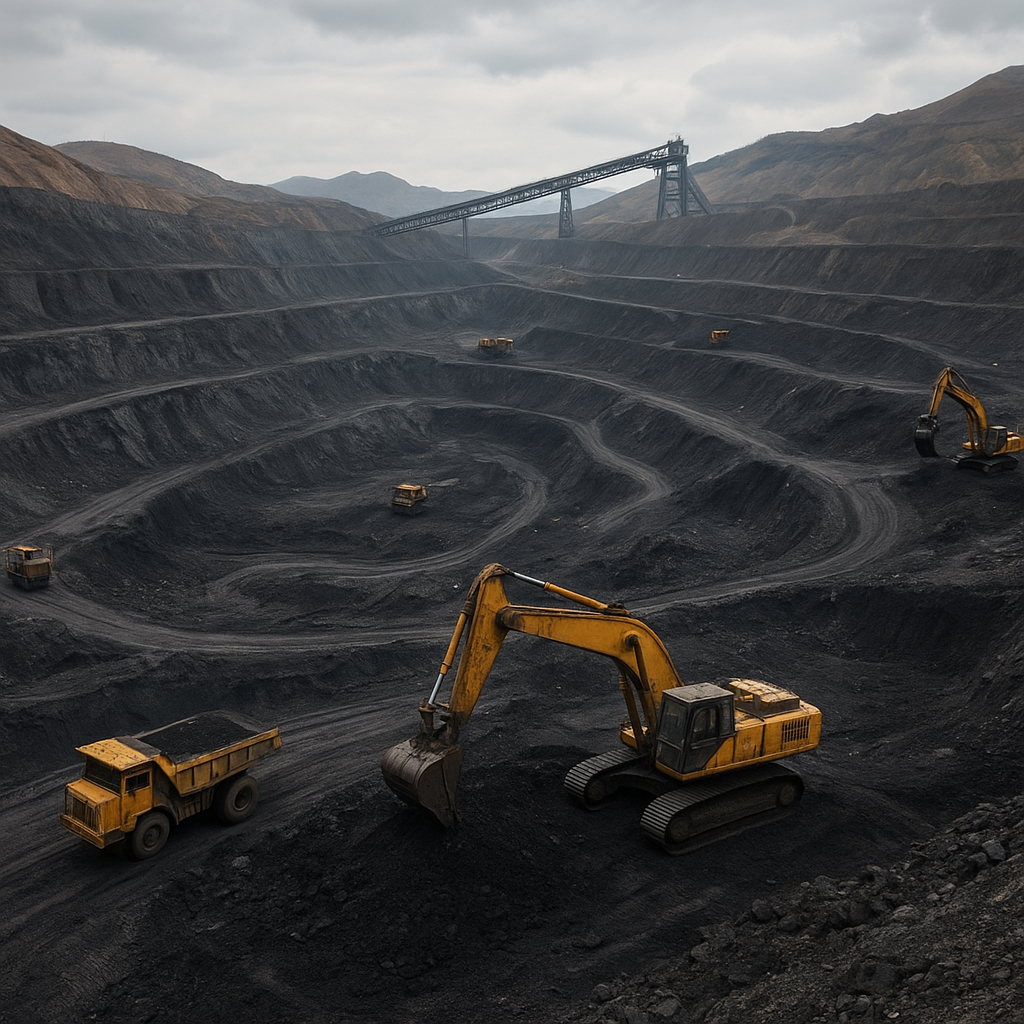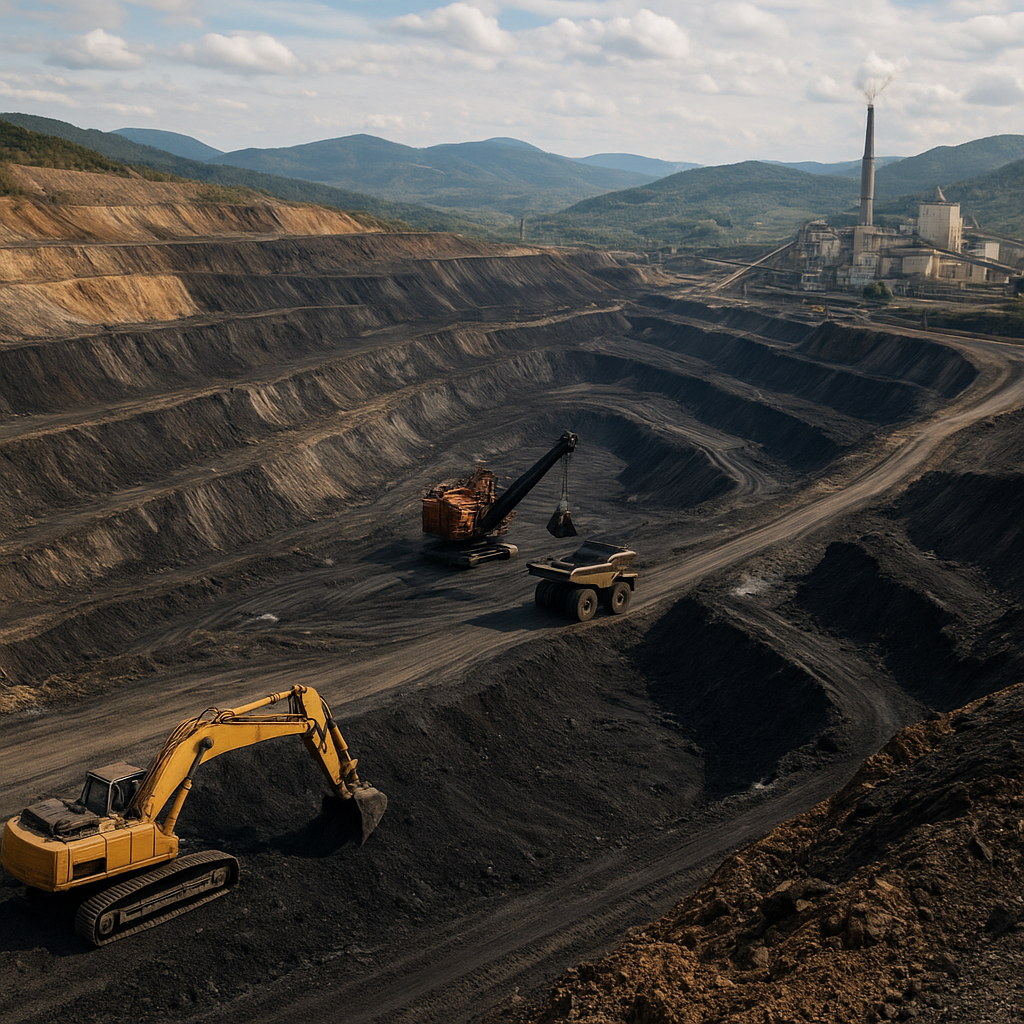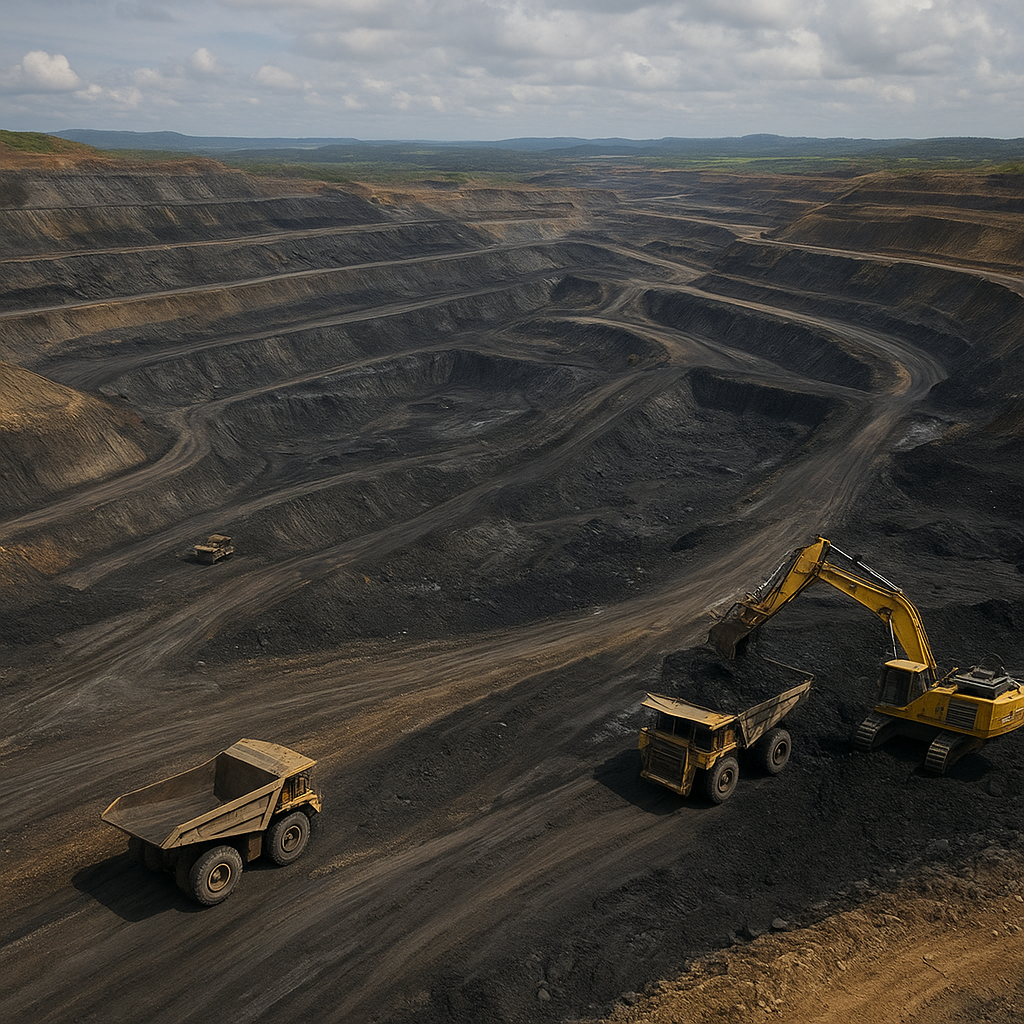
The Cerrejón mine in northern Colombia is one of the world’s largest open-pit coal operations, notable for its scale, long-term economic role in Colombian exports, and the social and environmental debates it has generated. Located in the arid plains of the Guajira Peninsula, the mine has produced large volumes of high-demand thermal coal for decades, supported local and national economies, and also become the focal point for discussions on indigenous rights, biodiversity, and the future of coal in a decarbonizing world. The following article explores the mine’s location and geology, mining methods and coal characteristics, economic importance, infrastructure and logistics, environmental and social impacts, historical development, ownership and recent developments, and statistical and forward-looking perspectives.
Location and geological context
The Cerrejón operation occupies a vast area in the department of La Guajira, in the extreme northeast of Colombia. The mine is situated in an arid to semi-arid landscape, relatively close to the Caribbean coast where the company operates the loading terminal at Puerto Bolívar. The deposits worked by Cerrejón belong to the Paleocene Cerrejón Formation, a geological sequence well known to geologists and paleontologists for its fossil content as well as its coal seams.
Geologically, the coal-bearing sediments were deposited in coastal plain and deltaic environments shortly after the Cretaceous–Paleogene boundary. The seams are comparatively extensive and thick, which has allowed open-pit methods to be economical at a very large scale. The region’s climate and geology influence operations: the arid conditions limit some water-related problems that affect mines elsewhere, but they also pose constraints for communities and ecosystems that depend on scarce water resources.
Mining operations and coal characteristics
Cerrejón is an open-pit mining complex comprising multiple contiguous pits that are developed and expanded over time. The company uses large-scale surface mining equipment—shovels, haul trucks, draglines, and conveyor systems—to extract, process and transport run-of-mine coal to the coastal terminal. Over the decades the operation has been optimized to handle very large volumes, with a focus on continuous improvement and efficiency.
Type and quality of coal
The mine produces predominantly thermal coal used for electricity generation rather than metallurgical coal for steelmaking. Cerrejón coal is generally characterized by relatively low sulfur and moderate ash content compared with many other thermal coals, qualities that make it attractive on international markets where emissions and pollution controls are factors in buyer decisions. The coal’s calorific value is suitable for power plants; however, precise quality figures (calorific value, moisture, ash, and sulfur) can vary between seams and over time as different benches are mined.
Processing
Processing at Cerrejón focuses primarily on cleaning and sizing to meet customer specifications. The coal is washed and sorted to reduce impurities and to produce consistent product grades. The site’s logistics chain—from pit to washeries to conveyor belts and the port—is designed to maintain steady throughput and to supply long-term contracts with international buyers.
Infrastructure, production and economic significance
Cerrejón’s integrated logistics infrastructure is a key part of its capacity to export coal competitively. The mine is linked to the coast by a dedicated transport system that includes long conveyor belts feeding the Puerto Bolívar coal terminal. The terminal is capable of loading large bulk carriers, facilitating direct access to international markets across Europe, Asia, and the Americas.
Production capacity and statistics
- Cerrejón has historically operated with an annual production capacity in the tens of millions of tonnes. Typical reported figures place its nameplate capacity in the range of approximately 32 million tonnes per year, though actual annual production fluctuates with market conditions and operational decisions.
- Reserves at Cerrejón are substantial, with estimates commonly reported as in excess of one billion tonnes of coal. Many assessments describe the mine as having long-term life-of-mine potential owing to the large extent of the coal seams in the Cerrejón Formation.
- The operation has been a major contributor to Colombia’s coal export volumes, historically representing a significant portion—often described as a substantial share—of Colombia’s total coal exports.
Employment and wider economic impact extend beyond direct payrolls. The mine employs thousands of workers directly and supports additional employment through contractors and service providers. The regional economic footprint is amplified by tax revenues, royalties, foreign exchange earnings from exports, and indirect services associated with housing, transport and local commerce.
Markets and customers
Cerrejón’s coal has been sold to diverse markets. Historically, large customers were found in Europe and the United States, and in more recent years Asian markets including India and Turkey have been important buyers. Demand patterns are influenced by global coal prices, shipping costs, competition from other suppliers (notably from Australia, Indonesia and Russia), and policy shifts in consuming countries regarding coal-fired power.
Environmental and social impacts
The size and longevity of Cerrejón have generated significant attention to its environmental and social impacts. The mine’s footprint, dust emissions, noise, groundwater and surface water interactions, and the resettlement of communities have been central concerns raised by local people, indigenous groups, NGOs and academic researchers.
Social issues and indigenous communities
The Guajira Peninsula is home to the Wayuu indigenous people and other rural communities. Expansion of mining pits and infrastructure required land acquisitions and resettlements, which led to disputes over compensation, cultural impacts and the adequacy of resettlement programs. Local communities have raised concerns about loss of livelihood (particularly livestock and small-scale agriculture), access to water, and the long-term sustainability of living conditions adjacent to a very large industrial operation.
Environmental concerns
- Water resources: Even though the region is relatively dry, changes in groundwater regimes and the allocation of scarce water have been points of contention. Local users and environmental groups have questioned whether mining operations affect aquifers and springs that communities rely on.
- Air quality and dust: Blasting, hauling and material handling produce dust that affects nearby settlements and agricultural areas. Cerrejón has implemented dust suppression and monitoring programs, but community groups frequently report ongoing problems.
- Biodiversity and landscape: The footprint of the mine has transformed local habitat, potentially affecting species composition and connectivity in an ecologically sensitive region. Rehabilitation plans and progressive reclamation are part of operational requirements, but full ecological restoration can be challenging in arid environments.
These concerns have led to legal challenges, regulatory scrutiny and public debate. At the same time, the company has implemented social investment programs, infrastructure projects (such as roads and local services), and claimed significant spending on community development and environmental management. The balance between development benefits and social-environmental costs remains contested.
History, ownership and recent developments
Cerrejón was developed in the late 20th century and has evolved into a major exporter of thermal coal. Over the years ownership has been held by large multinational mining companies, with a joint venture structure that included firms such as Glencore, BHP and Anglo American at various times. Ownership shares and corporate strategies have shifted as investors and operators reassess the long-term role of thermal coal in their portfolios, in light of climate policies and market dynamics.
In recent years, global shifts—such as commitments by major companies to reduce exposure to thermal coal, and varying demand from buyer markets—have influenced corporate decisions regarding Cerrejón. Some partners have announced plans to exit thermal coal operations or to seek buyers for their stakes, and discussions and transactions in the ownership structure have occurred. The mine’s future ownership and strategic orientation remain linked to the broader energy transition, corporate policies on fossil fuels, and the ability to operate profitably in changing markets.
Statistics, economic figures and employment
Reliable, up-to-date numeric figures can vary by source and by year. The following points summarize commonly reported ranges and figures that describe Cerrejón’s scale and economic footprint.
- Annual production capacity: commonly cited around 32 million tonnes per year nameplate capacity, with actual annual production varying by market conditions and operational choices.
- Proven and probable reserves: widely reported as exceeding one billion tonnes, granting multiple decades of potential production depending on the production rate chosen.
- Employment: Direct employment at the mine has typically been in the thousands; tens of thousands of jobs are often attributed when indirect, contractor, and supply-chain employment are included.
- Export share: Cerrejón has historically constituted a substantial portion of Colombia’s coal exports. Coal itself has been among Colombia’s leading commodity exports, contributing significant foreign exchange earnings.
- Fiscal contributions: Taxes, royalties and local agreements with regional authorities have provided fiscal revenue for municipalities and the national government, though debates persist regarding the sufficiency and distribution of these benefits.
Because commodity prices and demand fluctuate, yearly revenue and profit figures for the operation vary. Global coal prices, freight costs, and contractual obligations with buyers all play roles in the mine’s economic performance. Additionally, capital expenditures for pit expansions, environmental controls, and community development affect net financial outcomes.
Interesting facts and scientific significance
Beyond its industrial role, the Cerrejón area has produced notable scientific discoveries. The Paleocene sediments preserved in the Cerrejón Formation have yielded important fossil finds, including giant plant remains and fossils of ancient fauna. One notable discovery from the Cerrejón Formation was the enormous prehistoric snake Titanoboa cerrejonensis, a species that captured public and scientific attention and provided insights into Paleocene tropical ecosystems and climate.
These paleontological findings illustrate that mining regions can also be sites of scientific value, where careful collaboration between industry and researchers can unearth information about Earth’s history. Such discoveries, however, also underscore tensions: the same excavation activities that reveal fossils can also destroy contextual geological information if not managed with conservation-minded protocols.
Outlook: market, social license and the energy transition
The future of Cerrejón will be shaped by a combination of market forces, corporate strategies, regulatory environments, and social acceptance. Key factors include:
- Global demand for thermal coal: Shifts in coal-fired power generation—driven by the economics of natural gas, renewables, carbon pricing and climate policy—will directly affect Cerrejón’s markets.
- Corporate and investor policy: As major mining companies and financial institutions set targets to reduce thermal coal exposure, ownership structures and capital availability for coal projects change.
- Local social license: Continued consent and cooperation from local communities, and compliance with environmental and social regulations, are essential for long-term operation. Persistent disputes can impose delays, legal costs and reputational risks.
- Rehabilitation and closure planning: Even if production continues, planning for progressive rehabilitation, post-mining land use, and economic diversification of the local economy are increasingly important components of responsible operations.
In practical terms, Cerrejón may continue to operate profitably in the near to medium term if markets remain favorable and operators successfully manage social and environmental risks. Over the longer term, the global shift away from coal for power generation poses structural challenges that will require adaptation—either through diversification, changes in product markets, or eventual phase-out and reclamation planning.
Concluding observations
Cerrejón stands as a major industrial landmark in Colombia: an enormous coal complex that has delivered significant volumes of fuel to international markets and contributed meaningfully to regional and national economies. At the same time, the mine has generated complex and ongoing debates about environmental protection, indigenous rights, and the equitable distribution of mining benefits. Its geological significance—both for mineral resources and for paleontological discoveries—adds further dimensions to its importance. The coming years will test how effectively owners, regulators, communities and markets can balance economic interests with environmental stewardship and social responsibilities in a world that is increasingly attentive to climate and sustainability goals.