The following article examines the geological nature, global distribution, economic importance, and environmental implications of coal — a sedimentary rock that has powered industry and societies for centuries. It covers where coal occurs, how it is mined and processed, current production and trade patterns, its role in the energy and steel sectors, and the pressing challenges and transitions facing coal-dependent regions. Technical terms and key concepts are highlighted to help the reader quickly identify central ideas.
Formation, Types and Properties
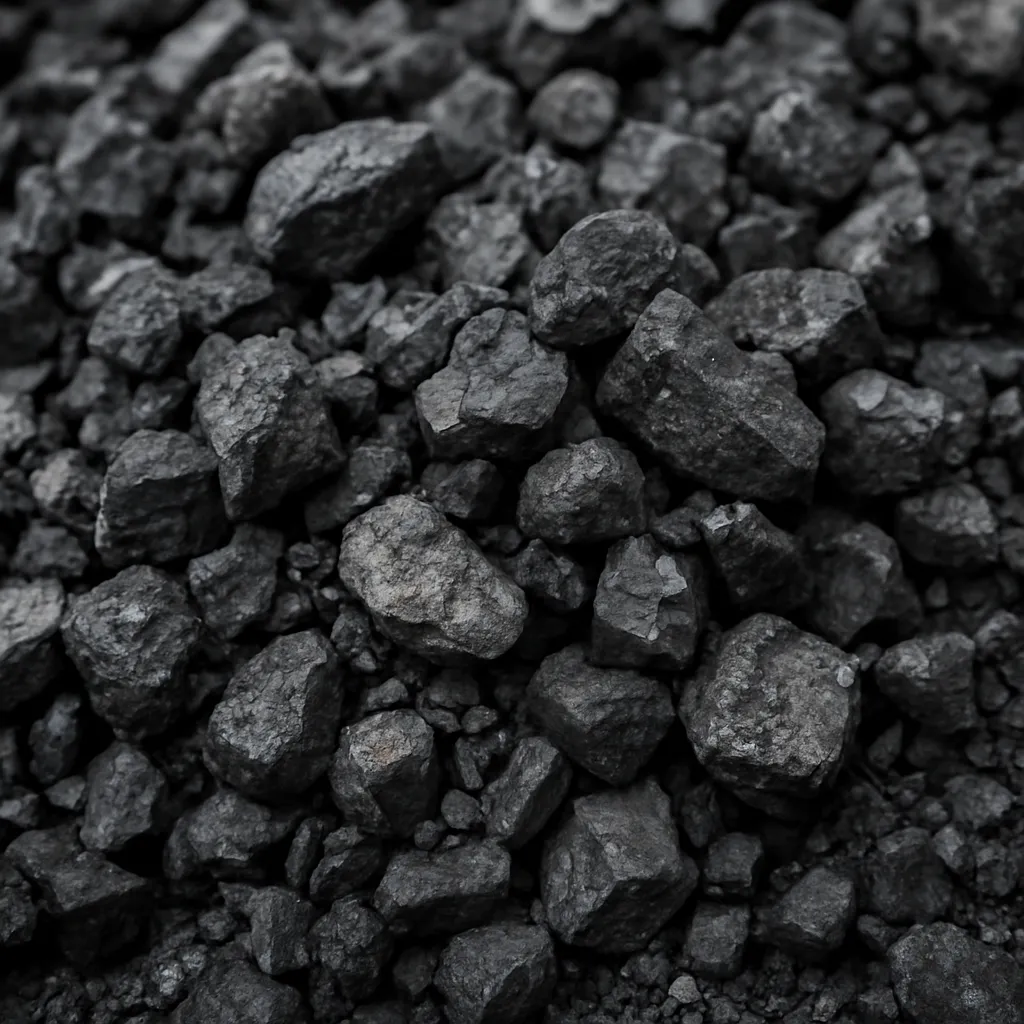
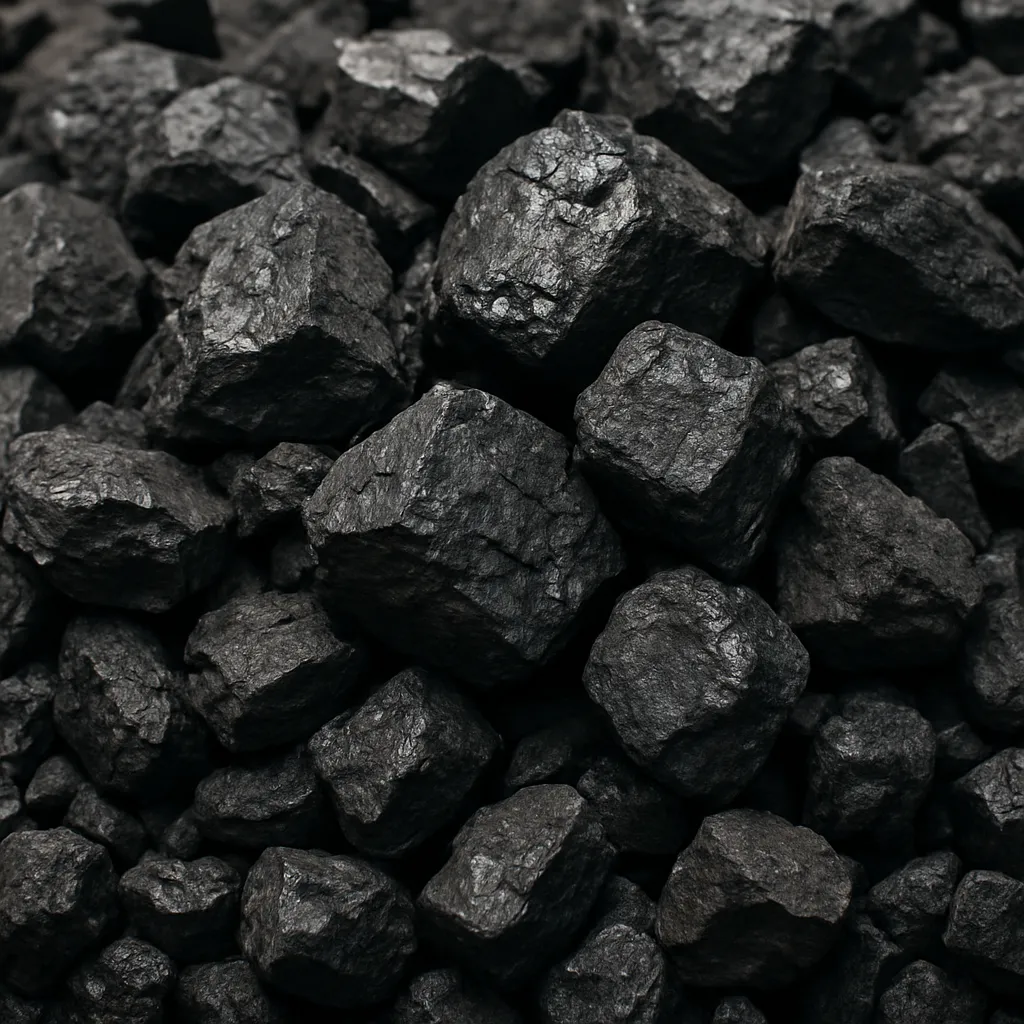
Coal is a fossil fuel formed from the compaction and alteration of plant material over millions of years under conditions of heat and pressure. The process of coalification transforms vegetation into progressively carbon-rich material through stages such as peat, lignite, sub-bituminous coal, bituminous coal, and anthracite. The resulting material varies in moisture content, volatile matter, heating value and carbon content, which determines its suitability for different uses.
Major coal ranks and their characteristics
- Lignite: low rank, high moisture, lower heating value; used mostly for local power generation near mines.
- Sub-bituminous coal: intermediate heating value; widely used in electricity generation.
- Bituminous coal: higher carbon and energy content; a major feedstock for power plants and some coking processes.
- Anthracite: highest rank, high fixed carbon and heating value, relatively low volatile matter; used for specialty heating.
- Metallurgical (coking) coal: a subset of bituminous coals that, when heated in the absence of air, produce coke — an essential reductant and structural material in steelmaking.
Different coal ranks also differ in sulfur and ash content, which affect air pollutant emissions and the economics of cleaning and handling. The calorific value of coal is commonly measured in kilocalories per kilogram (kcal/kg), British thermal units (BTU), or megajoules per kilogram (MJ/kg).
Where Coal Occurs and Major Production Areas
Coal deposits are widespread globally, reflecting past swamps and peatlands that existed during the Carboniferous and later geological periods. Coal is mined on every continent except Antarctica for commercial purposes, and it is concentrated in certain basins and countries that possess large, economically recoverable reserves.
Global distribution and key basins
- Asia: China dominates both production and consumption, with large basins in Shanxi, Inner Mongolia and Xinjiang. India’s major fields are in the eastern states of Jharkhand, Chhattisgarh and Odisha.
- North America: The United States has significant resources in the Powder River Basin (Wyoming/Montana), the Appalachian Basin (eastern U.S.), and the Illinois Basin.
- Russia and the CIS: The Kuznetsk Basin (Kuzbass) in western Siberia and the Pechora Basin and other deposits provide Russia with large coal outputs.
- Australia: Major coal-producing states include Queensland and New South Wales, with exports drawn from large open-cut mines.
- Africa: South Africa’s coal fields in Mpumalanga and the Highveld supply domestic power plants and export markets.
- Other regions: Colombia, Indonesia, Poland and Kazakhstan are notable producers or exporters with important basins and mining infrastructure.
Production and trade patterns (recent figures and trends)
Global coal production and consumption have shown resilience in the early 2020s despite strong policy momentum toward decarbonization in many countries. As of the early 2020s, world coal production hovered around 7–8 billion tonnes annually (metric tons), with consumption concentrated in a few large countries.
- China is the largest producer and consumer, producing roughly 3.5–4.0 billion tonnes per year and consuming even more, as much of its electricity generation remains reliant on coal.
- India is the second-largest consumer and a major producer (on the order of several hundred million tonnes annually) as its expanding grid and industrial sector continue to depend heavily on coal.
- Other significant producers include the United States (several hundred million tonnes), Australia (several hundred million tonnes but with large export volumes), Russia, Indonesia (notable as a top exporter, particularly of thermal coal), and South Africa.
International trade concentrates on thermal coal for power plants and metallurgical coal for steel production. Major exporters have included Indonesia, Australia and Russia for thermal coal, and Australia and the U.S. for higher-quality metallurgical coal. Importers are centered in Asia — primarily China, India, Japan, South Korea and Taiwan.
Economic Role and Industrial Uses
Coal remains a central component of global energy systems and industrial value chains. Its economic importance varies by region: in some countries it underpins national power systems and livelihoods, while in others it represents a declining but still valuable export commodity.
Electricity generation
Coal-fired plants historically provided a large share of global electricity. Depending on the year and region, around one-third of global electricity has been generated from coal, although the share has been declining in many advanced economies as natural gas and renewables expand. In emerging economies, coal still often provides baseload capacity due to cost and availability.
Metallurgy and industry
Metallurgical coal is indispensable to the steel industry. Coke made from coking coals acts as both a fuel and a reducing agent in blast furnaces. Despite advances in direct reduced iron (DRI) and electric arc furnace (EAF) technologies, the majority of global steel production still relies on coal-derived coke, especially in countries with integrated steelmaking complexes.
Other uses
Coal also supports cement production, industrial heating, and chemical feedstocks (coal-to-liquids and coal-to-chemicals processes). Coal gasification and liquefaction technologies have been developed to convert coal into synthetic natural gas, transport fuels and chemical intermediates, though these processes are capital- and energy-intensive and raise additional environmental concerns.
Economic impacts, employment and regional development
Coal mining and coal-fired power create significant direct and indirect employment in mining towns, transportation networks (rail and ports) and power plant operations. Regions with large coal industries often develop local supply chains and infrastructure, from heavy equipment suppliers to logistics firms. However, employment per tonne of coal has declined over decades due to mechanization and productivity improvements.
Statistics and Financial Aspects
Quantitative measures help capture coal’s scale and economic footprint globally. Below are representative figures and trends as of the early-to-mid 2020s; values are rounded and reflect market and policy-driven volatility.
- Global production: approximately 7–8 billion tonnes per year.
- Global proven recoverable reserves: on the order of 1,000–1,100 billion tonnes, meaning at current production rates reserves could last many decades; however, climate policies and economic shifts affect recoverability and valuation.
- Share of world electricity from coal: roughly 30–40% in recent years, with substantial regional variation.
- Share of CO2 emissions: coal combustion accounts for a significant share of energy-related CO2 emissions — historically around 40%–45% of global energy CO2 emissions depending on the year.
- Major exporters (annual thermal coal exports): Indonesia and Australia have often been the largest, exporting hundreds of millions of tonnes per year combined; Russia and Colombia are also important exporters.
Coal prices can be volatile and are influenced by fuel-switching dynamics, demand for steel, shipping costs, exchange rates, and geopolitics. For example, disruptions in major exporting regions or abrupt changes in Chinese or Indian import policies can cause rapid price spikes or dips. Financially, coal assets face increasing scrutiny from investors and banks due to transition risks, regulatory changes and environmental liabilities, prompting some institutions to restrict lending for new coal projects.
Environmental and Health Impacts
Coal combustion and coal mining have substantial environmental and social impacts. The industry is a major source of greenhouse gases as well as local air and water pollution. Understanding these impacts is essential for policymakers, communities and businesses as energy systems evolve.
Greenhouse gas and air pollutant emissions
Burning coal produces large quantities of CO2 relative to most other fossil fuels — hence coal is a major driver of anthropogenic climate change. Coal combustion also emits sulfur dioxide (SO2), nitrogen oxides (NOx), particulate matter (PM), mercury and other hazardous pollutants that affect air quality and human health.
Mining-related impacts
Mining operations can cause land disturbance, habitat loss, and water contamination. Specific practices such as mountaintop removal create dramatic landscape changes, while underground mining can lead to subsidence and the release of methane — a potent greenhouse gas. Mine closure and reclamation are long-term concerns in many regions, requiring careful planning and funding.
Human health and social issues
Communities near coal-fired power plants and mines face elevated risks of respiratory and cardiovascular illnesses due to air pollution, as well as potential water contamination from mine drainage. Worker safety in mining remains a priority — mechanization has reduced certain hazards but incidents and chronic exposures continue to pose risks.
Transition, Mitigation and the Future
Coal’s future is shaped by the intersection of energy demand, industrial needs (notably steel), policy frameworks (carbon pricing, emissions standards), technological innovation (carbon capture and storage, CCS), and economics (costs of renewables and storage). Multiple pathways are emerging.
Decarbonization technologies
Carbon capture, utilization and storage (CCUS) applied to coal-fired power plants and industrial processes could, in principle, reduce CO2 emissions significantly, but the technology is costly and requires substantial infrastructure. Alternative steelmaking routes — such as hydrogen-based DRI and increased recycling in electric arc furnaces — could reduce demand for metallurgical coal over time.
Policy drivers and market forces
Many governments have announced coal phase-down or phase-out timelines for power generation, often accompanied by support for workers and communities in transition. Market forces — lower costs for solar and wind, plus energy storage — are eroding the competitive position of coal in electricity markets in many regions. Nevertheless, in countries with rapidly growing electricity demand and limited alternatives, coal may remain part of the generation mix for years to come.
Economic and social transition strategies
Managing the socio-economic impacts of a coal transition requires comprehensive planning: diversification of local economies, retraining and redeployment programs, clean energy investments, and responsible mine closure and environmental remediation. International finance and technology transfer can support countries that depend heavily on coal for economic development.
Interesting Facts and Lesser-Known Aspects
- Coal-to-chemicals: Historically and in some present-day industrial contexts, coal has been used to produce chemicals, fertilizers and fuels through gasification and liquefaction.
- Coal seams have occasionally hosted rare preservation of plant fossils, providing paleobotanical insights into Earth’s climatic past.
- Some forms of coal (peat-derived or lignite) are still being used in rural areas for domestic heating where alternatives are limited.
- Innovations in mine safety, automation and monitoring have improved productivity and reduced certain risks, but also displaced some forms of employment, reshaping mining communities.
- Coal remains a strategic commodity: disruptions in coal supply or trade have had acute impacts on electricity security and industrial outputs in some countries, prompting strategic stockpiles and diversification efforts.
Conclusion
Coal is a complex, globally significant resource with deep geological roots and profound economic, industrial and social impacts. It has been central to the development of modern economies through its provision of affordable energy and as a feedstock for steel and heavy industry. At the same time, the environmental and health costs associated with coal combustion and mining are driving efforts to reduce reliance on coal where feasible, while technological and policy choices will determine how quickly and equitably transitions occur. The distribution of coal — with major producers like China, India, the United States, Russia and Australia — means that any large-scale shift in coal markets will have wide-reaching geopolitical and economic consequences. Understanding coal’s properties, uses and impacts remains essential for informed decision-making about energy systems, industrial strategy and climate action in the decades ahead.