The Bogatyr coal mine, located in the Ekibastuz coal basin of northern Kazakhstan, is one of the country’s most important and widely recognized coal mining sites. Operating as a large-scale open-pit complex, Bogatyr has played a central role in Kazakhstan’s energy security, industrial development and regional employment for decades. This article provides a comprehensive overview of the mine’s location and geology, the type and quality of coal produced, operational and economic information, statistical indicators where available, and broader environmental and social considerations. The aim is to present a clear picture of why Bogatyr remains strategically significant for Kazakhstan’s coal sector and the regional power industry.
Location and geological setting
The Bogatyr mine lies in the Ekibastuz coal basin in Pavlodar Region, in northeastern Kazakhstan. The basin is one of the largest coal-bearing provinces in Central Asia and was intensively developed during the Soviet period to supply thermal power plants and heavy industry. The Ekibastuz field spans a broad plain and contains multiple large seams of coal distributed across expansive open-pit operations.
Geological characteristics
- The basin contains extensive seams formed during the Permian and possibly late Carboniferous periods; these deposits are characterized by thick, laterally extensive beds.
- Coal in the Ekibastuz area, and specifically from Bogatyr, is mainly used as thermal coal (steam coal) rather than metallurgical coal. It is typically high in ash content and relatively low in volatile matter compared with higher-grade bituminous coals used for coke production.
- Typical properties include moderate to low calorific value relative to higher-grade global coals, a high ash percentage, and generally low sulfur content—attributes that make the coal suitable for large-scale power generation after washing and beneficiation.
These geological features determine the mining method and the economic uses of the resource: the coal is overwhelmingly destined for power generation, primarily to large nearby thermal power plants.
Mining operations and coal characteristics
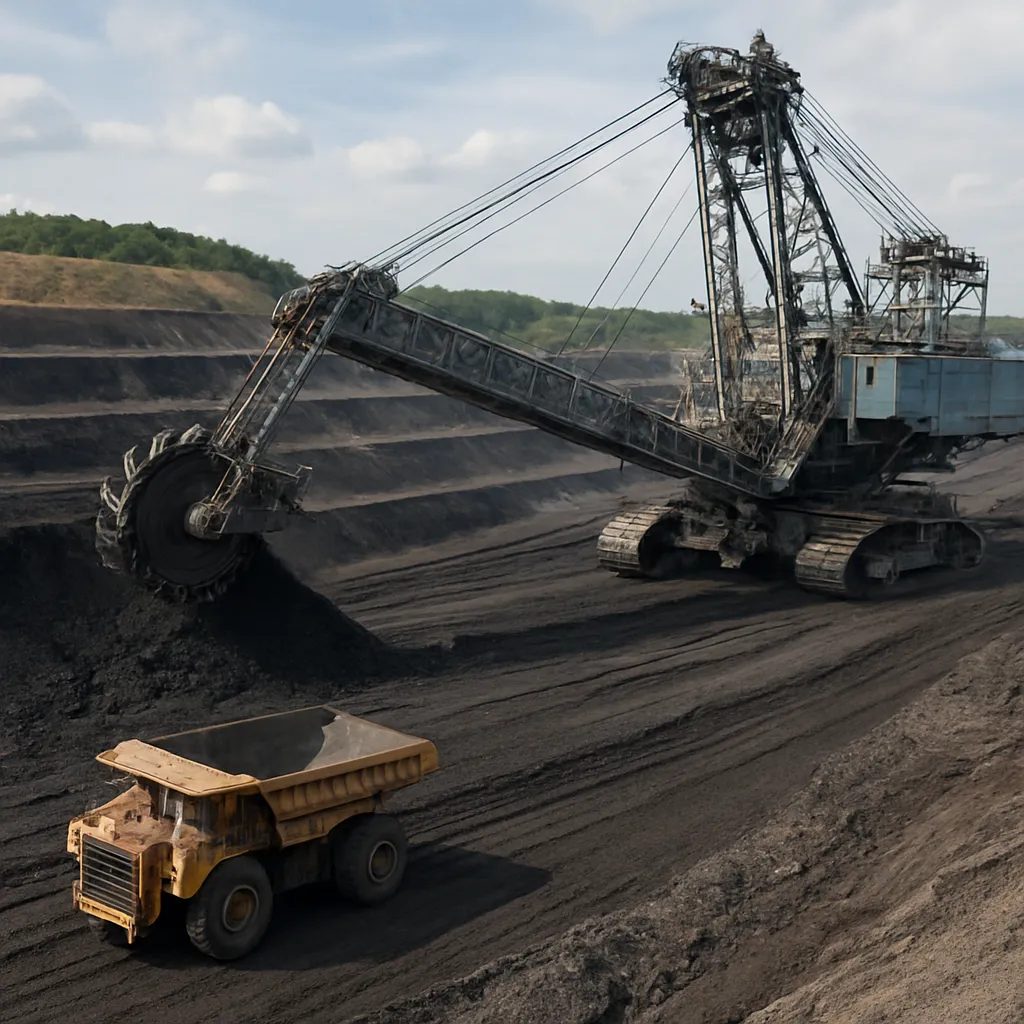
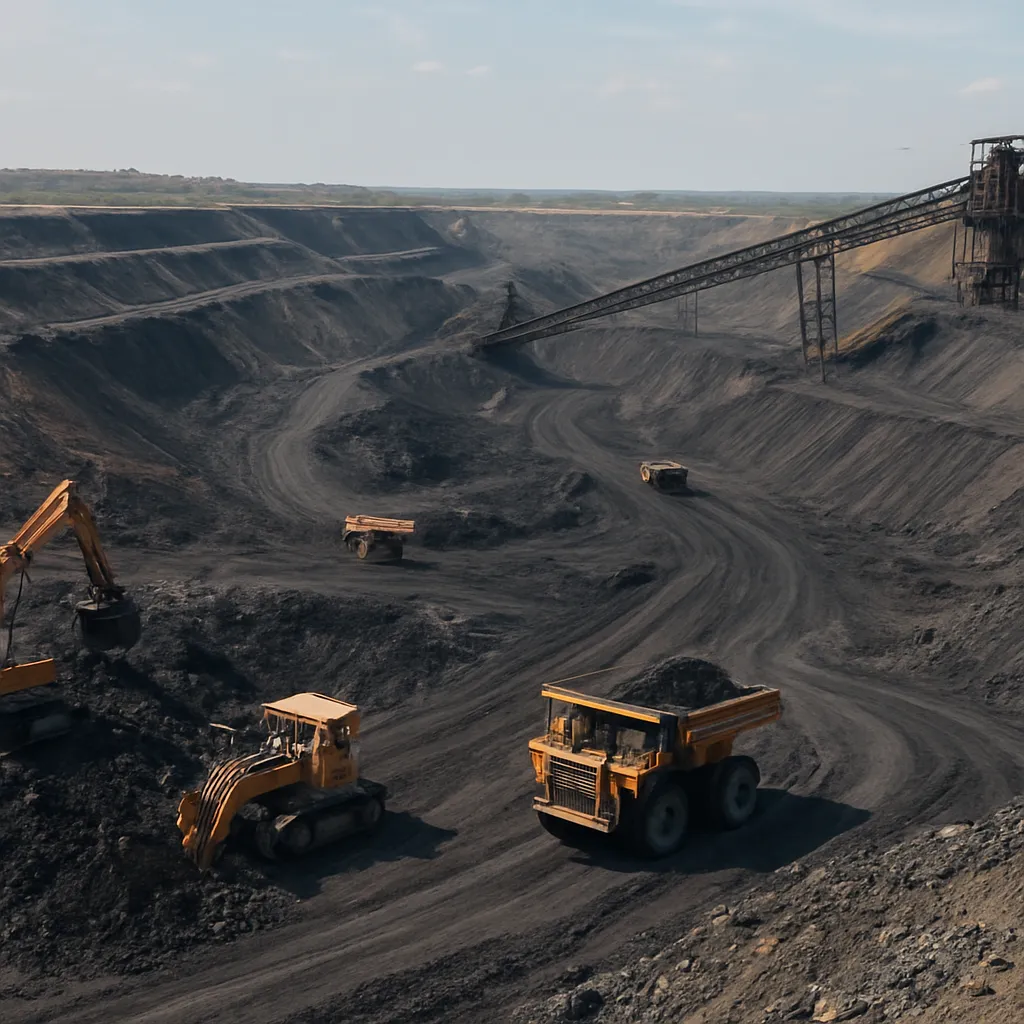
Bogatyr is operated as an extensive open-pit mine, employing heavy-scale earthmoving and material handling systems adapted to the basin’s thick, shallow coal seams. The mining complex historically integrated extraction, on-site coal washing/beneficiation, large conveyor systems, and rail loading facilities to move coal to customers.
Mining methods and equipment
- Large-scale surface mining using draglines, bucket-wheel excavators and high-capacity shovels and trucks.
- Extensive use of conveyor belts to move coal from the pit to processing plants and to rail loading terminals that connect the mine to domestic power stations and export routes.
- On-site beneficiation (coal washing) plants reduce ash content to meet the technical specifications of customers—especially power stations—thereby improving combustion properties and reducing transportation of non-combustible material.
Coal quality
- The coal is primarily steam (thermal) coal, used to produce electricity and heat in thermal power stations.
- Calorific value is typically in the low-to-medium range compared with international thermal coals; exact values vary by seam and post-wash treatment. Washed products used for power generation show improved calorific values and reduced ash percentages.
- High natural ash content (commonly in the tens of percentage points) is a defining characteristic; this requires beneficiation for high-efficiency power plant combustion and increases the importance of ash management at both mine and consumer sites.
- Low sulfur content is an advantage for emissions control, as sulfur dioxide (SO2) emissions are generally lower than for high-sulfur coals.
Economic importance and role in the energy sector
Bogatyr has been a backbone of regional energy supply and an important contributor to the national coal output. The mine’s production traditionally serves both domestic power plants and, to a lesser extent, export markets. Its impact shapes local employment, regional infrastructure and Kazakhstan’s broader energy strategy.
Supplies to power generation
- The proximity of large thermal power plants—most notably the Ekibastuz GRES complexes—creates a direct and efficient supply chain from pit to power station. These plants historically relied on local coal to provide baseload electricity for northern Kazakhstan.
- Because Bogatyr’s coal is primarily suited for electricity generation, its strategic value is closely linked to Kazakhstan’s thermal generation fleet and to seasonal heating demand.
Employment and local economy
- Bogatyr is a major local employer. The mine and its associated processing, logistics and maintenance activities support thousands of jobs directly and many more indirectly through local supply chains.
- Investment in infrastructure—rail, roads and utilities—associated with the mine stimulates regional development and attracts auxiliary industries.
Integration with national coal industry
- Bogatyr is part of Kazakhstan’s extensive coal network that supplies both domestic consumption and exports. The mine contributes to national energy security by providing a stable domestic fuel supply and reducing dependence on imports for thermal generation.
- Coal from Ekibastuz, including Bogatyr, has historically been a strategic asset dating back to Soviet planning, and continues to be significant as Kazakhstan balances resource exports with local energy needs.
Statistics, reserves and production data
Precise public data on reserves and production for any single mine can vary depending on reporting standards and the year of the report. The Ekibastuz coal basin is among the most substantial in Kazakhstan in terms of resource base, and Bogatyr is typically counted among the largest individual mine complexes in the country.
Reserves
- Reserves in the Ekibastuz basin are commonly described in the billions of tonnes at the basin level; estimates for individual large complexes such as Bogatyr often range into the hundreds of millions to multiple billions of tonnes of indicated and inferred resources when reported by mining companies and geological surveys.
- Publicly available company and government reports historically characterize the basin as having very large long-term economically mineable coal quantities, but classification between proven, probable and inferred reserves depends on the reporting standard and the year of assessment.
Production figures
- Annual production volumes for major operations in Ekibastuz, including Bogatyr, have historically been substantial: numerous millions of tonnes per year. Reported annual output figures for major Ekibastuz producers have often been in the range of tens of millions of tonnes per year at peak operations.
- Production fluctuates with market demand, capital investment, and modernization campaigns. In some reporting years, major producers in the basin have reported outputs in the low tens of millions of tonnes, while consolidated national coal production in Kazakhstan has been well over 100 million tonnes in recent decades.
Trade and markets
- Bogatyr’s coal primarily serves domestic thermal power plants, but the Ekibastuz basin as a whole contributes to Kazakhstan’s coal exports to neighboring markets, notably Russia and other countries in the region, when logistics and pricing are favorable.
- Export volumes are influenced by regional demand, rail capacity and the relative competitiveness of Ekibastuz coal against other suppliers in regional markets.
Notes on data variability
Quantitative values for reserves and annual production vary between company disclosures, government statistical agencies and independent analyses. Where exact up-to-date figures are required for investment, planning or academic purposes, it is recommended to consult the latest annual reports from the operating company (Bogatyr Komir or other current operator), Kazakhstan’s national statistical agency, and authoritative industry analyses for precise year-by-year data.
Environmental, social and technological aspects
Large open-pit operations like Bogatyr carry significant environmental and social implications that have shaped regulatory oversight and community relations. Addressing these issues is central to the mine’s operational sustainability and social license to operate.
Environmental challenges
- Dust and particulate emissions from open-pit mining and coal handling are persistent concerns, requiring dust suppression systems, water spraying, and covered conveyors where feasible.
- Ash and slag produced from coal combustion and the high ash content of mine product demand robust ash disposal and management strategies at both the mine and power plant level.
- Water balance and potential impacts on shallow groundwater can occur with large-scale excavation; mine water management plans and monitoring are standard mitigation measures.
- Progress in emissions control at end-use plants (e.g., flue gas desulfurization, particulate filters) and potential deployment of low-emission technologies influence the mine’s environmental footprint from a lifecycle perspective.
Social responsibility and post-mining land use
- Bogatyr’s workforce and the surrounding towns receive indirect economic benefits through employment and infrastructure. Maintaining community welfare and safety is an ongoing company responsibility.
- Post-mining land reclamation plans—reshaping pits, stabilizing slopes, restoring soils and planting vegetation—are part of modern mine closure strategies, though implementation timing depends on the remaining life of the operation and regulatory enforcement.
Technological modernization
- Efforts toward mechanization, improved material handling, and partial automation have increased productivity and reduced per-ton operating costs in large open-pit operations.
- Investments in coal-washing technologies improve product quality and reduce transport of ash. Modern conveyor and rail loading systems improve logistics efficiency.
- Longer-term trends in the industry include consideration of clean coal technologies, more efficient thermal generation, and potential carbon mitigation measures; the economics and feasibility of such technologies at any given mine depend on regulatory drivers and market incentives.
Significance, challenges and future outlook
Bogatyr is a strategic asset within Kazakhstan’s coal sector. Its role in supplying thermal power and supporting regional economies positions it as a key element in national energy planning. At the same time, the mine faces a series of challenges common to large coal operations globally.
Strategic significance
- As a major source of thermal coal, Bogatyr underpins regional power generation capacity, contributing to the stability of electricity supply for industry and households.
- The mine’s scale supports economies of scale in coal production, beneficiation and logistics that smaller operations cannot achieve, making it strategically important for national energy security.
Main challenges
- Market volatility: coal prices, competition from alternative fuel sources, and changing demand patterns in regional markets create economic uncertainty.
- Environmental pressure: tightening emissions regulations and global efforts to reduce carbon dioxide emissions increase pressure on coal producers and consumers, potentially reducing demand over the long term.
- Infrastructure limits: rail capacity and export logistics can constrain growth or redirect supply to domestic markets depending on demand and pricing.
Outlook
In the near to medium term, Bogatyr is likely to remain an important supplier of thermal coal within Kazakhstan due to existing infrastructure, large resource base and proximity to major power plants. The longer-term outlook depends on several factors:
- National energy policy choices in Kazakhstan regarding diversification away from coal and investments in renewables or gas-fired generation.
- Investment in modernization of power plants and emission control technologies, which can extend the useful life of thermal coal demand by improving efficiency and reducing pollutants.
- Global and regional market dynamics, including demand from neighboring countries and competition from other coal suppliers.
- Technologies for carbon mitigation, carbon pricing regimes, and international climate goals that may alter long-term demand trajectories for coal.
Interesting facts and historical perspective
Beyond its economic figures, Bogatyr is notable for several reasons that highlight its place in Kazakhstan’s industrial landscape:
- Historical role: The Ekibastuz basin, including Bogatyr, was intensively developed as part of Soviet-era industrial planning, supplying major power stations and supporting large-scale electrification.
- One of the largest open-pit operations: By area and output, mines in the Ekibastuz basin, including Bogatyr, rank among the larger single-site coal operations in the region.
- Integrated logistics: The mine’s combination of extraction, on-site beneficiation and dedicated rail links exemplifies vertically integrated coal operations intended to supply base-load thermal power.
- Regional employment: The mine complex is a principal employer for local communities, influencing town planning, social services, and regional infrastructure.
In summary, the Bogatyr coal mine is a central asset within Kazakhstan’s coal and energy sectors. Its large-scale open-pit operations produce predominantly thermal coal that fuels nearby power plants, underpins regional electricity supply, and provides significant employment. While the mine benefits from abundant resources and established logistics, it also faces the environmental, market and policy challenges that confront coal producers worldwide. The mine’s future will depend on how Kazakhstan balances domestic energy needs, economic considerations and environmental commitments in the decades to come.