The following article explores the Berau coal mining complex in Indonesia: its geographic setting, geology, mineral characteristics, economic footprint, logistical systems, environmental and social impacts, and its place in the national and global coal industry. The piece synthesizes public, historical and industry-typical information to present a comprehensive portrait of the operation and the region in which it operates.
Location and Regional Context
The Berau coal mining operations are located in the coastal and inland areas of Berau Regency in northeastern East Kalimantan, on the island of Borneo, Indonesia. The concession area lies within the greater Kutai Basin, a well-known Tertiary sedimentary basin that hosts numerous coal-bearing sequences across East Kalimantan. The proximity of the mine to coastlines and navigable rivers has historically shaped its logistics and export pathways.
Berau is part of a dense cluster of coal concessions across East Kalimantan — one of Indonesia’s principal coal-producing provinces. The regional economy has long been linked to extractive industries, with coal as the dominant mineral commodity. The Berau concession is therefore embedded in a network of local towns, riverine communities, and regional transport nodes that support both mining and downstream coal handling.
Geology and Coal Characteristics
The coal seams exploited at Berau formed in a coastal-plain to deltaic setting during the Neogene (principally Miocene), a period well known in the Kutai Basin for prolific peat accumulation and coalification. Coal seams in the area typically display lateral continuity across several kilometers, with thicknesses that can vary from thin bench seams to thicker individual units reaching several meters.
From a quality perspective, the coal mined in the Berau concession is largely used for power generation and other thermal applications. Key characteristics include:
- Coal type: Predominantly thermal coal — low- to medium-rank coal derived from peat; commonly described as sub-bituminous to high-volatile bituminous in some seams.
- Calorific value: Typical gross calorific values (GAR) for similar East Kalimantan coals range roughly between 4,000 and 6,000 kcal/kg, though specific seams may fall below or above that range depending on ash and moisture content.
- Ash and moisture: Indonesian coastal coals often have moderate to high intrinsic moisture and variable ash contents; both parameters significantly affect saleable calorific values and market classification.
- Sulfur and contaminants: Coals from this region tend to be relatively low in sulfur compared to global averages, which favors thermal use with lower SOx emissions, but trace element composition can vary by seam.
These general properties have made Berau’s product suitable for both domestic power plants and export markets where thermal coal for electricity generation is demanded.
Mining Operations, Methods and Infrastructure
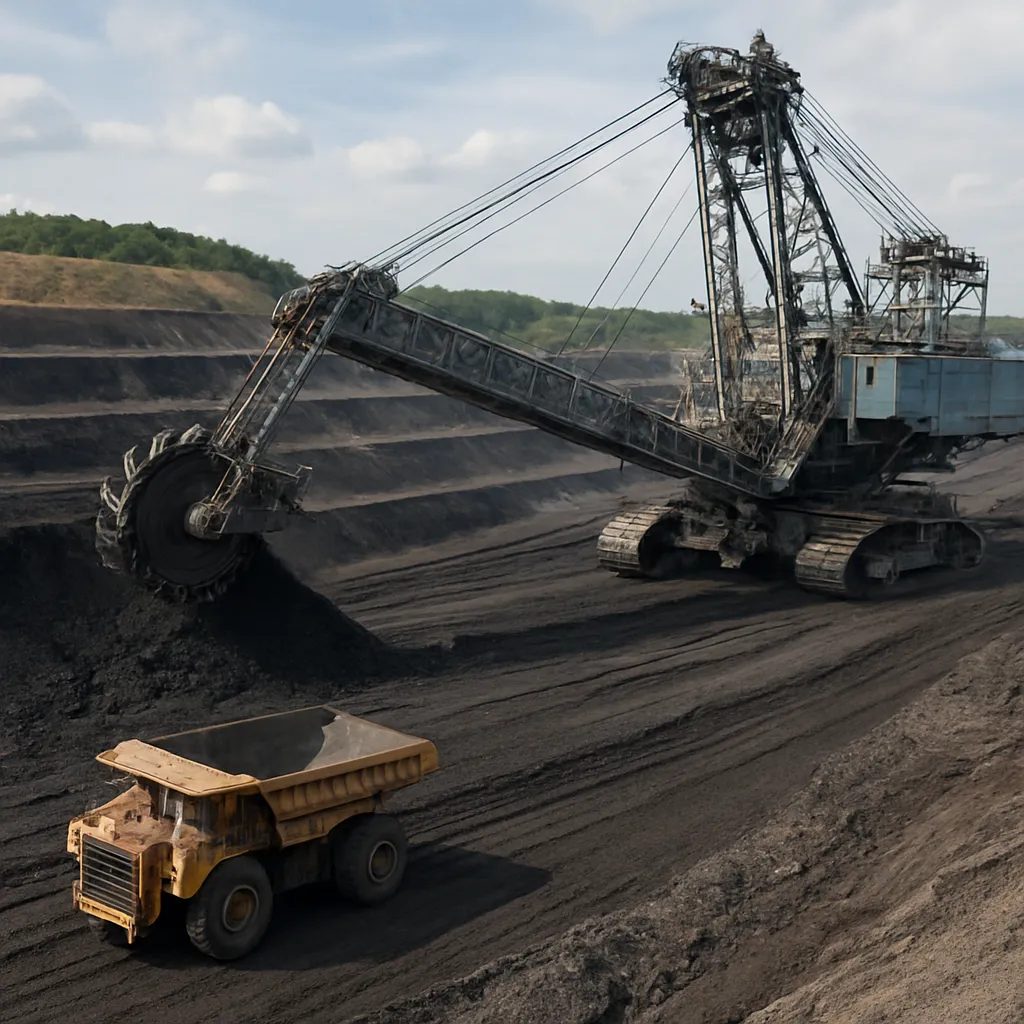
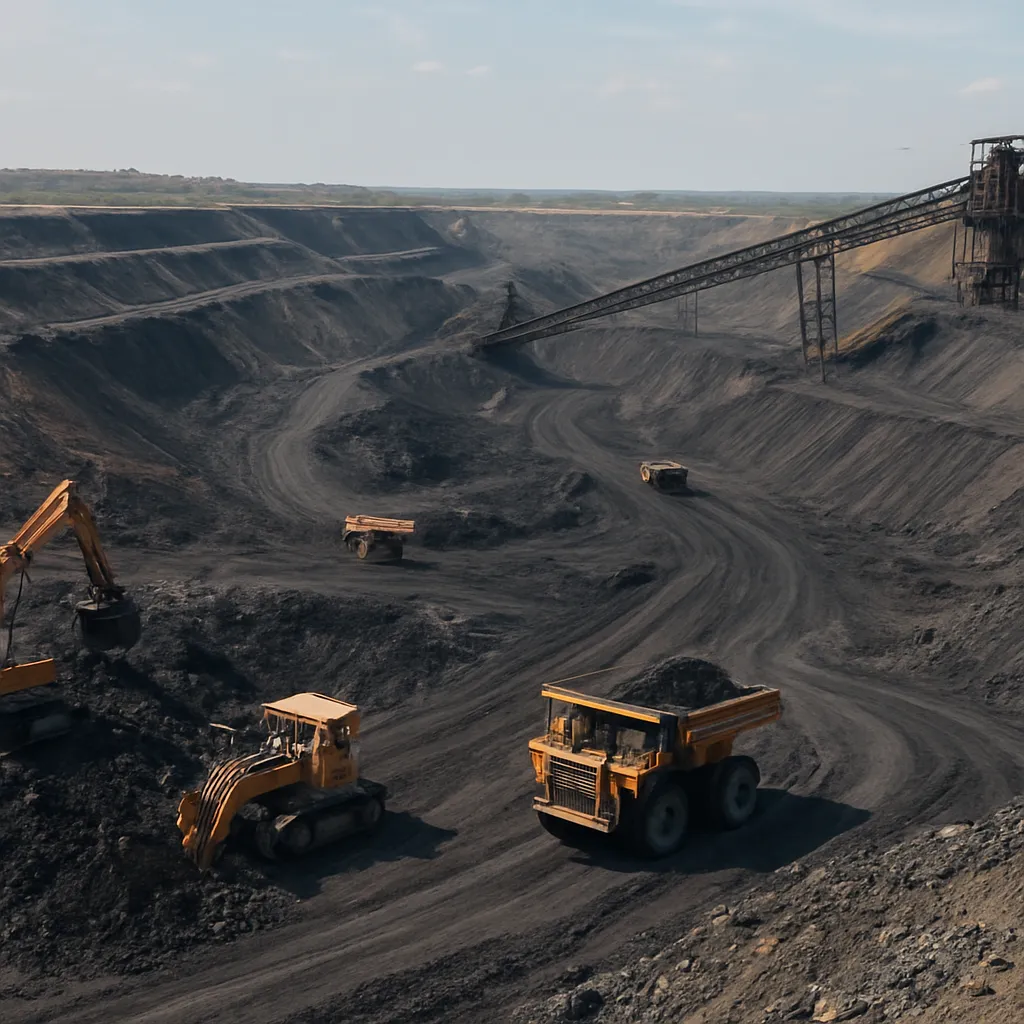
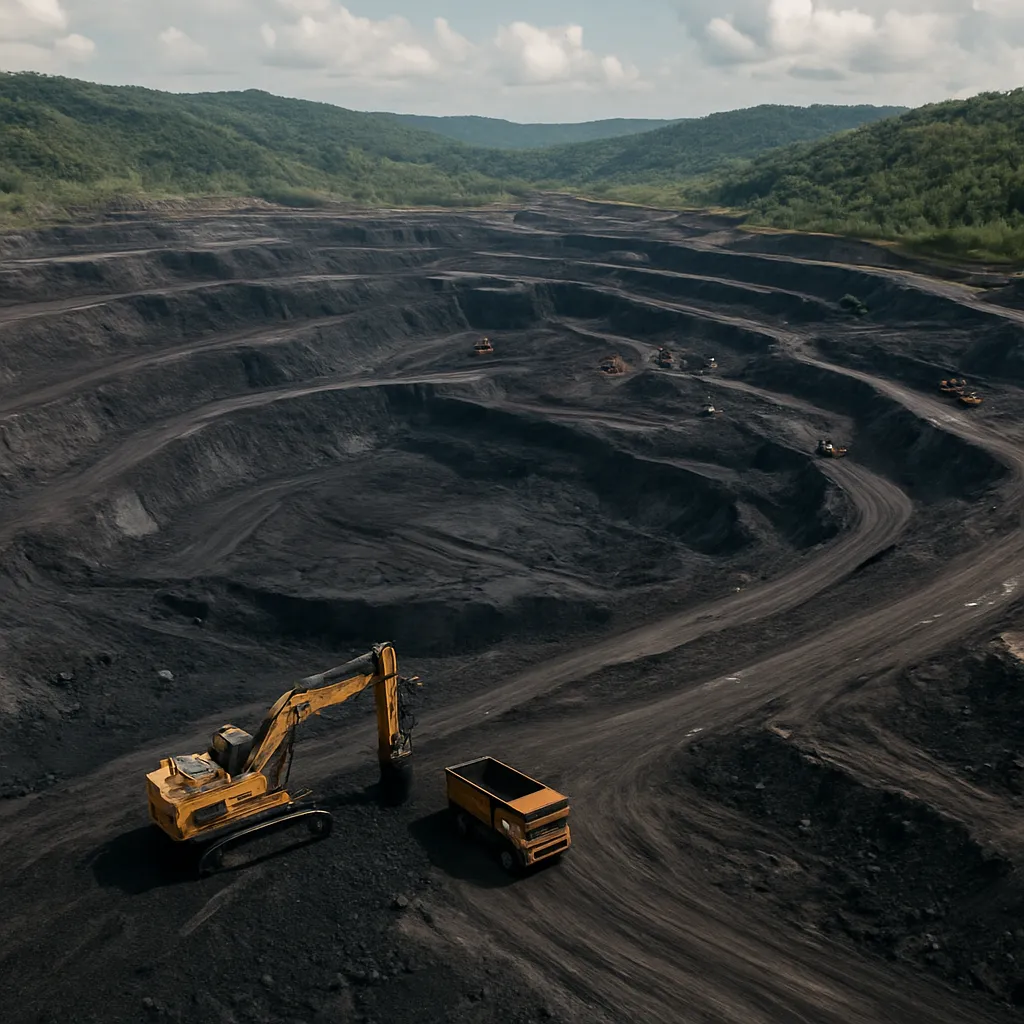
Mining at Berau has been carried out using conventional open-pit techniques typical of large Indonesian coal operations. Open-pit mining allows extraction of relatively shallow, laterally extensive coal seams and involves progressive removal of overburden, benching, and the use of hydraulic excavators, large haul trucks, barges and dredging where necessary for river access.
Key operational features and infrastructure commonly associated with the Berau complex include:
- Road and river transport: Coal is often hauled by truck to river loading facilities and then barged to coastal transshipment points or local jetties. River logistics are central to operations in many East Kalimantan concessions because they connect inland pits with export terminals.
- Stockyards and washing facilities: Depending on the business model, some operations have simple stockpiles and sorting, while others invest in washing plants to improve product quality and meet specific calorific value requirements.
- Export terminals: Coal is typically exported from regional ports or transshipment anchors in the Makassar Strait and the greater Kalimantan coast to buyers in Asia, including power utilities and traders.
- Support facilities: Maintenance yards, workshops, fuel storage, and worker accommodation camps are typical of large-scale tropical mining operations.
Reserves, Resources and Production Trends
Over the last two decades, company disclosures and industry summaries have consistently indicated that the Berau concession contains substantial coal resources. Historically, company reports and technical statements described resources exceeding one billion tonnes (measured + indicated + inferred) across the concession, with extractable reserves (proven and probable) in the order of several hundred million tonnes. These figures naturally depend on the reporting standard (e.g., JORC, Indonesian Mineral Code) and the classification date.
Production volumes from the Berau operation have fluctuated markedly over time, reflecting market cycles, operational scaling and corporate financial circumstances. In productive years, Indonesian mines in this class can produce from single-digit millions up to mid-double-digit millions of tonnes per annum. Berau’s historical annual sales and production have typically been in the multi-million tonne range, serving domestic and export markets. Production was constrained or reduced during periods of financial restructuring that occurred in the mid-2010s and associated operational realignment.
It is important to distinguish between three commonly used figures:
- Resources: The total estimated amount of coal in the ground (measured, indicated, inferred).
- Reserves: The portion of resources that is economically and technically recoverable under specific assumptions.
- Production capacity: The operational annual throughput achievable given equipment, workforce and permitting.
Company historical disclosures and independent assessments indicate ample long-term mine life at current or modestly scaled production rates, driven by significant in-ground resources.
Economic and Fiscal Significance
The Berau coal mining complex has multiple layers of economic significance:
- Regional employment and income: Mining creates direct jobs (operational staff, maintenance, logistics) and indirect employment in services, supply chains, and local commerce. In Berau Regency, revenues from coal-related activities have contributed substantially to local public finances and household incomes over the last two decades.
- Fiscal contributions: Coal mining in Indonesia contributes through royalties, corporate income tax, value-added taxes and local levies. While the exact fiscal receipts attributable to a single concession vary with production and commodity prices, coal remains a significant source of export earnings and government receipts at provincial and national levels.
- Export earnings: Indonesian thermal coal has been one of the country’s major mineral export earners. Berau’s volumes, exported to regional energy markets in Asia, have helped supply growing electricity demand abroad while generating foreign exchange for Indonesia.
- Local multiplier effects: Spending on camp supplies, fuel, maintenance contracts and logistics injects money into the local economy, supporting small businesses and infrastructure in port towns and river hubs.
However, economic benefits must be viewed alongside the volatility inherent in coal markets. Prices, demand from major buyers (China, India, Southeast Asia) and shipping costs can sharply influence cash flows for a given concession.
Markets and Trade
Berau’s coal historically flowed to a range of Asian buyers. Major markets for Indonesian thermal coal include:
- China — a large importer of lower-grade thermal coal for coastal and inland power plants.
- India — significant import volumes, particularly for coastal coal-fired power stations and coastal industries.
- Other Asian buyers — South Korea, Japan, Taiwan and Southeast Asian nations have been buyers of various grades.
Trade typically involves Indonesian producers selling to international traders, end-user utilities or through spot market transactions. Logistics chains leveraging barging to transshipment anchored off the Kalimantan coast, then loaded onto Cape-size or Panamax vessels, are common. The proximity to major Asian coal consumers across relatively short sea routes is an enduring competitive advantage for East Kalimantan producers.
Environmental and Social Considerations
Large-scale open-pit coal mining inevitably brings significant environmental and social impacts that have framed public and regulatory attention around the Berau concession:
- Land use and deforestation: Clearing for pits, haul roads and camps alters land cover and can affect primary and secondary forests and peatlands in lowland areas.
- Water resources: Mining and sediment runoff can change river hydrology, affect turbidity, and potentially impact fisheries and water quality for downstream communities.
- Air quality and dust: Dust from haul roads, stockpiles and ship loading can affect local air quality.
- Mine rehabilitation: Indonesian law requires mine reclamation and progressive rehabilitation, but implementation quality varies across concessions. Rehabilitation is a long-term commitment that can include landform recontouring, topsoil replacement, revegetation and, where possible, alternative land uses.
- Community impacts: Mining has created jobs and infrastructure but also generated disputes over land rights, changes to traditional livelihoods (fishing, small-scale agriculture), and social transformations tied to in-migration and economic shifts.
Many operations, including those in Berau, have implemented corporate social responsibility (CSR) programs to invest in local infrastructure, education, health and alternative livelihoods. Nevertheless, balancing economic benefits with environmental protection and equitable social outcomes remains a central challenge.
Regulatory and Corporate History
Indonesia’s mining regime has evolved significantly over recent decades. Concessions like Berau are governed by national mining law, permit conditions, environmental impact assessments (AMDAL), and local regulations. During the 2010s, the Berau enterprise experienced notable corporate and financial turbulence, including debt difficulties and restructuring that affected ownership and operations. Such corporate events are not uncommon within the sector, particularly given the capital intensity of mining, commodity price volatility and the need for continual investment in equipment and infrastructure.
Financial restructuring episodes can lead to changes in operational scale, revisions to investment plans, and new investor groups entering the asset base. For stakeholders — from local governments to workers and lenders — these changes bring uncertainty but can also create opportunities for operational reset and renewed investment if market conditions permit.
Statistical Snapshots and Historical Indicators
While precise yearly figures depend on the reporting period, the following are representative indicators and contextual statistics (expressed as general, historically referenced ranges):
- Resource base: Historical company reports and independent industry summaries indicated resources exceeding 1 billion tonnes across measured and inferred categories at various points.
- Reserve estimates: Proven and probable reserves have historically been reported in the hundreds of millions of tonnes, depending on cut-off criteria and the valuation date.
- Production volumes: Annual production and sales have varied from single-digit millions to low double-digit millions of tonnes in stronger years; production slumped during periods of corporate stress and was later adjusted according to market conditions.
- Export contribution: Berau’s production constituted a meaningful share of regional coal exports from East Kalimantan during peak production periods, contributing to Indonesia’s position as one of the world’s top thermal coal exporters.
Please note that mining companies periodically update reserves and resources through new drilling campaigns, changes to economic assumptions or after rehabilitation of operational capacities. For the most current numeric values, the latest corporate filings or technical reports filed by the mine operator are the definitive source.
Role in the Indonesian Coal Industry and Broader Energy Context
Berau is representative of a generation of Indonesian coastal coal concessions that have been integral to the country’s role as a global coal supplier. Key aspects of that role include:
- Supplying thermal markets: Providing coal suited to electricity generation in regional markets.
- Supporting national export earnings: Contributing to Indonesia’s balance of trade via mineral exports.
- Local development: Acting as an economic anchor in sparsely populated areas where extractive industries are often the principal source of modern employment and infrastructure development.
At the same time, global energy transitions toward lower-carbon systems create both challenges and timelines for coal producers. While thermal coal demand has remained robust in certain Asian markets, medium- to long-term trends depend on policy shifts, renewable energy uptake, and investment in emissions controls such as carbon capture.
Recent Developments and Future Outlook
The near-term future for Berau and similar concessions depends on several interlinked factors:
- Commodity prices and demand: Coal prices driven by Asian demand cycles, alternative fuel economics and global trade flows determine cash flows and reinvestment ability.
- Operational efficiency and capital availability: Access to financing for equipment upgrades, port improvements and environmental mitigation influences productive capacity.
- Regulatory environment: Indonesian mining regulations, royalty frameworks and permitting timelines shape operating costs and planning horizons.
- Environmental, social and governance (ESG) expectations: Increasing scrutiny from lenders and buyers means that sustainable practices, transparent rehabilitation planning and community engagement are increasingly material to continued market access.
For Berau specifically, historical financial restructurings and market pressures have highlighted the importance of flexible operational planning and diversified offtake agreements. If commodity conditions are favorable and investment is secured, the large in-ground resources provide potential for extended mine life and phased production that can continue to supply regional coal demand for years to come. Conversely, a protracted downturn in thermal coal markets or stricter regulatory constraints could limit future extraction.
Interesting and Less-obvious Facts
- Geographic advantage: East Kalimantan’s location shortens maritime distances to major Asian buyers compared with many other global suppliers, reducing freight costs and improving responsiveness for spot sales.
- Integrated logistics: Many Indonesian coal operations have developed integrated riverine-to-coastal logistics chains, combining inland trucking/barging with coastal transshipment — a model that balances capital intensity with operational flexibility.
- Community dynamics: Mines like Berau often become focal points for local development projects, including schools, clinics and road improvements, shaping regional socio-economic trajectories beyond direct employment.
- Rehabilitation innovation: Reclaimed mine lands in tropical settings can be restored for multiple uses, from agroforestry to aquaculture and ecotourism, though success varies with planning and long-term funding.
Concluding Perspective
The Berau coal mining complex in East Kalimantan exemplifies Indonesia’s large-scale thermal coal industry: significant resources and historical production, strong links to export markets, and substantial regional economic importance — all juxtaposed with environmental, social and economic challenges. While the precise figures for annual output and remaining reserves are periodically revised, the concession’s long-term potential is underpinned by extensive in-ground coal volumes. The future trajectory will be shaped by market demand, investment and regulatory choices, as well as how stakeholders manage environmental and community impacts while seeking to derive sustainable economic value from the resource.