The Banovići coal mine, located in the northeastern part of Bosnia and Herzegovina, is one of the country’s notable coal-producing sites. For decades it has served as a keystone of the local economy and an important supplier of low-rank coal to regional industries and power plants. This article presents a detailed overview of the mine’s location, geology, production characteristics, economic role, environmental impacts and the challenges and opportunities it faces in the context of energy transition and regional development.
Overview and location
The Banovići coal basin sits within the Tuzla Canton in the northeastern region of Bosnia and Herzegovina. The basin centers on the town of Banovići and extends across surrounding hills and valleys, forming one of the country’s accessible deposits of brown coal. The operation traditionally falls under the management of the local coal company commonly known by its abbreviation RMU Banovići (Rudnik mrkog uglja Banovići), which organizes extraction, processing and local distribution.
Geographical setting and access
Banovići is set in a hilly, continental landscape with transportation connections to regional road and rail networks that link it to larger industrial centers such as Tuzla and Sarajevo. The proximity to these centers, and to thermal power plants in the Tuzla basin and elsewhere in Bosnia and Herzegovina, makes the deposit strategically important as a fuel source where long-distance transport of low-grade coal would be uneconomic.
History in brief
Coal extraction in the Banovići area has a history stretching back to the late 19th and early 20th centuries, growing substantially during the industrialization periods of the 20th century. Over time the mine has evolved from smaller underground operations to a combination of surface and subsurface workings, undergoing phases of nationalization, modernization and restructuring accompanying the political and economic changes in the region.
Geology and coal characteristics
The Banovići deposit is composed predominantly of lignite (brown coal), a low-rank type of coal formed in relatively recent geological epochs. Lignite in this basin typically shows the common characteristics of high moisture content, significant volatile matter and moderate to high ash content. These properties define the coal’s heating value, combustion behavior and suitability for specific end-uses.
Typical properties of Banovići lignite
- Rank: lignite (low-rank coal)
- Calorific value: typically low compared to bituminous coal; estimates commonly place Banovići lignite within a lower heating value range (approximate values vary regionally)
- Moisture and volatile matter: relatively high, which affects drying and combustion performance
- Ash and sulfur: moderate to high ash content; sulfur content is site-dependent and influences environmental controls required for combustion
Because low-rank coal like that from Banovići has a lower energy density, it is most economical to use relatively near the mine in district heating schemes or in thermal plants designed for lignite. Long-distance export is generally limited by transport economics and the coal’s properties unless it is beneficiated or blended.
Mining operations and methods
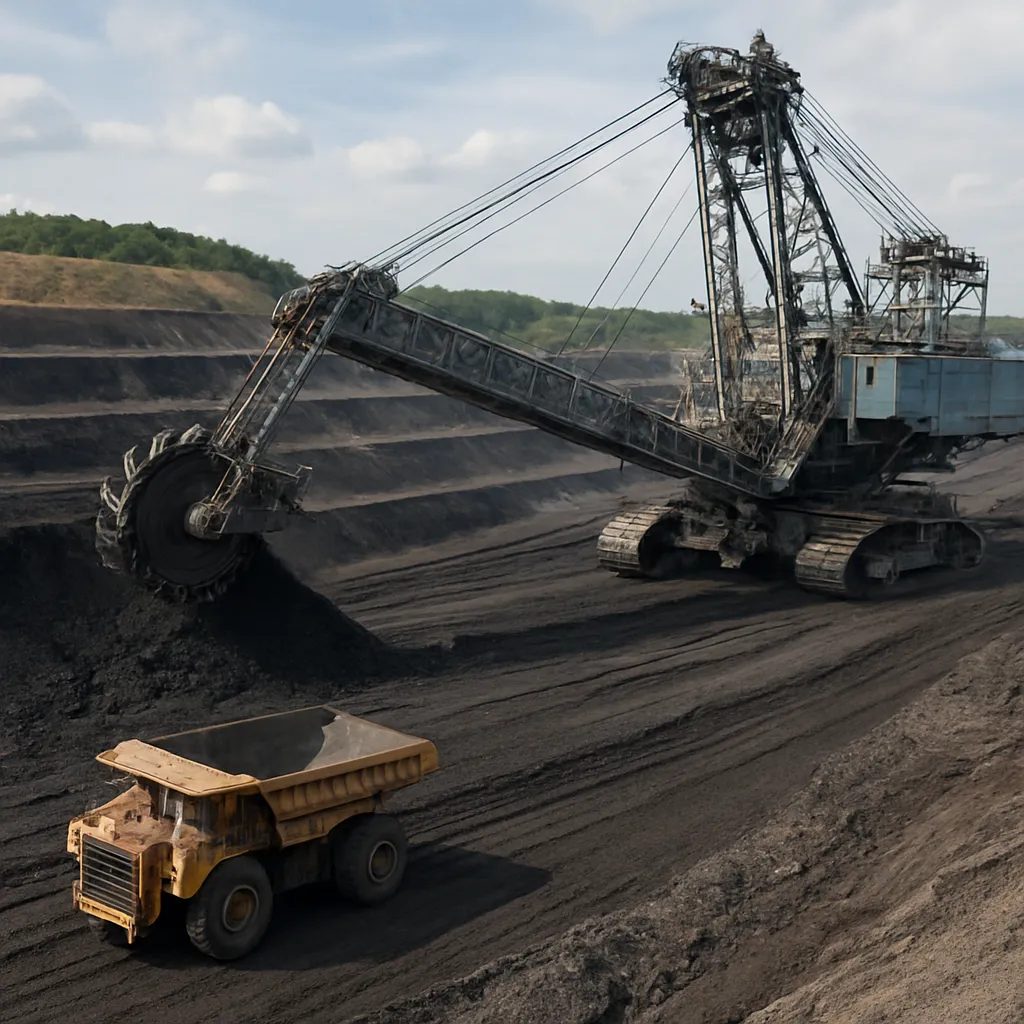
Extraction at Banovići has traditionally combined underground and open-pit techniques. Modern operations tend to emphasize mechanization, safer working conditions and optimization of overburden removal and coal extraction to maintain economical output.
Open-pit and underground workings
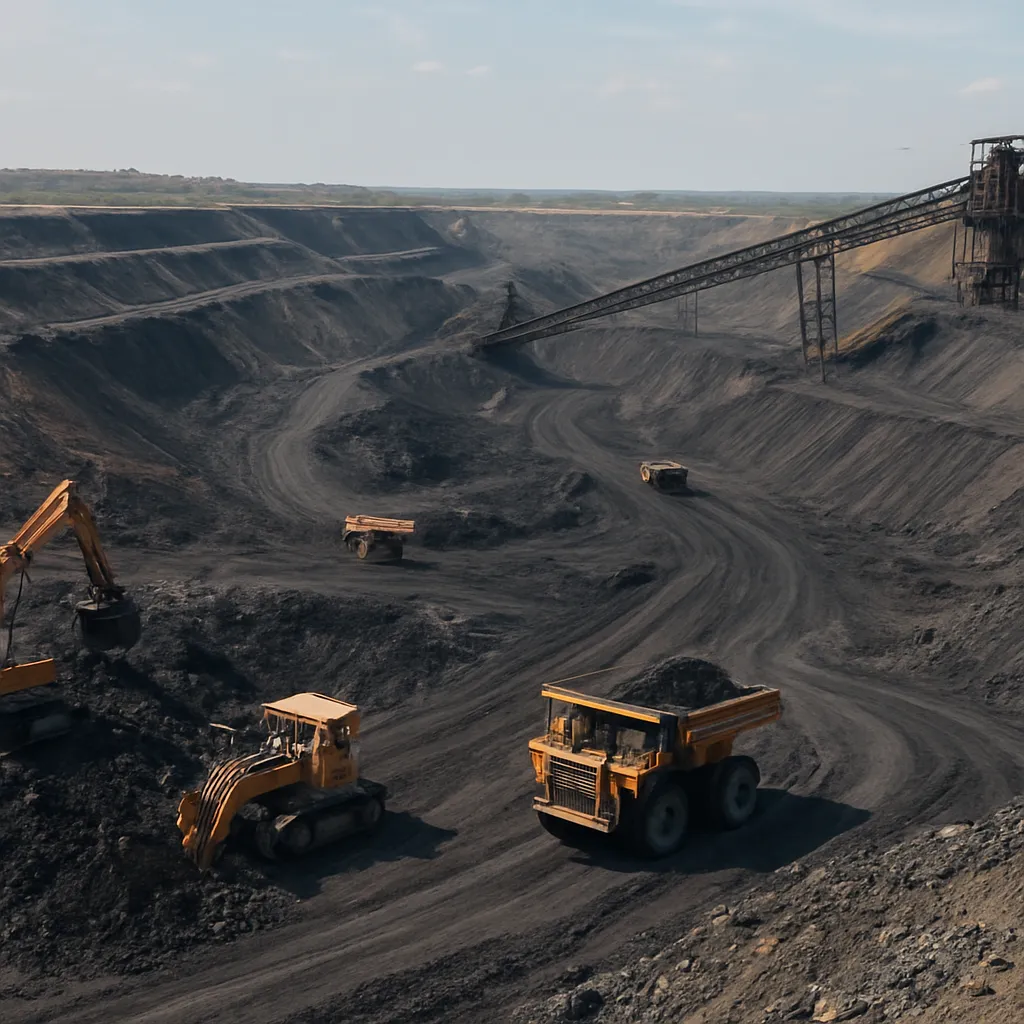
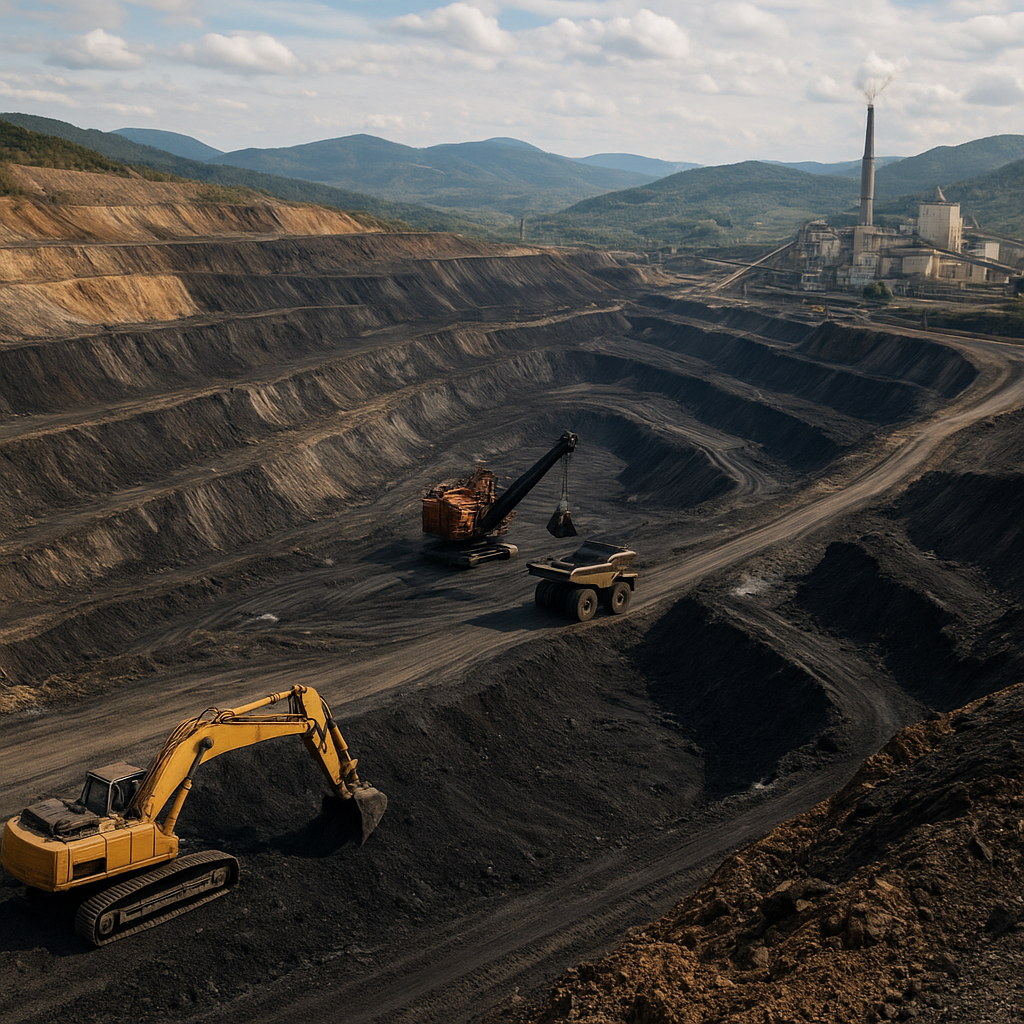
Open-pit mining is favored where seams come close to the surface and the overburden can be removed economically. In steeper or geologically complex areas, underground mining methods are used. Both methods require attention to slope stability, groundwater control and controlled blasting where applicable. Coal is normally broken, crushed and sometimes sized or blended before being delivered to local consumers or transferred to regional power plants.
Processing and transport
Because of the lignite’s moisture and ash, some processing steps—screening, sizing, dewatering and sometimes basic beneficiation—can improve combustion performance and transportation efficiency. Transport is typically by truck or rail to nearby consumers; the economics of canalized rail transfer to major thermal plants has historically influenced the local supply chains.
Economic and social significance
The Banovići mine is an important employer and economic pillar for the local municipality and surrounding communities. It supports direct employment in mining and processing, indirect jobs in logistics, maintenance and services, and contributes to municipal revenues through taxes and social programs tied to the mining company. For many decades, coal extraction has been integral to the local identity and workforce structure.
Employment and local economy
At peak times the mine and associated operations provide thousands of jobs (direct and indirect), forming a central component of the local labor market. The economic dependency on mining creates both benefits—steady employment, infrastructure—and vulnerabilities: when production falls or market conditions change, unemployment and social stress rise rapidly. The mine typically supports a range of small businesses and public services that depend on miners’ incomes.
Role in national energy supply
Banovići’s lignite supplies local heat and power consumers and, to some extent, regional thermal power plants. While not the largest coal producer in Bosnia and Herzegovina, Banovići contributes to domestic fuel diversity and energy security by reducing the need to import coal or other solid fuels. Its presence is also relevant to grid stability where thermal generation remains part of the energy mix.
Statistics and production data (estimates and context)
Precise numbers for reserves and annual output can vary by source and by method of estimation. The following figures should be read as indicative ranges based on widely reported assessments rather than precise audited totals.
- Estimated geological reserves: commonly reported in the range of several hundred million tonnes of lignite (estimates vary; some sources indicate two to several hundred million tonnes of in-situ coal).
- Recoverable reserves: a smaller subset of geological reserves, depending on economic, technical and environmental constraints. Recoverable figures are naturally lower and more conservative.
- Annual production: typically measured in the low millions of tonnes per year for similar regional lignite mines (often in the range of about 1–2 million tonnes per annum at different stages of operation, depending on demand and investment).
- Workforce: historically in the thousands when counting direct and indirect employment supported by mine activity; in recent decades numbers fluctuate with modernization and restructuring.
These figures may change as exploration campaigns, reclamation plans and economic assessments are updated. National energy planning, investment in mine infrastructure and regional demand conditions strongly influence how quickly reserves can be converted into annual production.
Environmental impacts and mitigation
As with any sizable lignite operation, Banovići’s mining and combustion activities produce environmental challenges. The most significant impacts include land disturbance, dust generation, water management issues, and greenhouse gas emissions from combustion.
Direct environmental effects
- Land use and landscape change: surface mines create characteristic scarred landscapes; reclamation can restore vegetation and alternative land uses over time.
- Air quality: dust from mining, coal handling and transport can affect local air quality; combustion of lignite produces particulate and gaseous emissions.
- Water and groundwater: dewatering operations and runoff management are necessary to avoid contamination of local water bodies; mine drainage and sediment control require continuous monitoring.
- CO2 and climate: burning lignite is relatively carbon-intensive; emissions from local combustion contribute to Bosnia and Herzegovina’s national greenhouse gas inventory.
Mitigation and reclamation efforts
Operators and authorities have worked to reduce impacts through measures such as dust suppression, water treatment systems, progressive reclamation of worked-out areas, stabilized slopes and re-vegetation. Modernization of combustion plants (where coal is used) and improved efficiency in coal handling can also reduce local pollution per unit of energy produced.
Regulatory context and energy transition pressures
Banovići operates within a regulatory framework that reflects national energy policies and growing international pressure to decarbonize. The European Union’s climate goals and broader international commitments place long-term constraints on coal use, even for countries outside the EU that are economically linked to European markets.
Policy and economic pressures
Coal-dependent regions like Banovići face a difficult balance: continuing to provide employment and affordable energy in the short term while planning for lower-carbon futures. Policy tools in play include emissions regulations, incentives for cleaner technologies, funds for “just transition” initiatives to retrain workers and diversify local economies, and potential support for mine reclamation and redevelopment.
Potential pathways for the future
- Modernization and efficiency: improving mining and combustion efficiency to lower local pollution and fuel use per MWh.
- Coal-to-value adjustments: limited beneficiation, drying or blending to raise fuel quality for specific industrial uses.
- Economic diversification: attracting alternative industries, renewable energy projects or services to reduce dependence on coal.
- Reclamation and repurposing: converting exhausted pits into lakes, industrial parks or other community assets.
Interesting aspects and local initiatives
Beyond its straightforward industrial role, the Banovići mine has cultural and socio-economic significance in the region. Mining traditions influence local identity, and former or current mine infrastructure is sometimes part of education and heritage projects. Local initiatives may include training centers, small-scale research collaborations with universities about mine reclamation, and community-driven programs to improve post-mining land use.
Innovation and community projects
Some mining communities explore co-firing with biomass, small-scale district heating improvements or pilot reclamation projects that combine nature-based solutions with community recreation spaces. These initiatives are often supported by a mix of company funds, local government and international development assistance when available.
Conclusions and outlook
The Banovići coal mine remains an important component of the local economy and a contributor to regional energy supply in Bosnia and Herzegovina. It is characterized by lignite reserves that have supported decades of extraction and provided employment and energy security for nearby communities. However, like many lignite operations in Europe and neighboring regions, Banovići faces economic, environmental and policy challenges linked to the global move away from coal.
Managing the transition—preserving livelihoods while reducing emissions—will require strategic planning, investment in cleaner technologies and diversification measures. For the near term, continued operation will likely emphasize improved efficiency, environmental controls and progressive reclamation. For the longer term, successful models will blend community-driven economic development with innovative reuse of mine lands and integration of low-carbon energy solutions.
Key words: Banovići, lignite, RMU Banovići, reserves, open-pit, underground, employment, energy, environment, reclamation.