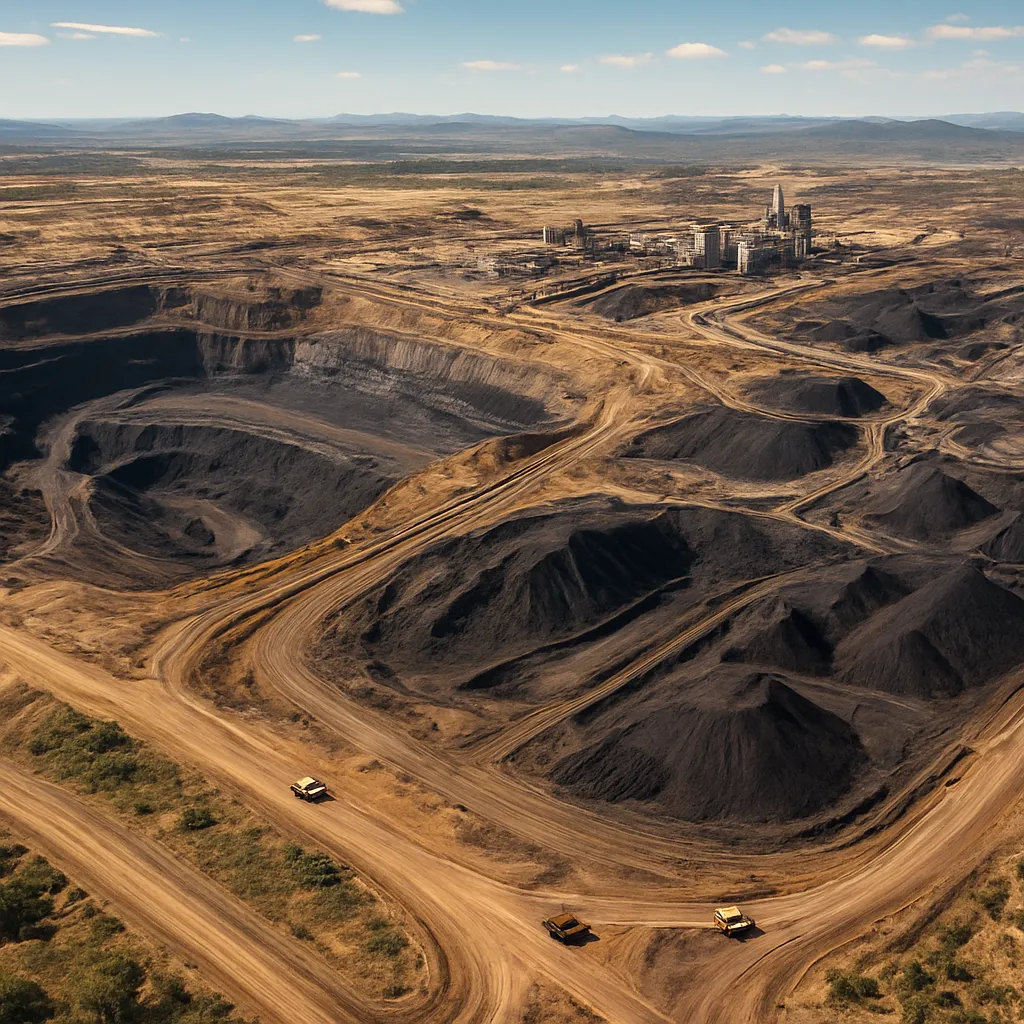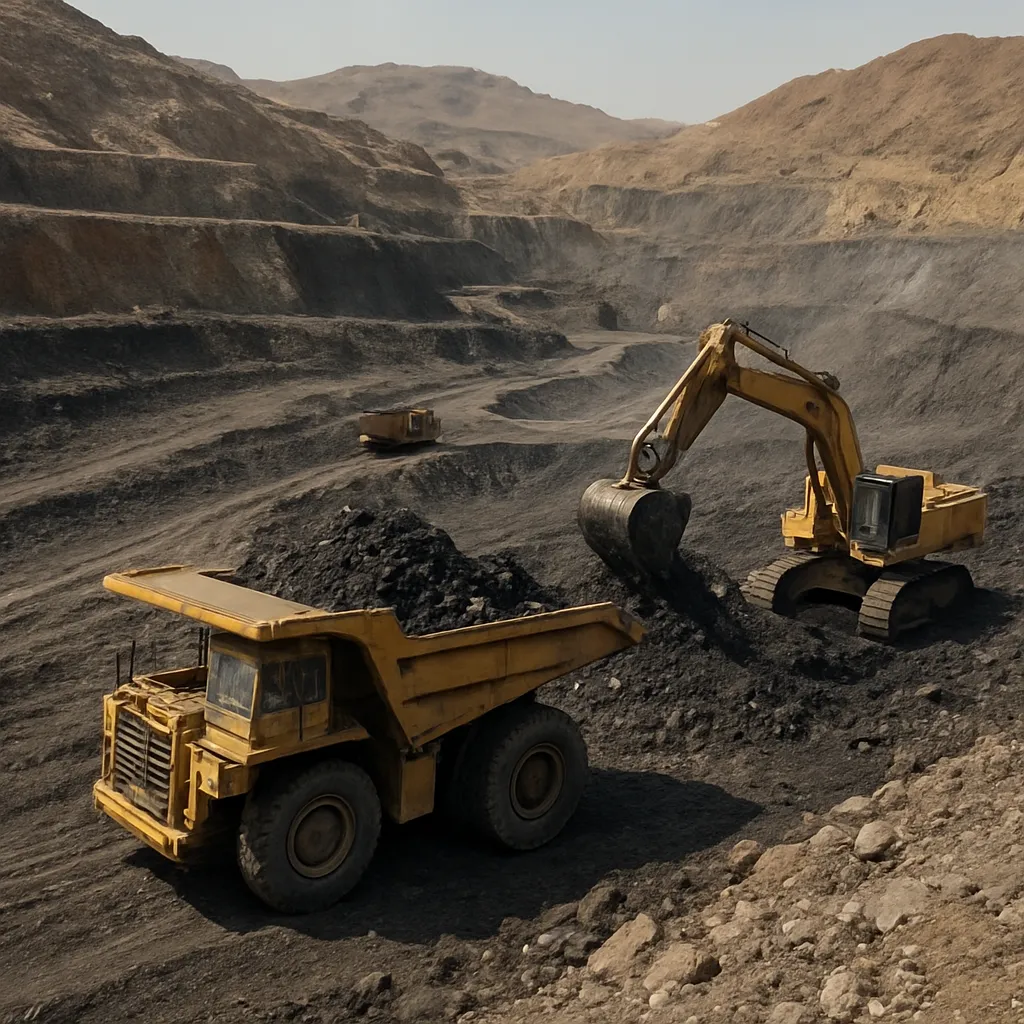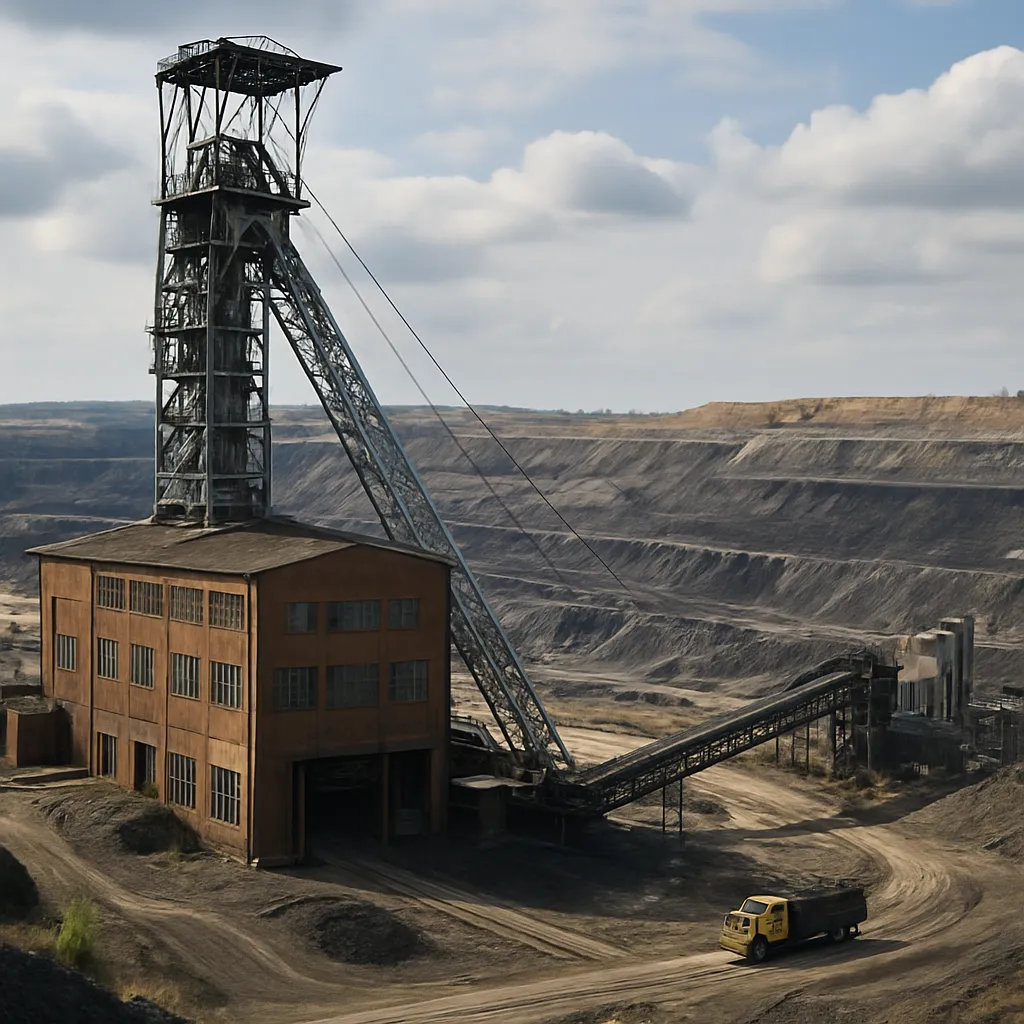
The Murcki–Staszic Mine is one of the notable coal mining sites in southern Poland, located in the industrial heart of the Silesian region. Established through the integration of earlier mining facilities, it forms an important part of the regional mining landscape and the portfolio of Poland’s coal industry. This article reviews the mine’s location, geological setting, the types of coal produced, operational and economic data, its role in local and national industry, environmental and safety issues, and prospects for the future.
Location and geological setting
The Murcki–Staszic Mine is situated in the city of Katowice, within the Upper Silesian Coal Basin (Polish: Górnośląskie Zagłębie Węglowe), one of Europe’s most important coal-bearing regions. The basin is a complex of Carboniferous-age sedimentary sequences that host multiple coal seams with variable thickness and quality. The mine works seams that belong to this basin and exploits layers that vary in depth, quality and methane content.
Geologically, the deposit consists of multiple layers of bituminous coal, formed during the Carboniferous period. Coal seams in this part of Silesia are typically characterised by relatively high calorific value and, in some horizons, favourable properties for coke production. The strata are interbedded with mudstones, sandstones and other sedimentary rocks, which influences the mining method and the need for roof support and rock mechanics measures.
History and development
The site known today as Murcki–Staszic has evolved through several administrative and operational changes. Historically, the mining activity in the Murcki and Staszic areas goes back to the early 20th century and mid-20th century respectively, with expansions and modernizations over the decades. At times they operated as separate mines before consolidation under larger state or corporate entities. In the post-communist era, the mine became part of broader restructuring in Poland’s coal sector and is currently linked to one of the major Polish coal companies.
Over the years the mine has undergone mechanization and modernization to support longwall mining systems, upgrade underground conveyance and safety systems, and reduce production costs. Investment cycles mirrored the broader economic and political shifts in Poland — with modernization in the late 20th and early 21st centuries aiming to increase efficiency while addressing safety and environmental standards.
Types of coal and production characteristics
Murcki–Staszic produces primarily hard coal (bituminous coal). Within the range of coal qualities found in the mine, there are seams more suitable for steam coal (used for power generation and domestic heating) and seams producing higher-grade coal used for coking, which is important for the steel industry. The mine’s coal is therefore of mixed commercial destination: local thermal power plants and industrial users, coke plants, and some sales for domestic heating.
Operationally, the mine employs longwall mining techniques for large-scale continuous extraction, supported by modern shearers, conveyors and hydraulic roof supports. The nature of the seams — including depth, rock pressure, and methane potential — determines the exact combination of technologies and safety systems used.
Production and reserves (estimates and context)
Precise annual production figures for any mine can fluctuate considerably year-to-year based on market demand, workforce, investment and operational decisions. Historically, Murcki–Staszic has been a medium-scale producer within the regional context. Annual production in recent decades for similar Silesian mines has typically ranged from several hundred thousand tonnes to a few million tonnes. The mine’s exploitable reserves depend on economically recoverable seams, which are periodically reassessed.
- Approximate annual output: commonly in the lower millions of tonnes range (this varies with time and reporting cycles).
- Workforce: employment levels for a mine of this type are usually in the thousands, providing significant employment to the local community and contributing to regional labour markets.
- Reserves: measured in tens of millions of tonnes for many Silesian mines overall; the mine’s specific recoverable reserves depend on geological and economic criteria.
Because official statistics are updated periodically and may be consolidated at the company or national level, readers seeking exact, up-to-date figures should consult the operator’s annual reports or Poland’s mining and geological publications for the latest numbers.
Economic and industrial significance
The Murcki–Staszic Mine plays multiple roles in the local and national economy. At the regional level, it is a source of direct employment and supports numerous ancillary services — equipment suppliers, transportation, maintenance, and local businesses. As part of the Upper Silesian mining cluster, it contributes to the supply chains of Polish heavy industry, notably steelmaking and power generation.
On a national scale, the mine contributes to Poland’s energy security and to the domestic supply of coal, a fuel that historically has been crucial for the country’s electricity generation and heating. Although Poland is undergoing gradual energy transitions, coal mines like Murcki–Staszic still have a strategic economic role—supporting jobs, tax revenues, and regional development.
- Local value chain: the mine supports regional suppliers, transport operators and service companies, multiplying the economic effect of its operations.
- Energy and industry: coal from the mine has provided feedstock for local power plants and coking plants, linking mining to industrial output.
- Fiscal contributions: taxes, royalties and social contributions from mining operations are important to municipal and regional budgets.
Social impact and community relations
Beyond direct employment, the mine affects local identity and culture. Towns and districts in Silesia have historically developed around mining activity; families often have multi-generational ties to the industry. The mine typically invests in community programs, infrastructure and social initiatives, although the scale and specifics vary with the mine’s financial situation and corporate strategy.
However, mining also brings social challenges: occupational health issues, noise, subsidence risks in older workings and long-term economic transitions as global energy markets evolve. Local authorities and operators often collaborate on retraining programs and economic diversification plans to reduce community dependence on a single industry.
Environmental and safety considerations
Mining operations like Murcki–Staszic must balance extraction with environmental protection and worker safety. Key environmental considerations include land subsidence, water management, dust and particulate emissions, and methane management. Many Polish mines have implemented measures to limit surface impact, treat mine water, and control dust emissions through sealed conveyors and filtration systems.
Methane is a particular concern in parts of the Upper Silesian Coal Basin. Effective methane drainage and monitoring are crucial for safety and also present opportunities: captured methane can be used as an energy source or fed into local gas networks, reducing greenhouse gas emissions if properly managed. The mine has likely adopted methane management strategies such as degassing boreholes, ventilation optimization and monitoring systems, consistent with industry practice.
Worker safety is managed through rigorous protocols: ventilation, gas detection, rock support and emergency preparedness. Longwall mining involves constant attention to geomechanics and roof control. Over recent decades, Poland’s mining sector has improved safety indicators significantly via mechanization, training and regulatory oversight, but mining remains an activity with inherent risks.
Technological modernization and innovation
To maintain competitiveness, Murcki–Staszic has participated in ongoing modernization. This includes mechanised longwall systems, automated material handling, remote monitoring and improvements in underground communications. Mine automation reduces manual exposure to hazards, increases recovery rates and may lower unit costs.
Innovation trends relevant to the mine include:
- Advanced longwall shearing systems and roof support technology to increase productivity and safety.
- Digital monitoring solutions—sensors and data analytics—to optimise ventilation, methane detection and equipment maintenance.
- Energy efficiency measures and integration of captured mine methane into local energy systems.
- Environmental remediation techniques for post-mining site restoration.
Challenges and regulatory context
Poland’s coal industry operates in a shifting regulatory and market environment. European Union climate policies, domestic energy transition goals and fluctuating international coal prices all influence the viability and planning horizon for individual mines. Operators must adapt to stricter emissions standards, potential carbon pricing and changing domestic demand for coal.
Financial sustainability can be a challenge during periods of low coal prices or when mines require significant capital investment to access deeper reserves. As a result, many mines have received state support or have been subject to consolidation, rationalisation and restructuring programs. These processes aim to balance socio-economic impacts with long-term energy and environmental objectives.
Future prospects
The future of Murcki–Staszic will depend on a combination of factors: the availability and economics of reserves, national energy policy, market demand for thermal and coking coal, investment capacity, and the pace of technological adaptation. Short- and medium-term prospects may see continued production to serve regional industrial demand, while longer-term pathways could involve gradual downscaling, repurposing of mine infrastructure, or transition projects.
Potential future directions include:
- Continued modernization to maintain cost-competitive production.
- Utilisation of methane and other mine gases for local energy applications.
- Post-mining land reclamation and redevelopment for industrial, commercial or recreational use.
- Workforce retraining and diversification programs to support the local economy as mining activity changes.
Interesting facts and broader context
Some contextual points that illustrate the mine’s place in regional history and industry:
- The Upper Silesian Coal Basin, where the mine is located, has been the backbone of Poland’s heavy industry for more than a century, shaping urban development, transport infrastructure and social structures.
- Even as Poland diversifies its energy mix, local coal mines remain an important element of energy resilience and cultural identity in Silesia.
- Technologies developed or implemented in the region often transfer between mines, creating a local ecosystem of suppliers, engineers and technical expertise.
- Reclamation of former mining areas across Silesia provides examples of urban and ecological renewal, from green spaces to commercial redevelopments—pathways that may be relevant for future Murcki–Staszic projects.
Summary
Murcki–Staszic is a representative example of a Silesian coal mine: geologically situated in the Upper Silesian Coal Basin, producing mainly bituminous coal for thermal and industrial use, and embedded in the economic and social fabric of Katowice and its surroundings. The mine’s operational profile includes mechanised longwall mining, attention to methane and environmental management, and ongoing modernization efforts. Economically, it contributes to local employment, industrial supply chains and regional fiscal revenues, while facing challenges from market fluctuations and energy transition pressures. The mine’s medium-term future likely involves a mix of continued production and adaptation, with long-term pathways shaped by policy, economics and technological choices.