Ejin Horo Mines, located in the heart of Inner Mongolia’s coal-bearing region, represent an important set of mining operations within China’s broader energy landscape. This article outlines the location, geological setting, types of coal produced, economic and statistical dimensions, industrial significance, environmental and social impacts, logistics and infrastructure, and future prospects. The goal is to give a comprehensive overview useful for industry observers, policymakers, students and anyone interested in the role of a major Chinese coal-producing area in the 21st century.
Location and geological setting
Ejin Horo (sometimes transcribed as Ejinhoro) is an administrative banner in central Inner Mongolia, situated within the Ordos Plateau. The banner lies in close proximity to the broader Ordos Basin, one of China’s principal coal-bearing regions. The area’s geology is dominated by Cretaceous and younger sedimentary sequences that host multiple coal seams of varying thickness and quality. Mining activity in Ejin Horo is concentrated on large surface deposits that are amenable to open-pit mining methods, although smaller underground workings and associated processing facilities exist in the surrounding districts.
The Ordos Basin is a structural depression filled with fluvial and lacustrine sediments. Over geological time the accumulation of organic matter under suitable conditions produced extensive coal seams. In Ejin Horo, these seams generally lie at shallow to moderate depth, allowing high production rates via mechanized excavation. Local topography is semi-arid, with grassland and sparse vegetation, which has facilitated the expansion of large surface mines but also creates specific environmental sensitivity regarding dust and reclamation.
Mining operations and coal types
Mines clustered in the Ejin Horo area extract coal primarily intended for thermal power generation and industrial use. The coal types are predominantly low- to medium-rank bituminous coal and, in places, sub-bituminous grades. These coals are typically used as thermal coal (steam coal) for electricity generation, district heating and industrial boilers. In some cases, higher-quality seams or blended and washed coal can be directed toward metallurgical use after beneficiation, but the primary role remains as a fuel in power and industrial sectors.
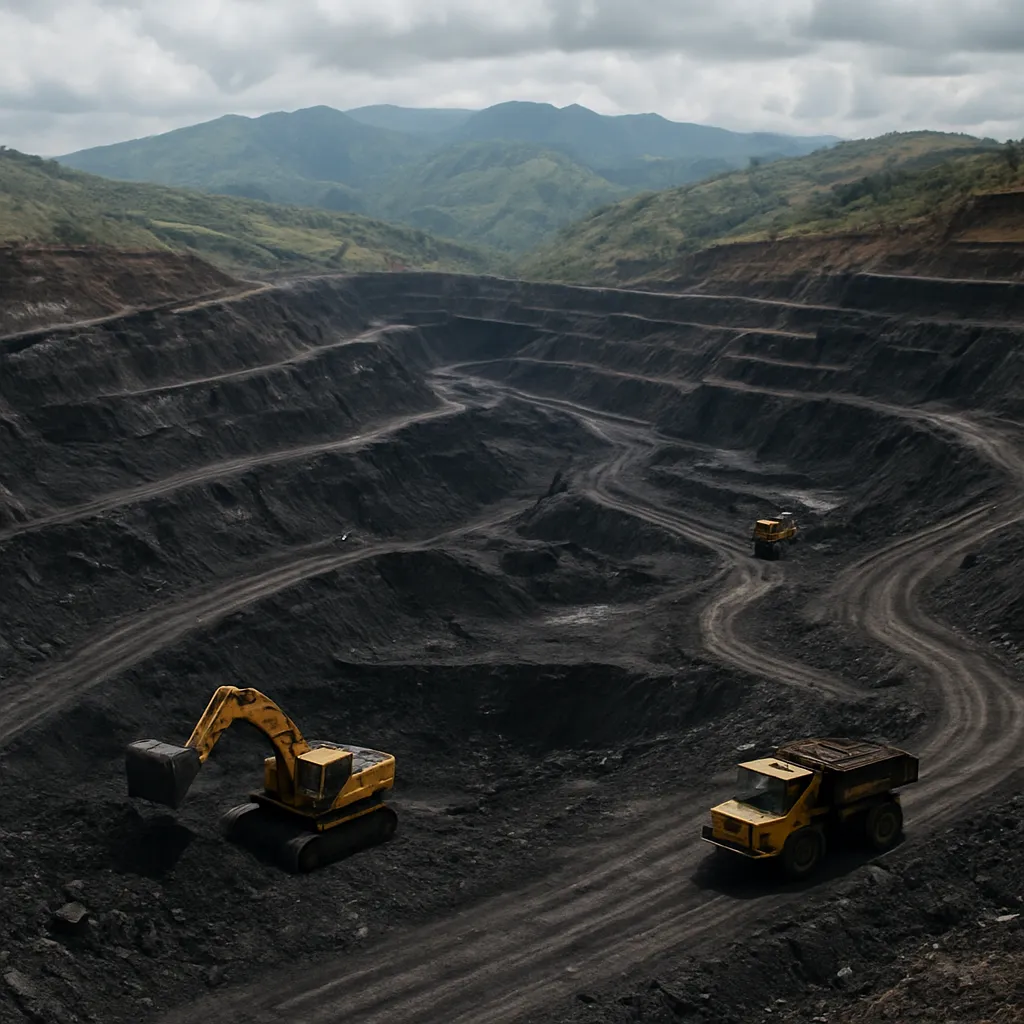
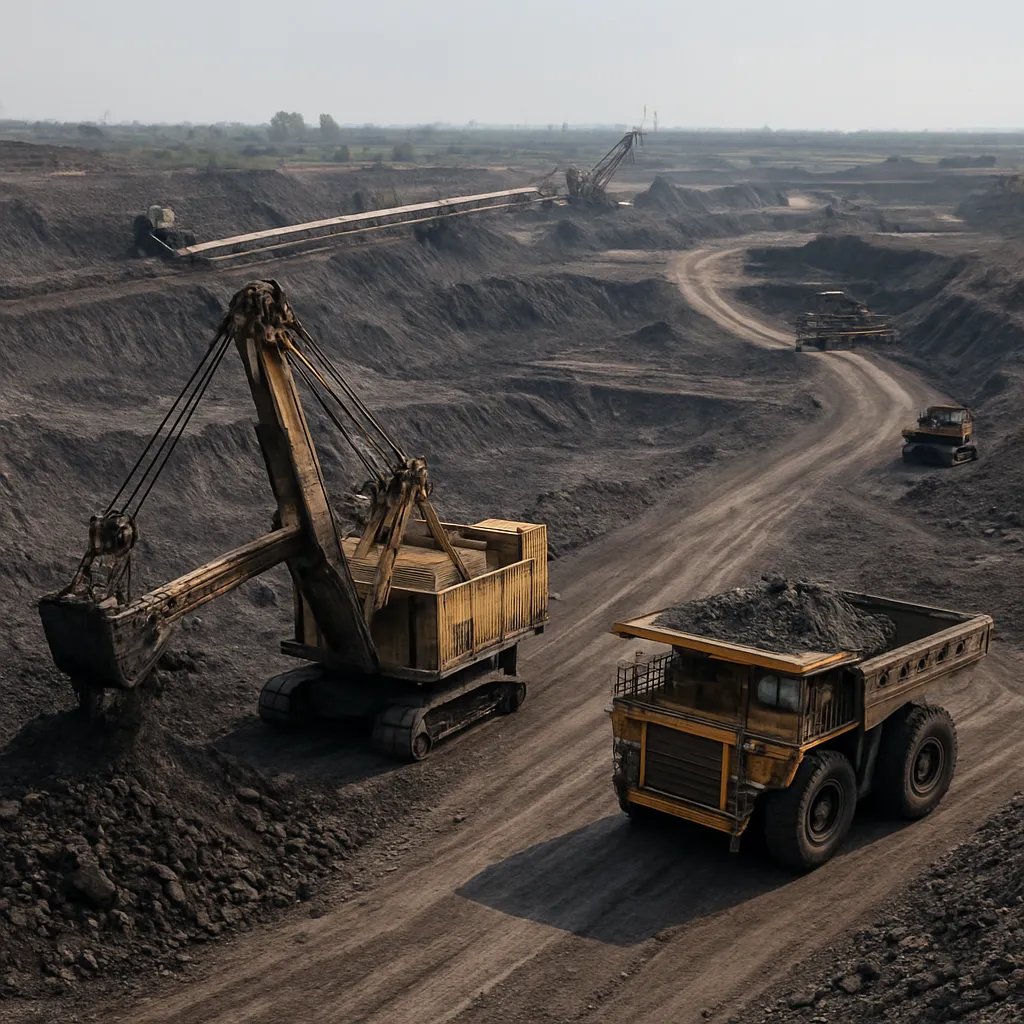
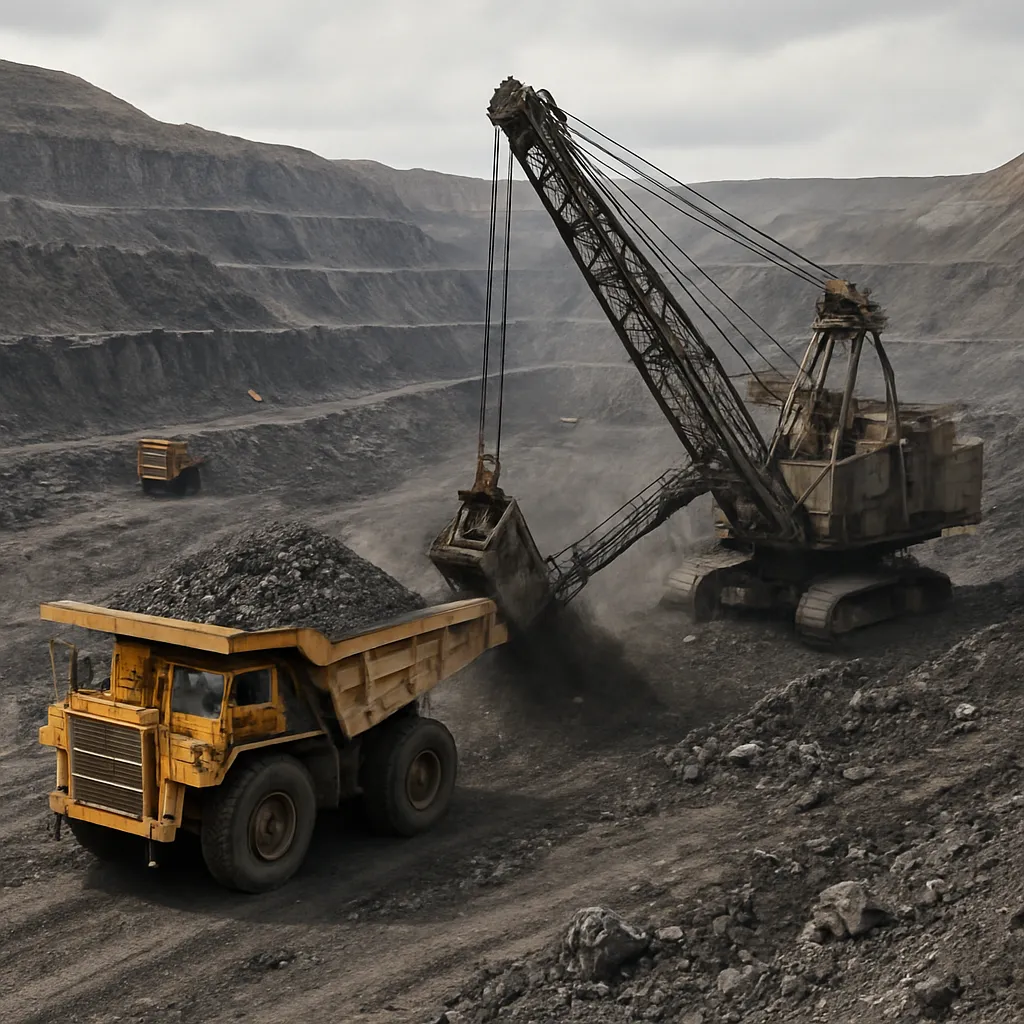
Most commercial operations in Ejin Horo employ modern, large-scale open-pit techniques: draglines, bucket-wheel excavators, large shovels, and high-capacity haul trucks. Surface mining allows rapid extraction of large volumes, which supports economies of scale. Complementary facilities include coal-washing plants, overburden disposal areas, conveyor systems, and on-site power for processing. Mines operate with varying degrees of mechanization and automation; larger operators have invested in digital monitoring, fleet management and remote-control equipment to increase efficiency and safety.
Reserve characteristics and seam quality
Coal seams in the Ejin Horo portion of the Ordos Basin are typically thick but can vary in moisture and ash content. The coal has moderate calorific value compared with high-grade coking coals elsewhere, making it well-suited to power generation. Typical properties include relatively high volatile matter and ash, a factor that necessitates washing and blending for certain end uses. Overall, the geological endowment contributes to a substantial resource base; while precise reserve figures for individual mines fluctuate with ongoing exploration, the broader Ordos Basin is routinely cited among China’s largest coal resource provinces.
Economic, production and statistical significance
Ejin Horo’s mines contribute to regional economic development by providing employment, tax revenue and raw material for industry and power generation. The mining sector in Inner Mongolia has been a major driver of provincial GDP growth over the last two decades, with coal extraction forming a central pillar of local economic structure. While national coal production is dominated by several provinces, Inner Mongolia — and specifically the Ordos region including Ejin Horo — is a key supplier to northern and coastal markets.
Precise, up-to-date production figures for a specific Ejin Horo mine vary with company reporting, but the district’s open-pit operations are capable of producing from several million to tens of millions of tonnes annually per large site. Collectively, mines in the Ordos Basin have historically accounted for a significant share of China’s coal output. On a provincial level, Inner Mongolia has produced close to or over 1 billion tonnes of coal in recent peak years, representing a substantial portion of the country’s total coal production; Ejin Horo contributes a portion of that output proportional to the scale and number of active pits within its administrative boundaries.
Economic impacts extend beyond direct production. Coal-related investment stimulates local construction, transport and service industries. Revenues from mineral rights, royalties and corporate taxes provide funds for municipal budgets, infrastructure projects and public services. However, dependence on commodity cycles makes local economies susceptible to price swings, national production controls, and environmental regulation.
- Reserves: Part of the Ordos Basin’s large coal endowment; estimates for the broader basin run into tens of billions of tonnes.
- Production: Individual large open-pit mines in the region commonly reach annual outputs in the single- to double-digit millions of tonnes range.
- Employment: Mining operations provide thousands of direct and indirect jobs in extraction, processing and logistics.
Industrial importance and downstream use
Coal from Ejin Horo feeds thermal power plants, industrial boilers, and local chemical enterprises. Its primary role is to ensure energy security for northern China, especially during winter heating seasons when demand spikes. Proximity to rail corridors enables shipment to provincial power grids, metallurgical centers (after beneficiation when appropriate), and export terminals when market conditions favor seaborne sales.
Steel and chemical industries in nearby provinces occasionally use washed or blended coal from Ordos deposits. Moreover, coal-to-chemical projects — historically emphasized in some parts of Inner Mongolia and Shanxi — may find resource feedstock in the region, although such projects are sensitive to environmental scrutiny and national policy shifts toward lower-carbon alternatives.
Infrastructure, logistics and market pathways
Efficient transport is essential to make large-scale surface mining economically viable. Ejin Horo mines rely on a combination of heavy-duty roads, conveyor belts where feasible, and critical rail connections that link the mines to China’s national rail network. Railway loading terminals are often constructed near large pits to allow continuous outbound flow of coal. From railheads, coal travels to power stations in northern provinces, to industrial customers, or to coastal ports for export.
Seasonal factors, such as winter transport disruptions, and bottlenecks on popular rail corridors can affect delivery times and costs. In response, mine operators coordinate with logistics providers and with government agencies to prioritize coal shipments during peak demand periods. Price formation for Ejin Horo coal follows national markets, with local grades adjusted for calorific value, ash, sulfur and moisture content.
Environmental, health and social impacts
Mining in Ejin Horo has created tangible environmental and social challenges. Large open pits alter landscapes and hydrology; dust and particulate emissions from excavation, haul roads, and coal handling affect air quality and can contribute to respiratory complaints among local populations. Water consumption and the potential for groundwater drawdown are important considerations in semi-arid settings. Spoil heaps and waste rock can generate erosion and, if left unmanaged, long-term landscape degradation.
Socially, mining brings both benefits and strains. Employment opportunities, improved roads, and enhanced public revenues are offset by disruptions to traditional pastoral and agricultural livelihoods, influxes of migrant workers, and the need for new housing and public services. Occupational safety is a priority: mechanized surface mining reduces some underground risks, but heavy equipment accidents, dust exposure and noise remain workplace hazards.
To address impacts, mines undertake mitigation measures: dust suppression systems, progressive reclamation of worked-out benches, water recycling in processing plants, and ecological restoration projects. Reclamation can include regrading spoil, restoring topsoil where possible, and planting native grasses or shrubs suited to local climate. Regulatory oversight from provincial and national environmental agencies has strengthened in recent years, with stricter permitting, emissions control and monitoring requirements.
Technology, safety and reclamation practices
Modern Ejin Horo operations have adopted a range of technological solutions to improve efficiency and safety. Fleet telematics, automated dispatching, real-time monitoring of equipment health and remote-control systems for some excavators and drills help reduce downtime and accidents. Coal-washing and beneficiation plants enhance product value by reducing ash and sulfur content. Monitoring of air quality and noise around mine perimeters supports community relations and compliance.
Safety management includes structured training programs, emergency response plans, and health surveillance for employees. Reclamation strategies are increasingly integrated into mine planning: operators set aside post-mining landforms and funds for restoration. In some projects, former pits are converted to industrial sites, reservoirs, or ecological zones, though successful long-term restoration in a semi-arid environment requires sustained investment and appropriate species selection for revegetation.
Policy context and future prospects
Ejin Horo’s future is shaped by multiple, sometimes competing, forces. On one hand, China’s short- to medium-term demand for coal remains significant for power stability and industrial processes. On the other hand, national commitments to peak carbon emissions and achieve carbon neutrality by mid-century are accelerating a shift toward cleaner energy, efficiency measures and, in some sectors, fuel substitution.
Policy measures affecting Ejin Horo include consolidation of small, unsafe mines into larger, regulated operations; stricter environmental standards for emissions and water use; and regional planning that balances resource extraction with ecological protection. Market dynamics — such as coal prices, competition from renewables and natural gas, and global economic conditions — will influence investment patterns. Technological advances in carbon capture, utilization and storage (CCUS), if commercialized at scale, could extend the role of thermal coal in a decarbonizing energy system by mitigating greenhouse gas emissions from combustion.
The likely near-term scenario for Ejin Horo is continued, though potentially moderated, mining activity: large, well-managed open-pit operations producing coal for regional markets while increasingly complying with environmental and social requirements. Over the longer term, diversification of the local economy, investment in reclamation, and adaptation to national climate goals will determine the intensity and nature of mining activity.
Interesting facts and contextual points
- Mines in the Ordos region, including those near Ejin Horo, are among the most productive surface mines in China due to seam thickness and favorable mining conditions.
- Open-pit operations generate economies of scale: a single large pit can supply multiple power stations and industrial consumers for decades, depending on the seam extent.
- Reclamation experiments in Inner Mongolia have explored the use of drought-tolerant grasses and shrubs to stabilize spoil and restore grazing potential.
- Local governments often balance mineral development with pastoral and ecological priorities, leading to integrated land-use planning in some banner-level administrations.
- As transport infrastructure improves, mines can reach more distant markets, but this also ties local production to broader national and international price cycles.
Concluding overview
Ejin Horo Mines play a clear role in supplying coal to China’s northern and national energy systems. Their geological endowment, dominated by accessible coal seams within the Ordos Basin, supports large-scale production using modern open-pit methods. The economic advantages for the region are significant, providing jobs, fiscal revenues and raw materials for power and industry. At the same time, environmental, health and social impacts require active management through regulation, technology and reclamation. The long-term trajectory of Ejin Horo will depend on national energy policy, market forces and the success of mitigation and diversification strategies designed to reconcile resource use with environmental sustainability.