The coal-bearing tracts surrounding the industrial city of Durgapur in West Bengal occupy a central place in India’s mining history and present-day energy economy. Located within the greater Raniganj–Bardhaman coal belt, the mines in and around Durgapur have supplied raw fuel to local heavy industry, thermal power stations and regional markets for more than a century. This article explores the geology, mining operations, economic importance, environmental and social impacts, and future prospects of coal mining activity connected to Durgapur, offering a broad statistical and contextual picture where specific data are available.
Location, geological setting and coal types
The coal-bearing region around Durgapur lies in the eastern part of the Indian peninsula, in the Paschim Bardhaman district of West Bengal, close to the historic Raniganj Coalfield. The Raniganj–Bardhaman tract is one of India’s oldest and most extensively worked coalfields, forming part of the larger Damodar Valley Coal belt that stretches across West Bengal and Jharkhand.
Geologically, coal seams in the Durgapur area are part of Permian and Gondwana formations. The coal here is mainly of the Gondwana sequence and displays characteristics typical of Indian coalfields:
- Predominantly bituminous to sub-bituminous ranks — suitable mainly for thermal applications (power generation and industrial steam), though some seams yield higher-grade coal used for metallurgical purposes.
- Relatively high ash content compared with many imported coals, which affects calorific value and necessitates beneficiation or washing for particular industrial uses.
- Variable seam thickness and depth, giving rise to both underground and opencast mining methods across different pockets.
The Durgapur region’s coal is therefore principally an energy feedstock rather than a dominant source of premium coking coal, although localized grades suitable for coking or partial metallurgical use exist within the broader basin.
Mining operations, infrastructure and processing
Coal mining in the Durgapur area is organized as a mixture of historical underground workings and modern opencast mines. Operations are conducted by a combination of public sector entities and private contractors; the most prominent operator in the region is Eastern Coalfields Limited (ECL), a subsidiary of Coal India Limited. ECL administers a network of collieries across the Raniganj and adjacent areas, and the Durgapur-adjacent mines form part of its operational footprint.
Mining methods and equipment
- Underground mining: Older seams have traditionally been exploited by underground workings using room-and-pillar and bord-and-pillar techniques. These areas are often characterized by legacy issues such as subsidence and abandoned voids.
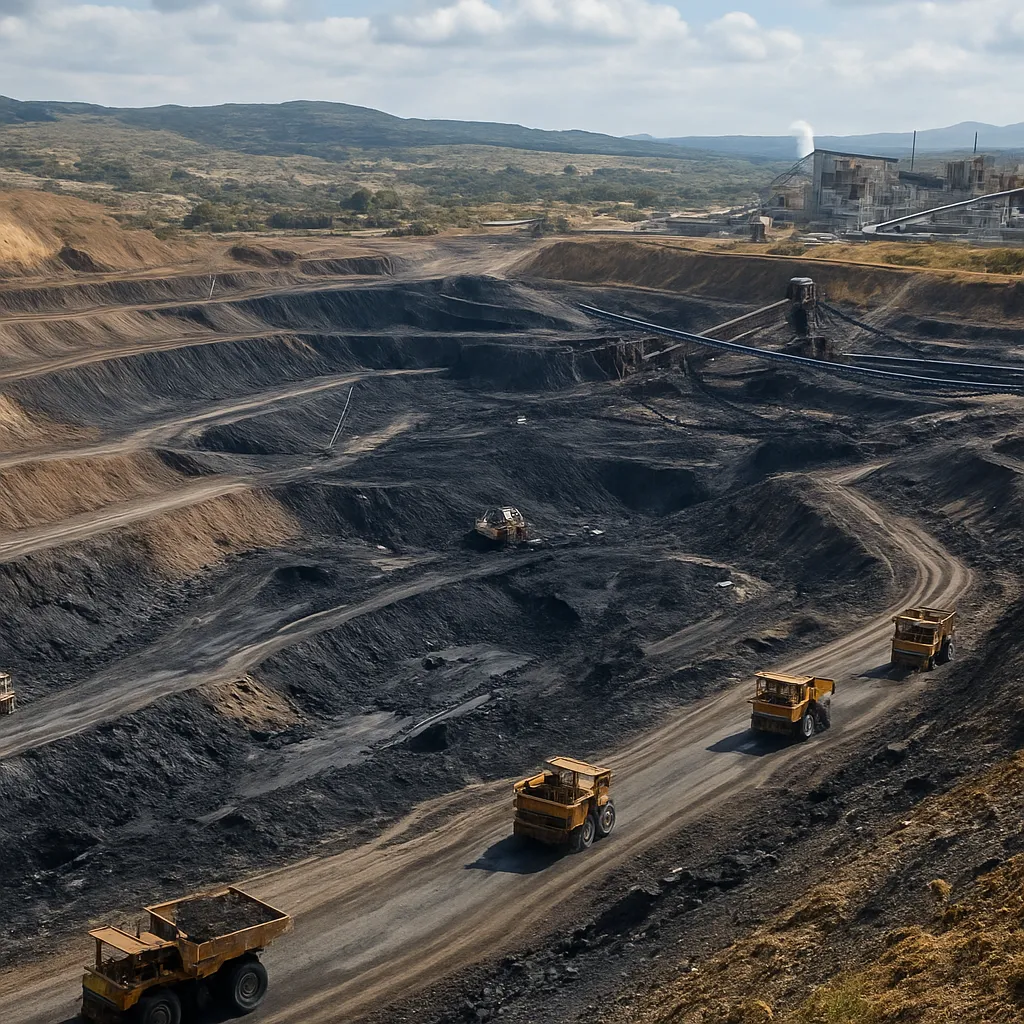
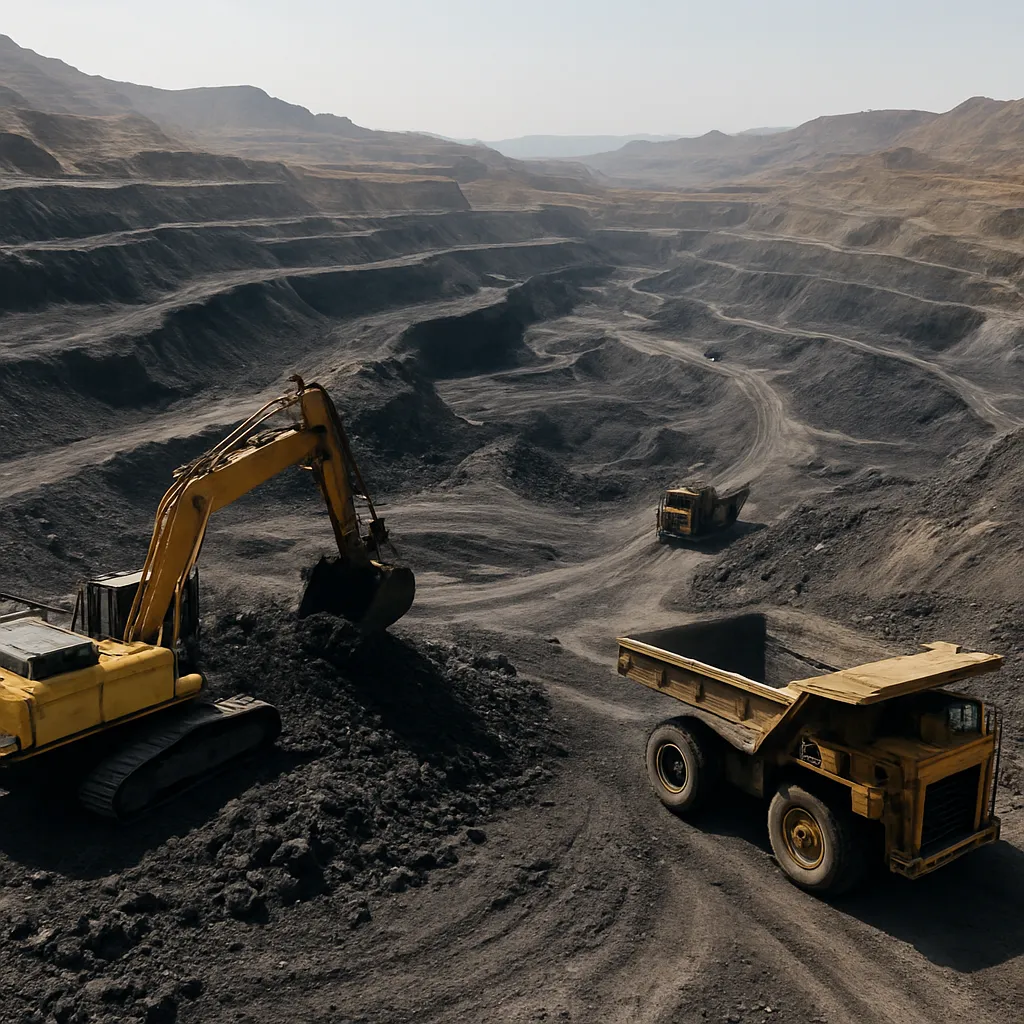
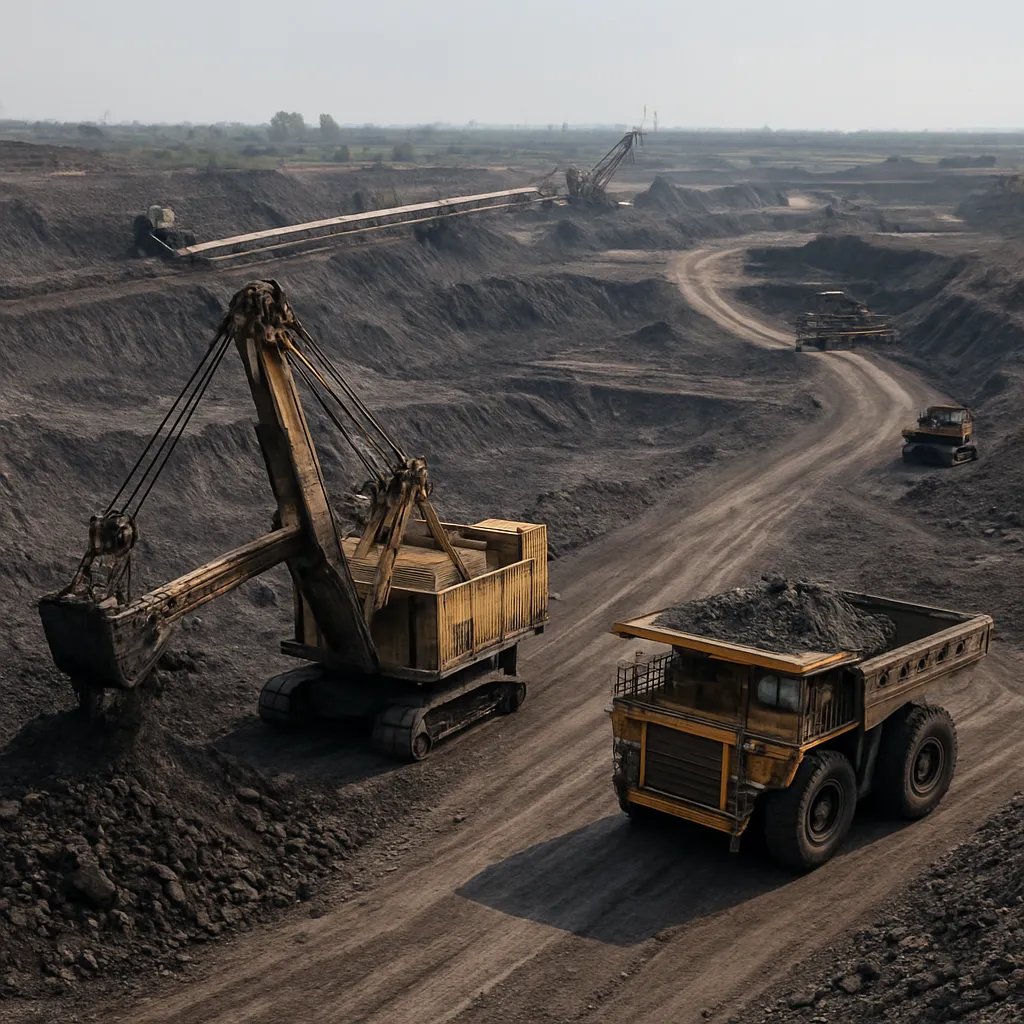
- Opencast mining: In recent decades, there has been a marked shift toward opencast methods where geology and land availability permit. Opencast mines favor higher productivity and mechanization (draglines, shovels, dozers, trucks).
- Washery and beneficiation: Because of the high ash content in raw coal, washery facilities and other beneficiation processes have been developed to improve calorific value and reduce environmental emissions when coal is used in industrial boilers and power plants.
Transport and logistics
Durgapur is advantageously sited on major rail and road corridors — the Howrah–Delhi main railway line and national highways — which facilitate movement of coal to local industries and to markets beyond West Bengal. Dedicated rail sidings, road haulage networks and conveyor systems link mine pits to washeries, depots and industrial consumers such as the Durgapur Steel Plant and nearby thermal power stations.
Economic and industrial significance
The coal extracted in the Durgapur area plays multiple roles in the local and regional economy. It fuels power generation, sustains heavy industry, supports employment and underpins ancillary services. Some of the primary economic contributions include:
- Energy supply: Coal from the Raniganj–Durgapur belt provides feedstock for regional thermal power stations and captive power units in industry, supporting electricity reliability and industrial production.
- Industrial raw material: Local industries — notably steel, cement, chemicals and brick-making — rely on regional coal supplies to operate boilers, furnaces and other heat-intensive processes.
- Employment and livelihoods: Mining and allied activities generate direct jobs in extraction, processing and maintenance, and indirect work in transport, services and small-scale trade across the Durgapur metropolitan area.
- Revenue and regional development: Coal royalties, taxes, corporate spending and industrial investment contribute to municipal and state revenues, urban services and infrastructure in Durgapur and surrounding towns.
Durgapur’s industrial ecosystem is anchored by the Durgapur Steel Plant (part of SAIL) and a cluster of engineering, chemical and manufacturing units that depend on affordable and reliable coal supplies. The synergy between mines, washeries and heavy industry has historically strengthened the city’s economic profile.
Statistical snapshot and production context
Obtaining precise, mine-by-mine statistics for the Durgapur cluster can be complicated because production figures are often aggregated under larger administrative units (for example, ECL’s area-wise reporting). Nevertheless, some general points give perspective on scale and trends:
- ECL is one of India’s major coal producers and administers dozens of collieries in the Raniganj-Bardhaman region; Durgapur-area output forms part of ECL’s consolidated figures.
- Over recent decades, the Raniganj–Bardhaman belt has contributed a substantial share to West Bengal’s coal output, with production modes shifting toward opencast methods to raise annual tonnages.
- Quality parameters: coal from the belt typically shows gross calorific values lower than many imported coals and ash contents that frequently exceed 25–35% in raw form; washery processing aims to reduce ash to improve combustion performance.
Because reporting granularity varies year-to-year, estimates for the immediate Durgapur mines should be treated as indicative. National and company-level reports from Coal India / ECL give the most authoritative numbers and provide annual breakdowns by area and mine where available.
Environmental and social impacts
Coal mining in the Durgapur vicinity has produced important economic benefits but has also generated environmental and social challenges that require continual management. Key impact areas include:
Environmental effects
- Air pollution: Dust from mining operations, haul roads and coal handling, plus emissions from coal-fired plants, contribute to particulate matter issues that affect urban and peri-urban air quality.
- Water contamination and usage: Mine dewatering, effluents from washeries, and runoff can alter water chemistry; competition for freshwater between industry, agriculture and households is a recurrent concern.
- Land disturbance: Opencast operations change landforms and soil profiles, necessitating rehabilitation and reclamation after mine closure to restore usability for agriculture or community needs.
- Subsidence and safety: Legacy underground workings can cause surface subsidence affecting structures and agricultural land; mine safety is a perennial focus in both underground and opencast settings.
Social impacts
- Displacement: Expansion of opencast sites sometimes requires land acquisition, with associated resettlement and livelihood impacts that need to be addressed through fair compensation and support programs.
- Health and livelihoods: Occupational health hazards for miners and public health issues for local communities (e.g., respiratory conditions) must be mitigated through protective measures and healthcare access.
- Workforce dynamics: Mining areas often attract migrant labor, creating cultural and provisioning pressures but also enhancing economic opportunities and urban growth.
To manage these impacts, operators and government bodies implement environmental management plans, pollution control systems, afforestation and land reclamation projects, community development programs and occupational safety standards. The effectiveness of such measures varies by operator, regulatory oversight and community engagement.
Technological changes, modernization and safety
Recent decades have seen a drive toward mechanization, automation and improved safety in coal operations around Durgapur, mirroring national trends. Notable shifts include:
- Increased opencast mining where geology permits, enabling higher productivity through large-scale earthmoving equipment.
- Adoption of continuous miners, surface miners and conveyor-based material handling to reduce manual labor and enhance throughput.
- Introduction of mine-monitoring systems, ventilation controls and personal protective equipment to lower accident rates and occupational illness.
- Expansion of washery and beneficiation capacity to improve coal quality and reduce downstream emissions in industrial applications.
Safety remains a priority given the historical risks of underground coal work. Regulatory oversight, worker training programs and technical modernization aim to lower incidence of fatal accidents and to improve rescue and emergency response capabilities where incidents occur.
Future prospects and strategic considerations
The long-term outlook for coal mining around Durgapur will be shaped by multiple intersecting factors:
- Energy policy and demand: India’s continuing need for affordable electricity suggests sustained demand for domestic coal in the medium term, but the pace of growth in renewables and cleaner technologies will influence future coal consumption patterns.
- Quality improvement: Further investment in washing and beneficiation can enhance the utility of Raniganj–Durgapur coal for higher-value uses and reduce environmental footprints.
- Mine life and resource management: Some seams in older parts of the basin are approaching maturity; identifying economically and environmentally viable extensions or new reserves will determine long-term production potential.
- Just transition and economic diversification: As global and national energy systems evolve, planning for alternative livelihoods, industrial diversification and retraining will be important to sustain communities dependent on mining.
Policymakers and industry stakeholders face trade-offs between maximizing near-term economic benefits from coal and meeting environmental and climate commitments. For Durgapur — a city with significant industrial infrastructure — balanced strategies to improve coal quality, minimize environmental harm and foster economic resilience will be central to local planning.
Interesting historical and cultural notes
The Raniganj–Durgapur coal region has been associated with early phases of India’s industrialization. Mining activity in the general Raniganj district dates back to the late 18th and early 19th centuries, making it one of the first areas where coal was mined commercially on the subcontinent. Over decades, the coal belt helped catalyze railway expansion, urbanization and the development of iron and steel works.
Durgapur itself, planned and developed in the mid-20th century, grew as an industrial township to serve and leverage the energy and raw-material base of the surrounding coalfields. The juxtaposition of historic mining enclaves with a post-independence planned industrial city creates a distinct socio-economic landscape where industrial heritage and modern manufacturing coexist.
Practical considerations for stakeholders
For industry, planners and community leaders engaging with coal mining around Durgapur, several practical considerations stand out:
- Prioritize investment in washery and emission-control technologies to make local coal more competitive and less polluting.
- Strengthen health and safety programs, and improve community healthcare provisioning targeted at mining-related ailments.
- Adopt phased land reclamation programs that convert exhausted opencast pits into productive land uses—such as aquaculture, green spaces or solar farms—where appropriate.
- Develop skills and retraining pathways to diversify employment options for mineworkers as parts of the basin mature or as energy markets evolve.
- Enhance transparency in reporting production, environmental performance and socio-economic outcomes to build community trust and support evidence-based planning.
These measures can help align short-term operational goals with medium- and long-term sustainability for the region.
Concluding perspective
The coal mining sites around Durgapur are an integral part of the Raniganj–Bardhaman coal belt, contributing fuel, jobs and industrial inputs to West Bengal and beyond. While the coal type is predominantly suitable for thermal applications and often requires beneficiation due to higher ash content, the region remains strategically important for regional energy security and industrial activity. At the same time, environmental management, social safeguards and a forward-looking approach to economic diversification will be crucial to ensure that the benefits of mining are sustained and its costs mitigated for communities in and around Durgapur.