Baruun Naran West is one of the many coal mining sites contributing to Mongolia’s emergence as a significant coal producer and exporter. This article examines the location, geology, coal types, mining methods, economic importance, statistics where available, infrastructure and logistics, environmental and social implications, and the future outlook for the site and its surrounding region. The goal is to place Baruun Naran West in the broader context of Mongolian coal development while summarizing practical and technical facets that define the site’s role in industry and regional economies.
Location and geological setting
Baruun Naran West is located within Mongolia’s extensive coal-bearing provinces. The name itself—Baruun Naran—derives from Mongolian terms meaning “western sun,” and the suffix “West” denotes a western subsection or satellite deposit within a larger coalfield. While detailed public coordinates for the site may vary by source, it is characteristic of many Mongolian coal operations in being sited in semi-arid to arid steppe or Gobi terrains, often at considerable distance from major urban centers and existing rail lines.
The geology of the Baruun Naran area reflects the broad Paleogene–Neogene and Mesozoic coal-forming basins that occur across Mongolia. Coal seams in such basins were formed in fluvio-lacustrine environments where organic material accumulated in restricted basins and subsequently underwent burial and coalification. Typical geological features for deposits in this part of Mongolia include:
- Multiple, laterally continuous coal seams separated by mudstone, siltstone and sandstone.
- Variable seam thicknesses from thin strings to economically minable seams several meters thick.
- Relatively shallow overburden in many places, enabling open-pit extraction methods where economically feasible.
- Presence of faults and structural variability that influence mine planning and quarry design.
Coal characteristics: types and quality
The coal produced at Baruun Naran West is generally consistent with the varieties exploited across Mongolia: predominantly medium- to low-rank coals used for thermal power generation and industrial heat, with some deposits possibly containing higher-rank coal suitable for metallurgical uses. Specific characteristics often associated with Mongolian deposits and likely applicable to Baruun Naran West include:
- Rank: sub-bituminous to bituminous in many basins; some local variations may yield higher-volatile bituminous coal.
- Calorific value: moderate — suitable for utility boilers and industrial processes; coking potential is limited in typical thermal-dominant deposits.
- Ash and sulfur content: variable, with some deposits exhibiting relatively low sulfur but elevated ash depending on host rock and seam contamination.
- Moisture: higher inherent moisture in lower-rank coals, affecting transport economics and calorific delivery.
For marketing and planning purposes, Baruun Naran West coal would be classified based on proximate and ultimate analysis (moisture, volatile matter, fixed carbon, ash, sulfur, calorific value). Mines commonly blend seams or stockpiles to meet contractual quality specifications for domestic power plants or export customers.
Mining methods, infrastructure and operations
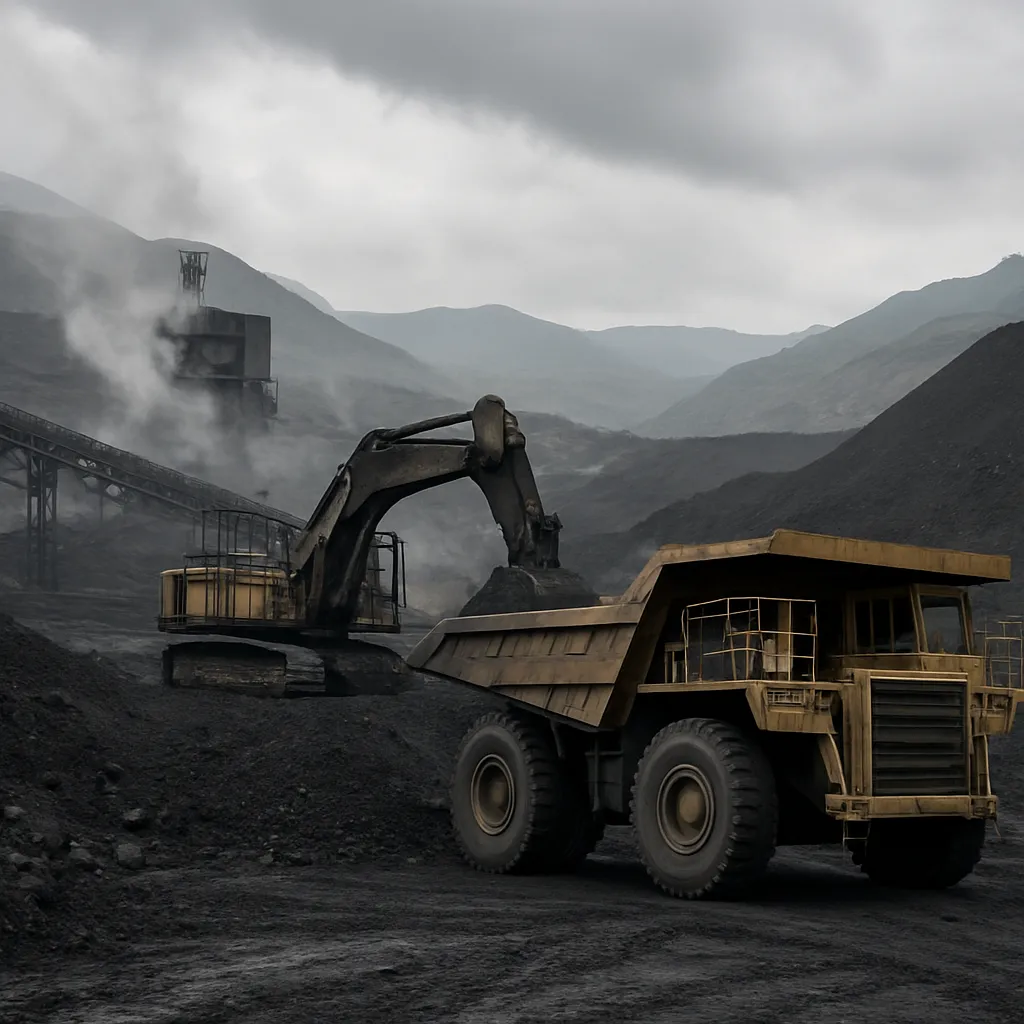
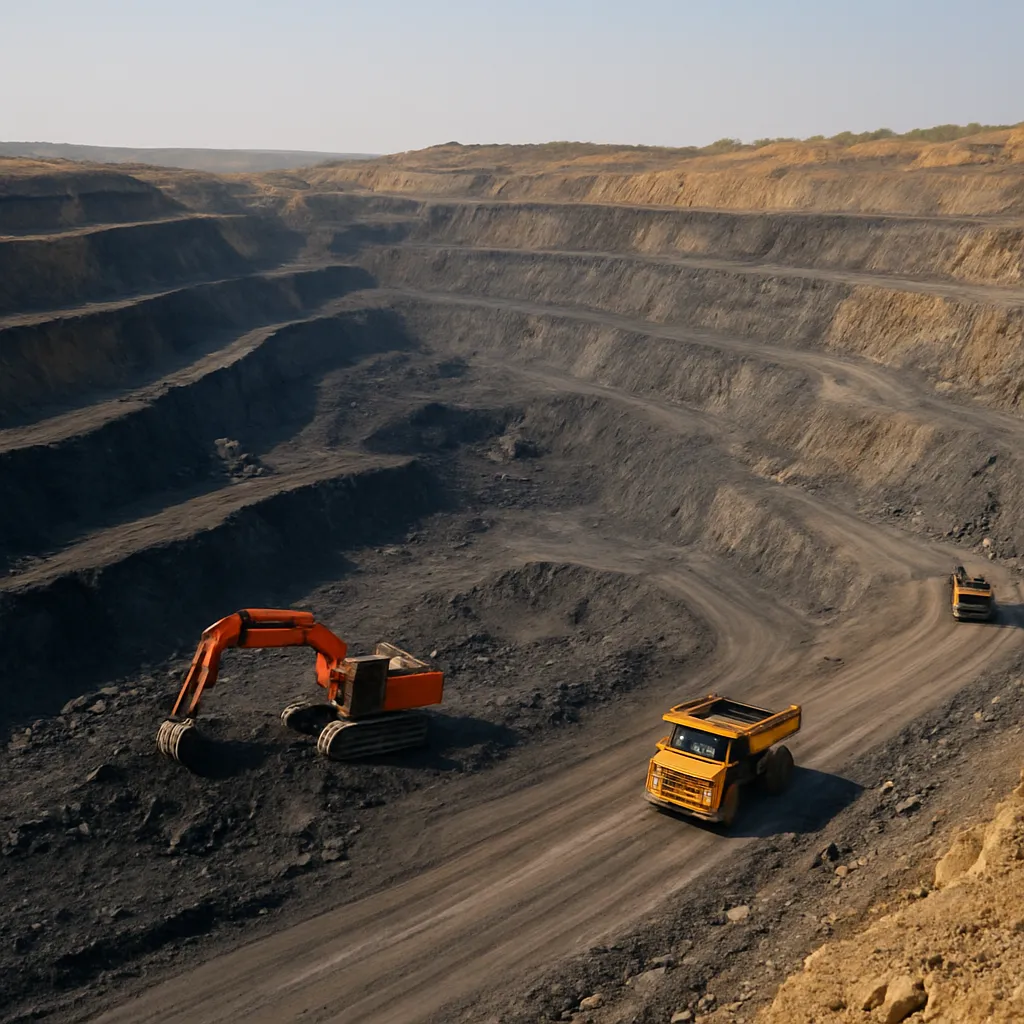
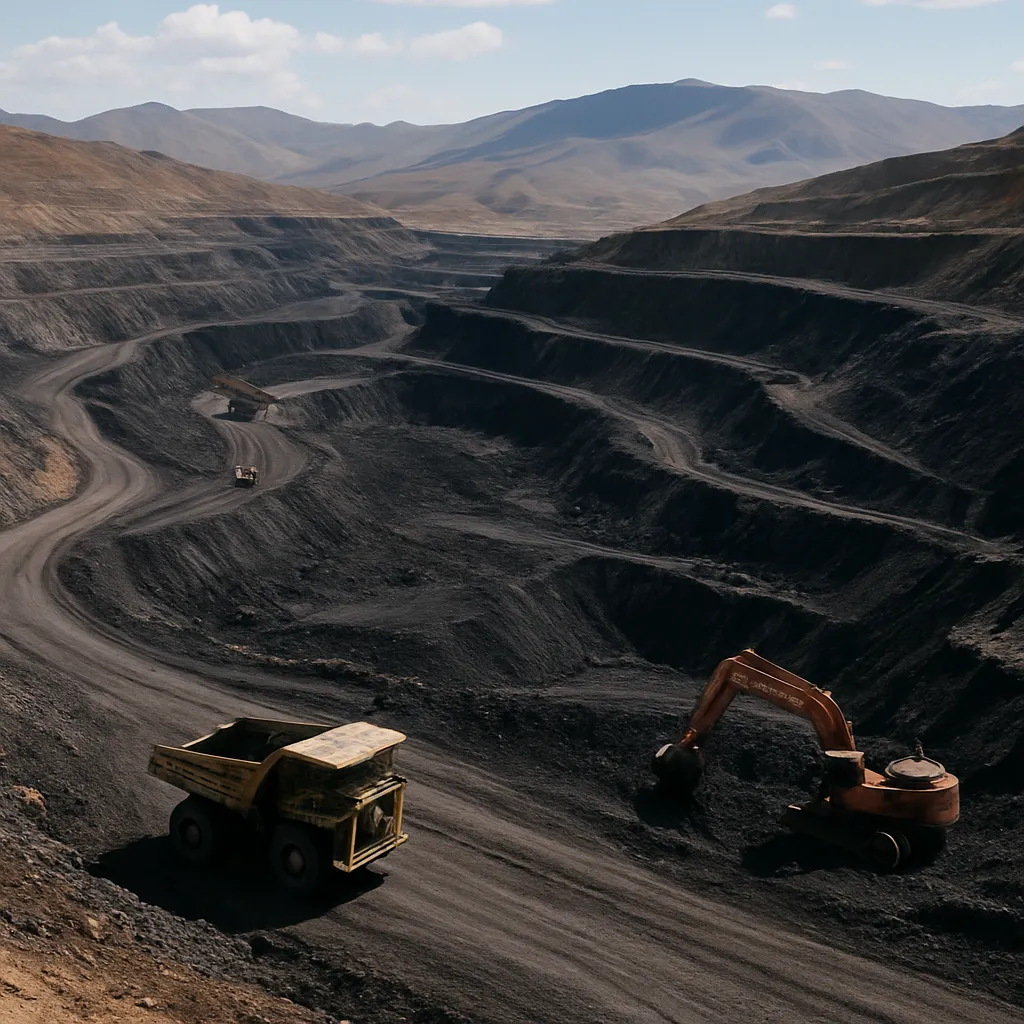
Given the typical seam geometries and overburden thickness in similar Mongolian deposits, Baruun Naran West operations most often employ open-pit mining techniques, supported by conventional earthmoving equipment such as excavators, dump trucks, dozers and screens. Key operational components include:
- Exploration drilling and resource modeling to define mineable reserves and seam continuity.
- Strip ratio optimization to balance overburden removal against coal recovery.
- Progressive rehabilitation of worked-out areas where required by regulation or company practice.
- On-site processing facilities: simple crushing and screening to produce size-fractioned product; limited washing if aimed at quality upgrading for higher-value markets.
- Supporting infrastructure: access roads, water supply systems, power (often from local generators or grid extensions), and worker accommodation camps.
Logistics are a major determinant of project viability in Mongolia. The nearest export routes for coal are typically to northern Chinese thermal demand centers via border crossings such as Gashuunsukhait–Ceke or through rail links where available. If Baruun Naran West is distant from rail, truck haulage to border transfer points or to railheads is the economic solution, though it increases per-tonne delivered cost compared with rail-connected projects.
Economic and statistical significance
The development and operation of deposits like Baruun Naran West contribute to several economic dimensions at local, regional and national levels:
- Employment: mines create direct jobs in extraction, processing, maintenance and management, and indirect roles in logistics, catering, services and supply chains.
- Revenue: sales of coal generate royalties, corporate taxes, customs duties for exports and local payments that can fund regional development.
- Foreign exchange: coal exports are a significant source of foreign currency for Mongolia, helping balance trade and support imports of capital goods and consumer products.
- Energy security: domestic coal supports thermal power generation and industrial heat, reducing reliance on imported fuels for internal consumption.
At the national level, Mongolia’s coal sector has been a major economic driver for the past two decades. While exact figures for Baruun Naran West depend on resource estimates and production schedules, several widely observed trends contextualize its significance:
- Mongolia houses multiple large coal deposits (for example, Tavan Tolgoi is one of the world’s largest). These major deposits anchor the industry and set standards for export volumes and investment flows.
- Coal production in Mongolia has fluctuated but reached tens of millions of tonnes annually in peak years, driven primarily by Chinese demand for thermal coal.
- Export dependence is high: a large share of Mongolian coal production is destined for China, making border access and cross-border logistics crucial for profitability.
Project-level statistics for Baruun Naran West—such as measured and indicated resources, proven reserves, expected annual production capacity, capital expenditure and operating costs—are typically disclosed by operators, exploration license holders or investors. Where public disclosures exist, they inform feasibility studies and allow analysts to compare per-tonne costs, break-even prices and potential returns on investment.
Market dynamics and trade
The primary commercial outlet for Mongolian coal deposits, including Baruun Naran West, is the Chinese market. Key market features include:
- Demand drivers: power generation, cement and steel production in northern and northeastern China historically fuel appetite for imported thermal coal.
- Price sensitivity: Mongolian producers must compete with domestic Chinese coal and imports from other countries, so delivered cost and quality determine market share.
- Seasonality and logistics: winter demand spikes for heating and supply chain congestion at border crossings can influence prices and shipment timing.
To be competitive, Baruun Naran West operators pursue measures such as improving coal quality (washing, blending), securing long-term offtake agreements, optimizing haulage, and investing in community relations to minimize operational disruptions.
Environmental and social considerations
Mining in Mongolia raises important environmental and social issues that affect project sustainability and community acceptance. For Baruun Naran West, considerations include:
- Dust generation and air quality impacts from open pits, haul roads and crushing operations, which can affect workers and nearby herding communities.
- Water use and groundwater impacts in arid regions where water is scarce and critical for livestock and communities. Mine water consumption and potential contamination are sensitive topics.
- Land disturbance and habitat fragmentation affecting grazing patterns and biodiversity.
- Socio-economic changes: influx of workers may bring both economic opportunities and social stresses to small towns and rural communities.
- Rehabilitation: progressive reclamation and post-mining land use planning can mitigate long-term environmental footprints.
Regulatory frameworks in Mongolia require environmental impact assessments (EIAs) for significant mining projects and impose monitoring, mitigation and closure obligations. Increasingly, financiers and international partners also demand compliance with social and environmental standards, including stakeholder engagement, resettlement policies where applicable, and transparent community benefit sharing.
Infrastructure, rail connections and logistics
One of the most critical determinants of a coal project’s economics in Mongolia is access to reliable transport infrastructure. For Baruun Naran West, practical logistics scenarios typically involve:
- Truck haulage to the nearest railhead or border crossing when an on-site rail spur is not present.
- Potential for rail extension projects: some deposits become markedly more viable if a rail spur or mainline connection is constructed, reducing unit transport costs and enabling shipment of higher volumes.
- Border facilities and trans-shipment points where Mongolian trucks transfer coal to Chinese rail or trucks; these points can be bottlenecks and are subject to cross-border regulations.
- Port access: while Mongolia is landlocked, exported coal travels overland into China and then to coastal ports for further international shipment when needed.
Investment in on-site and regional infrastructure—roads, power, water systems and worker accommodation—also influences the timeline for development and the scale of operations. Projects that participate in regional infrastructure programs can gain advantages through shared facilities and cost-sharing mechanisms.
Regulatory and fiscal framework
Mongolia’s mining sector is governed by national legislation that sets the rules for mineral licensing, taxes, royalties and environmental compliance. Important aspects include:
- Licensing: exploration and mining licenses with defined terms, work obligations and local content requirements.
- Royalties and taxes: a mix of production-based royalties, corporate income tax and other levies that affect project cash flows.
- Local participation: regulations and expectations for employing local labor, procuring local goods and partnering with domestic firms.
- Permitting: environmental permits and community consultations are prerequisites for development.
Changes in fiscal terms or permitting requirements can materially affect project economics. Investors typically perform sensitivity analyses to understand the impacts of royalty rates, corporate taxes and export duties on net project returns.
Social and economic benefits to local communities
When responsibly managed, coal projects such as Baruun Naran West can deliver multiple benefits to surrounding communities:
- Job creation—both direct and indirect—supports household incomes and local businesses.
- Improved local infrastructure—roads, schools, clinics and utilities—often arise from mining company investments or increased local revenues.
- Skills development and vocational training prepare local residents for employment within mining and services sectors.
- Local procurement policies strengthen small and medium enterprises in supply chains.
However, these benefits require proactive community engagement, transparent benefit-sharing agreements and effective mitigation of negative impacts such as dust, traffic and water stress.
Future prospects and development pathways
The future of Baruun Naran West depends on a combination of resource size, quality, economics, infrastructure and market conditions. Several plausible development pathways include:
- Incremental development as a small- to medium-scale supplier to regional power plants and industrial customers, focused on reliable deliveries and local market integration.
- Scaling up through investment in rail links and washing facilities to access larger export markets and achieve economies of scale.
- Integration into regional energy projects: supplying coal to captive power plants co-located with mining operations to provide electricity and heat for mining processes and reduce grid dependency.
- Closure and rehabilitation planning to ensure long-term land use, either for grazing recovery or alternative economic uses.
Investor sentiment will be influenced by global energy transitions, Chinese demand patterns, commodity prices and evolving environmental policies. Projects that can demonstrate low-cost operations, quality products and strong social-environmental performance are more likely to secure capital and offtake agreements.
Interesting facts and broader context
- Mongolia sits between two large energy consumers and suppliers—Russia and China—giving it a strategic geographic role for resource exports.
- Coal remains one of Mongolia’s dominant mineral exports and a major contributor to GDP, foreign exchange earnings and regional development.
- Large deposits such as Tavan Tolgoi provide scale and attract most headlines, but numerous smaller deposits like Baruun Naran West collectively support local economies and supply chains.
- Advances in mining technology, fleet management and satellite-based monitoring are helping remote projects reduce costs and improve environmental performance.
- Community-driven impact assessment and benefit-sharing models are increasingly used to align project development with local priorities, reducing conflict and improving sustainability.
Data and transparency considerations
Accurate publicly available data for specific projects can be limited. Resource owners, exploration license holders and corporate disclosures are primary sources for:
- Measured, indicated and inferred resource estimates;
- Proven and probable reserve classifications;
- Planned production rates and mine life estimates;
- Capital and operating cost breakdowns;
- Environmental monitoring reports and compliance documents.
For Baruun Naran West, stakeholders seeking quantitative detail—such as reserve tonnages, strip ratios, grade analyses and contracted offtake volumes—should consult company reports, government mining registries and technical feasibility studies where they are published. In the absence of such public disclosures, analysts rely on regional analogues, geologic comparisons and high-level market intelligence to estimate project-scale metrics.
Conclusion
Baruun Naran West exemplifies the many coal deposits that underpin Mongolia’s role as a significant coal supplier to regional markets. While specific figures for reserves and production depend on operator disclosures and feasibility work, the site’s attributes—typical of Mongolian coalfields—include open-pit mineability, thermal coal quality, logistical reliance on cross-border transport to China and both economic benefits and environmental challenges for local communities. The long-term viability of Baruun Naran West will hinge on securing competitive access to markets, maintaining efficient and responsible operations, and aligning with evolving energy and environmental policies regionally and globally.