Kusile Coal Mine and the coal mining sites that supply the Kusile power complex occupy a central place in South Africa’s energy landscape. Located in the heart of the Highveld coalfields, the Kusile complex is primarily associated with the Kusile Power Station — one of the country’s largest coal-fired power projects — and with a network of nearby opencast and underground mines that provide the plant with its feedstock. The following article reviews the location, geology, coal types, mining methods, economic and social importance, environmental and regulatory context, and wider significance of Kusile and its associated coal mining sites. It also presents available statistical and operational estimates and highlights some lesser-known but important facts about the site and the industry that supports it.
Location, scale and context
The Kusile complex is situated in Mpumalanga province, in the eMalahleni (formerly Witbank) region of South Africa’s Highveld. The area is among the country’s most productive coal basins and has long been a centre for both large-scale opencast mining and underground operations. The term “Kusile” is commonly used to refer to the Kusile Power Station project and the cluster of mining activity that supplies it; there is not necessarily a single mine named Kusile but rather multiple coal mining sites in the surrounding coalfields that deliver coal to the power station and to nearby industrial consumers.
The Kusile Power Station itself is a major strategic asset: with an installed capacity of approximately 4,800 MW generated by six units of about 800 MW each, Kusile is among the largest coal-fired power facilities in South Africa. The plant was developed by Eskom, the state-owned utility, to address chronic electricity shortages and to ensure generation capacity for the industrial heartland of the country. Because of its size, Kusile relies on a reliable and continuous supply of coal delivered from mines in the Witbank and Highveld coalfields — a region that contains thick, laterally continuous seams of thermal coal.
Geology and coal characteristics
The coal found in the Witbank and Highveld coalfields is predominantly thermal coal (steam coal) used for electricity generation. Geologically, the area forms part of the Karoo Supergroup’s coal-bearing sequences; seams in this region can be relatively thick and laterally extensive, which has enabled large-scale mining operations.
- Coal rank and composition: Most coal supplied to Kusile-type power stations is bituminous to high-volatile bituminous in rank — suitable for pulverized fuel firing in large boilers. The coal is valued for its calorific value, which for Witbank coal typically falls within a moderate-to-high range (commonly between roughly 18–26 MJ/kg depending on seam, wash and moisture content). Ash content, sulfur and moisture vary by seam and mining practice, and coal is often beneficiated (washed and blended) to meet the station’s specifications.
- Seam thickness and continuity: Witbank seams are known for their thickness and continuity, characteristics that favor both opencast and bord-and-pillar underground mining. Opencast mining dominates where seams are near-surface and economically extractable, while underground methods continue in deeper or more geologically complex zones.
- Suitability for Kusile’s boilers: Kusile’s boilers are designed for pulverized coal firing; consistent quality and proper beneficiation are essential to minimize slagging, fouling and corrosion and to meet environmental controls (notably particulates and SO2).
Mining methods and logistics
Coal supply to Kusile and neighbouring power stations comes from a mix of large-scale opencast (open-pit) operations and underground mines. The choice of method depends on overburden thickness, seam depth, economics and local environmental conditions.
Opencast mining
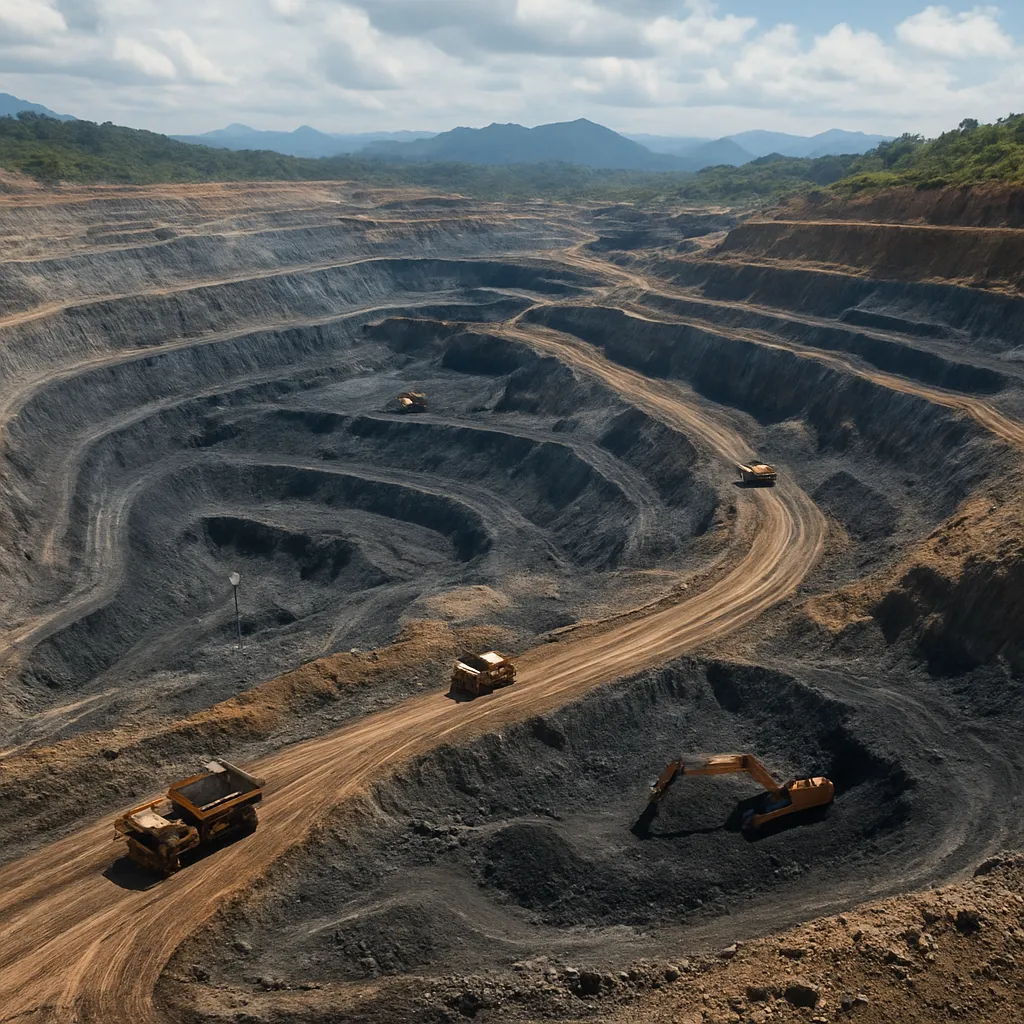
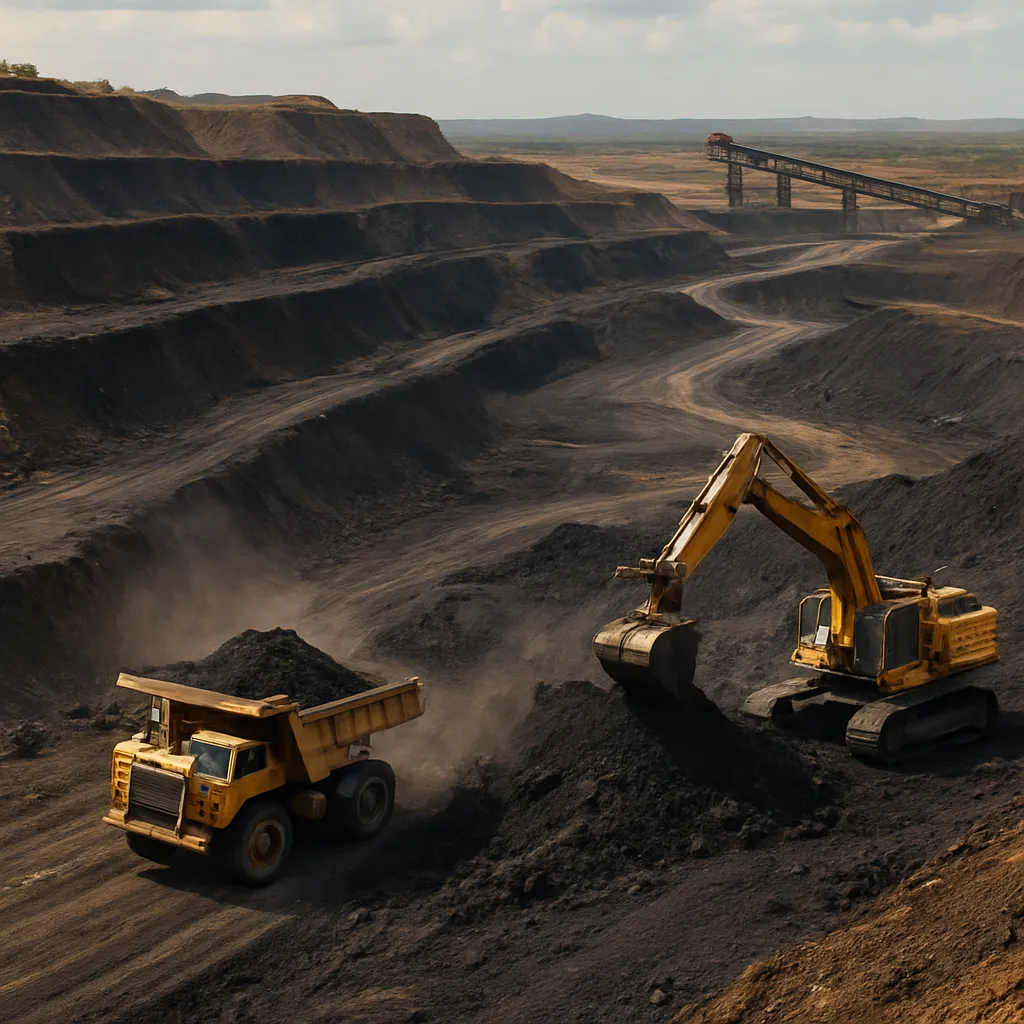
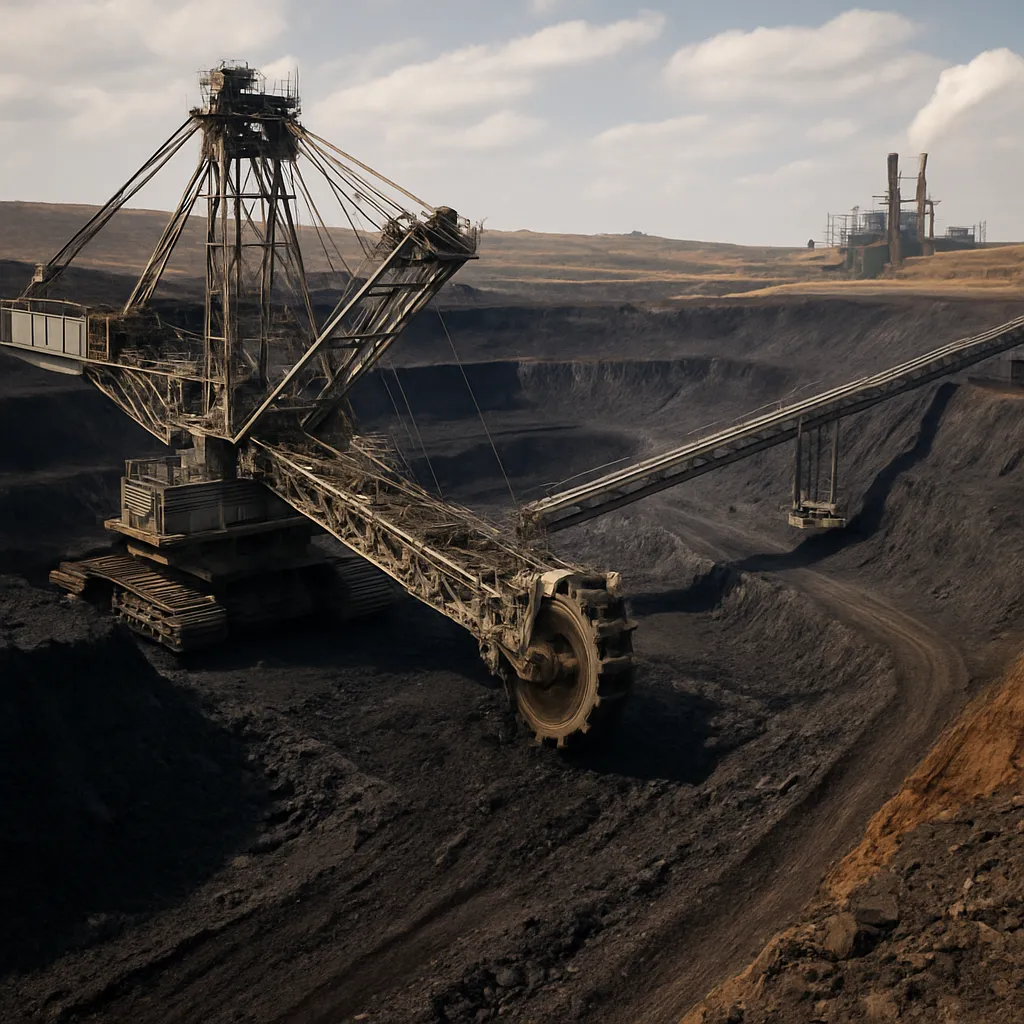
- Opencast operations use large earthmoving fleets — draglines, hydraulic excavators, trucks and large front-end loaders — and are efficient where overburden is shallow. Opencast mines in the Highveld are responsible for much of the tonnage delivered to large power stations because of their high productivity and lower unit costs for shallow seams.
- Rehabilitation and progressive backfilling are increasingly required by regulators, but historically some opencast sites have left significant spoil and landscape change, prompting stronger environmental oversight in recent years.
Underground mining
- Where seams lie deeper, bord-and-pillar or room-and-pillar methods are commonly employed, sometimes with pillar recovery. Longwall methods occur in some South African fields but are less pervasive in the Witbank area compared to other coal districts globally.
- Underground work is more labour-intensive and carries different safety and subsidence risks; it also tends to produce coal with different wash and moisture characteristics that require blending at the power station.
Logistics and coal handling
- Proximity to Kusile reduces transport costs and the time between mining and combustion, which is important for maintaining coal quality. Coal is transported via dedicated rail links, road haulage and, in some operations, conveyor systems. Reliability of rail infrastructure is a crucial factor for steady supply.
- At the power station, coal is handled through stockyards, crushing mills and pulverizers; blending strategies are used to stabilize calorific value and manage ash and sulfur levels to meet operations and emissions targets.
Economic and social significance
Coal mining and the Kusile power complex exert major economic influence locally, provincially and nationally. The industry supports direct and indirect employment, local procurement, municipal revenues and fiscal flows to national government through royalties, taxes and utility revenues.
- Employment: During Kusile’s construction phase, thousands were employed directly and via contractors — a significant temporary boost to local labour markets. Operationally, the power station and its supplying mines support several hundred to a few thousand permanent jobs combined, depending on the level of automation and the number of active mines supplying the plant. In addition, a larger supply chain (transport, services, small businesses) benefits from station and mine activity.
- Local economy: The presence of large mining operations and the power complex sustains local procurement opportunities for construction, engineering, logistics and maintenance services. Municipalities in Mpumalanga derive revenue streams from business rates and mining-related economic activity, even as they must manage the costs of infrastructure and environmental services.
- National energy security: Kusile’s contribution to the grid is substantial: at full output it can significantly alleviate shortfalls and support industrial consumers, mines, smelters and manufacturing plants across South Africa. The plant’s role in stabilizing supply has a direct bearing on national GDP and industrial competitiveness.
Environmental, health and regulatory issues
Coal mining and coal-fired generation present well-documented environmental and public health challenges. Kusile’s scale magnifies both the potential impacts and the scrutiny under which the project and associated mines operate.
- Air emissions: Coal combustion produces particulates, nitrogen oxides (NOx), sulfur dioxide (SO2), mercury and other trace elements in addition to large volumes of CO2. Kusile was designed to include flue gas desulfurization (FGD) technology to reduce SO2 emissions — a significant step for Eskom plants — but FGD implementation encountered delays and technical challenges during commissioning. Particulate and NOx controls (electrostatic precipitators, low-NOx burners) are part of the plant’s emission control package.
- Water use: Coal mining and large thermal plants are water-intensive. Mpumalanga’s water resources are under pressure from competing demands (municipal, agricultural, industrial). Kusile and its supplying mines must manage water abstraction, treatment and discharge within regulatory limits to protect river systems and communities.
- Coal ash and waste: Ash handling — including fly ash and bottom ash — requires secure disposal or beneficial reuse (cement and bricks). Ash dams have been points of risk and regulatory interest; proper lining, seepage control and rehabilitation are required under South African environmental law.
- Land and biodiversity: Mining footprint changes land use, affects ecosystems and can cause habitat loss. Progressive rehabilitation and environmental management plans are required to mitigate these effects.
- Health impacts: Communities near mining and power stations can face increased respiratory illnesses linked to particulates and other pollutants, as well as socio-economic stresses tied to boom-and-bust cycles in mining employment.
Statistics, performance and emissions — estimates and context
Some hard numbers are well established for the Kusile Power Station; others are best reported as well-founded estimates because coal supply and operational load factors fluctuate.
- Installed capacity: 4,800 MW (six units of ~800 MW each).
- Operation timeline: Commissioning activities for Kusile began in the mid-2010s; unit commissioning occurred progressively over several years. The plant entered service during a period of urgent need to expand generation capacity in South Africa.
- Coal consumption: A large station of Kusile’s size typically consumes tens of millions of tonnes of coal per year at high load factors. As a rough illustration: a 4,800 MW coal plant operating at a 70–80% capacity factor may generate on the order of 25–35 TWh per year; with a typical thermal coal consumption rate of roughly 0.5–0.6 tonnes per MWh (depending on calorific value and plant efficiency), this translates into on the order of 12–21 million tonnes of coal annually — a broad estimate that depends heavily on plant efficiency, coal quality, and actual utilization rates.
- Carbon emissions — illustrative estimate: Coal-fired thermal plants of Kusile’s scale generate significant CO2. Using a conservative emissions factor of ~0.8–1.0 kg CO2 per kWh, an annual generation of 25–35 TWh could correspond to roughly 20–35 million tonnes of CO2 per year at full or sustained high-load operation. These numbers are indicative and depend on actual generation profiles, plant efficiency and emission factors.
- Employment and economic output: During construction Kusile supported thousands of construction-related jobs; operational staffing is lower but supports ongoing local economic activity. Exact numbers vary by year and contractor arrangements.
Regulatory, social and governance challenges
Kusile and its coal mines operate within a regulatory framework that balances energy needs with environmental protection, labour rights and community welfare. Governance challenges and controversies have arisen around large infrastructure projects in South Africa, and Kusile’s development was no exception.
- Permits and environmental authorisations: Mining and power projects must obtain environmental authorisations, water use licenses and other permits from national and provincial authorities. Conditions often include measures for air pollution control, water management and rehabilitation.
- Community engagement: Local communities must be engaged in resettlement, jobs and procurement opportunities. Social licence to operate is critical; failure to engage meaningfully can lead to protests and legal challenges.
- Procurement, cost overruns and public scrutiny: Large power and mining projects attract scrutiny regarding contracting, costs and governance. Kusile experienced cost increases and delays, which are common in projects of its complexity and scale.
Role in the South African energy mix and industrial linkages
Kusile’s strategic importance transcends local boundaries. As one of the larger thermal stations on Eskom’s fleet, Kusile contributes to national generation capacity, supports industrial users (metallurgical plants, mining operations) and has implications for grid stability.
- Energy security: Bringing large baseload units online is a conventional response to chronic shortfalls. Kusile contributes baseload capacity that, when available, supports manufacturing and mining sectors which consume large quantities of electricity.
- Industrial linkages: Reliable baseload supply underpins smelting, chemicals and heavy industry operations in South Africa. Coal supply chains and local service industries (engineering, transport) benefit from the long-term presence of power plants and supplier mines.
- Local beneficiation: There are opportunities to use coal by-products (fly ash) in construction materials, which supports local industry and reduces waste disposal needs. Programs to increase local procurement and skills development have been attached to major projects as part of socio-economic development commitments.
Interesting facts and lesser-known aspects
- Name and meaning: Kusile is often interpreted to mean “to rise” or “to come into being” — reflecting the plant’s intended role in helping the country recover generation capacity.
- FGD and emissions control: Kusile was among the first large new Eskom coal plants designed to incorporate FGD systems to control SO2 — a technical and logistical milestone in a fleet that historically relied less on wet scrubbing technology. Implementation difficulties delayed full FGD operation, highlighting the complexity of deploying advanced pollution controls on a large scale.
- Interdependence of mine and plant: The viability of Kusile depends on a network of suppliers rather than a single “Kusile mine.” This supply-chain approach spreads economic benefits but also requires careful coordination, rail and road capacity and coal quality management to avoid operational problems at the station.
- Rehabilitation and legacy: The Highveld has a long history of coal mining, and modern regulatory frameworks increasingly emphasise progressive rehabilitation, water management and community engagement to manage the long-term legacy of mining activity.
Outlook and future considerations
The future of Kusile and its supplying coal mines will be shaped by several interlocking factors: national energy policy, market economics, environmental regulation, international pressure to reduce greenhouse gas emissions, and technological developments in energy generation and emissions control.
- Decarbonisation pressures: South Africa faces pressure to reduce emissions under global climate commitments. Large coal plants like Kusile are central to discussions about how to balance short- to medium-term energy security with long-term decarbonisation strategies. Options include improving plant efficiencies, retrofitting advanced emissions controls, co-firing with lower-carbon fuels, or planning for managed transition strategies over decades.
- Economic adaptation: Communities and regional economies dependent on coal must adapt to shifting demand over the long term. Strategies include skills development, local industrial diversification and rehabilitation programs that enable land reuse.
- Technological evolution: Advances in carbon capture, utilisation and storage (CCUS), improvements in renewables and grid-scale storage, and more efficient power plant operations could change the role that large coal-fired plants play in South Africa’s energy mix. Investment choices will reflect cost trends, policy incentives and the pace of technological adoption.
Concluding remarks
The Kusile complex — the power station plus the network of coal mining sites that feed it — sits at the crossroads of South Africa’s economic needs and environmental challenges. It supplies large-scale, reliable baseload power that supports industry and employment, drawn from the rich coal resources of the Witbank and Highveld coalfields. At the same time, the environmental footprint, emissions profile and the long-term sustainability of coal-based energy raise difficult questions that South Africa continues to address through regulation, technology and policy. While some statistics (such as Kusile’s 4,800 MW installed capacity) are firm, many operational and supply figures vary with market conditions, plant availability and policy decisions — making Kusile an instructive case study in the complex trade-offs that define 21st-century energy planning.