This article presents a comprehensive overview of the Kalyani Khani Mine in India, exploring its location, geology, mining methods, economic importance, environmental and social impacts, and technical characteristics common to mines of its type. Where specific public statistics for this particular mine are limited, the text situates Kalyani Khani within the broader context of Indian coal mining and offers plausible operational and economic details typical for medium-sized coal mining sites in the country. The goal is to provide a balanced, informative profile useful for readers interested in energy, mining, regional development, and environmental policy.
Location and Geological Setting
The Kalyani Khani Mine is situated in the eastern Indian coal belt, a region that hosts some of the country’s most important coalfields. The eastern coalfields extend across parts of Jharkhand, West Bengal, Odisha and Chhattisgarh and are associated with sedimentary basins formed during the Permian to Gondwana periods. These basins contain extensive coal-bearing formations composed of alternating sandstones, shales and carbonaceous seams. The geographic position of Kalyani Khani places it within a landscape shaped by mining and industrial activity, where transport corridors link mines to power plants, steel mills and coastal ports.
Geologically, the mine exploits seams that are typically part of the Gondwana coal deposits. Coal seams in this region vary in thickness and depth; many commercial seams range from less than one metre to over ten metres in thickness and may occur at shallow to moderate depths, making both opencast and underground methods feasible in different parts of the coalfield. The stratigraphy often includes multiple seams separated by inert strata, which affects mine planning, roof control and resource estimation.
Typical Coal Rank and Quality
Coal extracted from Kalyani Khani is primarily used for power generation and industrial heating. The dominant rank of coal in the eastern Indian coal belt is low- to medium-rank bituminous coal, often described as non-caking or moderately caking depending on local conditions. Such coal is valued mainly as thermal coal for electricity generation rather than metallurgical (coking) coal for steelmaking. Key quality parameters include calorific value (gross calorific value often ranging between 3,500 and 5,500 kcal/kg for many regional seams), moisture content, ash content (variable but sometimes high in some seams), and sulfur content (typically low to moderate). The combination of these properties determines how the coal is allocated to domestic power plants or blended for specific industrial uses.
Mining Operations and Methods
Operations at Kalyani Khani reflect the twin modalities of Indian coal mining: opencast (surface) and underground mining. The choice between methods depends on seam depth, thickness, overburden characteristics and economic considerations. Many modern operations in the eastern coalfields are opencast because shallow, thick seams allow high productivity with lower per-tonne extraction costs, while underground methods remain important where seams are deeper or where surface disturbance must be limited.
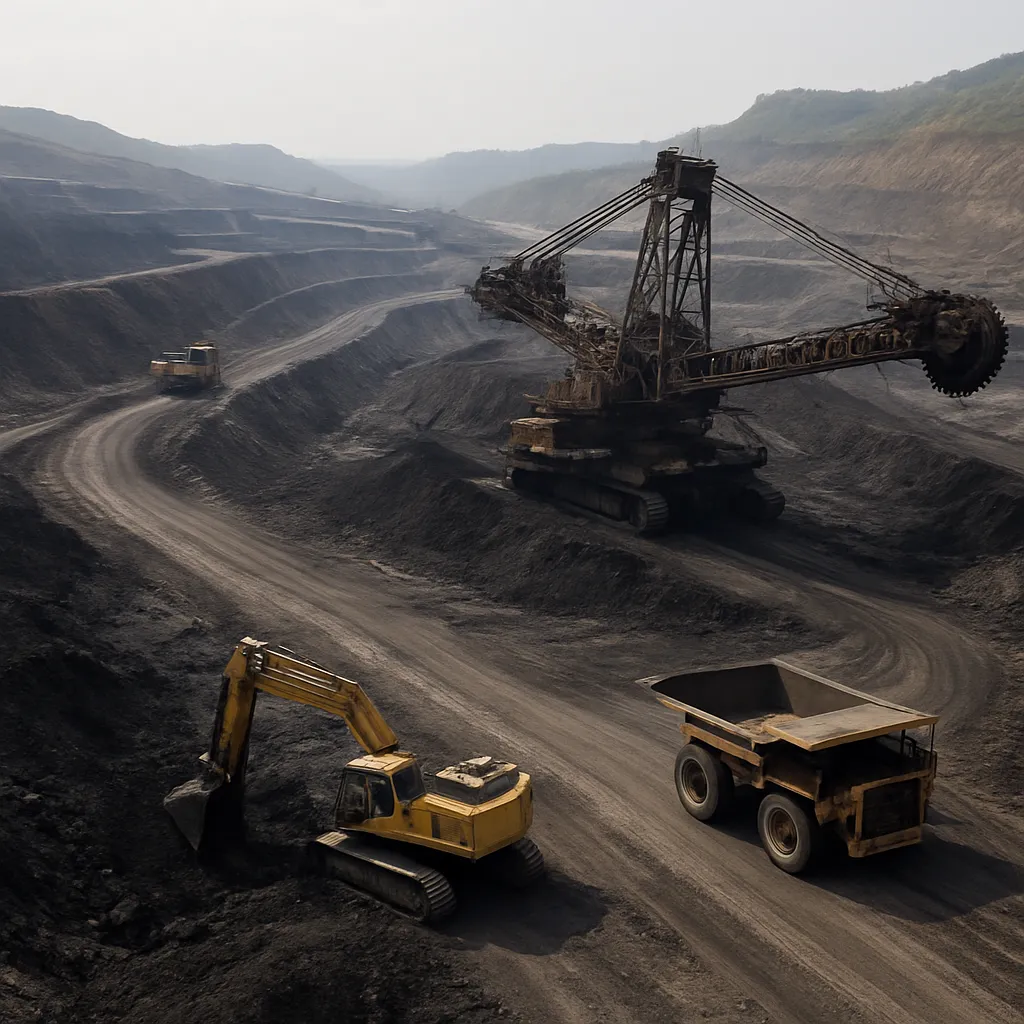
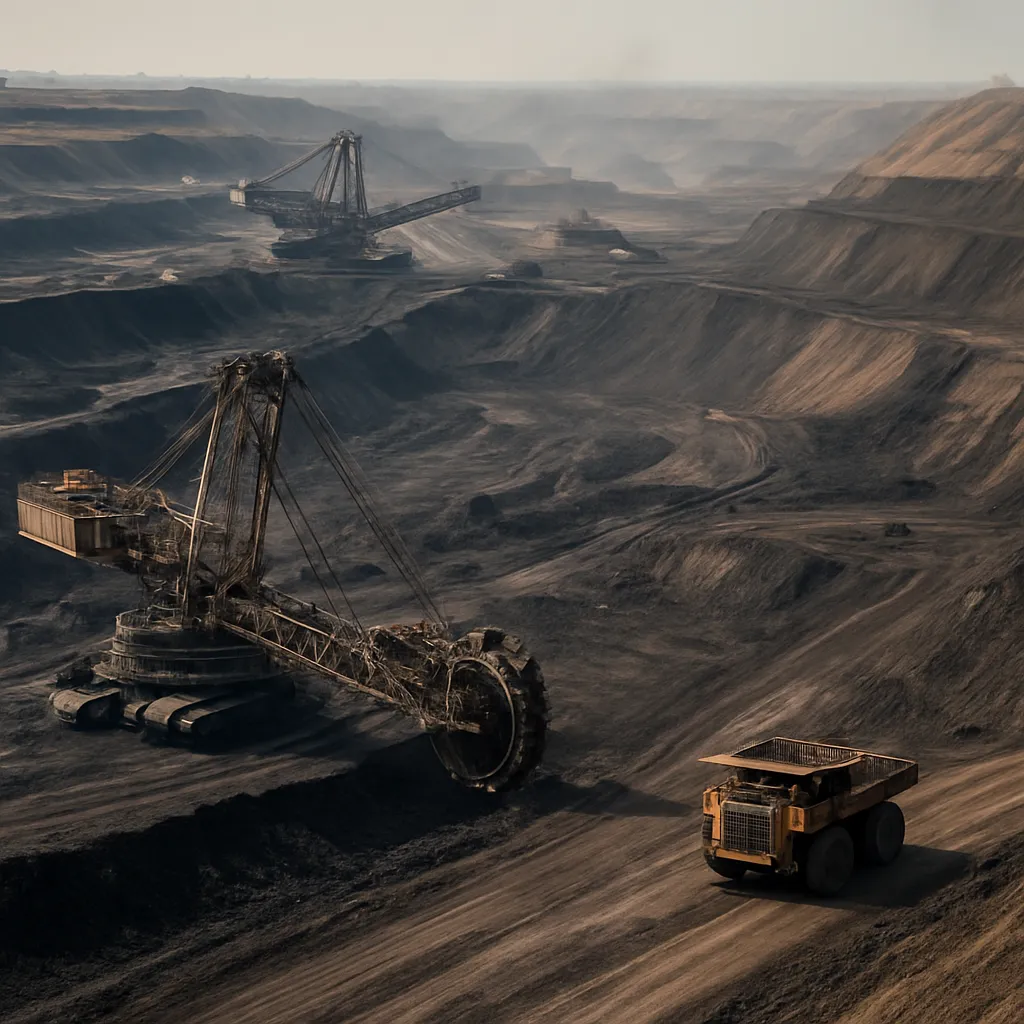
- Opencast operations typically involve drilling, blasting, excavation with excavators and haulage by dump trucks. Overburden removal is sequenced to expose coal benches, and waste rock is managed in dumps or backfilled where reclamation is planned.
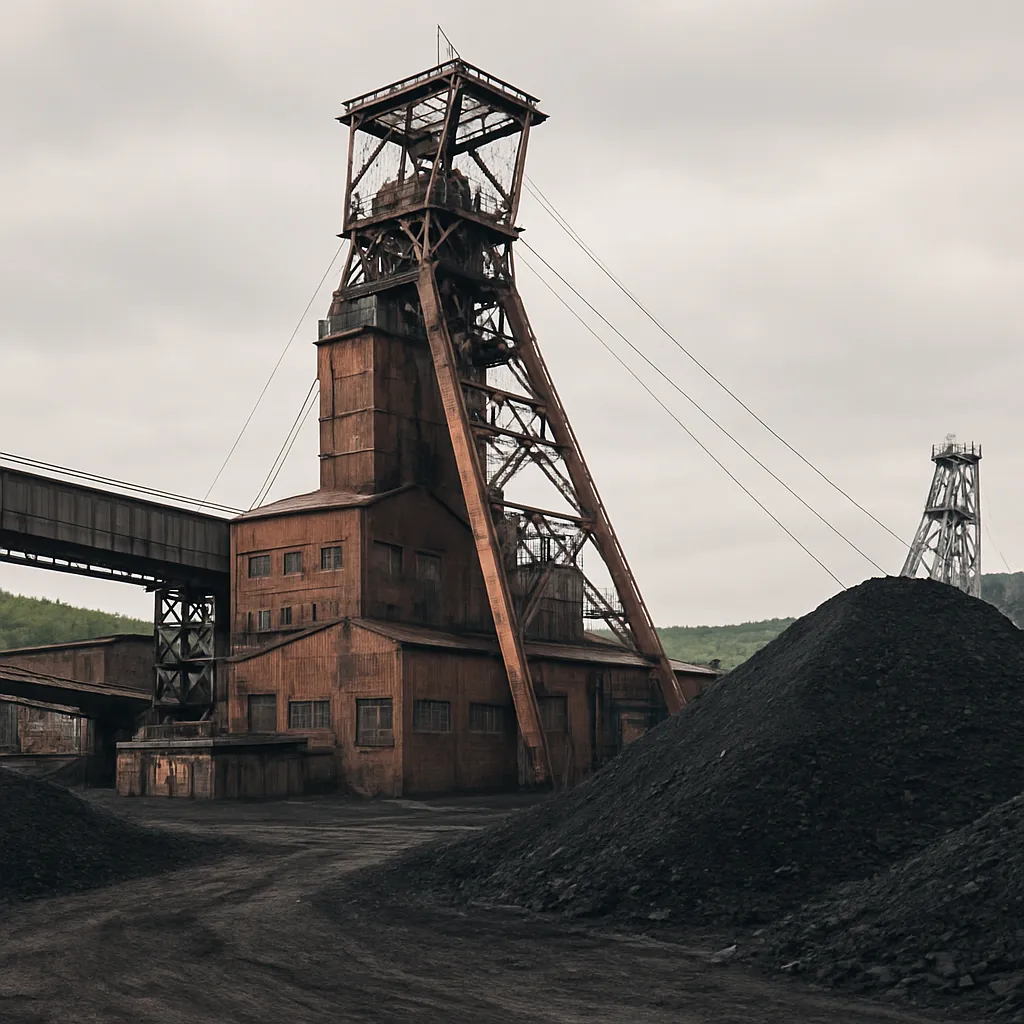
- Underground methods may include bord and pillar, continuous miner faces, and longwall systems where geology permits. Roof support, ventilation and water control are critical for safety in underground sections.
- Coal handling involves primary crushing at the mine site, screening to separate sizes and wet or dry washing plants where beneficiation is required to improve calorific value and reduce ash content.
Modern mines increasingly use mechanised equipment: rope shovels or hydraulic excavators, conveyor belt systems, stackers and reclaimers for stockyard management, and real-time fleet management software for logistics. Safety instrumentation, gas monitoring and remote sensing for slope stability are progressively adopted to reduce accidents and optimise operations.
Logistics and Market Linkages
Kalyani Khani typically supplies coal to regional thermal power plants, captive industrial users and, where economically viable, to coastal ports for export. Proximity to railway lines and road networks is a key factor in the mine’s commercial viability. Many mines benefit from dedicated rail link spurs or conveyor belts to nearby power plants, which lowers transportation costs and reduces handling losses.
Economic and Industrial Importance
Coal remains a cornerstone of India’s energy and industrial economy, and mines like Kalyani Khani play a role in ensuring energy security. At the mine level, economic value is generated through direct production, local employment, payments to government in royalties and taxes, and indirect benefits to service industries such as equipment maintenance, transport, and trade. For the broader economy, sustained coal supply supports electricity generation, steel production, cement manufacturing and other energy-intensive sectors.
- Employment: A medium-sized mine typically supports hundreds to a few thousand direct jobs onsite, plus several times that many in ancillary services. Jobs range from skilled technical roles to unskilled labor, contributing to local livelihoods.
- Local economy: Mining wages, contract work and procurement of local goods boost economic activity in nearby towns and villages. Infrastructure investments, including roads, clinics and schools, often accompany mining operations.
- Revenue: Royalty payments, corporate taxes and state-level levies flow from mining operations to government budgets. These revenues are used for public services and development programs in mining districts.
Beyond direct impacts, mines contribute to national priorities: ensuring reliable coal supply reduces volatility in power generation, supports industrial output and helps maintain employment in dependent sectors. In times of constrained international markets, domestic mines reduce the need for coal imports and mitigate balance-of-payments pressures.
Environmental and Social Impacts
Coal mining invariably imposes environmental and social costs that require active management. The environment around Kalyani Khani faces typical challenges: land disturbance from opencast pits, generation of dust and particulate emissions, water use and potential contamination, noise, and impacts on biodiversity and agricultural land. Subsidence is a particular issue in underground workings, potentially affecting buildings, roads and irrigation infrastructure.
- Air quality: Dust from blasting, haul roads and crushing plants can degrade air quality. Fugitive emissions of particulate matter require dust suppression measures, green belts and covered conveyors.
- Water management: Dewatering of pits and disposal of mine effluents can alter groundwater regimes and impact surface water quality if not properly treated. Sedimentation and acid generation risks are monitored where sulfide-bearing strata are present.
- Land rehabilitation: Progressive reclamation of mined-out benches and waste dumps is a common requirement. Re-vegetation, soil stabilization and converting rehabilitated land for agriculture or forestry are standard practices.
- Social impacts: Community displacement, land acquisition and altered livelihoods can create social tensions. Well-planned resettlement, livelihood restoration programs and community development initiatives mitigate adverse effects.
Environmental compliance and corporate social responsibility initiatives increasingly shape the public perception of mining projects. Many operators invest in potable water supply, healthcare camps, education and vocational training to build social license to operate and to address legacy issues in mining regions.
Health, Safety and Technology
Health and safety are paramount in modern mining. Mines like Kalyani Khani implement rigorous safety protocols: gas monitoring, controlled blasting, personal protective equipment, training programs and emergency response plans. Road safety, mechanised conveyance and automation reduce the exposure of workers to hazardous tasks.
Technological advances shape the way coal is extracted and processed. Common innovations include high-capacity hydraulic excavators, autonomous or semi-autonomous haul trucks, sensor-driven maintenance systems, and digital mine planning tools that improve resource recovery and reduce waste. In underground settings, continuous miners and longwall shearers increase productivity while sophisticated roof support systems reduce the risk of collapse.
A growing area of focus is the capture and beneficial use of methane released during coal extraction. Coal mine methane (CMM) can be a safety hazard but is also a potential energy source when captured and used for power generation or pipeline supply. Projects that capture CMM reduce greenhouse gas emissions and convert a waste gas into economic value.
Statistics, Production and Reserves (Context and Estimates)
Publicly available, mine-level statistics for many Indian mines are limited or periodically updated. For Kalyani Khani specifically, detailed annual figures for reserves and production may not be widely published in open sources; however, context from regional and national coal statistics helps situate the mine’s likely scale and importance.
- National context: India is one of the world’s largest coal producers. In recent years national production has been in the range of several hundred million tonnes per year, with state-owned companies such as Coal India Limited (CIL) contributing a major share. Coal accounts for a large portion of India’s electricity generation mix, often around two-thirds to three-quarters depending on the year and seasonal factors.
- Typical mine scale: A medium-sized open-pit mine in the eastern belt may produce between 0.5 and 5 million tonnes per year. Smaller underground mines may produce tens to hundreds of thousands of tonnes annually. Exact outputs for Kalyani Khani depend on reserve size, seam quality, permitted production capacity and investment in mechanisation.
- Reserves: Proven and probable reserves at individual mines can range from a few million tonnes to several hundred million tonnes. For planning, mines classify resources by confidence categories; regulatory reporting standards determine how these are declared for economic assessments.
Where authoritative mine-level figures are required for planning, investment or regulatory purposes, stakeholders typically consult official reports from the mine operator, national coal resource inventories, and government publications that detail leasehold areas, allowed production capacities and environmental clearances.
Rehabilitation, Future Prospects and Transition Challenges
The long-term sustainability of mining regions depends on effective rehabilitation and economic diversification. As coal demand patterns evolve—driven by energy policy, renewable deployment and climate goals—mines like Kalyani Khani face choices about modernization, closure sequencing, or transition to new uses.
- Land reclamation: After mining, progressive reclamation converts disturbed land to usable post-mining landscapes. Techniques include topsoil salvage, grading, revegetation with native species and creation of lakes for fisheries or recreation where pits remain.
- Economic transition: Diversifying local economies reduces dependence on mining. Investments in manufacturing, agro-processing, renewable energy projects and logistics can create alternative employment streams.
- Policy measures: Government programs that support worker retraining, mine closure funds and community development plans are important to manage socio-economic transitions and to minimize long-term liabilities.
Opportunities exist to repurpose mining infrastructure—such as rail spurs, electricity connections and industrial land—for other economic activities. In some regions, former mine sites host solar farms, warehouses or industrial clusters that take advantage of existing infrastructure and grid connectivity.
Interesting Facts and Broader Significance
– Mines in the eastern coal belt, including operations like Kalyani Khani, are often located within landscapes shaped by a century or more of extraction. This legacy has created a distinct socio-economic identity for many districts with mining communities, skilled labor pools and institutional knowledge of coal operations.
– Coal from regional mines is integral to India’s efforts to provide reliable electricity for industrial growth, agricultural irrigation pumps and household energy. Even as renewables expand, coal is often used for baseload stability and grid balancing.
– The interplay between local development and environmental stewardship at the mine level provides case studies for sustainable mining practices: water recycling in wash plants, dust-control technologies, community engagement models and habitat restoration efforts are increasingly important metrics of corporate performance.
– Adoption of methane capture projects at mines offers both emission-reduction and energy-generation benefits; where implemented, such projects can provide a new revenue stream and reduce greenhouse gas intensity of coal production.
Conclusion
Kalyani Khani Mine exemplifies a typical coal mining operation within India’s major coal-bearing provinces: it contributes to regional economic activity, supplies energy for industry and power generation, and faces environmental and social challenges that require careful management. While precise, up-to-date mine-level statistics are best obtained from operator disclosures and government resource inventories, the broader patterns described here—geology, mining technology, economic contribution and transition imperatives—characterise the role of mines like Kalyani Khani in India’s energy landscape. The future of such mines will be shaped by market demand for coal, regulatory frameworks, technological adoption and the success of community-focused rehabilitation and diversification efforts.