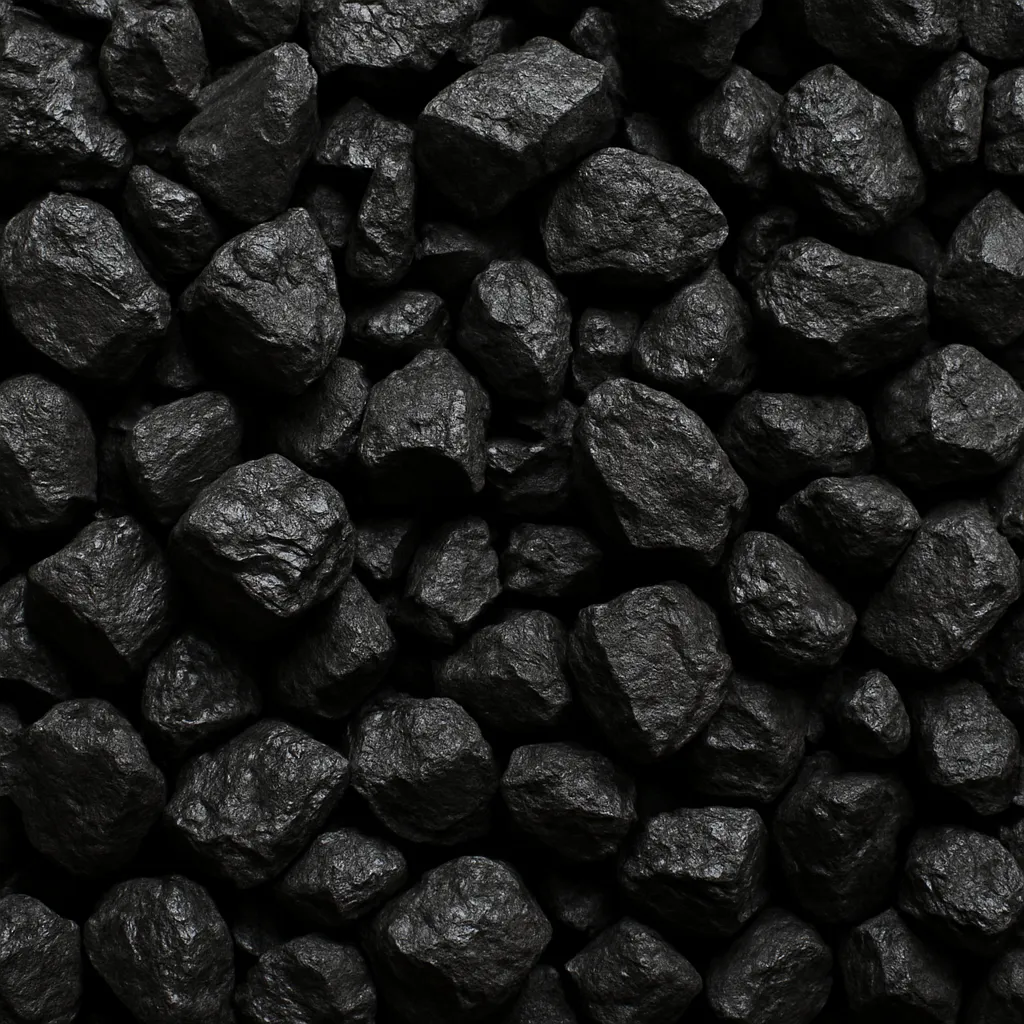
The global market for thermal export coal occupies a unique and sometimes controversial position in the world energy mix. Used primarily for electricity generation, thermal coal has powered industrialization and modern life for more than a century. Despite growing momentum toward cleaner energy sources, large parts of Asia, Africa and some regions of the Americas continue to rely on coal-fired plants as a stable and affordable source of baseload power. This article examines where thermal export coal is found and mined, the mechanics of production and trade, its economic importance, key statistics and market mechanisms, technical characteristics and environmental context, and likely near-term trends.
Distribution and geological occurrence
Coal forms from the accumulation and transformation of plant material under pressure and heat over geological time. Thermal coal deposits span many geological settings and are typically categorized by rank—from low-grade lignite to bituminous and anthracite. The most commercially significant thermal coals for the export market tend to be sub-bituminous and low- to mid-rank bituminous seams with calorific values suited to large-scale power plants.
Major geological basins hosting export-quality thermal coal include:
- Australia: the Bowen Basin (Queensland), the Sydney Basin (New South Wales) and the Surat Basin—sources of high-volume seaborne coal.
- Indonesia: numerous deposits on Kalimantan and Sumatra; Indonesian coals are typically sub-bituminous with competitive shipping advantages.
- Russia: large reserves in the Kuzbass (Kemerovo), Kansk-Achinsk and Russian Far East basins; increased export infrastructure has grown Russian seaborne shipments.
- United States: Appalachian and western Powder River Basin (PRB) coals; PRB coal is a major thermal export material due to low sulfur and large volumes.
- Colombia and South Africa: both with significant coastal basins enabling export flows to Latin American, Asian and African markets.
Geological distribution influences quality attributes such as moisture, ash, sulfur and calorific value, all of which determine market segmentation and end-use suitability.
Extraction, production and the supply chain
Thermal export coal is produced by a mix of open-cut (surface) mines and underground mines. Globally, surface mining dominates the export supply because it typically provides lower-cost, high-volume output. Modern mining operations involve large-scale equipment, conveyor systems, rail links and port terminals designed to handle millions of tonnes per year.
Mining methods and processing
- Open-pit mining: the most common method for high-volume coal destined for export; enables low unit costs and large economies of scale.
- Underground mining: used for deeper or higher-rank seams; contributes a smaller share of export volumes.
- Preparation plants: washing, screening and blending improve product quality—reducing ash and sulfur and optimizing calorific value to meet buyer specifications.
Transport and logistics
Key logistics components include rail haulage from mine to port, stockpiling and blending at terminals, and maritime shipping. Major coal ports such as Newcastle (Australia), Richards Bay (South Africa), Port Hedland (Australia for other bulk commodities), Balikpapan and Kalimantan terminals (Indonesia) are critical nodes. The seaborne trade relies on a fleet of bulk carriers, often Capesize and Panamax vessels, with chartering activity sensitive to seasonal demand and geopolitical events.
Global trade, major exporters and importers
The global seaborne trade in thermal coal forms a distinct market segment from domestic coal used within producing nations. Key exporters and their characteristics:
- Australia: Historically the largest seaborne coal exporter with a diversified portfolio to East Asian markets, including Japan, South Korea and increasingly India and China when import windows open.
- Indonesia: Competes aggressively on price and proximity to South and Southeast Asian markets; Indonesia is often the top or close-second exporter of thermal coal by volume.
- Russia: Expanded exports, especially to Asian buyers, via Pacific ports and by rail; geopolitical factors influence flows.
- United States and Colombia: Longstanding export supplies to the Americas, Europe and increasingly to Asia after trans-Pacific shipping economics improved in certain years.
- South Africa: Supplies African and some Asian markets, with Richards Bay one of the world’s largest coal terminals.
Importing countries are primarily large, fast-growing economies in Asia—India, China, Japan, South Korea, Taiwan and Southeast Asian nations—where coal remains a principal fuel for power generation.
Economic and statistical perspective
Quantifying the thermal coal market requires differentiating between domestic consumption and the seaborne export market. In rough terms:
- Global coal consumption (all types) has been on the order of several billion tonnes per year; thermal coal represents the majority of tonnage used for power generation.
- Seaborne coal trade (all coal types) typically moves more than one billion tonnes annually; the thermal segment constitutes a large share of that trade.
Recent market dynamics (2018–2023) showed high volatility: supply disruptions, pandemic-related demand swings, and energy-security responses to geopolitical crises produced strong price movements and reshaped trade flows. For example, in periods of supply tightness, some export prices rose sharply while in other years abundant Indonesian supply compressed margins.
For producing countries, thermal coal exports translate into substantial foreign-exchange earnings and fiscal revenues through royalties, taxes and corporate income. In Indonesia, coal exports can represent several percent of GDP and a significant fraction of export receipts in some years. In Australia, coal and other mining exports are a major component of national trade surpluses and regional employment in mining provinces. Conversely, heavy reliance on coal export rents raises economic vulnerability to long-term demand contraction driven by climate policies and competition from renewables.
Market structure, pricing and indices
Seaborne thermal coal pricing is influenced by grade, calorific value, sulfur and ash content, freight costs, and available port capacity. Price discovery occurs through physical contracts and spot markets supported by benchmark indices. Important pricing references include the Newcastle index for Australian coal and indices such as API4 and CIF ARA for certain trade lanes. Freight rates (Baltic indices for dry bulk) and fuel costs also feed through to delivered prices.
Contract structures vary from long-term supply agreements—used by utilities seeking security of supply—to spot and short-term contracts that reflect immediate market balance. Hedging, credit terms and insurance are commonly used to manage the risks inherent in long shipping chains.
Technical characteristics and end uses
Thermal coal is valued primarily for its ability to produce heat when burned, converting chemical energy into steam and then electricity. Key technical parameters:
- Calorific value: expressed as MJ/kg or kcal/kg, determines the energy content per tonne. Sub-bituminous coals often range from roughly 17–24 MJ/kg (4,000–5,800 kcal/kg), while higher-rank bituminous coals can be 24–35 MJ/kg (5,800–8,400 kcal/kg).
- Moisture content: high moisture reduces effective energy per tonne and increases shipping mass without adding useful energy.
- Ash and sulfur: high ash reduces boiler availability and increases disposal costs; sulfur influences emission control requirements.
- Volatile matter and grindability: affect combustion characteristics and plant performance.
Most thermal coal is consumed by large stationary boilers in coal-fired power stations. Other uses include industrial boilers, cement kilns and in smaller quantities for domestic heating in some markets.
Environmental impact and policy context
Coal combustion is a major source of CO2 and local air pollutants (NOx, SO2, particulate matter). Emission intensities vary with coal quality and plant efficiency, but a general range is approximately 2.5 to 3.1 tonnes of CO2 per tonne of coal burned, depending on carbon content and combustion conditions. Advanced plant technologies can reduce specific emissions per megawatt-hour—ultra-supercritical boilers and CCS (carbon capture and storage) offer higher efficiencies or lower net CO2, although CCS remains expensive and deployed at limited scale.
Governments and international bodies have gravitated toward policies that reduce coal use in power generation over the medium to long term, including:
- Carbon pricing mechanisms that raise costs for coal-based generation.
- Renewable energy mandates and auctions that reduce the load factor available to coal plants.
- Direct phase-out commitments for unabated coal in several OECD countries and growing pressure on financiers to restrict lending for new coal projects.
However, energy security and economic development imperatives mean that in some regions coal remains a central part of the energy mix for decades to come—particularly where cheap domestic supplies exist or alternatives are not yet economically or technically viable at the needed scale.
Social, fiscal and development implications
Coal mining and export activities often underpin regional economies with employment, infrastructure development and community revenues. Yet these benefits are not evenly distributed; issues include mine closure planning, worker retraining, environmental remediation and governance of resource revenues. The transition away from coal in consuming countries implies ripple effects for exporting communities—necessitating deliberate policies for a just transition that protect livelihoods while investing in alternative industries.
Interesting market dynamics and strategic considerations
Several factors make the thermal export coal market dynamic and strategically relevant:
- Short-term demand elasticity: seasonal spikes in power demand and outages at alternative fuel sources can create short-term price spikes.
- Geopolitics: sanctions, trade restrictions and shipping route disruptions materially alter trade flows (e.g., sanctions affecting specific exporters or embargoes that reroute supply).
- Fuel switching: natural gas price volatility can cause utilities to switch between coal and gas, influencing coal demand.
- Quality arbitrage: buyers blend coals from different origins to meet performance targets cost-effectively; exporters compete on consistent quality and timely delivery.
- Financial flows: insurance availability, project finance standards and banking restrictions on coal projects affect new developments and long-term investment.
Outlook and near-term trends
Over the next decade, the thermal export coal market will likely experience a mix of persistent demand in parts of Asia and structural decline in mature markets in Europe and North America. Key near-term trends include:
- Continued role in baseload generation in emerging economies where rapidly expanding power grids still rely on coal for affordability and reliability.
- Increasing volatility in seaborne markets driven by policy shifts and intermittent shocks, making flexible supply chains valuable.
- Gradual quality-driven segmentation: higher-efficiency plants demand better-quality coals, pressuring lower-grade producers to cut costs or exit.
- Opportunities in coal-technology niches: retrofitting plants with emissions controls, co-firing biomass, and eventual deployment of CCS where policy support exists.
Conclusions and practical takeaways for stakeholders
Thermal export coal remains a cornerstone of global electricity systems in many regions and a major export commodity for several nations. While long-term trends favor decarbonization and a reduced role for coal, the near- to medium-term outlook is mixed: demand will decline in some regions while remaining stable or even growing in others. For exporters, resilience means managing costs, maintaining consistent quality, navigating geopolitical risks and planning for transition impacts on communities and fiscal budgets. For importers, securing reliable, affordable and cleaner supply chains—through efficiency upgrades, co-firing strategies and diversification—will be central to balancing development needs with climate commitments.
Policy-makers, investors and industry participants should weigh the combined technical, environmental and socio-economic dimensions of thermal coal—recognizing that decisions made today about infrastructure, contracts, and community support will determine how smoothly the global energy transition unfolds in coal-dependent regions.