This article provides a comprehensive overview of the Adaro coal mining operations in Indonesia, focusing on location, geology, mining methods, product quality, economic and industrial significance, logistical arrangements, environmental and social aspects, and available statistics. The aim is to present a detailed, balanced profile of one of Indonesia’s most prominent coal producers, emphasizing both its role in the national and regional energy landscape and the technical and economic characteristics that define the operation.
Location and geological context
The Adaro operations are located on the island of Borneo, in the Indonesian province of South Kalimantan. The mining concession occupies a large area of the Barito River basin and surrounding lowland terrain, a region that is geologically favorable for the accumulation of peat-derived and deltaic sediments that later became coal. The concession comprises multiple contiguous mining areas developed over decades, enabling a large-scale open-pit mining complex.
Geologically, the coal found at the Adaro site is typically of low to medium rank, derived from Tertiary peat and alluvial sequences. It is generally classified as sub-bituminous to high-moisture, low-sulfur coal, formed in coastal plain and deltaic depositional environments. Seam thicknesses and lateral continuity are often favorable for large open-pit extraction, and the relatively shallow burial depth of deposits allows cost-effective surface mining methods.
Mining operations and technology
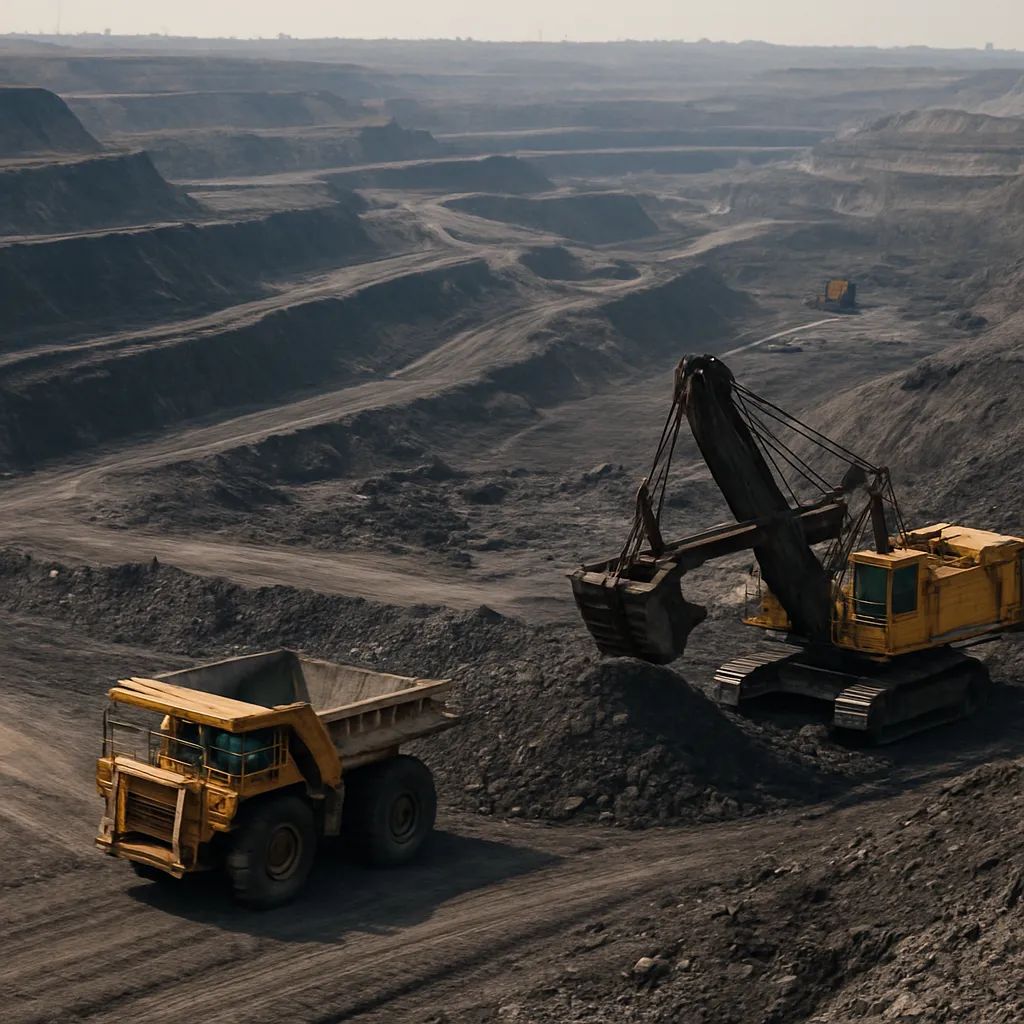
Adaro’s extraction model is built around large-scale, mechanized surface mining. The operation uses standard open-pit mining techniques adapted to tropical conditions: overburden removal by excavators and haul trucks, selective coal stripping, and staged benching to maintain slope stability. The scale of the operation allows economies of scale in equipment utilization, maintenance, and workforce deployment.
Typical mine layout and sequence
- Progressive benching and pit development to expose coal seams.
- Dedicated overburden management areas and temporary stockpiles for reclaimed topsoil and growth media.
- On-site coal washing and processing facilities in some parts of the complex to improve product quality.
- Tailings and water management systems adapted to a region with heavy seasonal rainfall.
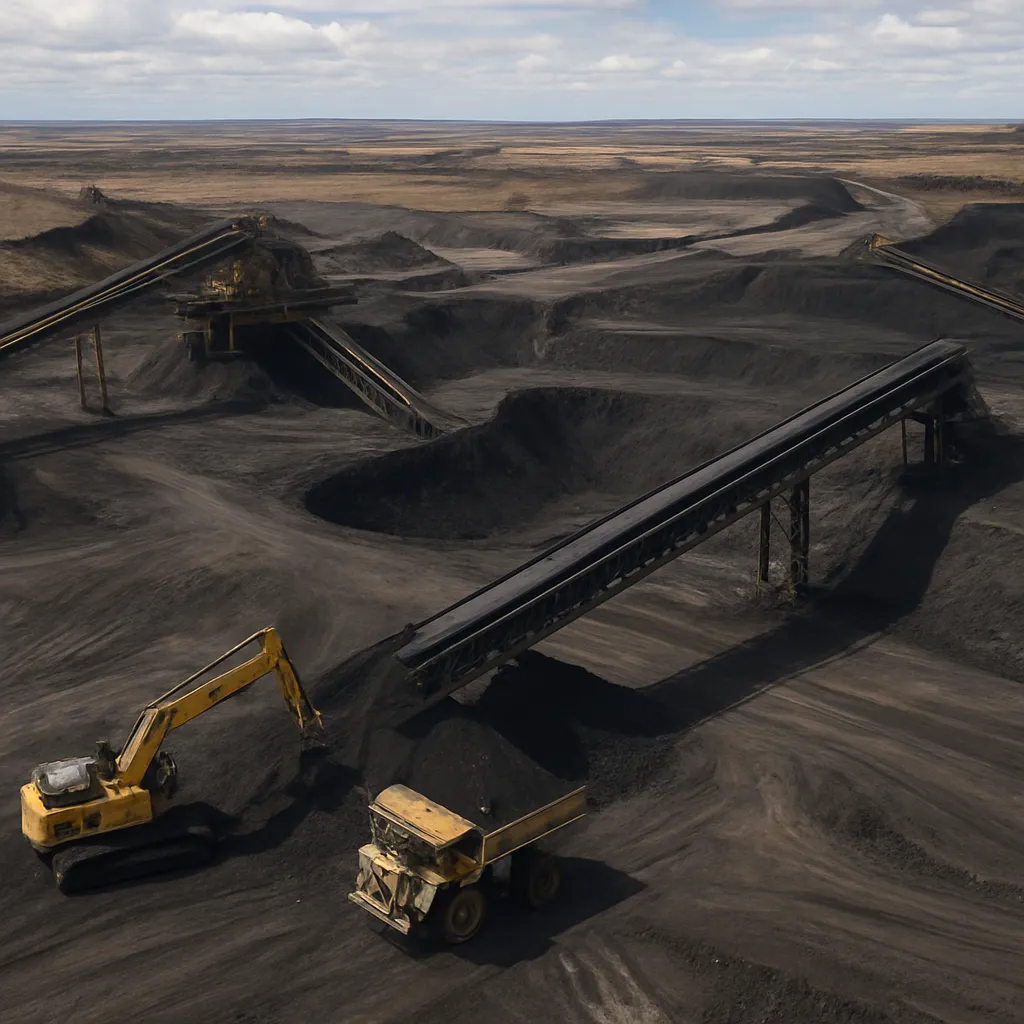
Operational efficiency relies on modern fleet management, pit design, and scheduling systems. Haul truck fleets, hydraulic shovels, dozers, and graders form the core mobile equipment. In order to minimize handling and cost, the mine employs integrated logistics (road, barge, and coastal shipping) to move coal from pit to port, often including conveyor systems in specific sections.
Coal quality and products
The coal produced at the Adaro complex is primarily thermal coal intended for power generation and industrial steam. Key coal characteristics include relatively low sulfur content and variability in calorific value due to high intrinsic moisture. Producers and marketers at the site tailor products to customer needs through blending and sometimes washing. The typical quality profile includes:
- Rank: sub-bituminous to high-moisture bituminous range (low calorific value relative to hard coals).
- Sulfur: generally low, which is advantageous for meeting environmental constraints on SOx emissions.
- Ash: variable, typically moderate; washing and beneficiation reduce ash content for specific market windows.
- Moisture: relatively high inherent moisture; this affects delivered calorific value and logistic handling.
- Primary use: power generation (utilities and captive power plants) and industrial boilers.
Adaro and similar producers often market graded products and offer blending options to meet calorific specifications requested by international buyers. Some product lines emphasize lower emissions and consistent burn properties to appeal to power plant operators adapting to stricter environmental standards.
Economic and industrial significance
At national and regional levels, the Adaro mining operations play a major role in Indonesia’s coal sector. Coal is one of Indonesia’s largest export commodities by volume and value, and large-scale mines like Adaro contribute significant export tonnages, employment, and tax and royalty revenue.
Key economic contributions include:
- Export earnings: Coal exports provide foreign exchange and help balance the trade account, with major markets historically including South and East Asia.
- Employment: The mine and its associated logistics and service industries employ thousands directly and indirectly, from technical staff to river transport crews and local contractors.
- Government revenue: Royalties, taxes, and state participation mechanisms contribute to regional and national budgets.
- Downstream industrial activity: Coal-fired power plants and industrial consumers in Indonesia and neighboring countries depend on steady coal supplies, supporting manufacturing and services.
The scale of operations also creates multiplier effects: investments in port infrastructure, road and river transport, and local community development projects stimulate broader economic activity in the mining region.
Logistics, markets and export pathways
Logistics are integral to the commercial success of a large coal mine. Adaro’s supply chain typically involves short-distance haulage from pit to on-site stockyards, followed by river barging or trucks to coastal transshipment facilities, and then loading onto seagoing vessels. The use of river barges is a common and cost-effective solution in Kalimantan, where navigable waterways provide direct access to ports.
Primary export markets historically include India, China, Japan, South Korea, and other countries in Southeast and South Asia. The product mix is adjusted for regional demand — thermal coals for power plants in India and Southeast Asia, and specific blends for utilities in East Asia.
- Domestic market obligations: Indonesian policy often requires producers to supply a proportion of production to domestic power plants (DMO policies), shaping allocation between export and domestic sales.
- Transshipment and shipping: Transshipment at coastal points or use of shallow-draft loading arrangements allows Panamax and smaller vessels to be supplied from river terminals.
- Value chain integration: Some coal producers invest in adjacent power plants, shipping, and port facilities to capture more value and stabilize demand for production.
Statistics and production figures (estimates and context)
Precise figures for production, reserves, and financials can vary by reporting period and corporate boundaries (single-mine vs. corporate group). The following points summarize the typical scale and statistical context associated with the Adaro operations, using conservative, generalized phrasing where exact numbers may change year to year:
- Annual production: Large-scale Indonesian mines like Adaro often produce in the tens of millions of tonnes per year. Historical annual production for major Adaro complexes has been reported in the range of roughly 40–60 million tonnes for the core mine complex, while the broader Adaro group (including other assets) reports consolidated totals that can be higher depending on the year and portfolio.
- Reserves and resources: The concession contains substantial coal resources and life-of-mine estimates typically measured in hundreds of millions to a few billion tonnes, which supports multi-decade production plans under current mining rates.
- Market share: At various times Adaro has been among the top three or top five coal producers in Indonesia by volume, reflecting its strategic importance.
- Employment and local procurement: The direct workforce for a mine of this size is typically in the thousands, with extended indirect employment in logistics, services, and community projects.
Because reporting practices and asset portfolios change, it is best to refer to the company’s latest annual report or regulatory filings for precise, up-to-date figures on annual tonnage, proven and probable reserves (2P), and financial returns.
Environmental management and sustainability efforts
Large open-pit coal mining inevitably raises environmental and social challenges. Operators at Adaro and elsewhere implement a suite of mitigation measures intended to reduce environmental impacts and meet regulatory obligations:
- Rehabilitation and progressive reclamation: Topsoil and growth media are managed to enable revegetation of mined areas once they are no longer operational.
- Water management: Sediment control, settling ponds, and water treatment systems reduce turbidity and contamination risks to local waterways during rainy seasons.
- Air quality controls: Dust suppression through water sprays and covered conveyor transfer points reduce particulate emissions from handling operations.
- Biodiversity and land-use planning: Environmental impact assessments and biodiversity action plans guide land clearing and restoration sequences.
- Community programs: Social investments in health, education, infrastructure, and local livelihoods are a component of the license to operate and long-term community relations.
Adaro and similar companies often publish sustainability reports detailing greenhouse gas emissions, land rehabilitation progress, and social investment outcomes. However, the broader climate implications of continued coal consumption remain a topic of global policy debate and investor scrutiny. Coal-fired power remains a major source of CO2 emissions compared with lower-carbon alternatives.
Social and regional impacts
Mining activity transforms regional economies and communities. Benefits typically include employment, infrastructure development (roads, power, water), and improved services through corporate social responsibility programs. Potential negative impacts include displacement of land uses, changes in livelihoods (fisheries and agriculture), and localized environmental degradation if not properly managed.
To mitigate social risks, operators engage in stakeholder consultations, land acquisition and compensation programs, livelihood restoration projects, and participatory development initiatives. Long-term planning aims to ensure that communities retain benefits when mining winds down, including skills training and economic diversification initiatives.
Industry role and longer-term outlook
In the near to medium term, mines like Adaro’s remain central to Indonesia’s role as a major global coal supplier, especially for power generation in Asia. Market dynamics — demand from importing countries, price fluctuations, domestic policy (including DMO and export duty regimes), and global energy transitions — will influence production strategies and investment decisions.
Key factors shaping the outlook include:
- Global demand trends: Electrification and industrial growth in Asia continue to support thermal coal demand, though long-term decarbonization policies could reduce demand decades ahead.
- Domestic energy policy: Indonesia’s own power sector plans and policies on coal use and renewable energy affect domestic off-take.
- Operational efficiency and cost control: Large producers with low-cost open-pit operations are better positioned to remain competitive if market prices soften.
- Environmental and financing pressures: Lenders, investors, and offtakers increasingly weigh environmental credentials, rehabilitation performance, and climate risk in commercial decisions.
Interesting technical and historical notes
Several operational and historical features make the Adaro area noteworthy within the global coal industry:
- Scale and continuity: The large, contiguous concession allows optimized pit designs, phased operations, and extended mine life planning, providing long-term employment and logistical continuity.
- River logistics: Use of river barges and transshipment is a defining local solution in Kalimantan, leveraging natural waterways to move large tonnages efficiently to coastal loading points.
- Product specialization: Focus on low-sulfur thermal coal fits regional compliance needs for emissions control, giving certain market advantages.
- Corporate evolution: Over time, the operator’s corporate strategy has included diversification into logistics, power generation, and other mining assets to spread risk and integrate the value chain.
Concluding summary
The Adaro mining complex in Indonesia is an example of a large-scale, industrial coal operation that combines substantial geological endowment with integrated logistics, mechanized open-pit mining, and market-oriented product handling. Its coal is primarily thermal, generally sub-bituminous with low sulfur content, aimed at power generation markets both domestic and international. Economically, the operation contributes materially to regional development, export earnings, and employment, while raising the standard set of environmental and social responsibilities that modern mining must meet. The future of such operations will be influenced by global energy trends, domestic policy, and increasing emphasis on responsible and sustainability-focused management practices.