The Ekibastuz coal basin in northeastern Kazakhstan is one of the country’s most important and historically significant coal-producing regions. Located in the Pavlodar region near the town of Ekibastuz, this basin has been a cornerstone of Kazakhstan’s energy system since the Soviet era. The basin is known for very large-scale, mechanized open-pit operations and for supplying coal primarily for thermal power generation. This article reviews the geology and coal types found in the basin, the main mining operations and infrastructure, key economic and statistical indicators, environmental and social dimensions, and the future outlook for Ekibastuz within Kazakhstan’s energy and industrial landscape.
Geological setting and coal characteristics
The Ekibastuz basin lies in the northern part of Kazakhstan’s Kazakh Uplands and occupies a broad sedimentary depression. The basin was formed in the Mesozoic to Cenozoic eras and contains multiple seams of coal interbedded with clays, sandstones, and other sedimentary rocks. Geological surveys and Soviet-era exploration identified very large in-situ resources, concentrated in relatively shallow seams that favor large-scale surface mining.
Coal in the Ekibastuz basin is typically classified as lower-rank types—predominantly sub-bituminous to lignite—though properties vary by seam and depth. Ekibastuz coal is characterized by:
- Moderate to low calorific value relative to higher-rank coals (making it primarily suited for combustion in power stations rather than metallurgical use);
- Relatively high ash content compared with many export thermal coals, which influences blending, transport economics, and boiler performance;
- Variable moisture and volatile matter content depending on seam and mining depth;
- Generally low to moderate sulfur content, which can be an advantage versus some other basins but does not eliminate the need for emissions control technologies.
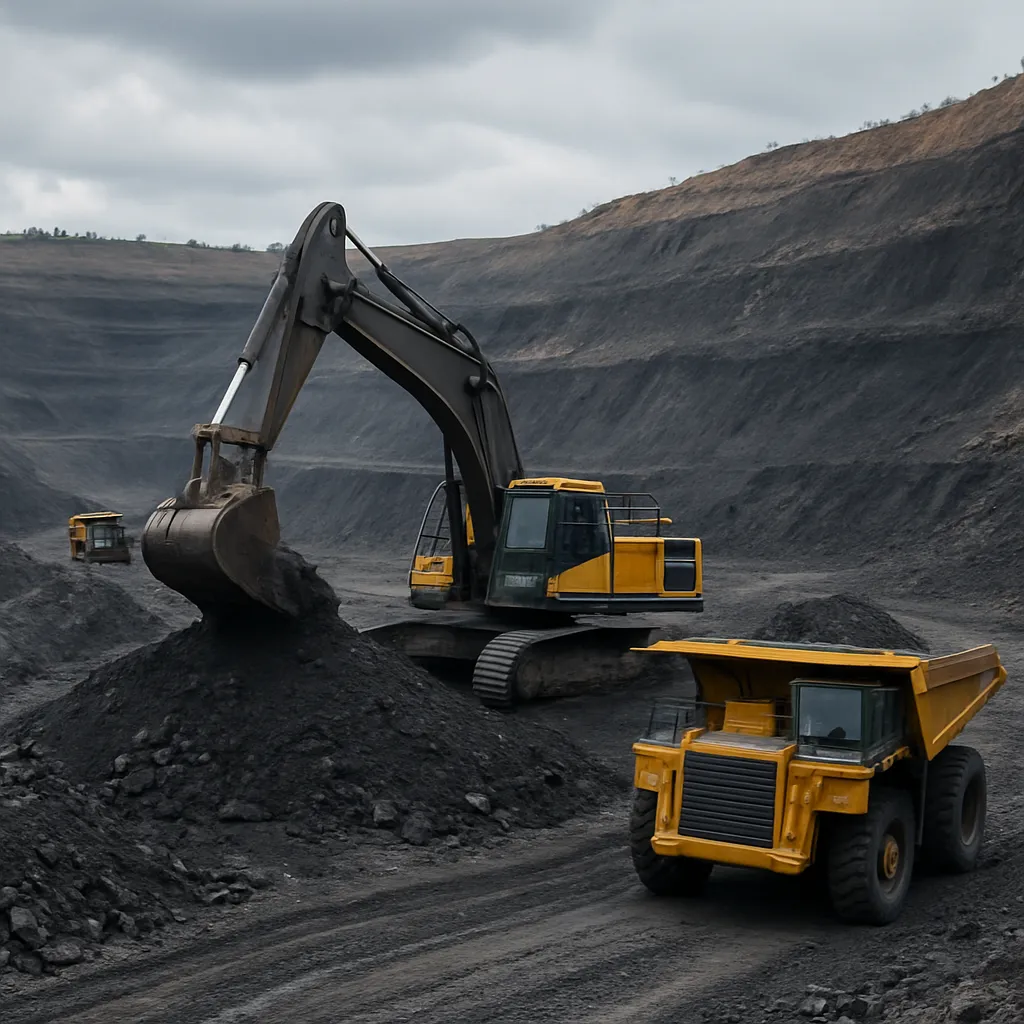
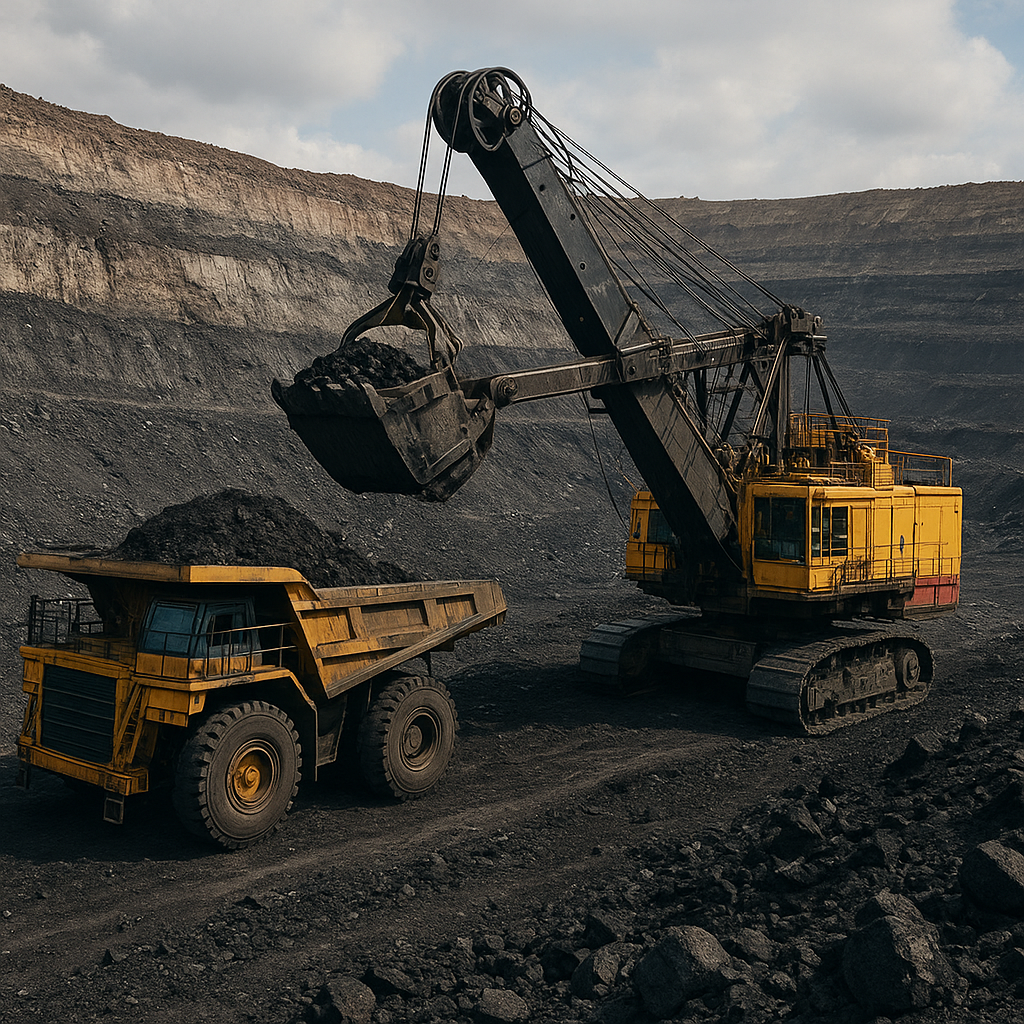
Because of the seam geometry—thick, extensive layers at shallow depths—the basin is ideally suited to large-scale open-pit mining with continuous haulage systems, draglines, bucket-wheel excavators, and conveyor networks that can move tens of millions of tonnes per year.
Mining operations, infrastructure and companies
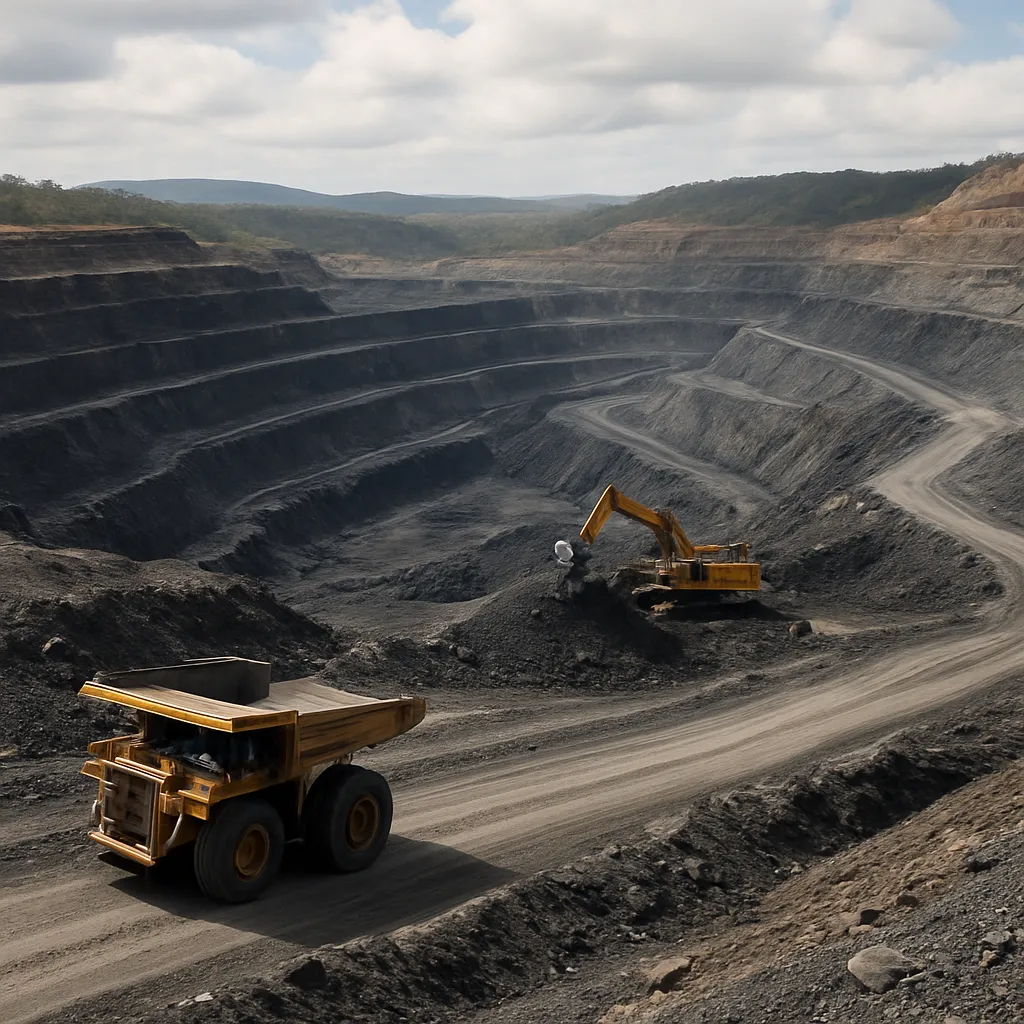
Ekibastuz is dominated by large open-pit mines and associated coal handling and transport infrastructure. The mines feed nearby thermal power plants and export routes. Over decades of operation, mine layouts, spoil handling, and reclamation schemes have created a landscape of giant benches, internal haul roads, and spoil dumps.
Major operational features in the basin include:
- Large-scale open pits capable of single-strip or multi-bench extraction at high rates;
- On-site processing facilities such as coarse screening, sizing, and primary washing in some operations to improve product quality for power stations;
- Extensive conveyor and rail links connecting mines with the Ekibastuz-TPS power plants and national rail network for domestic dispatch and, when economic, export;
- Giants of Soviet-era energy infrastructure nearby: the Ekibastuz thermal power complex (GRES units), built to consume low-grade basin coal; one of these plants is also notable for having one of the tallest chimneys in the world, a visible symbol of the basin’s industrial scale.
Among the prominent legal entities historically operating in the basin are corporate formations such as Bogatyr Komir (also written Bogatyr Coal), which has been one of the largest single-mine producers in the region. These large producers implemented highly mechanized extraction and large-scale logistics, enabling mine output in the tens of millions of tonnes per year at peak times. Many operations are vertically integrated or closely linked to major power consumers, reducing the need for long-distance shipment of a low-calorific product.
Economic, production and statistical overview
The Ekibastuz basin represents a significant share of Kazakhstan’s thermal coal base and thus plays an important role in national energy security and regional employment. Kazakhstan has been among the world’s larger coal producers, with annual national production frequently reported in the range of roughly 100–140 million tonnes in the 2010s and early 2020s (figures vary by year and by source). Ekibastuz’s contribution is substantial: the basin historically accounted for a double-digit percentage of national output, reflecting the large-scale mines operating there.
Specific statistical points and commonly reported data (bearing in mind that reported values can vary by source and accounting method):
- Resource scale: Geologists and historical Soviet-era studies reported multi-billion-tonne in-situ coal resources in the Ekibastuz basin. Estimates of proved, probable and inferred resources vary widely depending on classification systems and the cut-off used. Many industry references describe the basin’s resources as measured in the billions of tonnes, giving Ekibastuz a rank among the larger coal basins of Eurasia.
- Annual production: Individual large Ekibastuz mines have recorded annual outputs in the range of several million to several tens of millions of tonnes. Peak production levels in some large pits historically approached or exceeded 20–30 Mtpa (million tonnes per annum) for single large operations in favorable years, though modern figures fluctuate with market demand and mining plans.
- Domestic consumption linkage: A major share of Ekibastuz production is consumed by nearby power plants—integrated consumers built for the specific qualities of basin coal. This internal linkage insulates some portion of output from export market fluctuations but binds basin economics to the health and efficiency of the thermal generation fleet.
- Employment and regional economics: The mining and power complexes in Ekibastuz support thousands of direct jobs and many more indirectly through services, transport, and supply chains. Local towns and infrastructure grew around mining operations, making the basin a core regional employer in Pavlodar region.
Given the low-to-moderate calorific value and higher ash content, Ekibastuz coal typically sells at a discount relative to higher-quality thermal coals from other countries. That said, proximity to local consumers and integration with power plants provide stable internal demand. Export economics depend on price spreads, transport costs, and the need of neighboring markets for bulk thermal fuel.
Role in industry, energy security and strategic importance
Ekibastuz contributes to Kazakhstan’s energy mix primarily by supplying large-scale thermal generation. The basin’s integration with the Ekibastuz-GRES complex established a specialized energy system that effectively combusts the basin’s lower-rank coals at large scale. That relationship means Ekibastuz has strategic importance beyond raw tonnage: it enables baseload electricity generation, supports industrial customers, and underpins regional economic activity.
Strategically, several points are notable:
- Energy independence: Domestic coal from Ekibastuz reduces dependence on imported fuels for electricity. In the context of Eurasian energy flows and regional geopolitics, domestic coal reserves contribute to national resilience.
- Stable domestic supply: Power plants designed for Ekibastuz coal provide predictable demand and reduce volatility compared with relying solely on international markets.
- Export potential: While constrained by product quality and transport economics, Ekibastuz coal can be and has been exported to neighboring countries when prices and logistics make it viable, adding foreign exchange earnings.
- Industrial base: The basin supports associated industries—transport, mechanical services, metallurgy and construction—through demand for materials and energy.
Environmental, social and reclamation challenges
Large open-pit coal mining inevitably brings environmental and social impacts, and Ekibastuz is no exception. Key challenges include:
- Air quality and ash: The high ash content of the coal leads to significant quantities of combustion residues. Ash disposal, dust control, and particulate emissions from both mines and power plants require management systems to protect local air quality.
- Water management: Surface mining alters drainage patterns, and both mining and power plants use significant water resources. Tailings and ash ponds require engineering to prevent groundwater contamination and to manage stormwater.
- Land disturbance and reclamation: Open pits and spoil dumps permanently change landscapes unless reclamation is carefully planned and carried out. Post-mining land use planning—revegetation, contouring, and potential conversion to lakes or recreational spaces—has been an evolving practice but remains challenging at the scale of Ekibastuz operations.
- Greenhouse gas emissions: Combustion of coal releases CO2. While the basin supports energy security, national and global decarbonization policies create long-term pressure to reduce emissions or to deploy mitigation technologies such as higher-efficiency generation, carbon capture or fuel switching.
- Social impacts: Mining towns depend on single-industry economies; economic shifts or mine closures can cause unemployment and community stress. Conversely, mining revenue funds local services and infrastructure, so economic transitions must be managed carefully.
Efforts to modernize plants, improve dust suppression, and introduce more sophisticated water and waste management systems have been ongoing, driven by regulatory requirements, corporate investment, and international financing when available. The scale of remediation and modernization required remains substantial and is a key factor in the basin’s long-term sustainability.
Future prospects and modernization
The future of Ekibastuz will be shaped by a combination of domestic energy policy, market demand, investment in mine and plant modernization, and global decarbonization trends. Areas likely to influence the basin’s trajectory include:
- Efficiency upgrades: Modernizing thermal plants to higher efficiency cycles can reduce coal consumption per MWh and lower emissions intensity, extending the economic life of coal assets while reducing environmental footprints.
- Product upgrading and blending: Investments in washing and sorting can improve product calorific value and reduce ash, making coal more competitive for distant markets and easier to combust in modern boilers.
- Infrastructure investment: Rail, conveyors and port logistics (for export) determine the basin’s market reach. Continued or upgraded transport capacity could support selective export growth when economics justify it.
- Policy drivers: Kazakhstan’s energy and climate policies, including commitments under international frameworks, will affect demand for coal and the economics of investments in emissions control technologies.
- Economic diversification and just transition: For local communities, diversifying employment opportunities and planning for eventual reductions in coal dependency are critical to social stability.
Technologies such as carbon capture and storage (CCS) remain expensive and technically challenging at the scale of existing plants, but pilot projects and international partnerships could become relevant if policy incentives strengthen. Meanwhile, the basin’s comparative advantage—huge near-surface coal volumes and an established logistics network—will continue to matter, particularly for domestic power generation over the coming decades even as the global energy mix evolves.
Interesting facts and historical notes
Several items underscore Ekibastuz’s unique place in industrial and regional history:
- Historical scale: Developed most intensively during the Soviet era, the Ekibastuz basin was central to regional industrialization programs that linked coal with massive thermal power projects.
- Power station landmarks: The Ekibastuz power complex (GRES) was purpose-built to use basin coal. One of the thermal plants associated with the basin is notable for its exceptionally tall chimney—an industrial landmark visible for many kilometers—symbolizing the massive scale of Soviet-era energy infrastructure.
- Landscape transformation: The topography around Ekibastuz has been dramatically reshaped by mining—vast benches, spoil heaps and engineered landforms are visible evidence of industrial extraction at very large scale.
- Economic lifeline: For decades, mining and power generation in Ekibastuz provided steady employment, urban development and government revenues, making it a socio-economic anchor for the Pavlodar region.
Summary
The Ekibastuz coal basin in Kazakhstan remains a major regional coal province defined by very large, near-surface deposits exploited through mechanized open-pit mining. The coal is primarily sub-bituminous to lignite in rank, with relatively high ash content, and it supports large-scale thermal power generation. The basin’s multi-billion-tonne resource base and historical production capacity have given it sustained economic importance for domestic energy security and regional employment. Challenges include environmental management, modernization of plants and mines, and adapting to an evolving global energy landscape. Companies such as Bogatyr have been identified historically with the basin’s large-scale production; continued technological investment and policy clarity will shape Ekibastuz’s role in Kazakhstan’s energy future.
Overall, Ekibastuz exemplifies the trade-offs and dynamics of large coal basins worldwide: abundant indigenous fuel resources, critical links to power generation and industry, and significant environmental and social responsibilities that require planning, investment and technological adaptation as energy systems transform.