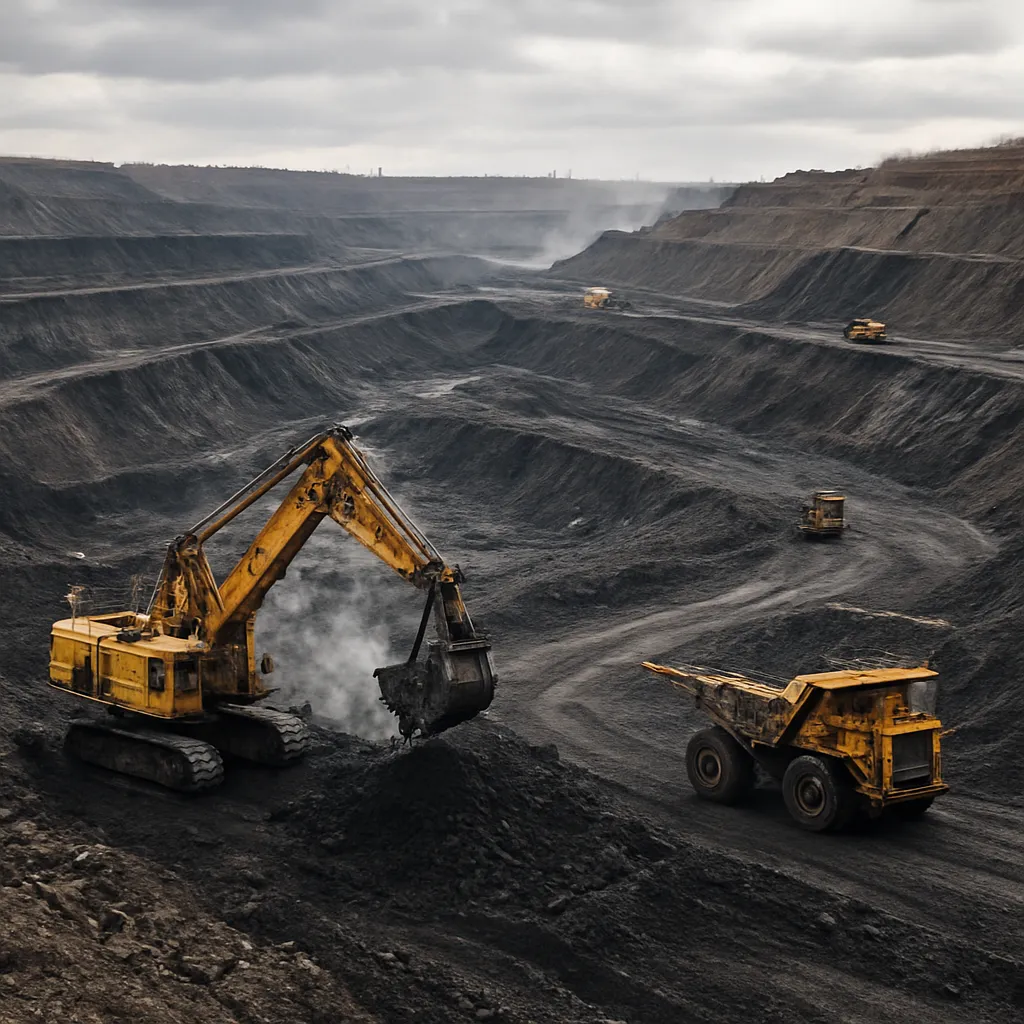
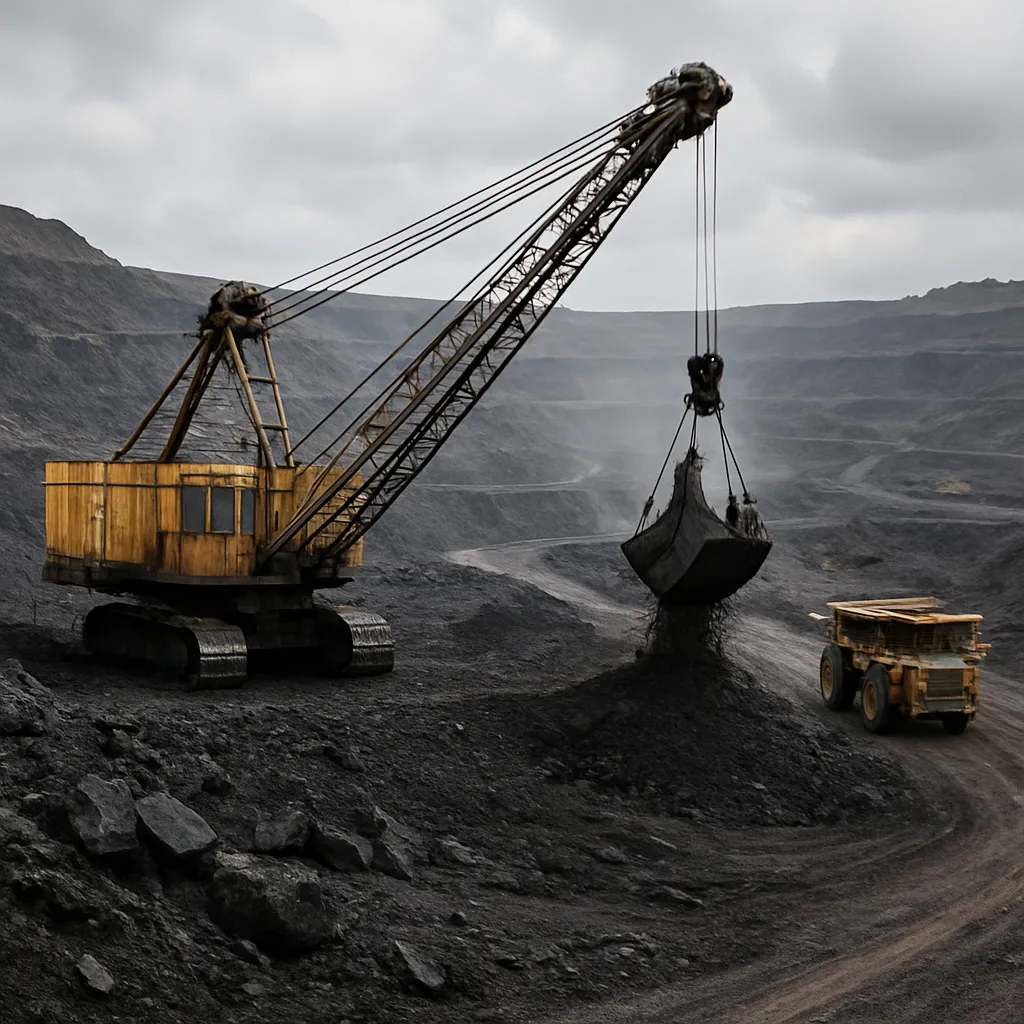
The Komsomolets Mine is one of several coal mining sites across the Russian Federation and the post-Soviet space that bear the historical name Komsomolets. While individual mines with this name may differ by region and specific geological setting, the general story around a mine called Komsomolets fits into the larger context of Russian coal mining — its geology, production methods, economic role, and social and environmental impacts. This article outlines where such mines are typically located, what kinds of coal they produce, how they operate, their economic significance, and other relevant technical and historical details.
Geographic setting and geology
Coal mines called Komsomolets have been found in several coal-bearing regions of the former Soviet Union, but when referenced in a contemporary Russian context they are most often associated with major coal basins such as the Kuzbass (Kemerovo Oblast), the Pechora Basin (Komis, northern European Russia), and smaller basins in the Far East. These basins are part of Russia’s broad coal resource base, which spans the western Siberian plains to the Arctic and the Far Eastern territories.
Geologically, Russian coalfields encompass a spectrum of coal ranks:
- High-rank bituminous and anthracite coals (found in places like the Donbas historically and certain Kuzbass seams), suitable for coking and metallurgical uses.
- Medium- to low-rank bituminous coals prevalent in much of Kuzbass and other Siberian basins, used for power generation and industrial heat.
- Sub-bituminous and lignite deposits in more northerly or younger basins, typically used for local power stations and district heating.
Many Komsomolets-designated operations historically targeted medium- to high-quality bituminous seams because of their value for both thermal power and metallurgical processes.
Mining methods and technical characteristics
Across Russian coal mines of this type, the dominant underground mining technologies include longwall mining and room-and-pillar (also called bord and pillar). Longwall mining, widely used in thicker, consistent seams, employs mechanized shearers and conveyor systems to extract coal efficiently. Surface shafting and ventilation systems are typical for vertical access; in some regions, inclined drifts provide transport access.
Key technical features and risks:
- Longwall faces can reach several hundred meters in length and are highly mechanized, enabling high output per face but also requiring advanced roof control and methane management.
- Coal seams may be methane-bearing; therefore, sophisticated ventilation and methane drainage systems are necessary to ensure safety and reduce greenhouse gas emissions.
- Coal processing facilities (wash plants) are often co-located to improve product quality — especially when producing coking coal for steelmaking, where ash, sulfur, and volatile matter must meet strict specifications.
What is mined — coal types and product mix
At a Komsomolets-type mine, the product profile typically includes:
- Thermal coal (steam coal) for power generation and heating networks. This coal emphasizes calorific value and acceptable ash and sulfur contents for combustion efficiency.
- Coking (metallurgical) coal in seams of higher rank and suitable petrographic composition; this coal is processed into coke used in blast furnaces for iron and steel production.
- Coal fines and byproducts, which may be briquetted, pelletized, or sent to coal-fired power plants or industrial boilers.
The exact split between thermal and coking coal varies by seam and by market demand; many mines produce a mix, with higher-grade lots destined for export or metallurgical use and lower-grade fractions used domestically in power plants.
Economic and industrial significance
Coal mining remains a cornerstone of Russia’s energy and industrial landscape. Russia is one of the world’s largest coal producers, with annual production generally in the range of 400–450 million tonnes of hard coal in recent years (figure varies by year and source). Within that national total, the Kuzbass region (Kemerovo Oblast) contributes a very large share — historically cited as roughly 50–60% of Russian coal output — making it the country’s primary coal-producing region.
The economic footprint of a Komsomolets mine includes:
- Direct employment of miners, engineers, and plant operators. Coal companies often provide ancillary services and local infrastructure (housing, clinics, schools) in mining towns.
- Indirect employment in transportation (rail), port handling, equipment maintenance, and supply industries.
- Contribution to regional GDP through wages, taxes, and royalties. In coal-dependent regions, mining companies are frequently among the largest taxpayers and employers.
- Export earnings when product is sold overseas. In pre-2022 trade patterns, Russia exported roughly 150–200 million tonnes of coal annually, with major destinations shifting over time between Europe and Asia.
Transport, logistics and export routes
Russian coal logistics are anchored by an extensive rail network and several export terminals. Heavy coal-producing basins are linked by rail to ports on both the Black Sea and the Pacific:
- Western export routes: ports such as Novorossiysk and Tuapse on the Black Sea (via rail links) historically served European and Mediterranean markets.
- Eastern export routes: ports such as Vanino and Vostochny (Far East) and Ust-Luga (Baltic), which are key for supplying Asian and regional buyers.
Shippers and mine operators schedule long-haul rail movements measured in millions of tonnes per annum. Coal quality and contract terms (cfr vs fob) affect the choice of port and shipping strategy.
Statistics and production data (generalized and contextual)
Precise production figures for a particular mine named Komsomolets vary by site and year; many such operations are mid-sized underground mines producing between several hundred thousand to a few million tonnes per year. In contrast, the largest Russian coal miners (private and state-owned), operating multiple pits and open-pit complexes, may produce tens of millions of tonnes annually.
Contextual national and regional data (approximate ranges):
- Russia’s annual hard coal production: roughly 400–450 million tonnes.
- Kuzbass share of national output: roughly 50–60% (i.e., in the low hundreds of millions of tonnes).
- Russia’s annual coal exports (pre-2022 trading patterns): roughly 150–200 million tonnes, with large flows to Asian markets, Europe, and neighboring states.
- Typical mid-sized underground mine production: 0.5–3 million tonnes per year, depending on seam thickness, mechanization, and investment.
These figures are indicative and subject to change with market conditions, policy shifts, and investment cycles. For specific yearly figures for a named Komsomolets mine, company reports and regional statistical bulletins are the most reliable sources.
Workforce, social aspects and local economy
Coal mines have long shaped local communities: company towns, social infrastructure, and labor traditions are deeply embedded. A Komsomolets mine typically supports:
- Several thousand direct and indirect jobs across the mine site and associated transportation and processing facilities.
- Training programs for miners and technical personnel; vocational schools and on-the-job apprenticeship are common in coal regions.
- Local economic dependency: single-industry towns can be vulnerable to market downturns, mine closures, or resource depletion, which makes economic diversification a key policy challenge.
Mining companies and regional governments often co-invest in housing, medical clinics, and cultural facilities, but the long-term sustainability of coal-town economies remains a pressing concern as energy markets evolve.
Health, safety and environmental challenges
Mining underground coal presents multiple hazards. Russian coal basins have experienced serious incidents in the past (for example, large fatalities in high-profile accidents in the 2000s and 2010s in Kuzbass), which prompted regulatory and technical responses. Key considerations include:
- Methane control and explosion prevention: Ventilation, methane drainage, and monitoring are crucial to prevent firedamp events.
- Coal dust suppression to reduce explosion risk and chronic respiratory disease among workers.
- Subsidence and land use impacts where longwall extraction causes surface deformation.
- Water pollution and acid mine drainage in areas without adequate tailings and effluent treatment.
- Greenhouse gas emissions: coal combustion and fugitive methane contribute to climate impacts; methane capture and utilization are important mitigation measures.
Technological modernization (automation, remote monitoring, improved roof-control systems) has reduced some risks in modernized operations, but legacy infrastructure and smaller mines often lag behind best practices.
Historical and cultural context
The name Komsomolets is derived from Komsomol, the All-Union Leninist Young Communist League, and reflects the Soviet-era practice of naming industrial assets after youth organizations or revolutionary symbols. Mines and towns named Komsomolets were often founded or expanded during the Soviet industrialization and contribute to local historical identity. Over time, some of these sites have been privatized, restructured, or closed, while others remain active participants in contemporary coal markets.
Modern trends and future outlook
Several trends shape the present and future of mines like Komsomolets:
- Market shifts: growing demand in Asia (China, India, Southeast Asia) has influenced export patterns; geopolitical developments have also redirected trade flows and logistics.
- Technological modernization: mechanization, digital monitoring, and automation increase productivity and safety but require capital investment and workforce retraining.
- Environmental regulation and decarbonization policies present long-term challenges to coal demand in Europe and other markets, encouraging diversification and cleaner coal technologies (e.g., high-efficiency low-emission power plants, carbon capture in some scenarios).
- Regional development policies: in coal-dependent regions, efforts to diversify local economies, improve social services, and remediate post-mining landscapes are ongoing priorities.
For an individual Komsomolets mine, viability depends on seam quality, operating costs, access to transport, and the broader trajectory of coal markets.
Interesting technical and operational facts
Some additional points of interest related to mines of this type:
- Selective mining and wash plant technology enable producers to meet strict coking coal specifications required by steelmakers, increasing product value.
- Methane capture projects can convert a hazard into an energy asset — methane drained from coal seams can be used for power generation or sold as fuel.
- Automation in longwall mining includes remotely operated shearers and automated belt systems, which reduce worker exposure in hazardous sections.
- Coal seam gas content, seam thickness, and geology determine whether underground mining or surface mining is most economical; many Komsomolets-style operations are underground because they target deep, continuous seams.
Where to find detailed, site-specific information
To obtain precise production numbers, reserves, employment figures, and technical descriptions for a specific mine named Komsomolets in Russia, consult:
- Company annual and quarterly reports if the mine is operated by a publicly reporting company.
- Regional statistical yearbooks (e.g., Kemerovo Oblast statistical publications for Kuzbass operations).
- Industry analyses by major consultancies and trade organizations that track Russian coal production and exports.
- Press releases from regional administrations, which often report on investment, safety incidents, and employment.
Summary
The Komsomolets Mine, as a category of coal mining site in Russia, exemplifies the characteristics of many mid-sized underground operations in the country’s principal coal basins. These mines typically produce medium- to high-rank coal for both thermal and metallurgical uses, operate with mechanized underground methods such as longwall mining, and are integrated into a national system of rails and ports that supports substantial exports. Economically, such mines contribute significantly to local employment and regional budgets, while presenting persistent challenges in safety, environmental management, and long-term economic diversification. Within the broader Russian coal sector — which accounts for several hundred million tonnes of production annually and a major share of exports — a Komsomolets mine plays a concrete role in supplying energy and industrial feedstock while being shaped by market, technological, and policy forces.