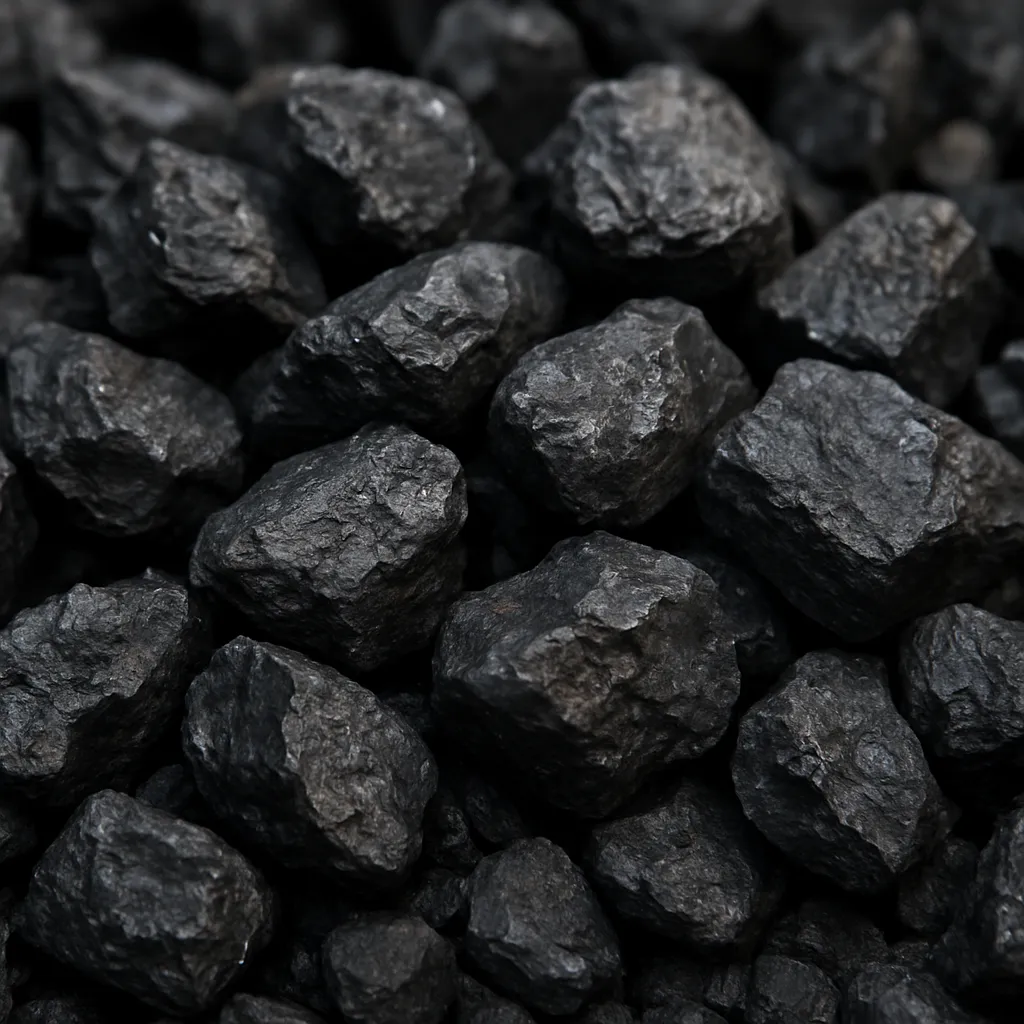
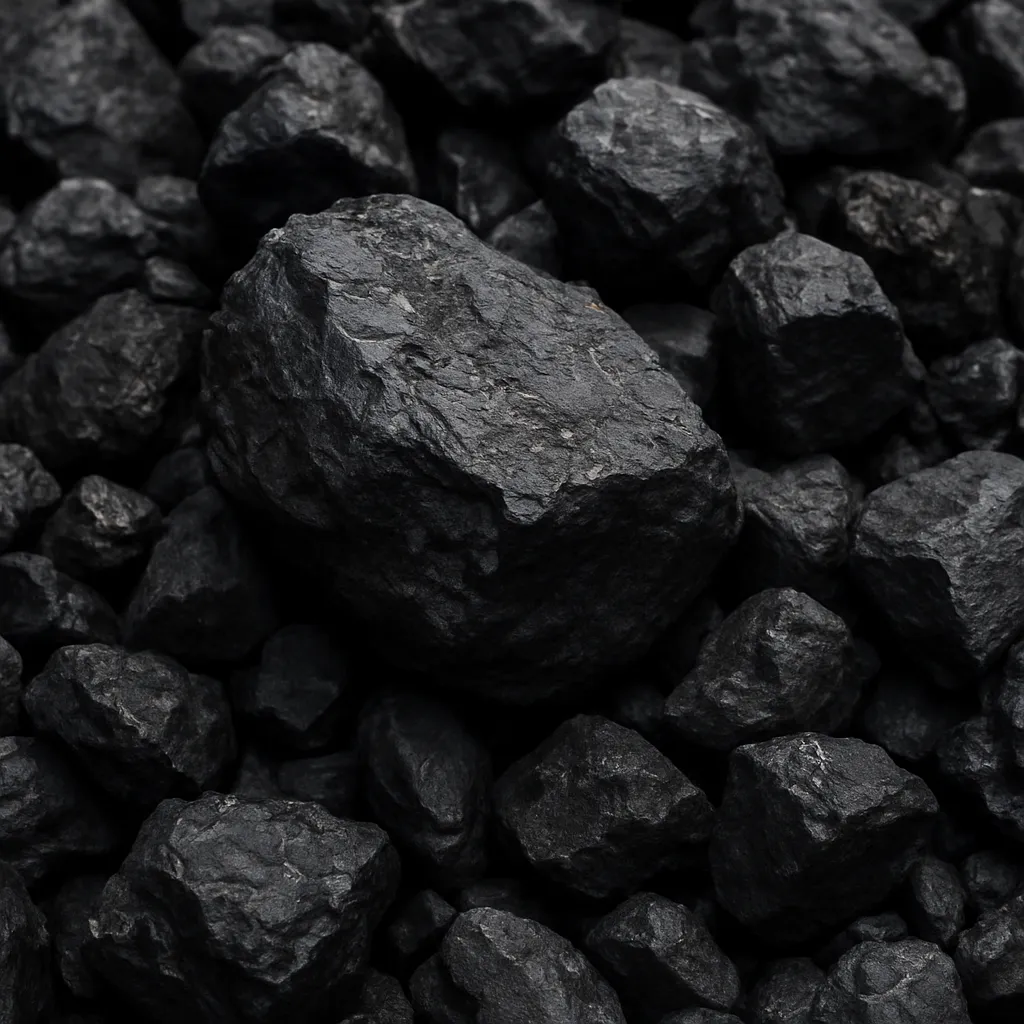
This article explores the characteristics, distribution, economic role and industrial importance of soft steam coal. Soft steam coal—commonly identified with certain grades of bituminous coal used primarily for thermal applications—remains a major fuel for electricity and heat production globally. The text covers geological origin, typical properties such as calorific value, major producing and exporting countries, market and trade dynamics, environmental and technological aspects, and other interesting facts that illustrate why this commodity continues to shape energy systems and industrial economies.
Definition, formation and physical properties
Soft steam coal is a term often used to describe types of coal that are softer than anthracite and are predominantly used for steam generation in power plants. In many classification schemes “soft coal” corresponds to bituminous coal (and sometimes high-quality sub-bituminous coal) as opposed to “hard coal” which can refer to denser, higher-rank coals like anthracite. The key characteristic of steam coal is its suitability for producing heat and steam rather than metallurgical uses (coking).
Geologically, steam coal forms from the progressive alteration of accumulated plant matter in peat bogs under increasing pressure and temperature through geologic time. The degree of coalification determines rank: peat → lignite → sub-bituminous → bituminous → anthracite. Soft steam coal typically sits in the mid-range of that sequence and is characterized by:
- Moderate to high volatile matter content compared to anthracite, influencing combustion behavior.
- Calorific values commonly in the range of about 24–35 MJ/kg for bituminous steam coal, though values vary widely by deposit and rank.
- Variable ash and sulfur contents which affect ash handling and emissions control requirements.
- Physical properties that make it suitable for pulverised-coal combustion in boilers and for use in fluidised-bed boilers when lower rank variants are considered.
These properties make soft steam coal a versatile feedstock for a wide spectrum of power generation technologies, from older subcritical plants to modern supercritical and ultra-supercritical units that achieve higher thermal efficiency and lower CO2 intensity per kWh.
Where it occurs and how it is mined
Coal-bearing basins are distributed worldwide; soft steam coal deposits are typically found in sedimentary basins formed during Carboniferous, Permian, and younger periods depending on the region. Major basins with significant steam coal resources include parts of eastern China, the eastern United States, the Australian Bowen and Surat basins, Indonesian Tertiary basins, the Kuzbass and eastern basins in Russia, South African Karoo and Highveld basins, and major deposits in India (Jharia, Dhanbad regions) and Colombia.
Mining methods
- Surface mining (open-pit, strip mining) is common where seams are shallow. It typically offers lower extraction cost per tonne and accounts for a large share of global production in regions like Australia, the U.S. Powder River Basin (for sub-bituminous steam coal), and Indonesia.
- Underground mining (room-and-pillar, longwall) is used where seams are deeper. Longwall mining in particular provides high recovery rates in thick continuous seams and is widely used in China, Russia and parts of Europe.
- Smaller-scale and artisanal mining also contributes locally to supply in some countries, although it often raises safety and environmental concerns.
Advances in mining technology—automation of longwall systems, improved haulage and processing, remote monitoring—have improved productivity and safety but also reshaped employment patterns in mining regions.
Major producers, exporters and trade flows
Globally, production and consumption of steam coal are concentrated in a handful of countries. While exact annual figures vary year to year, some persistent patterns are clear:
- China is by far the largest producer and consumer of coal, including steam coal. Its domestic production meets the bulk of its demand for electricity generation and industrial heating, though China also engages in international trade for specific quality requirements.
- India is a major producer and one of the largest consumers, with rapid demand growth driven by expanding electricity needs and industrialisation.
- The United States produces substantial volumes of steam coal (including lower-rank sub-bituminous from the Powder River Basin), and consumption patterns have shifted with the rise of gas and renewables.
- Australia and Indonesia are the world’s largest exporters of thermal steam coal. Indonesia has become the dominant supplier to many Asian markets (India, China, Japan, South Korea), while Australia supplies significant volumes to East Asia and other global buyers.
- Russia and South Africa are also notable producers and exporters, particularly to regional markets.
Trade flows are shaped by proximity to major consuming regions, coal quality (calorific value, ash, sulfur), and port/transport infrastructure. Asia is the central arena for steam coal trade given dense populations, industrial bases, and significant reliance on coal-fired power in many countries.
Economic importance and market dynamics
Soft steam coal has historically been central to national energy systems because of its affordability, storability, and high energy density relative to other solid fuels. It continues to play a major role in electricity generation, often providing baseload power or dispatchable capacity to back up variable renewables.
Price drivers and recent trends
Prices of thermal coal are influenced by:
- Global and regional demand for electricity and industrial heat.
- Availability of alternative fuels, especially natural gas and renewables.
- Logistics and export capacity—port bottlenecks and shipping costs can strongly affect landed prices in importing countries.
- Policy drivers—air quality regulations, carbon pricing, and power sector decarbonisation policies alter long-term demand prospects.
- Geopolitical events and supply disruptions, which in certain years (e.g., during COVID-era recovery periods and following the Russia–Ukraine conflict) contributed to price volatility.
Periodically, tight supplies or sudden surges in demand have driven international thermal coal prices sharply upward, while oversupply and structural declines in coal demand in some markets have pushed prices down. Short-term cycles are common; however, many analysts expect structural pressure on demand over the medium to long term in regions pursuing decarbonisation.
Employment and regional economies
Coal mining supports significant employment and regional economic activity in producing regions—providing jobs directly in mines and indirectly through services, transport, and equipment supply chains. Revenues from coal can represent a large share of regional GDP in areas heavily dependent on mining. At the national level, royalties, taxes and export earnings from steam coal can be important fiscal contributors, particularly for major exporting countries.
Statistical snapshot and global significance
While annual statistics fluctuate, some general statistical observations are useful:
- Coal remains one of the world’s largest sources of primary energy and one of the largest single sources of electricity generation in many countries—especially in Asia.
- Global coal production and consumption peaked or plateaued in different years across regions; some countries report declining coal use in the power sector, while others continue to expand coal-fired capacity.
- Export dependence varies: a few countries account for a large share of seaborne coal exports (Indonesia, Australia, Russia, South Africa, Colombia). Landlocked and domestic producers rely mainly on internal markets.
Exact numbers such as annual production (measured in million tonnes) vary across data sources (IEA, World Coal Association, national statistical agencies). For perspective, production and trade volumes are typically measured in the hundreds of millions of tonnes annually in the largest producing and exporting nations, with global production historically in the multiple billions of tonnes per year.
Role in industry and technology
Soft steam coal is predominantly used for:
- Power generation: Large-scale pulverised coal boilers and circulating fluidised-bed plants combust steam coal to produce steam for turbines.
- District heating and industrial steam: Food processing, paper mills, chemical plants and other industries use steam produced from steam coal-fired boilers.
- Blending and ancillary uses: Steam coal can be blended with higher- or lower-grade coals to meet specific boiler requirements and emissions targets.
Efficiency improvements and emissions
Improvements in power plant design—supercritical and ultra-supercritical technologies—raise thermal efficiency and reduce CO2 emitted per unit of electricity produced. For instance, moving from older subcritical plants to ultra-supercritical can cut CO2 intensity significantly for the same coal feedstock. However, even with efficiency improvements, combustion of steam coal produces substantial emissions of CO2, particulates, SOx and NOx unless abatement systems (particulate filters, flue gas desulfurisation, selective catalytic reduction) are installed and operated.
Environmental and regulatory aspects
Environmental concerns around steam coal are multidimensional:
- Climate impact: Coal combustion is a major source of CO2; reducing coal use is central to many national emissions reduction strategies.
- Air quality: Emissions of SO2, NOx and particulates from coal-fired plants have local and regional health impacts unless controlled.
- Mining impacts: Surface mining can disrupt landscapes, ecosystems and water regimes. Subsidence and water pollution are risks in underground mining.
- Waste management: Ash and other combustion residues require safe disposal or utilisation.
Policy responses include stricter emission standards, phased closures of older plants, carbon pricing mechanisms, and incentives for cleaner generation. These have led to retirement of some coal fleets in advanced economies, while in some developing economies, coal remains attractive in the short term for its cost and reliability.
Technological developments and alternatives
Several technologies may affect the future role of soft steam coal:
- Carbon capture, utilisation and storage (CCUS): If deployed economically at scale, CCUS could allow continued use of coal-fired generation with much lower CO2 emissions, but costs, storage availability and energy penalties are challenges.
- Advanced combustion controls and emissions abatement: These reduce local pollutants and can make coal plants compliant with stricter air quality rules.
- Fuel switching: Natural gas, biomass co-firing and increasing shares of renewables can displace some coal demand. Co-firing with biomass is an interim option to lower lifecycle emissions.
- Underground coal gasification and coal-to-liquids/gas technologies exist but face economic, technical and environmental hurdles for broad deployment.
Socioeconomic and geopolitical considerations
Decisions about steam coal are not only technical but also political and social. Coal regions often have strong labour unions and communities where the mining economy is central. Just transition strategies—retraining, economic diversification and social safety nets—are increasingly part of policy discussions in coal-dependent jurisdictions.
Geopolitically, control of coal supplies matters less than for oil or natural gas because coal is bulkier and trade is regionally concentrated, but disruptions and export restrictions can still have meaningful effects on regional power markets, particularly in Asia where import dependency is high for some nations.
Interesting facts and lesser-known aspects
- Historically, coal’s rise powered the Industrial Revolution; many early steam engines and factories relied on the steam produced from coal combustion to drive economic transformation.
- Different coal seams in the same basin can vary dramatically in quality—some seams within meters of one another can have different ash, sulfur and calorific values, making coal quality management a critical part of operations.
- Steam coal is sometimes washed and beneficiated to reduce ash and sulfur; the process improves heat value per tonne but creates concentrated waste streams (slurry and tailings) that require management.
- Some modern power plants are designed for rapid cycling to complement renewables; steaming plants that burn steam coal have been adapted in certain markets to provide grid stability services, though frequent cycling often increases maintenance costs.
- In several countries, coal-fired power plants operate with strategic coal stockpiles to ensure energy security during periods of import disruption or seasonal peaks.
Outlook and concluding observations
The future of soft steam coal will be shaped by a combination of market economics, technological evolution and policy choices. In the near term, steam coal will likely remain a significant source of electricity in many regions due to existing infrastructure and cost considerations. Over the medium and long term, widespread decarbonisation commitments, falling costs of renewables and batteries, and potential adoption of CCUS will determine whether coal retains a substantial role or retreats more rapidly.
For policymakers, energy planners and industry participants, the key variables to watch include: investment trends in new coal capacity versus renewables and gas; implementation and cost trajectories of carbon mitigation technologies; and social policies to manage transitions in coal-dependent communities. From a technical standpoint, improving plant efficiency and emissions controls can deliver immediate environmental benefits, while innovation in sequestration and alternative fuels could influence longer-term viability.
Soft steam coal remains more than a commodity: it is a complex intersection of geology, engineering, markets and social policy. Understanding its properties, supply chains, environmental footprint and role in the energy mix is essential for informed decisions about energy security, industrial development and climate goals.