This article provides a comprehensive overview of the La Loma coal mine in Colombia: its location, the type of coal produced, operational characteristics, economic significance, social and environmental impacts, logistics and markets, and the challenges and opportunities the operation faces in a changing global energy landscape. Where available, I refer to industry and company-level information and place the mine in the broader context of Colombian and global coal production.
Location and geological setting
La Loma is located in the northern Andean foothills of Colombia, in the department of Cesar, a region that forms part of the larger Cerrejón‑La Guajira/Cesar coal basin system. The mine lies within a landscape of rolling plains and low hills where extensive coal-bearing Paleocene and Eocene sedimentary sequences crop out. These seams were deposited in ancient coastal and deltaic environments and are part of the main Colombian coal-producing geological units.
Geologically, the coals in this area are primarily of the bituminous to sub‑bituminous rank, formed under conditions that produced relatively high carbon content suitable for steam or thermal coal applications. The seams are generally shallow to moderately buried, which has favored the use of open‑pit mining methods. Local stratigraphy includes multiple coal seams with variable thickness and quality, interbedded with sandstones, siltstones and mudstones typical of deltaic sequences.
Ownership, history and operational profile
La Loma has been a prominent coal operation in Colombia for several decades. Historically, ownership and project structure have been linked to large private mining companies with long-term investments in the region. The mine is notable for its scale and for being part of Colombia’s export-oriented coal sector. Its development followed the expansion of Colombian coal exports from the 1980s onward and the build‑out of infrastructure connecting inland mines to Caribbean ports.
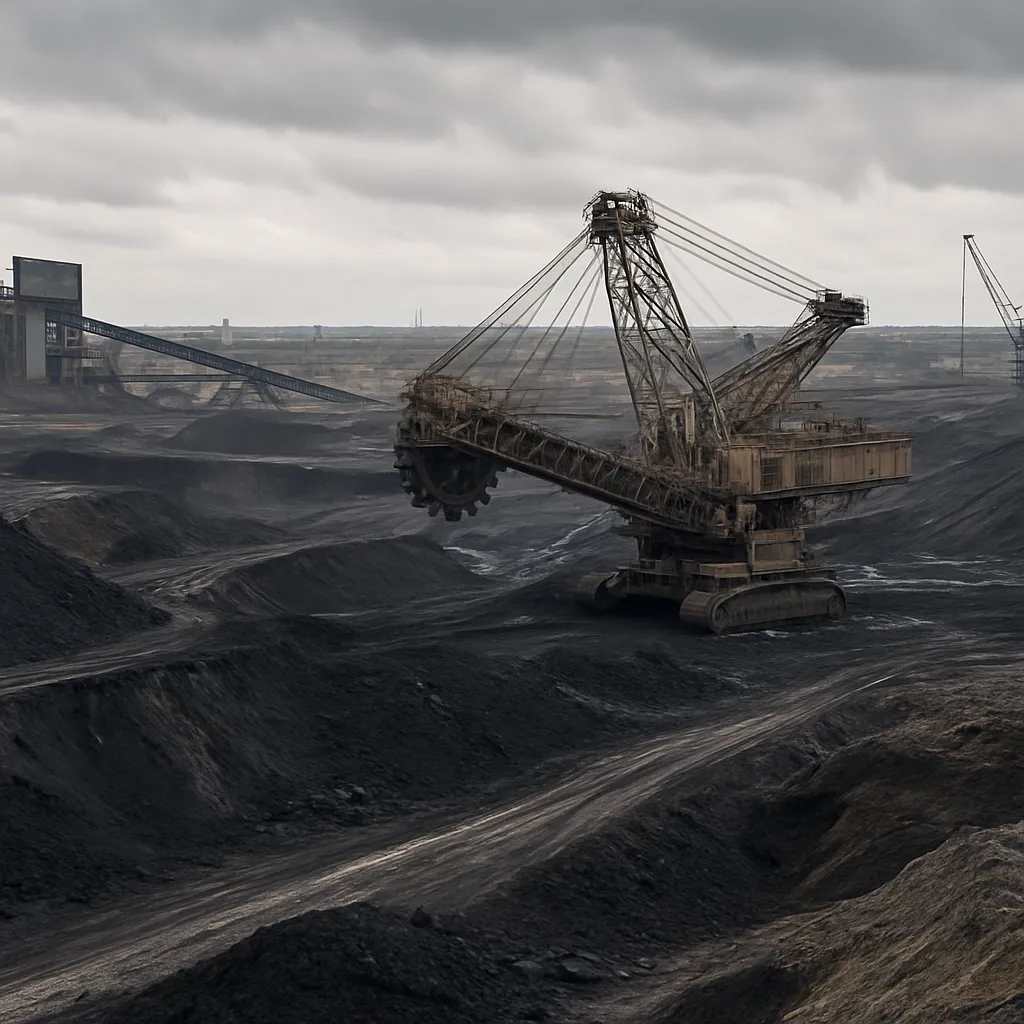
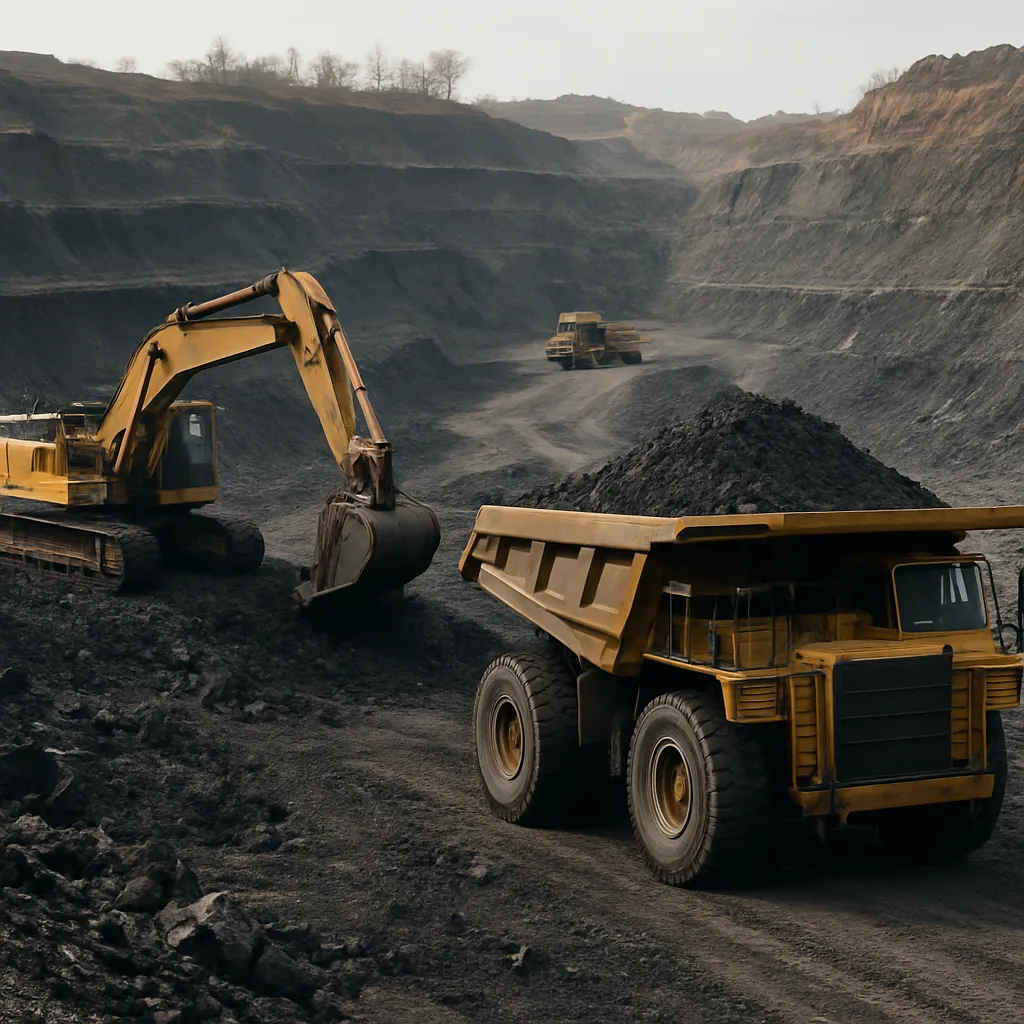
Operationally, La Loma has been developed as a conventional open‑pit coal mine. Typical activities on site include progressive removal of overburden, extraction of coal seams by large excavators and trucks, coarse crushing and screening where required, and stockpiling or direct loading for export. Processing, when applied, focuses on sizing and sometimes washing to reduce ash and improve product consistency for international buyers.
Coal quality and product characteristics
The coal produced at La Loma is principally thermal coal (steam coal) intended for power generation rather than metallurgical use. Key characteristics of the product include:
- Rank: predominantly bituminous to sub‑bituminous — suited for combustion in power plants;
- Typical use: electricity generation in domestic and international markets;
- Quality variables: calorific value, moisture, ash, sulfur and volatile matter content — these determine pricing and suitability for specific markets;
- Product forms: run-of-mine, sized coal, and sometimes washed products to meet specific buyer specifications.
Producers in the region often offer coal with moderate calorific values and competitive sulfur and trace element profiles, which can make Colombian thermal coals attractive to a range of power utilities, particularly in markets seeking relatively low‑sulfur options.
Production, reserves and statistical context
Precise annual production and reserve figures for La Loma can vary year to year due to market demand, investment cycles and operational changes. Industry reporting and company statements historically place mid‑sized Colombian operations in the range of several million tonnes per year. As part of the national coal sector, La Loma contributes to Colombia’s position as one of the world’s larger exporters of thermal coal.
At the national level, Colombia’s coal industry has historically exported **tens of millions of tonnes per year**, making coal one of the country’s most valuable mineral export commodities. La Loma, as a significant operation within the Cesar basin, plays a part in these national totals, supplying both seaborne export markets and occasionally domestic users.
When interpreting available figures, note that production can be affected by:
- international coal prices and demand in importing countries (Europe, Asia, Americas);
- logistical capacity at Caribbean ports and rail links; and
- domestic policy, permitting and social factors that influence operations.
Economic and regional importance
La Loma’s significance extends beyond the raw tonnage of coal it produces. Economically, the mine contributes in several ways:
- Employment: The operation directly employs operational, technical and administrative staff and supports additional jobs in contracting services, transport and logistics;
- Regional income: Royalties, payments and local procurement can provide revenue streams for municipal and departmental governments, influencing public budgets for infrastructure, education and health;
- Foreign exchange: Coal exports generate hard currency for Colombia, supporting trade balances and contributing to export diversification;
- Supply chains: Mining stimulates related industries — equipment manufacturing, maintenance, catering, and construction — creating multiplier effects across the economy.
For local communities in Cesar and neighboring departments, the mine represents an important employer and economic anchor, but this comes with trade-offs related to land use, environmental impacts and social change. The distribution of economic benefits at the community level varies with corporate policy, contracts, local governance, and the effectiveness of social investment programs.
Logistics, transport and export markets
Transport and logistics are central to La Loma’s viability as an export mine. Coal extracted inland must move to coastal terminals for transshipment. Typical logistics consist of:
- haulage by heavy trucks to railheads or directly to local processing yards;
- rail transport on dedicated or shared tracks linking mines to Caribbean ports;
- port handling at Caribbean terminals for bulk carriers;
- global shipping to buyers in Europe, Asia, the United States and Latin America.
The quality of transport infrastructure — road and rail conditions, port throughput capacity and availability of bulk shipping — is a critical determinant of the mine’s competitiveness and realized netbacks. Investments in logistics, whether by the company or public authorities, can materially change operational costs and export volumes.
Environmental, social and governance (ESG) considerations
Like other large open‑pit coal operations, La Loma faces a range of environmental and social issues that companies and regulators must manage:
- Land disturbance: Open‑pit excavation leads to substantial alteration of landforms and requires progressive reclamation planning;
- Water impacts: Mining can affect surface and groundwater through dewatering, runoff and potential sediment transport; water management and treatment are essential;
- Air quality: Dust control measures are required at extraction, crushing and stockpile areas to protect worker and community health;
- Biodiversity: Clearing of native vegetation and habitat fragmentation must be mitigated through compensation, restoration and conservation actions;
- Community relations: Land tenure, resettlement, employment, and community development programs influence long‑term social license to operate;
- Climate: As a producer of fossil fuel for combustion, the mine is part of global discussions around greenhouse‑gas emissions and the energy transition. Both operational GHG footprints and the end‑use emissions of the coal are relevant to stakeholders.
Colombian coal operations, including La Loma, have increasingly implemented formal ESG frameworks: environmental impact assessments, community engagement plans, biodiversity action plans, and infrastructure investments. Nonetheless, mines in the region have sometimes been the focus of social concern and legal disputes, reflecting the challenges of balancing development with environmental stewardship and local rights.
Legal and social controversies
Large-scale mining projects in Colombia have occasionally been linked to social tensions and legal challenges. Historically, some mining operations in the region have faced allegations of improper relationships with local armed actors, disputes over land and compensation, and complaints brought by affected communities. These controversies can translate into court cases, administrative sanctions, reputational risk and changes in operational conditions.
Resolving such disputes typically requires a combination of legal compliance, transparent stakeholder engagement, targeted compensation or benefit-sharing arrangements, and sometimes third-party mediation. Companies operating in these contexts often emphasize compliance programs, human rights due diligence, and policies designed to prevent improper influence and ensure accountability.
Role in Colombian and global coal markets
La Loma is part of a cluster of Colombian mines that supply the international market with thermal coal. Colombia’s coal is valued for its consistency and relatively low sulfur in many cases, enabling it to compete in several markets. The mine contributes to:
- the country’s export profile and foreign exchange earnings;
- market diversification for utilities seeking reliable seaborne thermal coal;
- regional economic development in northern Colombia through infrastructure and jobs.
Market dynamics influencing La Loma and similar mines include global coal prices, competition from other exporters (Australia, Indonesia, Russia, the United States), freight costs, and evolving environmental policy in importing countries that affects demand for thermal coal.
Reclamation, community programs and safety
Best practice for modern mines includes planning for progressive reclamation and post‑mining land use. At La Loma, reclamation activities and community programs typically focus on:
- land reshaping and topsoil replacement to enable pasture, forestry or agriculture;
- water treatment and the creation of sustainable water resources for communities;
- investment in local education, health and small-business development;
- occupational health and safety programs to reduce accidents and long‑term health risks for workers.
Successful reclamation and social programs can improve local acceptance and leave a positive legacy, but they require sustained investment and monitoring over years or decades after mining ceases.
Challenges and future outlook
The long‑term outlook for La Loma, as for many thermal coal operations, depends on several interacting factors:
- Global demand: The pace at which importing countries reduce coal use for power generation will determine future export opportunities;
- Price volatility: Coal prices fluctuate with macroeconomic conditions, fuel substitution and shipping costs, affecting project economics;
- Regulatory environment: Domestic permitting, environmental standards, and royalties influence operating costs and social acceptability;
- Operational costs: Efficiency gains, cost control and logistical improvements can maintain competitiveness even in lower-price environments;
- Energy transition: Diversification of company portfolios, investment in lower‑carbon technologies, and reclamation commitments may shape the mine’s legacy and future roles.
For many coal-producing regions, including Cesar, realistic long‑term planning involves preparing communities and economies for a potential transition away from coal dependence by investing in alternate livelihoods, education and infrastructure that can underpin sustained regional prosperity.
Interesting facts and lesser‑known aspects
– La Loma is an example of how geology, infrastructure and international demand converge to create export‑oriented mining hubs in Colombia.
– Mines in the Cesar basin have supported the development of specialized local skills in open‑pit operations, heavy equipment maintenance and bulk logistics.
– The regional concentration of mining has spurred public debates about land use tradeoffs between agriculture, conservation and extractive industries.
– Advances in mine planning and remote sensing have improved the ability to monitor environmental impacts and enforce mitigation measures around major sites like La Loma.
Concluding perspective
La Loma coal mine is a significant component of Colombia’s coal sector: it demonstrates the interplay of geology, large‑scale open‑pit mining operations, export logistics and the broader economic and social dynamics of resource regions. While contributing substantial economic benefits through employment, government revenues and export earnings, La Loma operates in a context of environmental challenges, community expectations and a shifting global energy landscape. The mine’s future will be shaped by how effectively operators, regulators and communities manage impacts, improve efficiency, and plan for a future where energy systems and market demands continue to evolve.