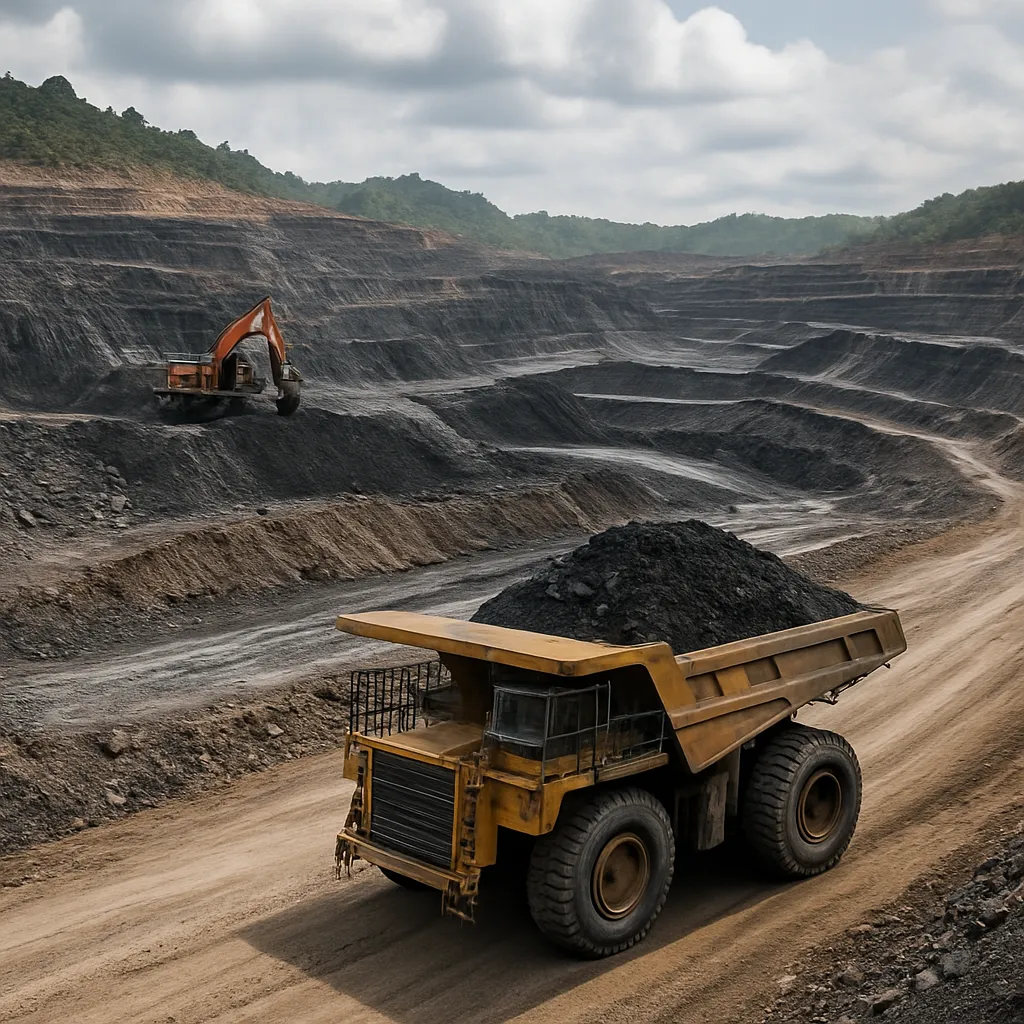
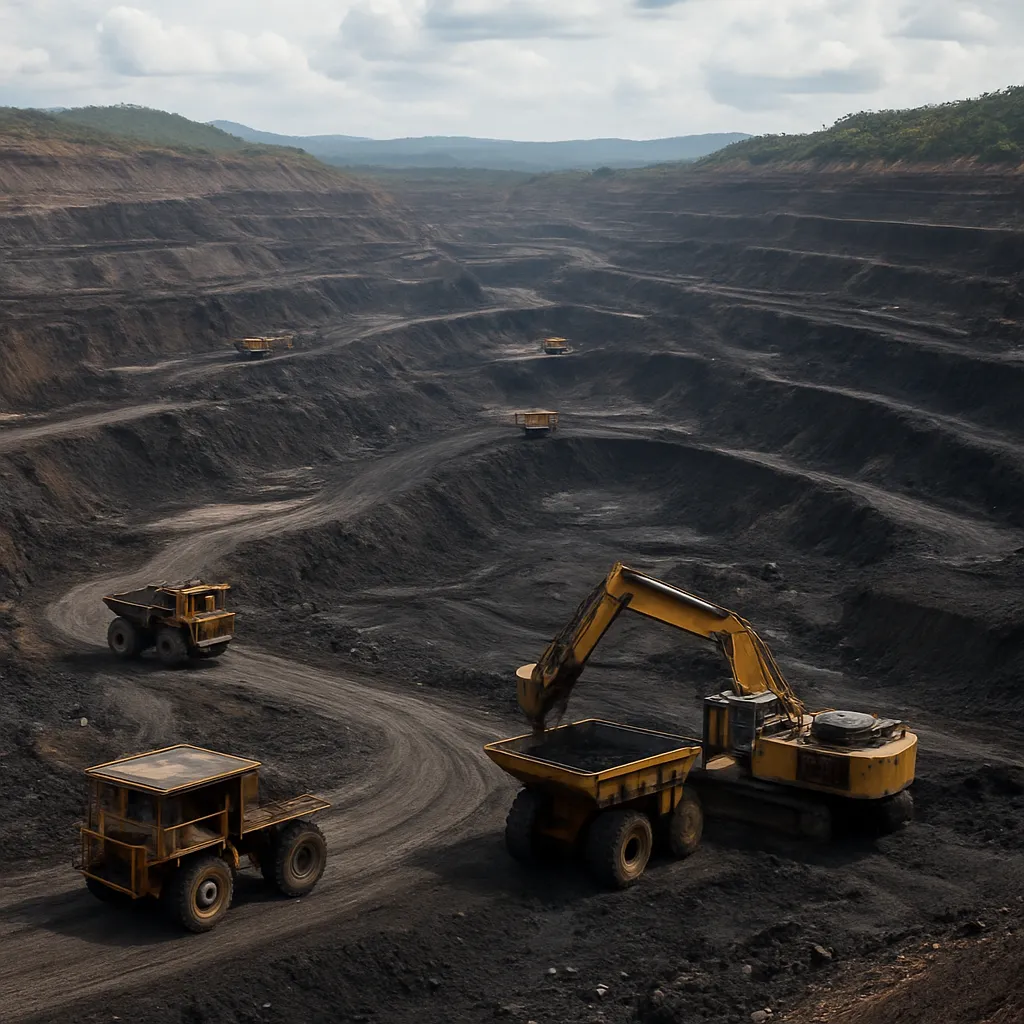
The Moolarben Coal Mine is a significant coal-producing complex in central-western Australia. Operating as a modern open-cut and underground mining enterprise, Moolarben plays an important role in regional employment, national energy supply and the export coal market. This article examines the mine’s location and geology, the type and quality of coal produced, operational and logistical arrangements, economic impact and statistics, environmental and social considerations, and prospects for the future.
Location, ownership and geological setting
The Moolarben Coal Mine is located in the state of New South Wales, in the central-western part of the state, near the towns of Mudgee and Gulgong. The site lies within the broader Sydney Basin geological province, an area known for extensive and commercially important coal seams. The mine forms part of a cluster of coal operations that supply both domestic power generation and international export markets.
Ownership and operational control have changed over the years. The mine is currently operated by Yancoal (Yancoal Australia), a large coal company with significant Chinese ownership and Australian management. Historically the asset passed through several coal industry owners during its development and early production phases. Moolarben is operated as a coal complex consisting of multiple pits and associated mining infrastructure rather than a single pit, and it incorporates both open-cut and underground mining methods where appropriate.
Geologically, Moolarben exploits Permian-age coal seams typical of the Sydney Basin. These seams are relatively continuous and at accessible depths in many locations, enabling large-scale open-cut extraction. The structural setting includes gently dipping coal seams with varying seam thicknesses, which influences the design of pits and the mine sequencing. Local geology also dictates aspects of water management, overburden handling and rehabilitation approaches.
Coal type, quality and production
Moolarben primarily produces thermal coal used for electricity generation and some industrial uses. The coal is typically medium- to high-energy thermal coal with calorific values commonly reported in industry ranges of approximately 5,000–6,500 kcal/kg (about 21–27 MJ/kg). The coal grade from the mine generally features moderate ash and sulfur levels, making it suitable for export markets in Asia and for domestic power stations where blending and emissions controls are applied.
The complex has historically targeted an annual production in the order of several million tonnes. While production figures vary year to year depending on market demand, operational constraints and maintenance cycles, typical reported annual saleable production for the Moolarben complex has been in the range of around 8–12 million tonnes per annum in active years. Production comprises run-of-mine coal subjected to washing and beneficiation processes to achieve specified product qualities for particular markets.
Recovery and reserve statements for large Australian coal mines often present both proven and probable reserves plus additional indicated resources. Estimates for Moolarben’s recoverable coal resource (saleable coal) have been reported in the hundreds of millions of tonnes, supporting a multi-decade mine life at sustained production rates. Exact figures fluctuate over time as further exploration, mining depletion and approvals update the formal resource and reserve statements.
Operations, processing and logistics
Moolarben operates as a coal mining complex combining large open-cut pits with some underground components where commercially viable. The open-cut operations involve removal of overburden, drilling and blasting, large-scale excavation using hydraulic shovels and haul trucks, and staged pit sequencing to maintain continuous production. Processing typically includes coal handling, crushing and washing circuits (coal preparation plants) to reduce impurities and deliver product coal to specification.
Logistics are a critical element of mine operations. Product coal from Moolarben is generally moved by heavy road haulage or via nearby rail-loading facilities to export terminals. Many coal shipments from central-west New South Wales are transported to the Port of Newcastle, which is one of the world’s largest coal export ports. Coordination with rail operators, port slot availability and weather events are all operational considerations that can influence production scheduling and shipping timetables.
Workforce and contractor arrangements at Moolarben typically include a mix of directly employed personnel in mining, engineering, processing and management roles, together with a substantial contractor workforce providing services such as earthmoving, drilling, haulage, maintenance and environmental management. At peak times the complex has supported a workforce numbering in the high hundreds to low thousands when contractors are included, contributing to the local economy through jobs and procurement.
Economic impact, royalties and regional significance
Moolarben is an important economic asset for the central-west New South Wales region. The mine contributes to economic activity through wages, local procurement, accommodation and hospitality spending by workers, and contracting opportunities for regional businesses. Revenue flows from the mine also include royalties and taxes paid to state and federal governments; these transfers support public services, infrastructure and regional programs.
Exports from Moolarben support Australia’s broader role as a major global coal supplier. Thermal coal exports to Asia supply power generation and industrial consumers, where Australian coal’s relative quality, logistics reliability and contractual arrangements make it a consistent commodity in international energy markets. The mine’s output therefore has direct linkages to energy security in importing countries and to commodity pricing dynamics that affect the mine’s financial performance.
Quantitatively, the mine’s production of several million tonnes per year places it among mid-to-large sized operations in Australia’s coal sector. The revenue contribution in a typical year is influenced strongly by global coal prices; multi-year coal price cycles can lead to significant fluctuations in earnings and in the level of investment or expansion activity at the site. While precise annual revenue and royalty payments vary with prices and volumes, a mine of Moolarben’s scale generally represents an economic contribution measured in the tens to hundreds of millions of Australian dollars annually when wages, supplier spend and government receipts are aggregated.
Safety, workforce and community relations
Health and safety are central priorities for modern coal operations. Moolarben implements safety management systems aligned with regulatory requirements in New South Wales, focusing on hazard identification, training, emergency response, equipment maintenance and fatigue management. Reporting and continuous improvement in safety performance are part of operational culture, with particular emphasis on high-risk activities such as highwall operations, haulage and processing plant maintenance.
Community relations play a significant role in the mine’s social licence to operate. Moolarben engages with neighbouring landholders, indigenous stakeholders and local councils through community consultation programs, grievance mechanisms and benefit-sharing initiatives. Typical community investments include local infrastructure support, educational partnerships, scholarship programs and funding for community groups. Managing cumulative impacts such as increased heavy vehicle traffic, dust, noise and changes to local land use patterns is handled through ongoing engagement and mitigation commitments.
Environmental management, water and rehabilitation
Environmental management at Moolarben covers a wide range of topics: water management, dust suppression, noise control, biodiversity offsets, progressive rehabilitation and greenhouse gas reporting. Water is a particularly sensitive issue in New South Wales mining areas; the mine operates water management systems to capture and treat runoff, manage sediment, recycle process water and avoid adverse impacts on local groundwater and surface water systems. Compliance with licensing conditions and periodic monitoring programs are integral to operations.
Progressive rehabilitation is standard practice, with disturbed areas progressively contoured, topsoiled and revegetated according to approved rehabilitation plans. The aim is to return former pit and waste landforms to stable, non-polluting post-mining land uses such as grazing, native vegetation or other agreed land uses. Biodiversity offset arrangements can be used where avoidance or minimisation of impacts on native habitat is insufficient to meet approval conditions.
Greenhouse gas emissions from coal mining and from the combustion of coal remain a broader societal challenge. While the mine itself reports scope 1 and scope 2 emissions associated with mining operations, the bulk of emissions associated with coal are released when coal is burned for power generation. Mines increasingly face expectations to improve energy efficiency on site, reduce diesel use, implement methane capture where feasible, and to disclose emissions transparently.
Regulatory context and approvals
Moolarben operates within a regulatory framework administered by New South Wales state agencies and subject to federal environmental approvals where matters of national environmental significance arise. The mine’s approvals set out conditions for operational limits, noise, air quality, water use and monitoring, community consultation and rehabilitation requirements. Periodic updates and extensions to approvals are common as companies seek to access deeper seams or expand existing pits, and these processes typically involve environmental impact assessments and public consultation.
Compliance is monitored by regulatory authorities, and the mine must report on environmental performance and incident management. In some cases, mines must undertake additional studies or implement adaptive management to address unforeseen impacts or to respond to community concerns.
Market context and export customers
Australia’s thermal coal market is closely tied to demand from Asia, particularly countries such as Japan, South Korea, China and increasingly Southeast Asian nations. Moolarben’s coal typically targets these markets via long-term contracts and spot sales. Global coal prices, freight costs, exchange rates and competition from other exporting countries influence profitability and export volumes.
Shifts in global energy policy, the pace of renewables adoption in importing countries, and the use of alternative fuels can affect long-term demand for thermal coal. However, in the near to medium term many regions continue to rely on coal for baseload and balancing generation, sustaining market opportunities for Australian coal producers.
Challenges, controversies and adaptive measures
Like many coal projects, Moolarben has been subject to public and regulatory scrutiny concerning environmental impacts, water use and greenhouse gas emissions. Community advocacy groups and local stakeholders sometimes raise concerns about land use, visual amenity, road safety and impacts on agriculture. In response, the mine operator typically implements mitigation measures — for example, dust suppression systems, noise bunds, reduced night-time operations in sensitive periods, and improved heavy vehicle routing.
Operational challenges include fluctuating coal prices, fluctuations in global demand, workforce availability and the technical challenges of mining deeper or geologically complex seams. The mine adapts through productivity improvements, cost management, investment in mechanisation, and engagement with supplier networks to maintain competitiveness.
Future outlook and strategic considerations
The future of Moolarben will be shaped by a combination of resource availability, market conditions, regulatory change and community expectations. If coal prices remain supportive and demand persists in key Asian markets, the mine could continue to produce at commercial rates for years to come, drawing on remaining recoverable reserves. Conversely, accelerated decarbonisation and policy changes in key customer markets could reduce demand and pressure operators to diversify, repurpose assets or accelerate rehabilitation activities.
Operators may pursue incremental improvements such as energy efficiency, electrification of mining fleets where feasible, improved water recycling and increased automation to reduce operating costs and environmental footprint. Strategic planning also includes preparing for end-of-life scenarios through detailed closure and rehabilitation planning and by working closely with local communities to secure beneficial post-mining land uses.
Interesting facts and summary
- The mine is a substantial employer in the region and provides significant indirect economic benefits through contracts and supply chain activity.
- Moolarben’s coal is primarily marketed as thermal coal for power generation in export markets across Asia and for domestic use.
- Production has historically been in the multi-million tonne range annually, supporting long-term investment and regional infrastructure.
- Key operational priorities include safety, environmental compliance, water management and progressive rehabilitation.
- The mine’s long-term future depends on global energy trends, regulatory frameworks and ongoing community engagement.
In summary, the Moolarben Coal Mine is an important mining complex in New South Wales that produces substantial volumes of thermal coal, contributes meaningfully to the regional economy, and faces the same operational, environmental and market challenges common to contemporary coal operations. Its continued evolution will depend on how it balances production objectives with environmental stewardship, regulatory compliance and the shifting landscape of global energy demand.