This article provides a comprehensive overview of the Yili No. 1 Mine in China, examining its location, geology, the type of coal extracted, economic and industrial importance, environmental and social impacts, and broader statistical context. Where mine-level data are not publicly available, the article places Yili No. 1 in the regional and national framework to explain its likely role and significance in China’s coal sector.
Location, Ownership and Regional Context
The Yili No. 1 Mine is situated in the Yili (also spelled Ili) region of the Xinjiang Uygur Autonomous Region in northwestern China. The Yili prefecture lies along the foothills of the Tian Shan mountain range and forms part of a geologically active and resource-rich area. While the mine’s exact coordinates and ownership details can vary depending on enterprise reorganizations, mines in this region are often operated by provincial coal companies, local state-owned enterprises, or joint ventures with private and state capital participation.
Xinjiang is a strategic energy base for China: it combines significant reserves of coal, natural gas, and oil. Within this broader context, Yili No. 1 Mine is one of several local mines that contribute to regional energy security, local employment, and the supply chain of coal for thermal power plants, industrial users, and, where suitable, metallurgical processes. The mine’s proximity to railway corridors and regional roads is a critical factor in transporting coal to power stations and industrial hubs across western and central China.
Geology and Coal Characteristics
The geology of the Yili region reflects an interleaving of Mesozoic and Cenozoic sedimentary basins and more recent tectonic activity along the Tian Shan. Coal deposits in Xinjiang show a range of types and qualities, reflecting the depositional environment and thermal maturity of the organic matter. At Yili No. 1 Mine, the coal extracted is typically characterized as a low- to medium-rank coal. Exact categorization at the mine level may include:
- Sub-bituminous or bituminous coal for thermal use — common in many Xinjiang deposits;
- Lignite in shallower, younger seams, where moisture content is higher but calorific value is lower;
- Coal with variable ash and sulfur contents depending on seam and mine management practices.
The coal’s calorific value, moisture, ash, and sulfur content determine whether it is best used for power generation, local heating, or upgraded for industrial purposes. In general, mines in the Yili-Xinjiang region supply coal mainly for thermal power plants and regional industrial consumption; some higher-grade seams in Xinjiang can also feed coking coal markets, although the largest coking reserves in China are found in other provinces.
Mining Methods and On-site Operations
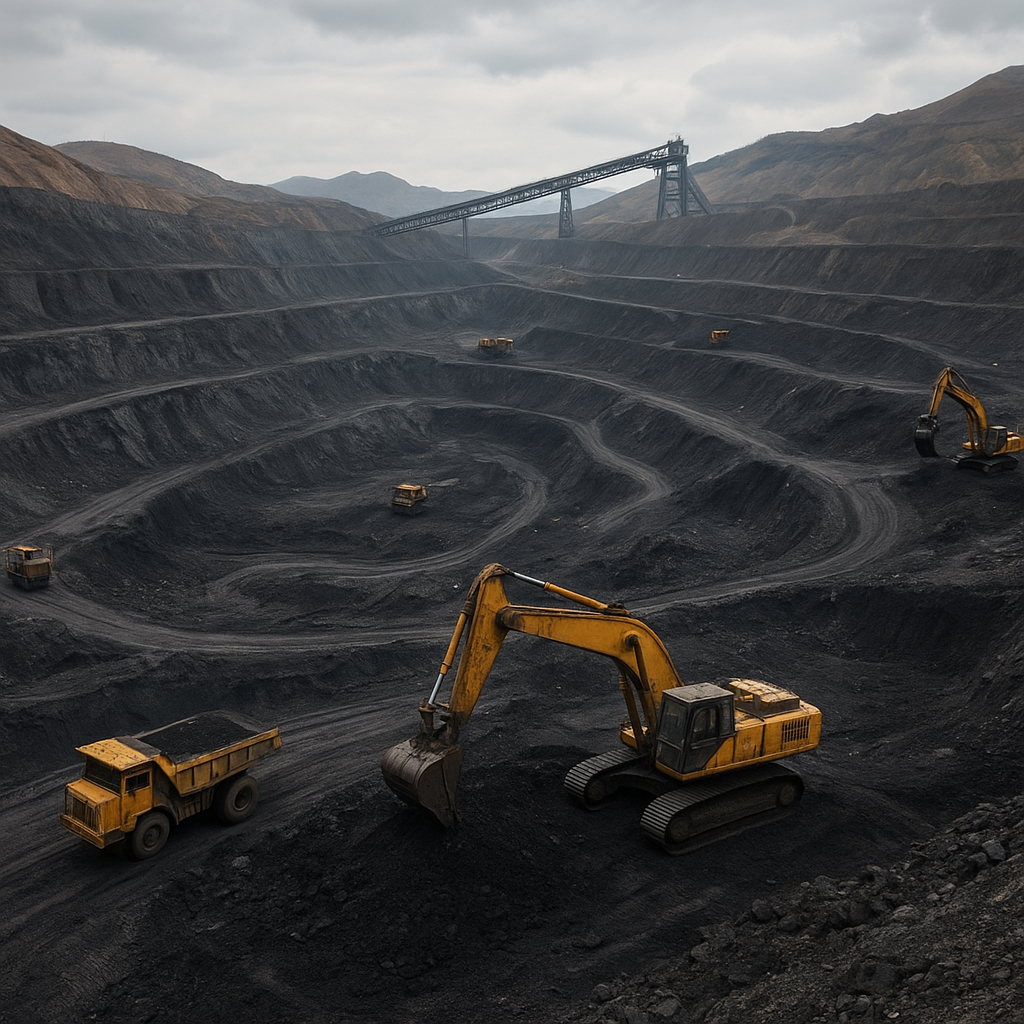
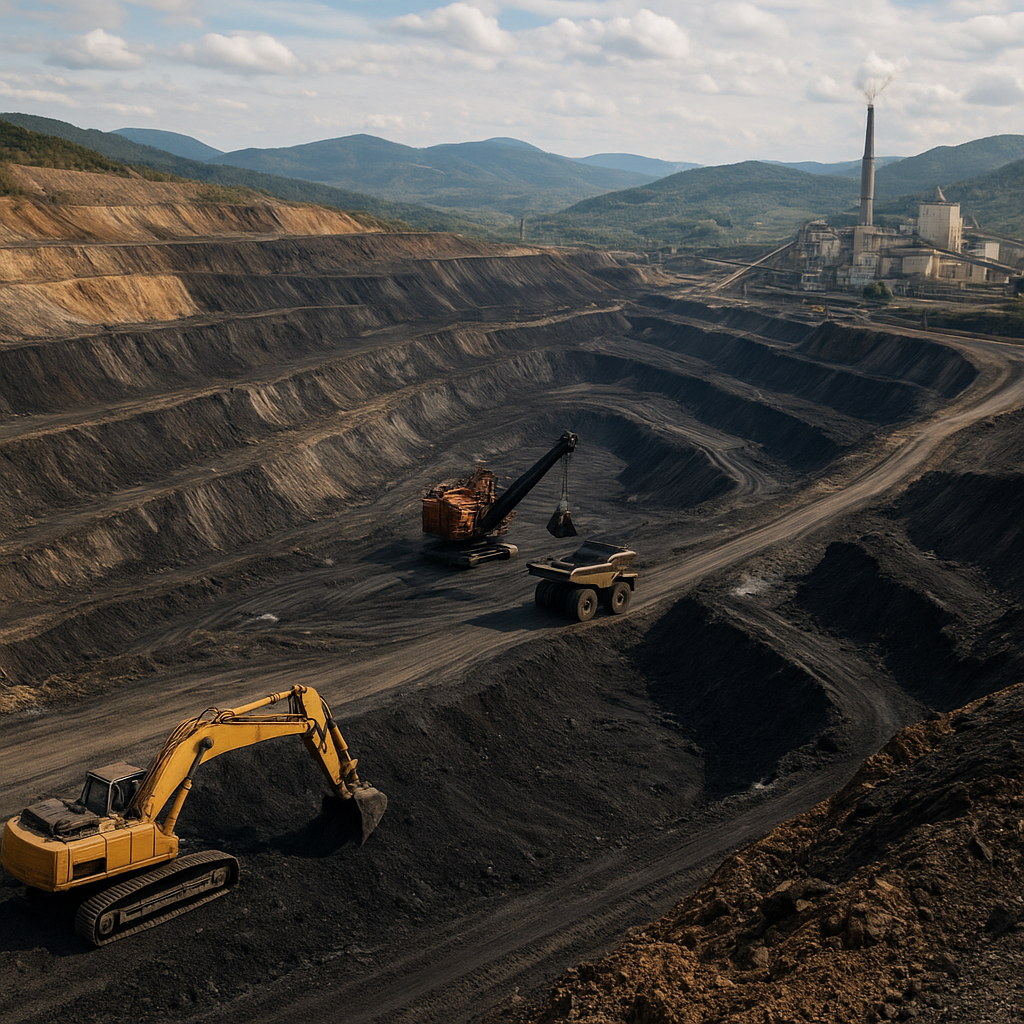
Operations at Yili No. 1 Mine are likely to include a mix of surface (open-pit) and underground mining techniques depending on seam depth, thickness, and economic considerations. Key operational features commonly found at comparable mines in the region include:
- Mechanized longwall or room-and-pillar underground mining for deeper, thicker seams;
- Open-pit excavation for shallow seams with large lateral extent;
- On-site coal processing facilities for crushing, washing, and blending to meet customer specifications;
- Infrastructure supporting railway or road loading, storage yards, and conveyor systems for efficient dispatch.
Automation and modern safety systems have been progressively introduced across Chinese mines; however, implementation levels vary by operator scale and investment. Yili No. 1 Mine’s productivity and mechanization status will depend on its capital base, ownership model, and integration into larger coal groups.
Economic and Industrial Significance
At the mine level, Yili No. 1 contributes to the local economy through employment, taxation, and purchase of services and materials. Regionally, the mine helps sustain industrial activity by providing a locally available energy feedstock, reducing transport costs relative to distant supplies. On a national scale, the cumulative production from Xinjiang mines like Yili No. 1 supports China’s overall energy mix and is part of the supply that enables the country’s heavy industry and electricity generation.
Key economic aspects include:
- Local employment: Mining operations typically employ a range of workers — miners, engineers, safety and environmental staff, logistics personnel, and administrative employees. Secondary employment arises in services, transportation, and maintenance.
- Regional revenue: Coal royalties, corporate taxes, and land use fees contribute to prefectural and provincial budgets, helping finance infrastructure and public services.
- Trade and logistics: Coal from Yili and surrounding areas is often transported within Xinjiang or to central China using rail links; proximity to the Silk Road economic corridors enhances transport options.
- Energy security: Domestic coal production reduces dependency on imported fuels and stabilizes energy prices for local industries.
Statistical Context — Regional and National
Publicly available mine-level statistics for Yili No. 1 Mine are limited; many Chinese mines do not disclose detailed production or reserve figures publicly, or their statistics are aggregated at the company or prefecture level. To place Yili No. 1 in perspective, the following regional and national statistics are relevant:
- China is the world’s largest coal producer and consumer, with annual production in the early 2020s exceeding several billion tonnes. Coal remains the dominant single source of primary energy in China, supplying more than half of the country’s energy needs.
- Xinjiang ranks among China’s important coal-bearing regions, hosting large reserves and contributing a sizable share of national production. The region’s geology supports both thermal and certain higher-grade coals suitable for industrial use.
- Regional output figures from Xinjiang are periodically reported in provincial statistical yearbooks and energy bulletins; these aggregated figures include thousands of small and medium-size mines as well as large state-owned operations.
Because mine-level numbers for Yili No. 1 are not always published, stakeholders typically infer its scale from local transport throughput, the size of associated processing facilities, and employment numbers. Investors and analysts monitor provincial energy reports, company annual reports (for state-owned enterprises), and local government disclosures to obtain more precise data when available.
Safety, Regulation and Labor
Coal mining in China has been subject to significant regulatory reform over the past two decades, with an emphasis on reducing accidents, consolidating small, unsafe operations, and raising overall standards. Yili No. 1 Mine is expected to operate under national safety regulations administered by central and provincial authorities, including:
- Mandatory safety management systems and regular inspections;
- Technical requirements for ventilation, gas monitoring, and roof support in underground workings;
- Emergency response planning and workers’ safety training;
- Periodic mine-level certifications and environmental permits.
Labor in the region may comprise a mix of local workers and migrant specialists. Wages, social benefits, and working conditions vary by operator size and financial health. Large, modernized mines tend to offer better mechanization, higher productivity, and safer working conditions compared with small, older operations.
Environmental and Social Impacts
Coal mining carries a range of environmental and social impacts; Yili No. 1 Mine shares many of these challenges with mines worldwide and within China. Notable impacts include:
- Land disturbance: Surface mining alters topography and can lead to habitat loss; progressive reclamation and revegetation programs can mitigate long-term impacts.
- Water management: Mine dewatering, wastewater from coal washing, and potential acid mine drainage are management concerns that require treatment and monitoring.
- Air pollution: Dust from mining and coal handling, as well as emissions from coal combustion in downstream facilities, contribute to local and regional air quality issues.
- Greenhouse gases: Coal extraction and combustion emit CO2 and methane; China’s national climate policies increasingly pressure the coal sector to improve efficiency and reduce emissions intensity.
- Community impacts: Mining can bring jobs and infrastructure, but also social change, noise, and potential displacement; community engagement is critical for social license to operate.
In response to environmental concerns, many operators in Xinjiang and across China are adopting water recycling, dust suppression, methane capture, and reclamation measures. The Chinese central government’s dual goals of ensuring energy security and reducing carbon intensity are driving incremental investments in cleaner coal technologies and efficiency improvements at mines and power plants alike.
Infrastructure and Supply Chains
The value chain for coal from Yili No. 1 Mine typically involves the following components:
- Extraction and initial sizing at the mine site;
- On-site processing such as washing and blending to meet calorific and ash specifications;
- Bulk transport via conveyor, road, or rail to regional power plants, industrial facilities, or export terminals (where applicable);
- End-user combustion in power stations or use in industrial boilers and furnaces.
Transport logistics are a major determinant of a mine’s competitiveness. Good rail connectivity to main trunk lines and access to highway networks reduces delivered coal costs, expands market reach, and enhances the mine’s strategic value. Xinjiang’s integration into national rail networks and cross-border transport projects can increase the economic footprint of regional mines by opening new markets.
Role in Regional Development and Energy Policy
Yili No. 1 Mine contributes to several broader policy goals at the regional and national levels:
- Regional development: Mining revenues and jobs help finance infrastructure and public services in remote areas, contributing to rural-urban integration and economic diversification programs.
- Energy security: Continued domestic coal production stabilizes supply, especially for inland regions distant from coastal import terminals.
- Industrialization: Ready access to coal supports heavy industry, cement production, and chemical manufacturing that are concentrated in or near resource regions.
- Transition planning: As China pursues emissions reduction targets, regional coal sectors face pressure to improve efficiency, reduce emissions intensity, and diversify local economies to reduce dependence on coal.
Balancing these objectives — ensuring reliable energy and economic benefits while meeting environmental and climate commitments — is a central policy challenge that shapes the future of mines like Yili No. 1.
Future Prospects and Development Pathways
The medium- and long-term prospects for Yili No. 1 Mine will be influenced by several interrelated factors:
- Market demand for thermal coal domestically and regionally: demand scenarios linked to economic growth, power demand, and the pace of power-sector decarbonization will directly affect production and prices.
- Regulatory and environmental constraints: stricter emissions standards, methane control rules, and reclamation requirements can raise operating costs and favor producers who invest in cleaner technologies.
- Technological upgrades: mechanization, automation, and digital mine management can improve productivity, safety, and cost competitiveness.
- Economic diversification: efforts to expand non-coal industries in Yili and Xinjiang more broadly can reduce local economies’ exposure to coal market fluctuations.
Potential development pathways for the mine include continued operation with incremental environmental upgrades, consolidation into a larger mining group to achieve economies of scale, or, in a longer-term scenario, phased closure accompanied by reclamation and community transition programs if national policy further reduces coal reliance.
Interesting and Lesser-Known Facts
A few additional points that illuminate the broader context of a mine like Yili No. 1:
- Geopolitical relevance: Xinjiang’s resource base, including coal, gives the region strategic importance for national energy planning and for connectivity projects that link China with Central Asia and beyond.
- Seasonal demand effects: Harsh winters in inland regions increase local heating demand, creating seasonal peaks in coal consumption and logistics activity.
- Technological adoption: Some mines in Xinjiang experiment with renewable hybridization — using solar or wind at mine sites to reduce diesel use in remote operations.
- Water scarcity: Water management is a pressing operational challenge in arid parts of Xinjiang, motivating investments in dry separation technologies and water recycling.
Concluding Remarks
Yili No. 1 Mine is emblematic of many regional Chinese coal mines: it provides local employment and revenue, contributes to regional energy supply, and forms part of a larger national system that relies heavily on coal. While mine-specific public data can be scarce, understanding the mine’s likely coal type, mining methods, and socioeconomic roles helps place it within Xinjiang’s mineral economy and China’s broader energy landscape. Moving forward, the mine’s viability will depend on its ability to adapt to logistical, environmental, and market pressures while contributing to local development and energy security.
Key terms emphasized in this article: Yili, Xinjiang, coal, bituminous, lignite, production, energy, infrastructure, reserves, sustainability.