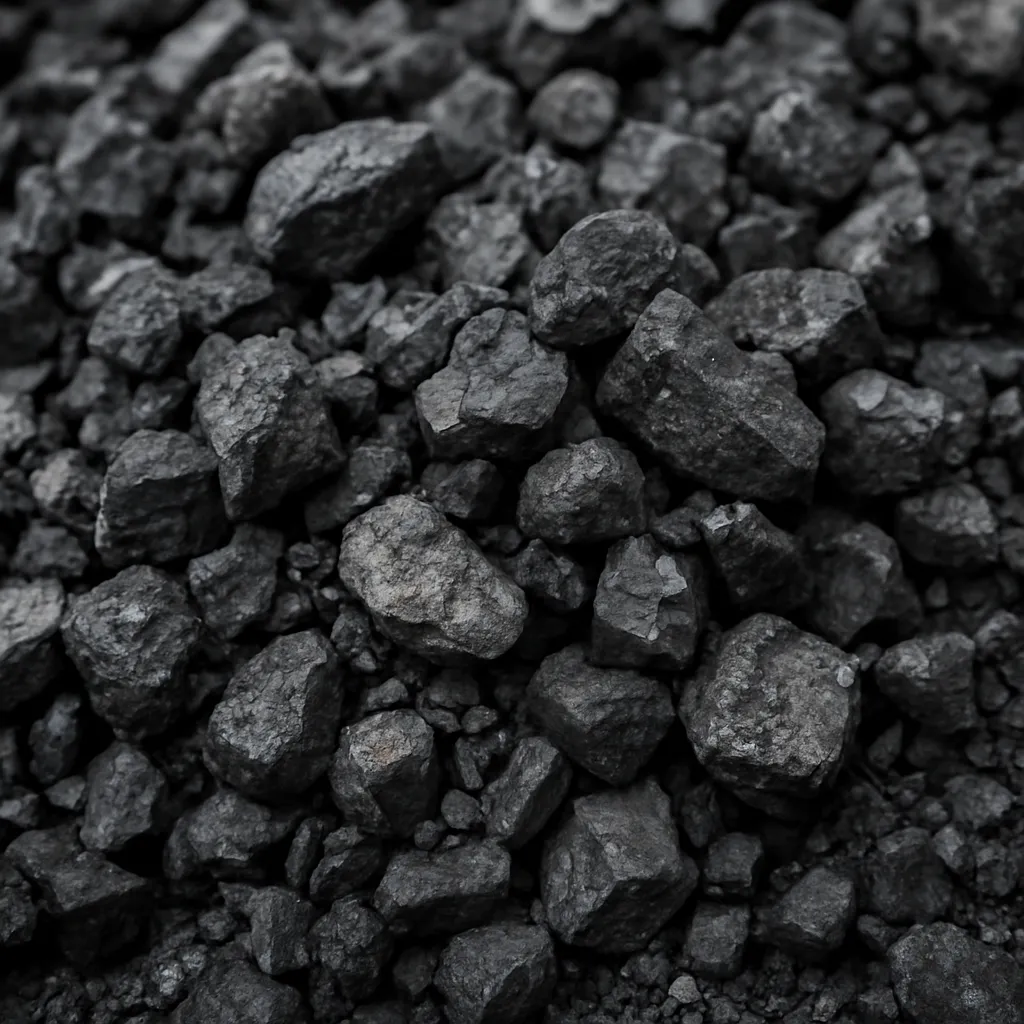
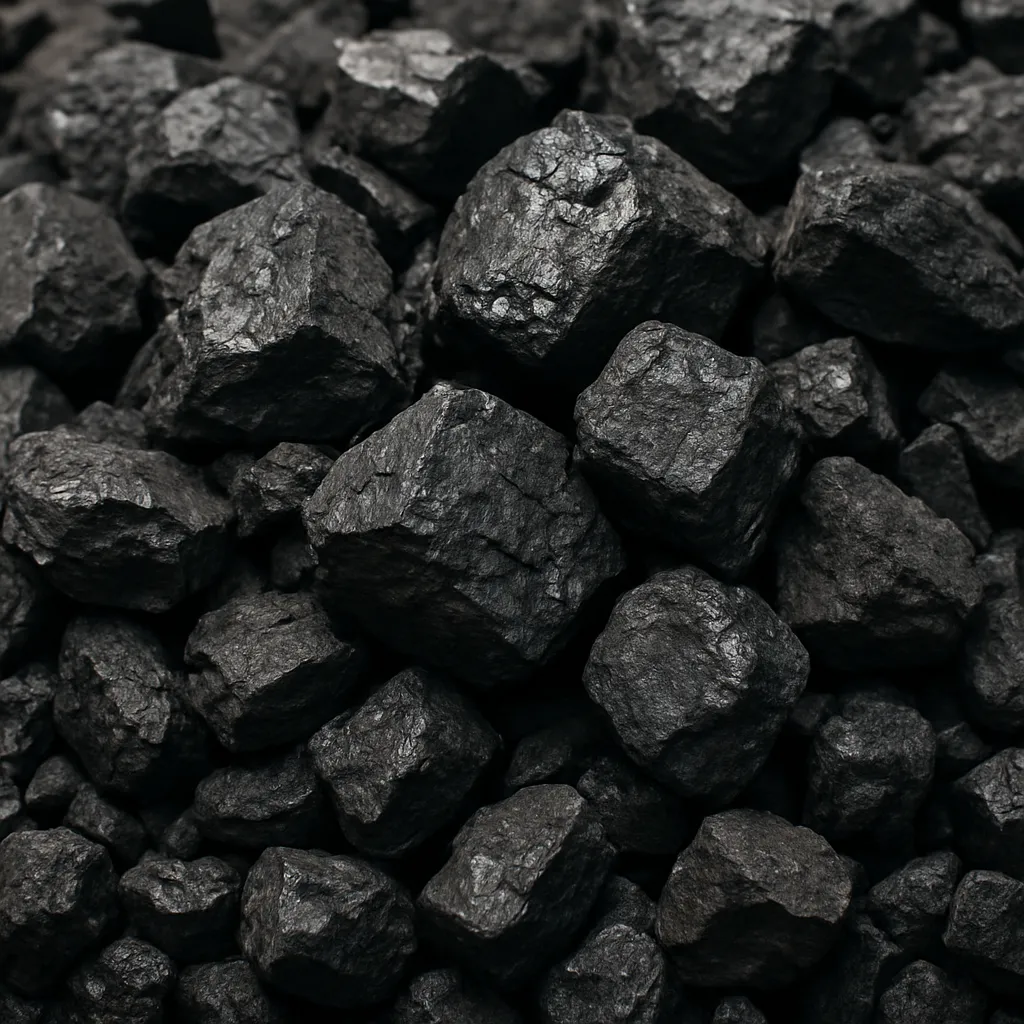
This article describes the nature, production, distribution and significance of torrefied coal — an upgraded solid fuel produced by thermal treatment — and explains where feedstocks and conventional coal occur, how torrefaction changes material properties, its economic and industrial implications, environmental considerations and outlook. The text covers geological occurrence and mining, market statistics and trade, process details and practical uses. Throughout, several important terms are emphasized to aid readability.
What is torrefied coal and how is it produced?
Torrefied coal commonly refers to a solid fuel produced by torrefaction, a mild thermal treatment applied to biomass and, in some cases, to low-rank coal. Torrefaction typically heats the material in an oxygen-poor environment at temperatures between about 200°C and 320°C. The process drives off moisture and light volatiles, partially decomposes hemicellulose (in the case of biomass) and modifies the material’s physical and chemical properties.
Outcomes of the process include higher energy density (higher heating value per unit mass and sometimes volume), improved grindability, increased hydrophobicity (reduced moisture uptake), and enhanced storability and transport characteristics. The torrefied product is often densified into pellets or briquettes to create a uniform, coal-like fuel sometimes referred to as biocoal, black pellets or torrefied coal.
- Typical mass yield from torrefaction: roughly 60–80% of the original biomass mass (varies with severity).
- Typical energy yield: often 80–95% of the original fuel energy is retained in the solid product (losses occur in gases and condensables).
- Typical higher heating values (HHV): raw wood ~15–20 MJ/kg; torrefied biomass ~20–26 MJ/kg; low-rank coals range ~15–23 MJ/kg while bituminous coal ~24–35 MJ/kg.
Torrefaction can be applied as a standalone biomass upgrade or as a pretreatment to allow co-firing with coal in existing coal-fired boilers. It can also be used to upgrade lignite and sub-bituminous coal to more stable products with improved fuel properties. The torrefaction industry remains relatively small but is viewed as a promising route to decarbonize some stationary energy sectors by replacing a portion of coal with sustainably sourced bio-derived fuels.
Geological occurrence, feedstock locations and mining regions
Natural occurrence of materials relevant to torrefied coal comprises both conventional coal deposits and large biomass resources. Coal is a sedimentary rock formed from accumulated plant matter under pressure and heat across geologic time. Major coal types are lignite, sub-bituminous, bituminous and anthracite; their distribution affects where torrefaction might be applied as an upgrade.
Major coal-bearing regions
- China: the largest global producer and consumer; abundant thermal coal and large reserves across Shanxi, Inner Mongolia, Shaanxi and other provinces. China produces roughly half of global coal output.
- United States: major basins include the Powder River Basin (Wyoming, Montana) for sub-bituminous coal, Appalachian basins for bituminous coal and a long history of mining across multiple states.
- Australia: large resources in New South Wales and Queensland; major exporter of thermal and metallurgical coal.
- India: large domestic coalfields (Jharkhand, Odisha, Chhattisgarh) — predominantly thermal coal for power generation.
- Russia, Indonesia, South Africa: large producers with significant export markets and diverse grades of coal.
- Europe: significant lignite (brown coal) deposits in Germany, Poland, Greece and the Czech Republic — locations of interest for local torrefaction/upgrade to reduce transport and emissions.
Biomass and torrefaction feedstock sources
Sustainable feedstocks for torrefaction include forestry residues (sawdust, bark), agricultural residues (straw, bagasse), dedicated energy crops and waste wood. Regions with high forest-industry activity (Scandinavia, Canada, the U.S. Pacific Northwest, parts of Eastern Europe, Brazil and Southeast Asia) are natural candidates for torrefied pellet production. Torrefaction facilities are often sited close to feedstock to minimize transport of bulky raw biomass. For coal-to-coal torrefaction or upgrading of low-rank coal, operations are naturally located near lignite or sub-bituminous reserves.
Economic, market and statistical overview
Global background: conventional coal remains a major global fuel. In the late 2010s and early 2020s annual global coal production and consumption were on the order of about 7–8 billion tonnes per year. China accounts for roughly half of that production (around 3.5–4.0 billion tonnes), with India, the United States, Indonesia, Australia and Russia among the next-largest producers (each producing in the hundreds of millions to about 1 billion tonnes annually). Coal trade flows remain significant, with Australia, Indonesia and Russia as key exporters and major Asian economies as primary importers.
Market for torrefied products: the market for torrefied pellets and torrefied coal has been small but growing. As of the early 2020s, global installed torrefaction capacity measured in commercial production capacity was limited — typically estimated in the tens to a few hundred kilotonnes per year, concentrated in demonstration and early commercial plants in Europe and North America. Uptake is policy- and price-sensitive: incentives for renewable heat, renewable electricity or carbon pricing greatly affect competitiveness relative to raw biomass and coal.
- Typical prices: torrefied pellets command a premium over conventional wood pellets and raw biomass due to processing costs and improved properties; prices vary widely with region, feedstock costs and scale.
- Export potential: torrefied pellets are designed to be more transportable and compatible with coal supply chains, enabling potential exports from biomass-rich regions to coal-consuming markets.
- Capital and operating costs: torrefaction plants involve moderate capital expenditure relative to the throughput; economies of scale and integration with existing industry (sawmills, power plants) reduce costs.
Statistical caveats: because torrefied fuels are emerging products and because feedstock and product definitions vary, official statistics remain fragmented. Industry reports and academic surveys provide the most realistic near-term estimates. Growth scenarios commonly model expansion from tens of kilotonnes in the early 2020s toward several million tonnes per year by the 2030s in decarbonisation scenarios that rely on biomass combustion or co-combustion to displace coal.
Industrial applications and significance
The principal industrial roles for torrefied coal include:
- Co-firing with coal in existing power plants: torrefied pellets can be co-fired with pulverized coal with minor boiler modifications, reducing net fossil CO2 when the biomass is sustainably sourced.
- Conversion to gaseous fuels via gasification: torrefied material’s improved grindability and homogeneity facilitate entrained-flow and fluidized-bed gasification for synthesis gas production and downstream chemicals or fuels.
- Industrial heat and CHP: torrefied fuels can displace coal in industrial boilers and combined heat and power plants.
- Metallurgy and reductant use: research continues into using torrefied biomass as a partial reductant in iron and steelmaking (blast furnaces and alternative smelting routes), though technical and material-handling challenges remain.
- Residential and commercial heating: densified torrefied pellets are compatible with modern pellet stoves and provide advantages over raw biomass pellets due to moisture resistance.
Because torrefied biomass is more similar to coal in handling and energy content than raw biomass, it lowers the technical barriers to replacing coal in many established supply chains and facilities. This attribute makes torrefied coal strategically important in transition scenarios where complete electrification or hydrogen substitution is slower to penetrate certain heavy industries or existing fossil-fuel-based power fleets.
Environmental and climate considerations
Torrefied biomass has potential climate benefits but the magnitude depends on lifecycle accounting. If biomass feedstocks are sourced sustainably and regrowth or substitution is accounted for, substituting coal with torrefied biomass in combustion can significantly reduce net fossil CO2 emissions. Typical lifecycle assessments indicate potential reductions in net CO2 emissions ranging from partial reductions to near-complete displacement of fossil emissions on a combustion basis, but actual results depend on:
- Feedstock origin and land-use change impacts
- Energy and emissions embedded in collection, transport, and processing
- End-use efficiency and co-benefits like local air-pollutant reductions
Torrefaction itself produces gases and condensable organics that can be combusted to provide process heat, potentially making the process self-sufficient in energy if systems are well-designed. However, if process heat is derived from fossil fuels the net benefit declines. Careful supply chain design, sustainable sourcing, and transparent accounting are essential to ensure real climate benefits.
Other environmental issues include potential air-quality impacts during pellet combustion (particulate matter, NOx), although modern emission control systems mitigate many of these for large installations. Increased demand for woody biomass can create pressures on forestry management if not regulated, so sustainability certification and robust governance are critical.
Technical advantages and limitations
Advantages:
- Improved handling: torrefied material resists moisture and does not soften at transport temperatures, reducing spoilage and spontaneous biological degradation.
- Better grindability and compatibility with pulverizers used in coal-fired power plants, enabling co-firing with minimal retrofit.
- Higher volumetric energy density when densified into pellets or briquettes, lowering transport costs per unit of energy.
- Improved combustibility and more stable combustion characteristics than many raw biomass types.
Limitations and challenges:
- Capital and operational costs for torrefaction plants, which must be offset by a sufficiently large and stable market for the product.
- Competition with cheaper raw biomass pellets and other renewable heating solutions, depending on policy and fuel prices.
- Logistical complexity: while torrefied pellets are more durable than raw biomass, supply chains must still ensure consistent quality and sustainable sourcing.
- Regulatory and accounting uncertainties in some jurisdictions about how biomass substitution is treated under emissions inventories and renewable energy frameworks.
Policy, trade and investment drivers
Policy frameworks that influence the torrefied coal market include renewable energy mandates, carbon pricing, incentives for renewable heat and electricity, and sustainable biomass certification schemes. Where carbon pricing or renewable fuel incentives exist, torrefied fuels become more competitive relative to coal. Likewise, countries aiming to reduce coal in their energy mix without immediate plant retirement may favour co-firing with torrefied biomass to reduce emissions quickly while minimizing capital costs.
Trade potential exists because torrefied pellets pack better and are less susceptible to water-related degradation than raw wood chips. Regions with abundant low-cost biomass could export torrefied products to markets with large existing coal fleets. Investment decisions depend on long-term policy certainty: many developers cite uncertainty about future renewable energy targets and biomass accounting as major risks.
Future prospects and innovation areas
Expected development pathways for torrefied coal/biocoal include:
- Scaling demonstration projects to commercial size, improving process integration and reducing per-unit cost.
- Improved densification methods and logistics to reduce supply chain cost and make export markets economically viable.
- Integration with carbon capture and storage (CCS) at power or industrial sites to create negative emissions when sustainably sourced biomass is used (BECCS), enhancing climate mitigation value.
- Use in industry beyond power generation — such as cement, chemicals and steel — where low-carbon solid fuels are required.
Research continues into optimizing feedstocks, torrefaction parameters and downstream handling to maximize energy yield, minimize emissions and secure sustainable supply. Economic modeling generally finds that torrefied products are viable in scenarios combining supportive policy, rising carbon prices, or where co-firing avoids the higher capital costs of plant conversion.
Interesting technical and historical notes
Torrefaction is sometimes called “mild pyrolysis” or “roasting.” Historically the idea of thermally upgrading fuels has deep roots — coal itself is the result of natural, long-term carbonization. Applying a controlled, industrial torrefaction step to modern biomass or low-rank coal is conceptually similar but aims to produce a stable, transportable fuel compatible with existing energy infrastructure. In addition to utility-scale uses, torrefied pellets have niche applications in metallurgy and specialized industrial processes.
From a materials perspective, torrefaction increases carbon concentration, reduces oxygen content and changes the polymeric structure of biomass, which is why torrefied products behave more like coal in combustion and handling. Pilot projects worldwide have demonstrated co-firing rates of tens of percent biomass-equivalent energy without substantial boiler re-design, although limits vary by boiler type and emission control design.
Summary
Torrefied coal — broadly interpreted as torrefied biomass or upgraded low-rank coal — is an engineered fuel with properties that make it attractive as a transitional low-carbon substitute for some coal uses. It combines improvements in energy density, hydrophobicity, handling and combustion compatibility with existing systems. While the global coal industry remains large (several billion tonnes per year), torrefied products occupy a small but potentially growing niche driven by decarbonisation policy, technological advances and logistic advantages. Key success factors include sustainable feedstock supply, favourable policy frameworks, cost reductions through scale and integration, and robust lifecycle accounting to ensure genuine emissions benefits. The field remains active in research, demonstration and early commercial deployment as markets and climate policy evolve.