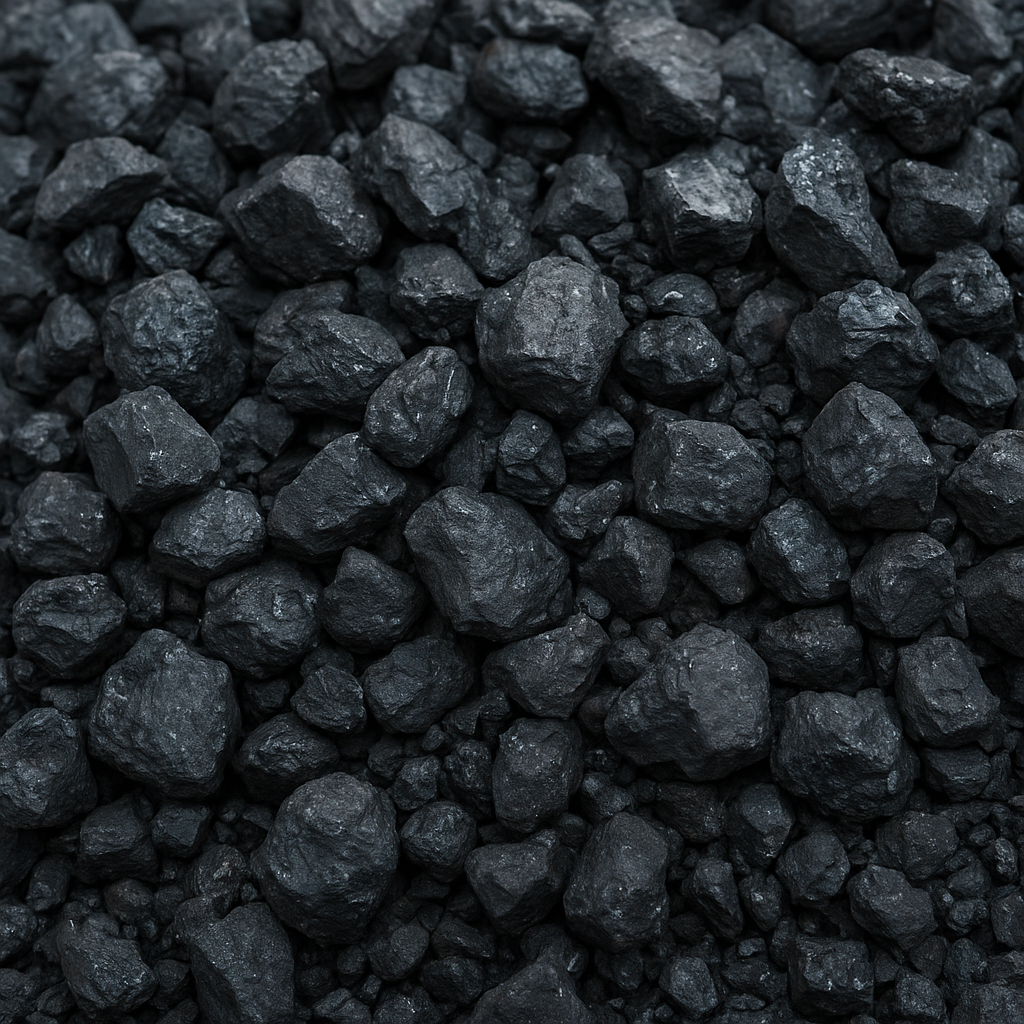
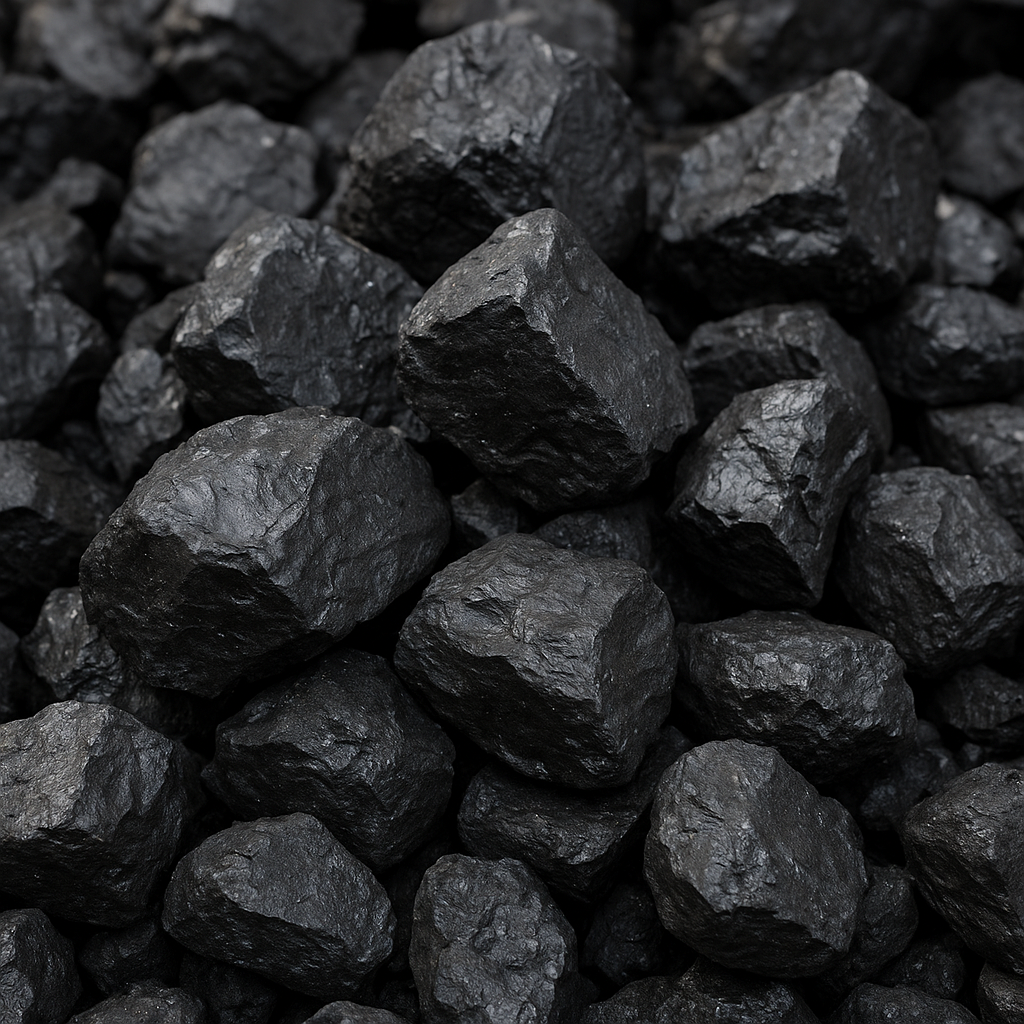
Thermal coal, commonly known as steam coal, is one of the most important fossil fuels in modern energy systems. It is primarily used to generate electricity and as a heat source in industrial processes. Despite pressure from climate policies and rising renewable generation, thermal coal continues to play a major role in the global energy mix, especially in fast-growing economies. This article examines where thermal coal is found, how and where it is mined, its economic and trade significance, environmental implications, and likely future developments.
Occurrence and geology of thermal coal
Coal forms from the accumulation and burial of plant material in ancient peatlands over millions of years. Thermal coal is a category defined by its suitability for burning to produce heat and steam rather than for metallurgical processes. Geologically, deposits occur in layered sedimentary basins, often associated with Paleozoic and Mesozoic eras. The depth, pressure and temperature history determine coal rank—from peat through lignite, sub-bituminous, bituminous to anthracite—affecting energy content and impurity levels.
Typical characteristics
- Energy content: Varies widely; low-rank coals may contain 8–22 MJ/kg while high-rank bituminous coals can reach 24–32 MJ/kg.
- Moisture and ash: Lignite and sub-bituminous coals have higher moisture; ash content affects combustion behavior and ash disposal.
- Impurities: Sulfur, mercury and other trace elements are present at varying concentrations and influence environmental controls required at plants.
Thermal coal deposits are widespread geographically. Major coal-bearing regions include the Songliao and Shanxi basins in China; the Bowen and Surat basins in Australia; the Powder River Basin in the United States; the Donets Basin in Ukraine/Russia; the Jharia and Damodar basins in India; and the Karoo basin in South Africa. Many of these basins have been worked for decades and host large, integrated mining and transport systems.
Extraction methods and where thermal coal is mined
Coal mining methods vary by deposit depth and seam geometry. Two broad categories dominate: surface (open-pit or strip) mining and underground (room-and-pillar, longwall) mining. Surface mining is economical for shallow, extensive seams and is the primary method in major export regions like the Powder River Basin (USA) and Indonesia (for lower-grade coals). Longwall underground mining is prevalent where deeper, higher-quality seams occur, such as in parts of China, Poland and India.
- China: The world’s largest producer and consumer of coal. Coal is mined across many provinces using a mix of small underground pits and large mechanized operations. China accounts for roughly half of global production and consumption.
- India: Major producer for domestic power plants and industry. Mining ranges from deep underground to open-cast operations. Coal remains the backbone of India’s power sector.
- Australia: A leading exporter of both thermal and metallurgical coal. Large open-cut mines in Queensland and New South Wales supply global markets.
- Indonesia: Rapidly grown into one of the largest seaborne thermal coal suppliers through open-pit operations, especially for low-cost, low-rank coals.
- United States: Production concentrated in Powder River Basin (low-energy, low-sulfur coal) and Appalachian Basin (higher-energy bituminous coal).
- South Africa, Russia, Colombia and Poland: Each plays important regional roles in supply, with a mix of export and domestic consumption.
Economic and trade aspects
Thermal coal is a globally traded commodity with large regional markets. Its economics are influenced by local mining costs, transport infrastructure (rail, river barges, ports), international shipping rates, and competition from alternative fuels. Thermal coal prices can be volatile, responding to short-term supply disruptions, weather-driven demand for electricity, and shifts in policy.
Key market dynamics
- Seaborne vs. domestic markets: Many major consumers — China, India, Japan, South Korea — combine domestic production with seaborne imports. Export-focused producers like Australia and Indonesia are sensitive to global demand.
- Price drivers: Demand from power sectors, especially in Asia, is the primary driver. Natural gas prices, renewable deployment, and carbon pricing also affect coal economics.
- Logistics: Freight capacity and port throughput set practical limits on how quickly surplus coal can reach buyers. Inland transport costs can dominate delivered price to a power plant.
Recent years have seen large swings: periods of low prices in the late 2010s following oversupply were followed by price spikes in 2021–2022 as post-pandemic demand recovered and supply constraints emerged. Such cycles make forward planning challenging for both miners and utilities.
Statistical overview and recent trends
Although exact numbers vary by source and year, several robust trends and statistics are notable:
- Global production and consumption: World coal production and consumption have historically been on the order of several billion tonnes per year. For much of the 2010–2022 period, annual global coal production hovered around 7–8 billion tonnes. After a dip in some markets due to COVID-19 in 2020, coal use rebounded in 2021–2022, driven primarily by Asian demand.
- Major producers: China produces roughly 50% of global coal; other large producers include India, the United States, Indonesia, Australia and Russia.
- Trade flows: Australia and Indonesia are the largest seaborne exporters of thermal coal. Australia’s export volumes to Asia, especially to China, Japan and South Korea, are substantial. Indonesia supplies large volumes to China, India and Southeast Asia. Russia and Colombia are also important exporters to Europe and the Americas respectively.
- Electricity contribution: Thermal coal has provided in the range of 30–35% of global electricity generation in recent years, although this share varies by country: in some nations it exceeds 60% while in others it is marginal.
Because data are updated annually by agencies like the International Energy Agency (IEA), the US Energy Information Administration (EIA), and national statistical offices, exact values shift. But the structural picture — abundant global reserves and continued strong dependence in Asia — remains stable into the early 2020s.
Role in industry and energy systems
Thermal coal’s primary use is power generation. Steam produced by burning coal drives turbines to generate electricity. Large, centralized coal-fired power plants historically provided reliable baseload power. Beyond electricity, thermal coal is used in district heating, cement production (as fuel), and other industrial heat applications where switching to alternatives can be complex and costly.
- Baseload and grid stability: Coal plants offer predictable output and inertia that helps grid stability. This has value even as renewables grow, especially in systems with limited storage or flexible generation.
- Industrial heat: High-temperature industrial processes (e.g., some cement kilns) still rely on coal in many regions because alternatives (natural gas, electrification, biomass) are not always available or economical.
- Regional dependence: In countries like Poland, South Africa and parts of China and India, coal is deeply embedded in the economic and social structure — providing jobs, fiscal revenue and energy security.
Environmental and public health impacts
Coal combustion is one of the largest sources of CO2 emissions worldwide, making it a central focus in climate mitigation efforts. In addition to carbon emissions, coal-fired plants emit sulfur dioxide (SO2), nitrogen oxides (NOx), particulate matter (PM), mercury and other heavy metals — all of which have significant public health and environmental consequences.
- Climate impact: Burning thermal coal releases large quantities of CO2 per unit of energy compared with natural gas or many renewable sources. This is why phasing down coal is critical to achieving net-zero targets.
- Air pollution: Intermittent and chronic exposures from coal combustion contribute to respiratory and cardiovascular diseases. Many countries have strengthened air-quality controls, requiring desulfurization and particulate controls at plants.
- Mining impacts: Surface mining can lead to land degradation, habitat loss and water quality issues. Underground mining carries risks of subsidence and miner safety hazards.
Efforts to mitigate these impacts include emissions control technologies, stricter regulatory regimes, and policies to reduce coal use in favor of cleaner sources. Nevertheless, the physical legacy of decades of coal use — including abandoned mines and coal ash deposits — remains a challenge.
Technological responses: efficiency, abatement and alternatives
Several technological pathways exist to reduce the environmental footprint of thermal coal or to replace it:
- Higher efficiency plants: Ultra-supercritical and advanced ultra-supercritical coal-fired power plants can improve thermal efficiency and reduce CO2 per MWh compared with older subcritical plants.
- Pollution controls: Flue gas desulfurization (FGD), selective catalytic reduction (SCR) for NOx, electrostatic precipitators and baghouses for particulates, and activated carbon injection for mercury have become standard in many jurisdictions.
- Carbon capture and storage (CCS): CCS aims to capture CO2 from flue gas and store it geologically. While technically feasible, CCS deployment at scale for coal plants has been limited by cost and infrastructure needs.
- Fuel switching and electrification: Replacing coal with natural gas, renewables, or electrifying industrial heat with low-carbon electricity are common strategies where feasible.
Each option has trade-offs: efficiency improvements reduce emissions but still rely on fossil fuel combustion; CCS could enable continued use with reduced CO2 but requires substantial investment; renewables displace coal but need complementary flexibility (storage, demand response) to maintain system reliability.
Socioeconomic impacts and the transition challenge
Coal industries are often major local employers and municipal revenue sources in mining regions. Transitioning away from coal raises complex socioeconomic questions:
- Jobs and communities: Mines and coal-fired power plants support direct and indirect employment. Sudden closures without transition plans can cause significant local economic distress.
- Energy security: Coal contributes to domestic energy independence in many countries. Rapid import dependence introduces geopolitical and market risk.
- Policy and fairness: Policymakers face the dual task of decarbonizing the energy system while supporting affected workers and communities through retraining, economic diversification, and social protections.
Successful transitions combine clear policy signals (timelines, carbon pricing), investment in alternative industries, and social programs that ease the shift for workers and local economies.
Interesting facts and lesser-known aspects
- Historical legacy: Coal powered the Industrial Revolution and was the backbone of early electrification. Many historic towns grew around coal mines and power stations.
- Coal-to-liquids (CTL) and coal gasification: Technologies exist to convert coal into synthetic fuels or chemicals, but these processes are carbon-intensive and often discouraged in low-carbon scenarios.
- Peat vs. lignite: Not all brownish brittle organic layers are economically valuable coal; peat represents an early stage of coalification and has lower energy density.
- Reclaimed mine sites: With planning, former mines can be rehabilitated to provide recreational spaces, wildlife habitats, or sites for renewables like solar farms.
Future outlook and policy drivers
The future of thermal coal depends on interlinked drivers: energy demand growth, economics of alternatives, climate policy and geopolitics. Several scenarios are possible:
- Decline in many advanced economies: Strong climate policy, carbon pricing, and cheaper renewables are driving closures of coal plants in Europe, North America and parts of Asia.
- Continued use in developing economies: In regions with rapid power demand growth and limited alternatives, coal may remain important for at least another decade or two unless cost-effective clean alternatives are installed.
- Technology and policy interactions: Broad deployment of CCS or breakthrough storage technologies could extend coal’s role in low-carbon systems, but both require significant investment and time.
International climate agreements, national net-zero pledges, and corporate commitments are increasingly pushing toward reduced coal consumption. However, short-term market dynamics — including energy security concerns and supply disruptions — can cause cyclical rebounds in coal use.
Summary of key statistical indicators (typical ranges and notes)
Below are representative statistical indicators to help frame the scale and importance of thermal coal. Note these are general magnitudes rather than fixed values and should be cross-checked with the latest reports for precise planning:
- Global annual coal production and consumption: on the order of 7–8 billion tonnes (metric) in recent pre-2023 years.
- Share of electricity generation: roughly 30–35% globally in the early 2020s, with higher regional concentrations.
- Proven reserves: global proven recoverable coal reserves are estimated in the hundreds of billions to over a trillion tonnes, sufficient for many decades at current consumption rates.
- Top producing countries by volume: China (~50% of global), India, United States, Indonesia, Australia, Russia, South Africa.
- Top seaborne exporters: Australia, Indonesia, Russia, Colombia.
Concluding remarks
Thermal coal remains a major global commodity with deep roots in the world’s energy infrastructure. Its geological abundance, established supply chains, and role in reliable power delivery have preserved its relevance even as climate imperatives increase. The coming decades will determine whether thermal coal’s role contracts rapidly under coordinated climate policy and technological progress, or whether it persists longer due to affordability, energy security concerns, and limited alternatives in some regions. Managing the environmental impacts, economic transitions for affected communities, and investment in cleaner technologies will be central to the global conversation about coal’s future.