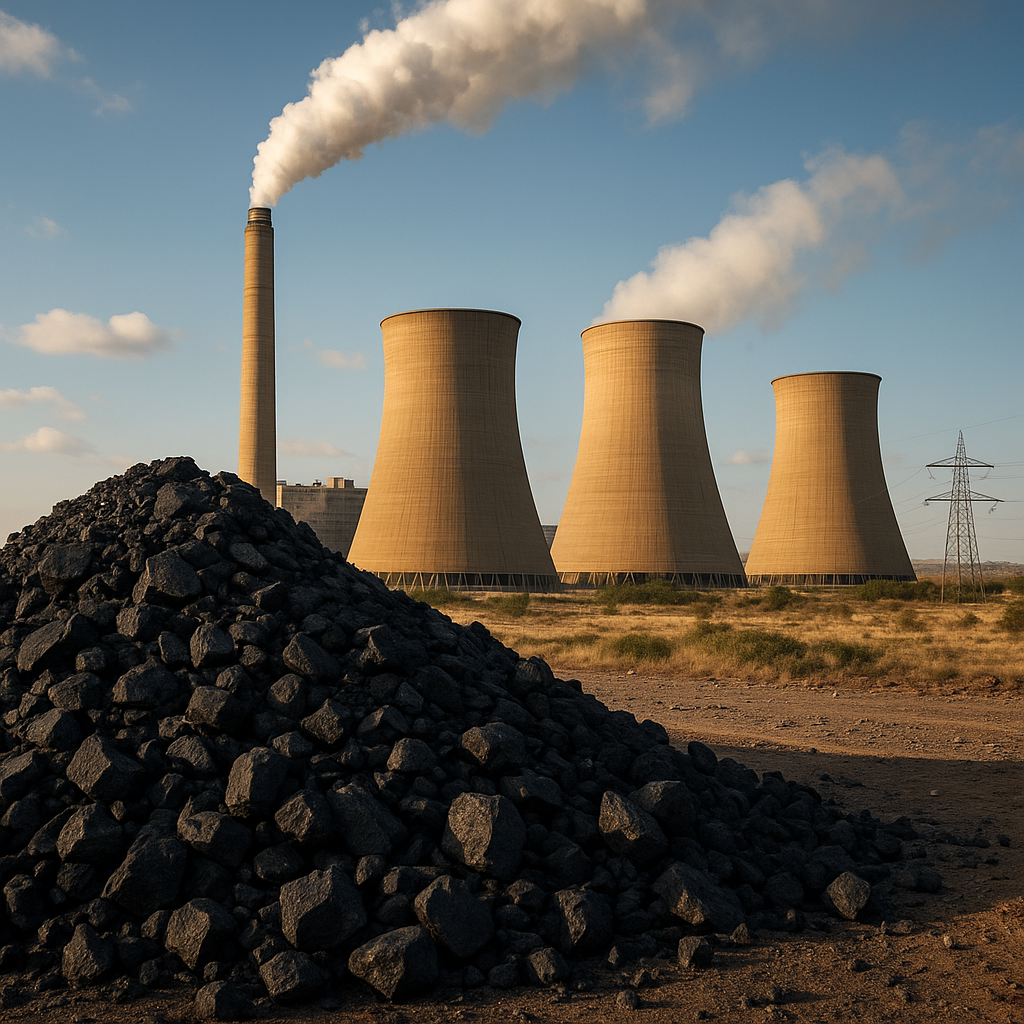
The extensive reliance on coal has shaped South Africa’s energy landscape for over a century, driving industrial growth while posing complex challenges. This exploration delves into the origins, management of stockpiles, environmental repercussions, and future pathways that define the nation’s ongoing energy crisis.
Historical Context of Coal Dependency
Since the late 19th century, South Africa’s vast reserves of bituminous and anthracite coal have underpinned rapid industrialization. Early mining towns in Mpumalanga and the Highveld region fueled both domestic projects and exports, securing a reputation as a powerhouse among emerging economies. The discovery of extensive seams near Witbank accelerated the establishment of rail links, ports, and processing plants dedicated to refining coal for global markets.
The state-owned utility, Eskom, was founded in 1923 to harness coal for large-scale electricity generation. Over subsequent decades, a network of coal-fired power stations—including Kendal, Majuba, and Matimba—expanded capacity to meet surging demand. The synergy between mining companies and utilities became a cornerstone of national development, ensuring continuous power for mining, manufacturing, and urban centers.
However, the heavy leaning on coal engendered structural rigidity. Mines and power generators were optimized for maximum output rather than flexibility, making it challenging to adapt to fluctuating markets or integrate alternative sources. This legacy created an energy grid weighted heavily towards large baseload units, a factor that now complicates efforts to modernize and decarbonize the system.
Management of Coal Stock and Supply Chains
Optimal handling of stockpiles is critical for preventing disruptions in power delivery. Eskom’s coal ports at Richards Bay and Durban serve as conduits for both domestic consumption and export, funneling millions of tonnes annually. Inland, strategic reserves are maintained near major power stations to hedge against railway delays and weather-related interruptions.
- Buffer Stock Strategy: Maintaining a minimum of 30-day reserves to ensure grid reliability.
- Rail Logistics: Coordination between Transnet Freight Rail and private operators to transport coal from pit to plant.
- Quality Control: Monitoring calorific value and ash content to optimize combustion efficiency.
- Inventory Management Systems: Digital tracking to forecast demand and replenish reserves accordingly.
Despite these measures, misalignments frequently occur. Aging rail lines and rolling stock often result in bottlenecks, forcing power stations to operate on reduced coal supplies. Seasonal rain can flood mining areas, impeding extraction and transport. When reserves drop below critical thresholds, units must be taken offline, exacerbating load-shedding cycles and undermining public confidence.
Environmental and Economic Impacts
The environmental footprint of coal-fired generation is substantial. High levels of emissions—including sulphur dioxide, nitrogen oxides, and particulates—have exacerbated air pollution in towns surrounding major plants. Water-intensive cooling processes strain river systems already stressed by drought, while ash dumps and slurry ponds risk contamination of soil and groundwater.
Economically, the low cost of coal has historically undercut incentives to diversify. Labor-intensive mining contributes significantly to employment in certain provinces, making any transition politically sensitive. However, reliance on obsolete infrastructure necessitates ongoing maintenance outlays, diverting funds from potential upgrades or investments in cleaner alternatives.
Health and Social Dimensions
Respiratory illnesses are more prevalent in communities adjacent to coal facilities. Research indicates correlations between chronic exposure to airborne particulates and increased rates of asthma, bronchitis, and cardiovascular conditions. Moreover, mining operations bring occupational hazards, with safety violations sometimes leading to tragic accidents underground.
Transition Strategies and Future Outlook
In response to mounting pressure, the government has outlined a phased approach to reduce coal’s dominance. A growing portfolio of solar farms, wind parks, and open-cycle gas turbines aims to bolster capacity and reduce reliance on aging baseload stations. Integrated Resource Plans (IRP) set targets for renewable additions, though execution has been slow due to funding constraints and permitting delays.
- Grid Stabilization Projects: Incorporating battery energy storage systems to manage intermittency.
- Retrofitting Coal Plants: Implementing flue-gas desulphurization and carbon-capture pilots.
- Regional Cooperation: Leveraging cross-border power pools to share surplus renewable output.
Despite these initiatives, achieving sustainability remains a formidable challenge. The scale of existing coal infrastructure means that any significant decommissioning must be matched by equivalent new capacity. Delays in commissioning wind and solar farms have perpetuated cycles of load-shedding, pushing policymakers to rely on short-term diesel generators or even new coal projects.
Community Engagement and Job Transition
Many mining communities fear job losses as mechanization and plant retirements accelerate. Just transition frameworks propose retraining programs for coal workers, with pilot schemes exploring roles in solar maintenance and biomass supply chains. Nevertheless, sufficient social grants and alternative employment opportunities must materialize to prevent regional economic collapse.
Policy Frameworks and Investment Imperatives
Bolstering South Africa’s energy resilience hinges on attracting both domestic and international capital. Private-public partnerships are emerging as viable vehicles for financing large-scale renewables, complementing government-backed energy service companies (ESCOs). Long-term power purchase agreements (PPAs) with clear pricing structures can reduce risk perceptions and unlock further investment.
An effective policy stack includes:
- Transparent Licensing: Streamlining approvals for renewable projects and energy storage installations.
- Carbon Pricing Mechanisms: Aligning operational costs with environmental externalities to discourage high-emitting generators.
- Incentives for Clean Technology: Tax credits and grants for solar, wind, and green hydrogen ventures.
- Regulatory Certainty: Clear timelines for coal plant retirements and grid reinforcements.
Ultimately, a balanced approach that acknowledges the existing dependence on coal while embracing innovative solutions will be essential. Investments that enhance transmission networks and promote distributed generation can mitigate risks associated with centralized outages. With robust policy support, South Africa can navigate its current investment gap and lay the groundwork for a more reliable, low-carbon future.