Talcher Coalfield in eastern India is one of the country’s most significant coal-bearing regions. Located in the state of Odisha, it has shaped regional industry, energy supply and local economies for decades. This article provides a comprehensive overview of where the field is situated, what type of coal is produced, how mining is carried out, and the broader economic, social and environmental implications. Statistical estimates, industrial linkages and future prospects are also discussed to give a full picture of Talcher’s continuing role in India’s energy landscape.
Location, geology and coal quality
Talcher Coalfield lies primarily in the Angul and Dhenkanal districts of inland Odisha in eastern India, stretching across a broad plain that is part of the Mahanadi river basin. Geologically it belongs to the Gondwana coal-bearing formations that dominate much of peninsular India’s coal resources. The coalfield extends over several hundred square kilometers and contains multiple coal seams with variable thickness and depth.
The coal in Talcher is predominantly thermal coal (non-coking), formed from Permian to younger Gondwana sediments. Key characteristics include:
- Calorific value typically in the medium range for Indian coals — roughly between 3,000 and 4,500 kcal/kg on an as-received basis (values vary by seam and location).
- Ash content is relatively high compared to many global thermal coals, often in the range of 25–45%, which influences combustion behavior and transport economics.
- Moisture and volatile matter contents vary by depth and seam; the coal is generally suitable for power generation, cement production and other industrial uses after appropriate handling and, in some cases, beneficiation.
- Some seams within Talcher are notably thick and laterally extensive, which makes them well-suited to large-scale open-cast mining methods.
Estimates of geological resources for Talcher place it among the largest coalfields in India. Various technical assessments (by government agencies and Coal India subsidiaries) have estimated geological reserves in the order of tens of billions of tonnes, making Talcher strategically important for national energy security. Exact figures differ by source and as newer exploration updates are incorporated, but the coalfield’s scale is undisputed.
Mining operations and infrastructure
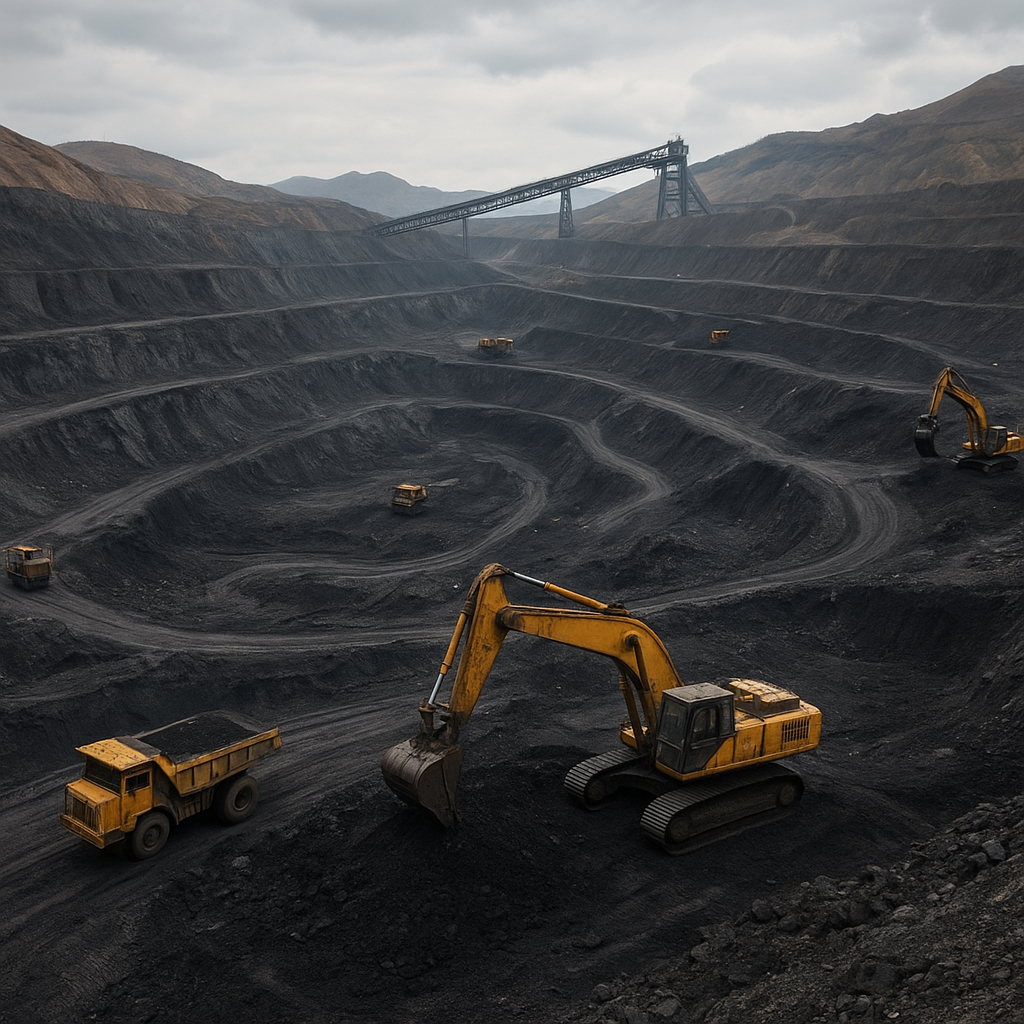
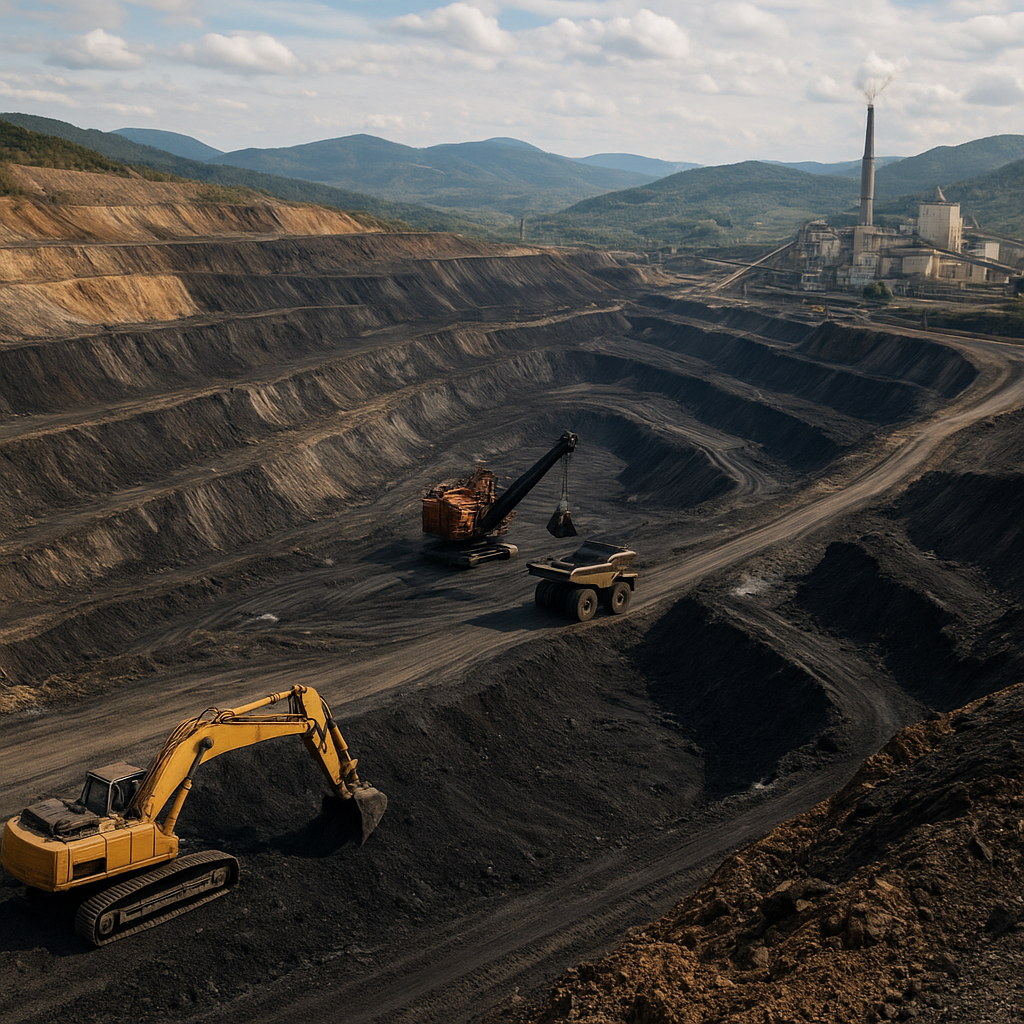
Talcher’s mining operations are dominated by large surface mines (open-cast) with some underground activity in limited areas. The scale of operations has grown substantially since mechanized open-cast mining methods were introduced, allowing higher single-mine production rates than are achievable by underground methods in many of the thick seams present.
Operators and organization
Most production in the Talcher region is managed by subsidiaries of Coal India Limited (CIL), notably Mahanadi Coalfields Limited (MCL), which operates a cluster of mines and associated infrastructure. These operations include multiple coal blocks under a coordinated management structure to optimize extraction, transportation and dispatch to customers such as power plants and industrial units.
Transport and logistics
Efficient movement of coal from pithead to consumers or railway sidings is critical to Talcher’s economics. Key logistical features include:
- Dedicated railway lines and wagon loading systems that link mine clusters to major trunk routes serving eastern, southern and northern Indian load centers.
- Road networks for inter-mine movement and to serve captive power plants, cement units and local industries.
- Coal handling and washing facilities (washeries) in some areas to reduce ash content and improve calorific value for certain off-take requirements.
- Increasing use of mechanized overburden removal equipment (shovels, draglines, large dump trucks) to sustain large-scale open-cast operations.
Mining methods and technology
Open-cast mines at Talcher typically employ a combination of surface miners, rope shovels or hydraulic excavators and large-capacity dumpers. Modern mine planning emphasizes:
- Stripping ratio management — balancing overburden removal costs with coal output.
- Progressive reclamation and rehabilitation of mined-out benches where feasible.
- Use of coal beneficiation to improve quality for specific customers.
In recent decades there has been a steady adoption of digital mine planning tools, GPS-enabled fleet management and environmental monitoring systems aimed at optimizing production and compliance.
Production, statistics and economic significance
Talcher’s production contributes significantly to both Odisha’s and India’s overall coal output. While annual output numbers vary year to year and across sub-areas, the coalfield produces tens of millions of tonnes annually, forming a major component of the output of operators such as MCL. On a national scale, Talcher’s reserves and production ensure a steady supply of fuel to the power sector and energy-intensive industries.
Important economic linkages include:
- Power generation: Many thermal power plants — both state-owned (such as some NTPC units) and captive plants for aluminium, steel and cement producers — rely on Talcher coal delivered by rail or road. Proximity to large coal blocks reduces fuel transport costs for nearby plants.
- Employment: Large-scale mining creates direct employment in operation, logistics and maintenance, and indirect employment in services, equipment supply, transport and local markets. Thousands of workers are associated with the coal cluster and related industries.
- Industrial growth: Reliable coal supplies have attracted energy-intensive industries to the region. Aluminium smelters, cement plants and manufacturing units often cite coal availability as a key locational advantage.
- Revenue and royalties: Royalties, taxes and lease payments contribute to state and central government revenues; corporate investments drive infrastructure spending in roads, power and community services.
Statistical snapshot (indicative figures):
- Geological reserves: estimated in the order of tens of billions of tonnes (Talcher is often cited as among India’s largest single coal-bearing areas).
- Annual production: ranges typically in the multi-million-tonne band; individual mines may produce several million tonnes per year depending on scale and equipment.
- Workforce: mines, contractor personnel and allied services together employ many thousands of people across the Talcher area.
Because production and reserve figures are periodically revised by geological surveys and Coal India group assessments, readers seeking exact up-to-date statistics should consult the latest reports from Coal India Limited (CIL), Mahanadi Coalfields Limited (MCL) and the Ministry of Coal.
Social, community and regional impacts
Mining at Talcher has profoundly influenced the social and economic fabric of the region. Key impacts include:
- Urbanization: Townships and settlements have grown around mine sites; worker colonies, markets, schools and medical facilities have expanded in response to mining activity.
- Livelihood changes: While mining provides employment, traditional rural livelihoods such as agriculture and forest-based activities have been altered due to land acquisition and changes in local ecosystems.
- Resettlement and rehabilitation: Large projects have necessitated resettlement of communities. Managing fair compensation, livelihood restoration and social integration remains an ongoing challenge and policy focus.
- Local infrastructure: Mining companies and government schemes have invested in roads, electrification and water supply projects in mining districts as part of corporate social responsibility (CSR) and development programs.
The social picture is mixed: while mining has raised incomes and improved access to services for many, it has also brought challenges related to displacement, cultural change and environmental stress that require continuous attention from operators and authorities.
Environmental challenges and mitigation
Large-scale coal mining creates environmental pressures that are particularly visible in production centers such as Talcher. Principal issues include:
- Land disturbance: Open-cast mining removes vegetation and topsoil, converting agricultural or forest land into pits and spoil dumps. Rehabilitation requires soil management and replanting programs.
- Air quality: Dust from overburden movement, coal handling and haul roads can degrade local air quality. PM10 and PM2.5 controls, water sprinkling, covered conveyors and green belts are typical mitigation measures.
- Water impacts: Groundwater drawdown, surface water contamination from runoff and sedimentation in local streams are concerns. Proper drainage design, sedimentation ponds and wastewater treatment are employed to reduce impacts.
- Biodiversity: Clearance for mines can affect local flora and fauna, especially where forestland is involved. Compensatory afforestation and biodiversity management plans are part of regulatory requirements.
- Greenhouse gas emissions: Coal production, transport and combustion contribute to CO2 emissions. Efforts to improve mine efficiency, reduce methane release and modernize combustion at power plants are part of broader climate responses.
Mitigation and sustainability approaches in Talcher include progressive land reclamation, construction of coal washeries to lower ash content, air and water monitoring programs, and community development schemes. Additionally, regulatory oversight by central and state environmental authorities shapes operational practices.
Industrial links, supply chain and end use
The bulk of Talcher coal is consumed by thermal power stations, which convert coal’s chemical energy into electricity made available to regional and national grids. Other important end-uses include:
- Cement manufacturing — where coal is used as a fuel in kilns;
- Aluminium and other metal industries — some of which operate captive power plants linked to coal supplies;
- Local industries and small-scale consumers — though high ash and logistics favor industrial off-take rather than household uses.
Supply chains for Talcher coal emphasize reliability and scale: long-term offtake agreements, captive coal blocks for large industries, and rail-based distribution networks help smooth deliveries. Coal quality considerations (ash, sulfur, moisture) drive whether coal is used directly or sent to washeries or blending facilities to meet plant specifications.
Policy environment and future prospects
Coal policy, mining regulations and national energy planning affect Talcher’s trajectory. Key policy factors include:
- Allocation of coal blocks and auction processes for commercial mining;
- Environmental clearances and mine lease conditions that require rehabilitation and community engagement;
- National energy policy balancing coal’s role in baseload power with commitments to renewable energy expansion and emissions reduction;
- Investment incentives for washeries, mechanization and mine safety improvements.
Future prospects for Talcher hinge on both domestic energy demand and the evolving economics of coal. While India pursues large-scale expansion of renewable energy, coal is expected to remain a significant component of the power mix for at least the coming decades because of existing infrastructure and baseload needs. This suggests continued extraction in high-resource fields such as Talcher, with stronger emphasis on:
- Cleaner coal technologies and improved combustion efficiency at receiving power plants;
- Investment in coal beneficiation to reduce transport of inert ash and improve plant performance;
- Greater automation and improved mine safety;
- Exploration for associated resources such as coal bed methane (CBM) where geologically feasible, offering alternative uses of underground coal resources.
Interesting facts and concluding observations
Talcher Coalfield’s scale and strategic importance mean it will remain central to discussions about energy security, industrial competitiveness and regional development in eastern India. A few notable points:
- Talcher’s thick, extensive seams make it especially suitable for high-volume open-cast operations, differentiating it from thinner-seam fields elsewhere.
- High ash content has spurred investment in local washeries and ash-handling systems to improve fuel quality for end-users.
- Infrastructure investments (rail links, conveyors, power evacuation systems) developed around Talcher benefit broader economic activity in Odisha.
- Balancing economic benefits with environmental and social responsibilities remains the core long-term challenge. Innovations in mine reclamation, community partnerships and cleaner-use technologies are key to reconciling these objectives.
Talcher Coalfield exemplifies the complexities of modern coal mining: vast geological potential, decisive industrial value, and significant environmental and social responsibilities. For policymakers, industry leaders and communities alike, Talcher’s future will be shaped by how effectively these multiple priorities are managed while aligning with India’s broader energy transition goals.
Key terms highlighted: Talcher Coalfield, Odisha, thermal coal, Mahanadi Coalfields Limited, reserves, open-cast mining, power generation, infrastructure, employment, environmental impact.