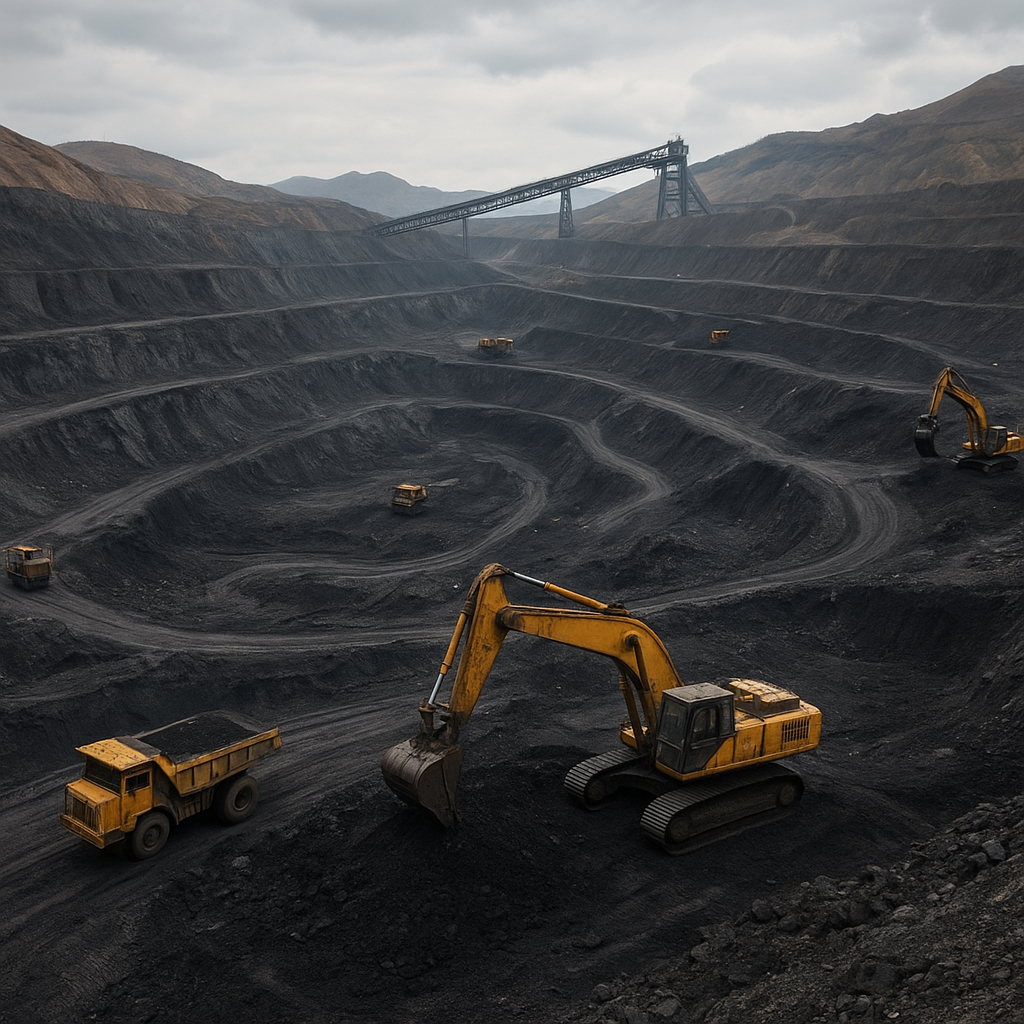
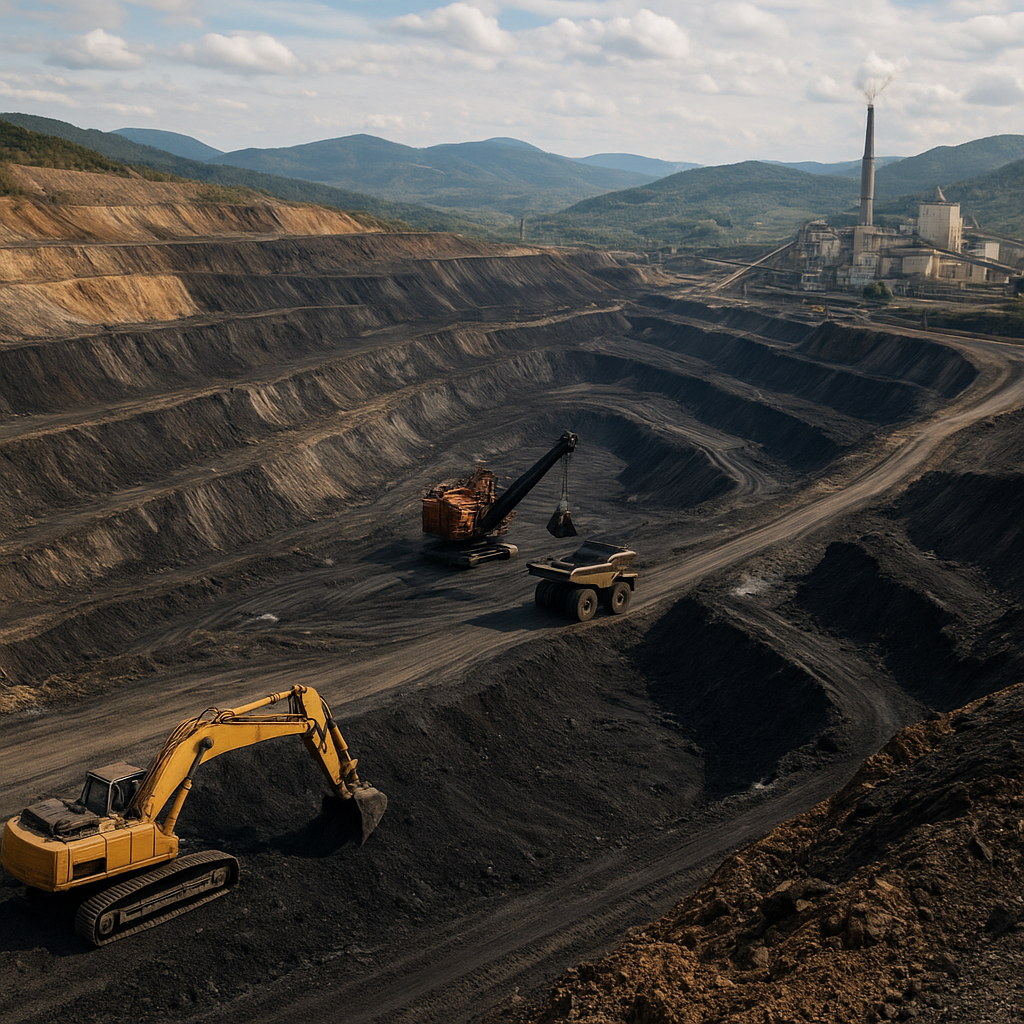
The Ravensworth Mine, located in the heart of Australia’s major coal-producing region, is a notable example of the nation’s long-standing coal industry. This article outlines where the mine is found, what types of coal are produced, how the operation functions, its economic and industrial significance, environmental and social considerations, and broader trends shaping the mine’s future. The text synthesizes geological background, typical mining methods, logistics and market connections, and a discussion of impacts and mitigation measures relevant to modern coal operations in New South Wales.
Location and Geological Setting
Ravensworth Mine is situated in the Hunter Valley region of New South Wales, a part of the broader Sydney Basin coal province. The Hunter Valley is one of Australia’s most important coal-bearing areas, with multiple large open-cut and underground mines feeding domestic and international markets. The coal at Ravensworth is hosted by Permian-age sedimentary sequences characteristic of the region’s coal measures.
Geology and Coal Seams
- The coal-bearing strata in the area are typically of Permian age and belong to the coal measures of the Sydney Basin. These measures contain several laterally extensive seams of economic interest.
- Coal seams in the Hunter Valley generally range from thin to several metres in thickness and may occur at varying depths. The structural setting includes gentle folding and, in places, faulting that affect mining planning and geotechnical design.
- Coal quality in the region varies by seam and depth, but the deposits commonly yield products suitable for both thermal (power generation) and metallurgical (steelmaking) markets, depending on seam selection and processing.
Understanding the local geology is essential for planning mining methods, risk mitigation (such as subsidence), and predicting coal quality and yield. Geotechnical monitoring, core logging, and in-seam sampling are routine practices used to inform safe and efficient operations.
Mining Methods, Infrastructure and Operations
Ravensworth Mine has historically utilized methods typical of modern Australian underground coal operations. While details of extraction methods evolve with leases and technological updates, the following operational characteristics are representative of such mines in the Hunter Valley.
Mining Techniques
- Underground mining—including longwall and bord-and-pillar systems—has been a common approach for extracting deep or moderately-deep seams in the region. Longwall mining enables high recovery rates from continuous seams but requires careful planning for surface and subsurface impacts.
- Mechanised continuous miners, hydraulic supports, and conveyor systems are often used to increase productivity and reduce manual exposure to hazardous conditions.
- Ventilation, methane drainage, and gas monitoring are critical safety and environmental components of underground operations, with methane management also contributing to greenhouse gas strategy.
Logistics and Transport
- Coal from Ravensworth is typically transported by dedicated rail links to export terminals in the Hunter region, most notably the Port of Newcastle, which handles the majority of NSW coal exports.
- On-site infrastructure includes preparation plants (coal handling and processing), load-out facilities, workshops, and water management systems to treat and recycle process water.
- Integration with regional conveyor and rail networks is a key factor determining competitiveness in export markets, where reliability and consistency of supply are valued by buyers in Asia and beyond.
Coal Quality and Products
The coal extracted at Ravensworth and nearby Hunter Valley operations typically falls into two broad product categories: thermal coal for electricity generation and, where present, metallurgical coal for steelmaking. The exact mix depends on seam selection, washing and beneficiation processes, and market demand.
- Thermal coal – used for power generation domestically and internationally. It generally has higher moisture and ash contents than metallurgical coal and commands lower prices than steelmaking grades.
- Metallurgical coal (coking coal) – if produced, it is processed to meet strict specifications for volatile matter, ash, sulfur, and coking properties, and is typically destined for steelmakers in Asia.
- Coal washing plants at mine complexes improve product quality by reducing ash and impurities, increasing calorific value and marketability.
Quality specifications—calorific value, ash, total moisture, sulfur, and trace elements—determine the markets the coal can serve and the price it will attract. Modern mine operations invest in coal quality control and blending to meet customer contracts and maximize value.
Economic and Industrial Significance
Coal operations like Ravensworth are economically significant at multiple scales: local, regional and national. They provide employment, generate export revenues, pay royalties to state governments, and support a wide supply chain ranging from equipment and services to rail and port logistics.
Employment and Local Economy
- Mines in the Hunter Valley typically support hundreds to a few thousand direct jobs during peak operation, with additional indirect employment across services, contracting and supply chains. The presence of a mine contributes to local procurement and community investment.
- Payroll and local procurement can be a major economic stimulus for regional towns—supporting schools, retail, and housing markets.
Exports, Revenues and Fiscal Contributions
- Coal is one of Australia’s top export commodities, and Hunter Valley mines contribute a substantial portion of coal volumes exported through the Port of Newcastle and other east coast terminals.
- Revenue from coal sales supports corporate earnings, royalties payable to the New South Wales government, and tax contributions at the federal level. These fiscal flows help fund public services and infrastructure.
- The economic value of a specific mine varies with annual production, coal quality, and global coal prices, which can be cyclical and sensitive to demand from major buyers such as China, Japan, South Korea and India.
While precise annual production and revenue numbers for Ravensworth depend on operational schedules and ownership reporting, the mine’s contributions mirror the broader significance of the Hunter Valley coal sector to Australia’s export economy.
Environmental, Safety and Community Considerations
Modern mining in Australia operates under a comprehensive regulatory framework that addresses environmental protection, mine rehabilitation, workplace safety, and community consultation. Ravensworth Mine, like other regional operations, must meet licensing conditions, implement environmental management plans, and engage with stakeholders.
Environmental Management
- Water management – mines design systems for stormwater control, sediment retention, and treatment of process water to protect local waterways and groundwater. Monitoring programs are required to demonstrate compliance.
- Air quality and dust – controls include dust suppression, covered coal conveyors, and monitoring to manage particulate emissions that can affect local communities and ecosystems.
- Biodiversity and rehabilitation – operators carry out progressive rehabilitation of disturbed land, restore soil profiles, and re-establish native plant communities according to approved rehabilitation plans. Long-term monitoring ensures successful ecosystem recovery.
- Greenhouse gas management – methane emissions and CO2 from combustion of coal are global concerns; mines may capture methane where feasible, and companies increasingly report emissions inventories as part of corporate responsibility programs.
Safety and Workforce Wellbeing
- Underground coal mining presents hazards such as rockfall, gas, and particulate exposure. Modern safety regimes emphasize training, mechanisation, emergency preparedness and continuous monitoring.
- Health measures include respiratory protection, noise control and programs addressing psychosocial wellbeing among fly-in fly-out (FIFO) and local workforce.
Community Engagement
- Mines maintain channels for local consultation, community investment programs, and arrangements to address grievances. Social licences to operate are supported by transparent reporting and partnerships with local stakeholders.
- Investment in education, infrastructure, and community services is often part of corporate community development strategies.
Regulatory Context and Permitting
Coal mining in New South Wales is governed by a combination of state and federal laws covering environmental protection, workplace safety, and land use. Key aspects include development consents, environmental impact assessments, water licenses, and mine closure obligations.
- Project approvals often include conditions for monitoring, independent audits, and adaptive management measures to address unforeseen impacts.
- Community submissions and public inquiry processes are commonly part of major project approvals, ensuring stakeholders can provide input on potential impacts.
Statistical Context and Market Dynamics
While mine-level statistics vary from year to year, the broader context helps illustrate the significance of an operation like Ravensworth within national and global markets.
- Australia is among the world’s leading coal exporters. The Hunter Valley is a central export region, linking multiple mines to international buyers via rail and port infrastructure.
- Coal prices are influenced by global demand for thermal coal (for power generation) and metallurgical coal (for steel). Economic growth in Asia, energy policies, and competition from alternative fuels all influence market dynamics.
- Operational metrics for mines typically reported in public disclosures include annual run-of-mine (ROM) production, saleable coal tonnes, average product qualities (calorific value, ash, sulfur), workforce numbers, and environmental performance indicators.
Specific figures for Ravensworth’s annual production, workforce size and financial outputs have varied over time with operational phases and ownership. For the most current mine-specific statistics, company reports and government resource publications provide the authoritative sources.
Significance in the Mining Industry and Supply Chains
Ravensworth Mine exemplifies several broader industry themes:
- Integration—its operations are part of a vertically integrated supply chain that includes coal preparation, rail logistics, and export terminals.
- Specialisation—clean-coal handling and quality control allow the mine to target specific markets, whether for power generation or metallurgical use.
- Resilience—regional mining communities depend on industry continuity, diversified employment and investments in infrastructure to absorb market cycles.
As part of a cluster of operations in the Hunter Valley, Ravensworth contributes to competitive supply capacity that underpins the region’s role as a reliable coal exporter.
Future Outlook and Challenges
The outlook for coal operations such as Ravensworth is shaped by several converging trends:
- Global energy transition pressures to reduce greenhouse gas emissions are putting long-term demand for thermal coal under scrutiny, while metallurgical coal demand tied to steelmaking is influenced by decarbonisation pathways in the steel sector.
- Technological advances in mining automation, data analytics and methane mitigation can improve productivity and reduce environmental footprints.
- Policy and investment trends—carbon pricing, emissions targets, and buyer-side sustainability criteria—affect future market access and valuation of coal assets.
For mine operators and local communities, balancing economic benefits with environmental stewardship, responsible closure planning, and diversification of regional economies is central to long-term resilience.
Interesting Facts and Considerations
- Ravensworth and neighbouring operations benefit from the proximity to major export infrastructure, which reduces logistics costs and improves access to international markets.
- Progressive rehabilitation efforts at modern mines aim to leave post-mining landforms that can be used for agriculture, conservation, or other community purposes.
- Mining companies increasingly report sustainability metrics—such as water use intensity, rehabilitation hectares, and workforce safety statistics—to provide stakeholders with transparent performance indicators.
The mine’s trajectory will depend on a mix of commodity markets, corporate strategy, regulatory settings and community expectations. Stakeholders continue to track production profiles, environmental performance, and the economic contributions of mines like Ravensworth to the Hunter Valley and to Australia’s export economy.
Key terms: Hunter Valley, Permian, thermal coal, metallurgical coal, longwall, Port of Newcastle, underground mining, employment, environmental management, rehabilitation.