The following article examines the Raspadskaya mine, one of Russia’s most prominent coal mining operations. It covers the mine’s geographic setting, geological characteristics, the type of coal produced, economic and statistical data where available, its role in regional and national industry, safety and environmental considerations, and prospects for the future. The aim is to provide a comprehensive portrait of the site’s importance within the Russian coal sector and the broader energy and metallurgical markets.
Location and geological setting
The Raspadskaya mine is located in southwestern Siberia within the industrial heartland of the Kuznetsk Basin, commonly known as the Kuzbass, in Kemerovo Oblast. It lies close to the city of Mezhdurechensk and is part of a dense cluster of coalfields that have powered Russia’s heavy industry for more than a century. The Kuzbass is one of the world’s major coal basins, and Raspadskaya occupies a strategic position in its western sector where thick coal seams and extensive coal-bearing strata are present.
Geologically, the Raspadskaya deposits are associated with Carboniferous to Permian coal-bearing sequences that characterize the Kuzbass. Coal seams in the area are generally of considerable thickness and continuity, which has enabled the exploitation of high-capacity underground mining panels. The mine exploits deep, laterally extensive seams that are amenable to mechanized longwall and room-and-pillar extraction methods. Because of the geological complexity of the Basin, site-specific seam conditions—such as faulting, seam inclination, roof strata competence, and methane content—affect operational choices.
Coal type and mining methods
Raspadskaya primarily produces coking coal that is used in the metallurgical industry, particularly for the production of coke in blast furnaces and in pulverized coal injection (PCI) systems. The coal from this part of Kuzbass is often characterized by volatile matter, relatively favorable ash and sulfur contents for coking applications, and properties that allow blending to meet steelmakers’ specifications. In addition to metallurgical grades, the mine and related operations can produce marketable thermal coal fractions for power generation and local industrial use.
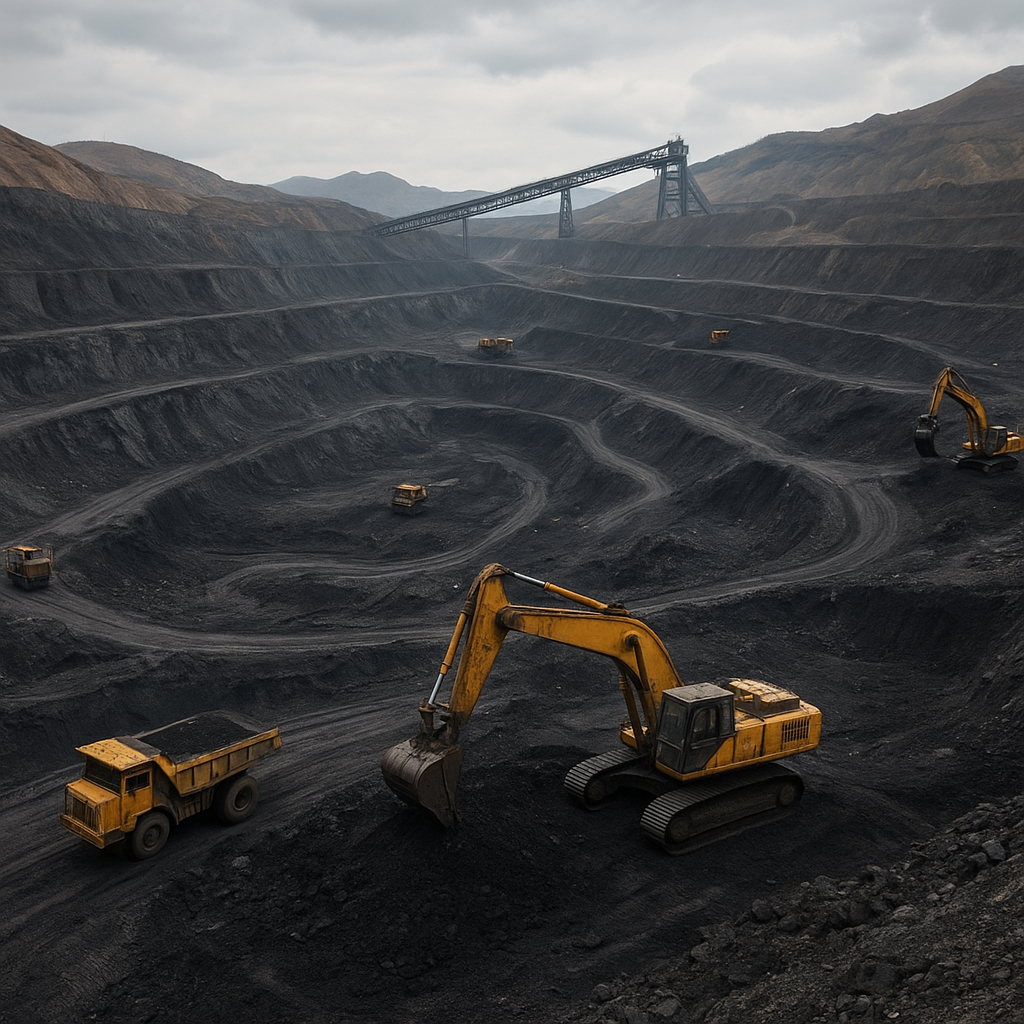
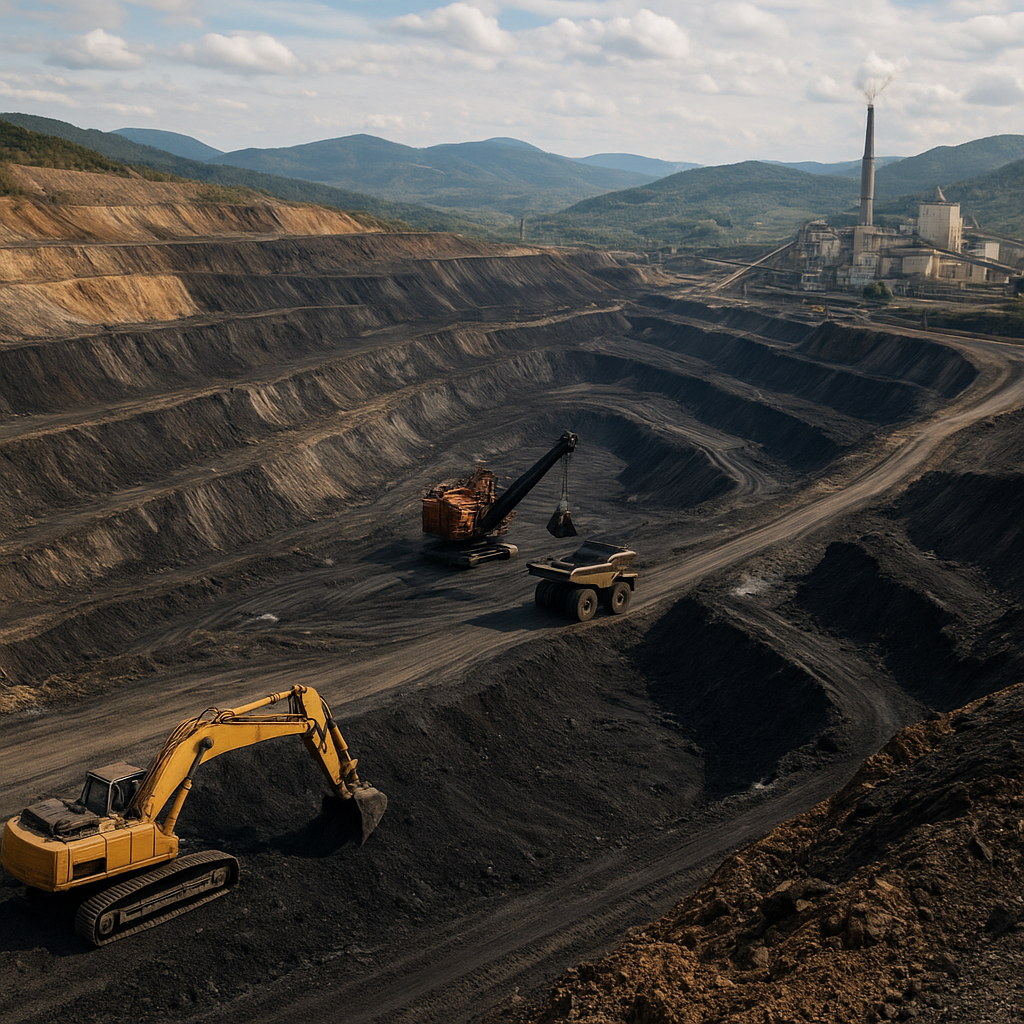
Mining at Raspadskaya has historically been carried out using deep underground methods rather than open-pit extraction. The predominant technique is mechanized longwall mining, which permits high daily advance rates and efficient recovery of coal from thick continuous seams. Modern longwall operations rely on shearers, armored face conveyors, hydraulic roof supports, and sophisticated face control systems. Ancillary methods such as room-and-pillar and bord-and-pillar approaches are used where geological or structural constraints limit longwall deployment. Ventilation systems, methane drainage, and continuous monitoring are essential components due to the basin’s methane-prone geology.
Production, reserves and economic scale
Raspadskaya is among Russia’s largest single coal producers by volume. Over the last two decades the mine and its associated coal-processing and logistical infrastructure have produced on the order of millions of tonnes annually, contributing significantly to regional output from the Kuzbass. Reported annual production during various years in the 2010s and early 2020s has often been cited in the mid single-digit to low double-digit million tonne range; depending on market conditions, maintenance schedules, and investment in mining fronts, annual output has varied.
Exact figures for a given year should be consulted from company reports and Russian statistical releases, but public-domain summaries and industry profiles typically place Raspadskaya’s output in the neighborhood of about 8–15 million tonnes per year in many operating periods. The mine is supported by substantial geological resources—recoverable reserves and measured resources considered sufficient to sustain long-term production at commercial rates—though reported reserve categories and volumes are subject to re-evaluation as mining advances, geological exploration continues, and economic parameters (price, operating cost, technology) change.
The economic footprint of the mine extends beyond direct coal sales. Raspadskaya supports on-site coal preparation plants (washery facilities) that upgrade raw run-of-mine coal into multiple marketable products, enhancing value capture. The mine’s products supply both domestic metallurgical customers and export markets. Revenues from sales, the mine’s contribution to regional employment, and associated taxes and royalties make it an important contributor to the local economy of Kemerovo Oblast.
Markets and significance in the metallurgical and energy sectors
As a source of coking-grade coal, Raspadskaya plays a role in Russia’s steelmaking supply chain. High-quality coking coals from the Kuzbass are blended and used by steel producers domestically, and they are also shipped to international consumers when market prices and logistics allow. Typical destination markets include Russian steelmakers located in the Ural and European parts of Russia, as well as overseas buyers in Europe and Asia—subject to the prevailing export routes and regulatory environment.
The mine’s logistical connectivity—rail links to the regional rail network and onward transshipment capability to ports—determines how competitively its coal can access distant markets. Historically, Kuzbass coal has been exported either westward to Black Sea and Baltic ports or eastward to Pacific ports, and many operators optimize export flows based on freight, demand conditions, and contract commitments. Domestically, Raspadskaya supplies metallurgical plants and power generators, thereby contributing to industrial stability in several economic sectors.
Socio-economic impact and regional role
Raspadskaya is a major employer in its immediate area, providing direct jobs in mining, processing, maintenance, and administration, as well as indirect employment through service providers, contractors, and local suppliers. The mine’s operations have supported urban infrastructure, social services, and community programs in adjacent towns such as Mezhdurechensk. In many mining towns of the Kuzbass, single large employers like Raspadskaya underpin municipal budgets and influence local labor markets.
Economic multipliers from mining include demand for rail and logistics services, local power and water supplies, and investment in housing and social amenities. At the same time, dependency on one or a few commodity sectors creates economic concentration risks: downturns in steel demand or disruptions to mining output can have outsized local effects. Company-led and state-led programs that aim to diversify local economies, retrain workers, or modernize infrastructure are therefore of strategic interest to regional planners.
Safety record, methane and environmental considerations
Mining in the Kuzbass—and particularly deep underground operations—carries inherent safety challenges. Methane emissions, the potential for coal dust explosions, roof falls, and water inflow are perennial hazards. Raspadskaya operates in a geological context where methane control is a central safety requirement. The mine’s safety programs typically include ventilation engineering, methane drainage and capture systems, rock support and monitoring, continuous atmospheric monitoring, and emergency response preparedness.
Environmental impacts from mining include land disturbance, surface subsidence, changes to local hydrology, handling and disposal of spoil and tailings, and dust and noise emissions. Coal preparation plants generate fine coal waste that requires management to prevent leachate and sedimentation problems. Modernization efforts at large mines often emphasize waste-water treatment, dust suppression, progressive reclamation, and reduction of fugitive methane emissions—some of which can be monetized through methane capture and use for power generation if technologically and economically viable.
Notable incidents and industry responses
Like many large underground mines, Raspadskaya has experienced operational incidents that drew attention to the need for continual improvement in safety and monitoring. Historically, catastrophic events in underground coal mines worldwide have led to tighter regulation, industry-wide adoption of new safety technologies, and investments in training and emergency preparedness. The Raspadskaya operation has been part of this broader trajectory: incidents have prompted reviews, implementation of new ventilation and gas-monitoring systems, enhanced training for underground crews, and shifts in management practices to reduce risk.
Regulatory bodies, industry associations, and mining companies in Russia have intensified efforts to reduce fatality rates and improve workplace safety, including investments in automation, remote-controlled equipment, and real-time monitoring systems that can reduce the need for personnel to work in the most hazardous zones.
Modernization, technology and future prospects
Future competitiveness of the Raspadskaya mine depends on continuous investment in mining technology, automation, and integrated logistics. Modern longwall faces with advanced shearers, automated roof support systems, and real-time operational analytics increase recovery rates and reduce unit costs. Automation also has the potential to improve safety by removing workers from the most hazardous tasks and enabling faster reaction to hazardous conditions detected by sensors.
Global and regional market trends for metallurgical coal will influence Raspadskaya’s trajectory. Demand for coking coal is closely tied to steel production, which itself depends on construction, automotive, and infrastructure cycles. Decarbonization trends in steelmaking—such as hydrogen-based direct reduction and greater recycling—may alter long-term demand patterns for coking coal. However, in the medium term, coking coal remains essential to traditional blast-furnace steelmaking technology, and high-quality Kuzbass coking coals are likely to remain valuable where blast furnace routes persist.
Environmental regulation and carbon pricing mechanisms could create additional pressures and opportunities. Methane capture initiatives and use of captured gas for power or heat can reduce greenhouse gas footprints and create new revenue streams. Efforts to reduce life-cycle emissions, improve energy efficiency, and rehabilitate mine-affected landscapes are increasingly important for social license to operate.
Statistical overview and sources of data
Readers seeking the most current numerical data on Raspadskaya—annual production tonnages, reserve classifications, employment levels, and sales figures—should consult the mine operator’s annual reports, regional statistical publications from Kemerovo Oblast, and Russia’s national energy and mining statistics. Industry analysts and trade publications provide regular updates on production trends and market flows. It is common for large mines to report production in millions of tonnes per year, disclose recoverable reserve estimates in tens to hundreds of millions of tonnes, and list employee counts in the thousands. For precise figures and trends over time, primary company disclosures and audited financial statements are the authoritative sources.
Conclusion
Raspadskaya occupies a prominent place in the Kuzbass coal landscape as a major producer of coal—especially coking coal—and as an economic anchor for its locality. Its deep underground operations exemplify the technical complexity and operational challenges of modern mine engineering, such as methane control and longwall mining. Economically, the mine contributes to regional employment, industrial supply chains, and export potential. Environmentally and socially, it reflects the dual imperatives of maintaining safe working conditions and reducing ecological impacts. Looking ahead, a combination of modernization, improved methane management, and adaptive market strategies will influence how Raspadskaya navigates shifting global demand for fossil fuels and metallurgical feedstocks, and how long it continues to supply the coal that has historically driven heavy industry in Russia.
Key terms emphasized
- Raspadskaya
- Kuzbass
- coking coal
- Mezhdurechensk
- underground
- methane
- production
- exports
- modernization
- reserves