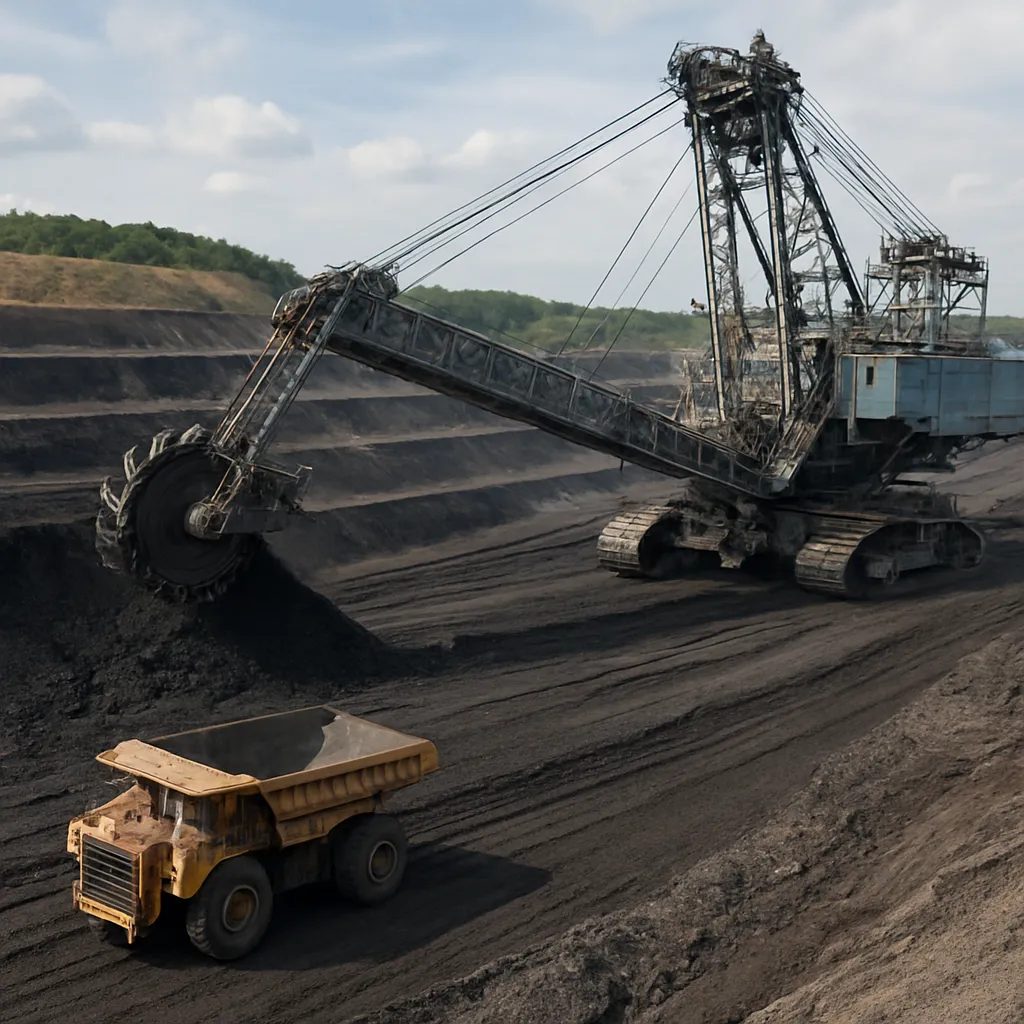
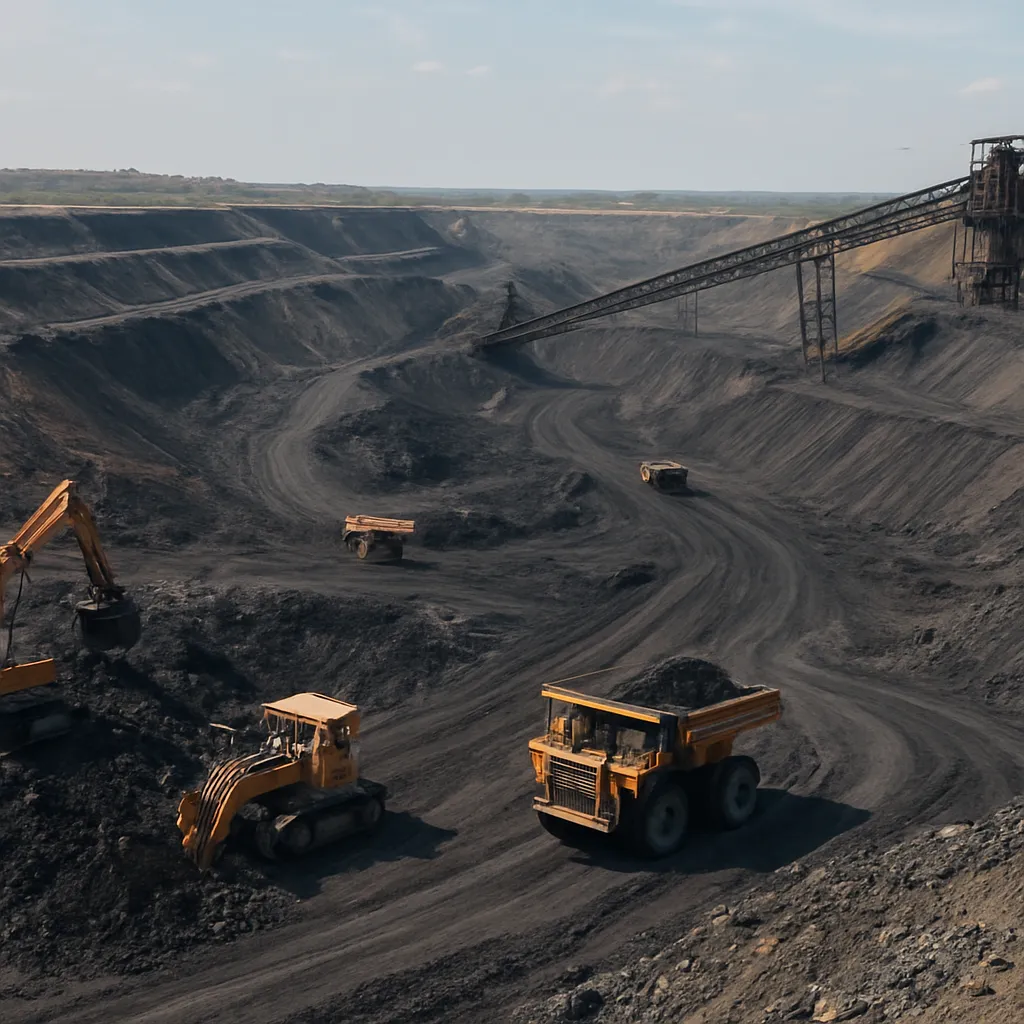
The Mezhdurechensk mining area, located in the heart of the Kuznetsk coal basin in southwestern Siberia, is one of Russia’s most important coal-producing regions. This article examines where the mines around Mezhdurechensk are located, what types of coal are produced, the scale of extraction, economic and social impacts, technical and safety aspects, and the role the area plays in domestic energy supply and international trade. Where possible, available statistical information and well-known facts are presented to provide context for the continued significance of this mining complex.
Location, geological setting and history
The city of Mezhdurechensk and its surrounding mines lie in Kemerovo Oblast in southwestern Siberia, in the central part of the vast Kuznetsk Basin (commonly known as the Kuznetsk or Kuzbass). The Kuzbass is among the world’s largest coal basins and extends across much of Kemerovo region. The mining zone around Mezhdurechensk is characterized by Carboniferous-age coal-bearing strata with thick, extensive seams that have been economically mined for more than a century. Mining activity in the area expanded rapidly in the Soviet period, with both underground shafts and later large open-pit operations developed to extract a range of coal grades.
The geology of the basin includes numerous multi-seam horizons. Coal seams near Mezhdurechensk vary in thickness and depth, making the area suitable for a combination of underground and surface mining methods. Historic development followed classical patterns of coal town growth: railways and processing plants were built, settlements expanded around shafts, and integrated logistics networks developed to move coal to domestic consumers and export terminals.
What is mined — coal types and quality
The mining complex produces several coal types, mainly within the bituminous range. Two broad commercial categories dominate:
- Coking (metallurgical) coal — high-quality, low-ash bituminous coal used in steelmaking as coke feedstock and for pulverized coal injection (PCI).
- Thermal (steam) coal — used for electricity generation and heat production; quality ranges from mid- to high-calorific value bituminous coals.
Kuzbass coals are generally valued for their relatively high carbon content, suitable volatile matter, and favorable coke-producing properties in many seams, which makes the region important to Russia’s metallurgical industry. Many mines also supply washed coal (beneficiated coal) after coal preparation at wash plants to meet specific moisture, ash and sulfur specifications demanded by power stations and export markets.
Major mines and operators
Mezhdurechensk and its vicinity host several large mining complexes and individual mines. One of the most prominent operations in the area is the Raspadskaya mine complex — a large underground mine historically among Russia’s highest-volume single coal producers. Raspadskaya has produced both coking and thermal grades and has been a focal point for discussions about mine safety and modernisation after major accidents drew national attention.
Large Russian coal companies with operations in the Kuzbass include the Siberian Coal Energy Company (SUEK), private and state-affiliated producers, and local mining companies that own and operate individual underground shafts and open-pit fields. Many of these operators integrate extraction, processing (coal washing), rail logistics and sales, enabling coal from Mezhdurechensk to reach domestic power plants, metallurgical plants and export terminals.
Production volumes, reserves and regional significance
Precise production figures for a single mine or city can vary year to year, but the regional context is clear: the Kuzbass is the powerhouse of Russian coal. Historically, the Kuznetsk Basin has accounted for roughly 50–70% of Russia’s total coal output; in recent decades a commonly cited share is around 60%. At a national level, Russian coal production in the late 2010s and early 2020s typically ranged in the neighborhood of 400–450 million tonnes per year; applying a ~60% share suggests Kuzbass production in the order of 240–270 million tonnes annually, though annual variations occur.
Estimates of total coal resources in the Kuzbass vary by methodology; many geological surveys and industry sources place recoverable resources in the basin in the hundreds of billions of tonnes. Those extensive in-place reserves underpin long-term planning and investment in the Mezhdurechensk mining corridor and make the region strategically important for energy security and metallurgy within Russia.
Economic and social impact
Coal mining around Mezhdurechensk is a major local employer and a cornerstone of the regional economy. Mining operations support direct jobs in extraction, engineering, geology, transport and plant maintenance, as well as indirect employment in services, trade, utilities and rail logistics. Local towns and cities developed around mines host housing, schools and medical facilities largely funded by mining companies and regional budgets.
At the national level, coal from the Mezhdurechensk area contributes to:
- Electricity generation across Siberian power networks and beyond.
- Feedstock supply for metallurgical plants in western and eastern Russia.
- Export earnings when supplied to foreign buyers — particularly in Asian markets.
Exports have become increasingly important in recent decades. Prior to the mid-2010s, Russia’s coal exports grew strongly, with Asia (notably China, Japan, South Korea and other buyers) absorbing a growing share. Coal from Kuzbass is typically railed to Pacific ports or to western export routes depending on customer location.
Logistics, infrastructure and markets
One of Mezhdurechensk’s strengths is its integration into Russia’s rail network. Coal is transported by heavy freight rail to major domestic consumers and to export terminals. Rail capacity, rolling stock availability and port throughput are critical constraints and drivers of investment in the region. Coal preparation plants near mines improve product quality for domestic utilities and export markets; investments in conveyor systems, load-out facilities and transshipment points are common.
Market demand is split between domestic consumption (power generation and industry) and export. Geographically, Asian markets are the fastest-growing destination for Russian coal due to proximity and rising energy demand in the Asia-Pacific region. European markets have historically been important, but shipments to Europe depend on price competitiveness and logistics costs.
Safety, environmental and social challenges
Coal mining is inherently hazardous, and the Mezhdurechensk area has suffered notable accidents in the past. The Raspadskaya mine complex experienced a major methane explosion in 2010 that resulted in significant loss of life and prompted national scrutiny of safety procedures, emergency response and methane management. Such incidents have reinforced regulatory and industry interest in improved ventilation, methane monitoring, mine rescue readiness and safer operating practices.
Environmental challenges are multi-faceted:
- Greenhouse gas emissions — coal combustion is a major source of carbon dioxide; methane released during mining is a potent greenhouse gas that poses both an environmental and an occupational hazard.
- Local pollution — dust, particulate emissions, water contamination from mine drainage and tailings, and landscape disruption from open-pit mining.
- Subsidence and land-use conflicts — underground mining can cause ground movement that affects buildings and infrastructure, requiring monitoring and mitigation.
In response, companies and regional authorities have invested in dust suppression, water treatment, land reclamation of closed pits, and methane capture technologies where economically feasible. Methane capture can sometimes be used for power generation or heating, reducing both emissions and safety risks while providing a supplemental energy source.
Technology, modernization and future trends
The Mezhdurechensk mining complex has seen steady technological upgrades over recent decades. Trends include:
- Mechanization of underground face operations — longwall and continuous miners where geology allows.
- Automation and remote-operation equipment for high-risk tasks and to increase productivity.
- Improved coal preparation and washing facilities — to meet strict quality standards for metallurgical coal and to reduce ash and sulfur for power sector customers.
- Methane drainage and utilization systems that improve safety and provide a fuel feedstock.
- Digital monitoring and predictive maintenance systems for equipment and geotechnical stability.
Market-driven developments also affect investment choices. For example, demand for high-quality coking coal encourages investment in seams and processing facilities that produce metallurgical-grade coal. Conversely, flat or depressed coal prices can slow new capital expenditure on longer-term projects.
Notable incidents, regulations and social response
Serious accidents such as the Raspadskaya explosion in 2010 (which caused numerous fatalities and injuries) became catalysts for regulatory review and public discourse about miner safety, emergency preparedness and the social responsibilities of coal companies. Russian authorities periodically tighten safety requirements, while companies often combine regulatory compliance with public relations and community support programs to offset negative perceptions.
Social impacts extend beyond safety. Long-term dependence on coal can create economic vulnerability if global energy transitions reduce coal demand. Many mining communities are therefore involved in discussions about economic diversification, retraining programs and infrastructure improvements to support alternative industries.
Statistics and notable quantitative facts (approximate)
- Regional contribution: The Kuzbass region, where Mezhdurechensk is situated, supplies roughly 50–70% of Russia’s coal, commonly cited as around 60% in many industry reports.
- National production context: Russia’s annual coal production in recent years has typically ranged from approximately 400–450 million tonnes (annual variability is influenced by market conditions and domestic demand).
- Large mine outputs: Major complexes in the Mezhdurechensk area, such as Raspadskaya historically, have had annual production in the multi-million-tonne range (single-digit to low double-digit millions of tonnes per year depending on operating status and investments).
- Reserves: The Kuznetsk Basin contains estimated recoverable reserves on the order of hundreds of billions of tonnes by many estimates; exact figures depend on the definitions used (proved vs. inferred vs. resources).
Cultural and community aspects
Mining towns around Mezhdurechensk maintain deep social ties to the industry. Trade unions, professional technical schools, and company-sponsored social programs (housing, healthcare, cultural events) all form part of the local identity. The ebb and flow of coal demand affect local living standards: boom periods bring employment and investment, while downturns create pressure on municipal budgets and social services.
Local cultural heritage often celebrates the professions of miners, with memorials and museums chronicling the history of extraction, collective achievements, and the sacrifices of mining communities.
Outlook: resilience and transition
Looking ahead, Mezhdurechensk’s mining complex will likely remain important for Russia in the near and medium term because of large in-place reserves, established logistics and metallurgical demand. However, several factors will shape future trajectories:
- Global energy markets — shifts in demand (e.g., continued demand from Asia) will influence production levels and investment decisions.
- Policy and climate considerations — decarbonisation efforts and carbon pricing in some markets can reduce demand for thermal coal over time or increase costs of operation.
- Technological change — further mechanisation, automation, and methane utilisation can improve safety and economics, prolonging viable operations.
- Local economic diversification — investments in alternative industries and retraining will affect the social sustainability of mining towns.
Interesting facts and lesser-known points
- Coal quality variation within the Mezhdurechensk area allows simultaneous production of both metallurgical and thermal grades, enabling flexibility by suppliers when markets shift.
- Methane management is both a safety and commercial opportunity — captured methane can be used on-site or sold for power generation, converting a hazard into a resource.
- Seasonality and logistics play a large role: winter rail performance and port ice conditions historically impacted delivery schedules, driving investment in rail capacity and winterised equipment.
- Technological retrofits in older underground mines require careful geotechnical study; modernization is often phased to balance safety improvements with production continuity.
Concluding remarks
The Mezhdurechensk mining area is emblematic of the wider Kuzbass region’s role in Russia’s energy and industrial landscape. Rich coal seams, large-scale operations, and established logistics networks create significant economic value and employment. At the same time, the sector faces the twin challenges of improving safety and mitigating environmental impacts while adapting to global market and policy shifts. Continued investment in safety, modernisation, methane utilisation and diversification measures will determine how Mezhdurechensk’s coal industry evolves in the coming decades.