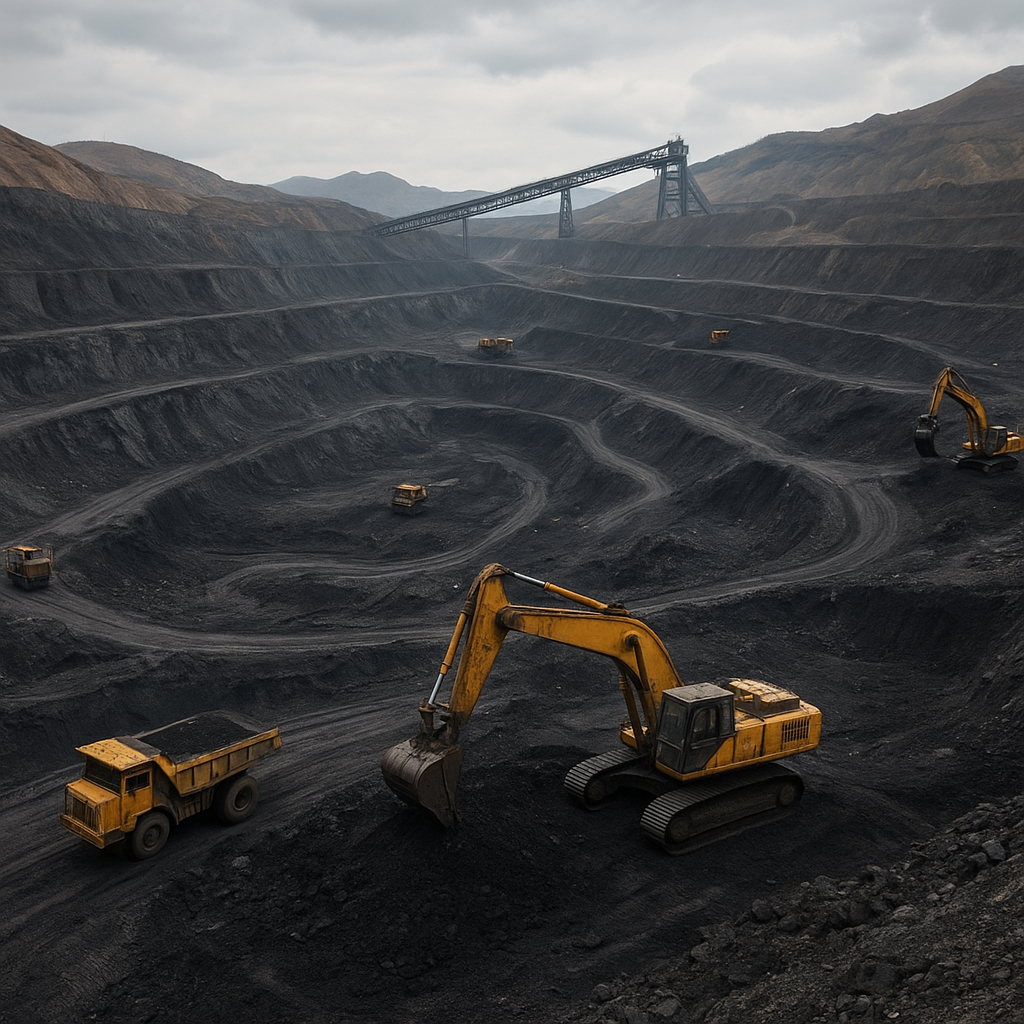
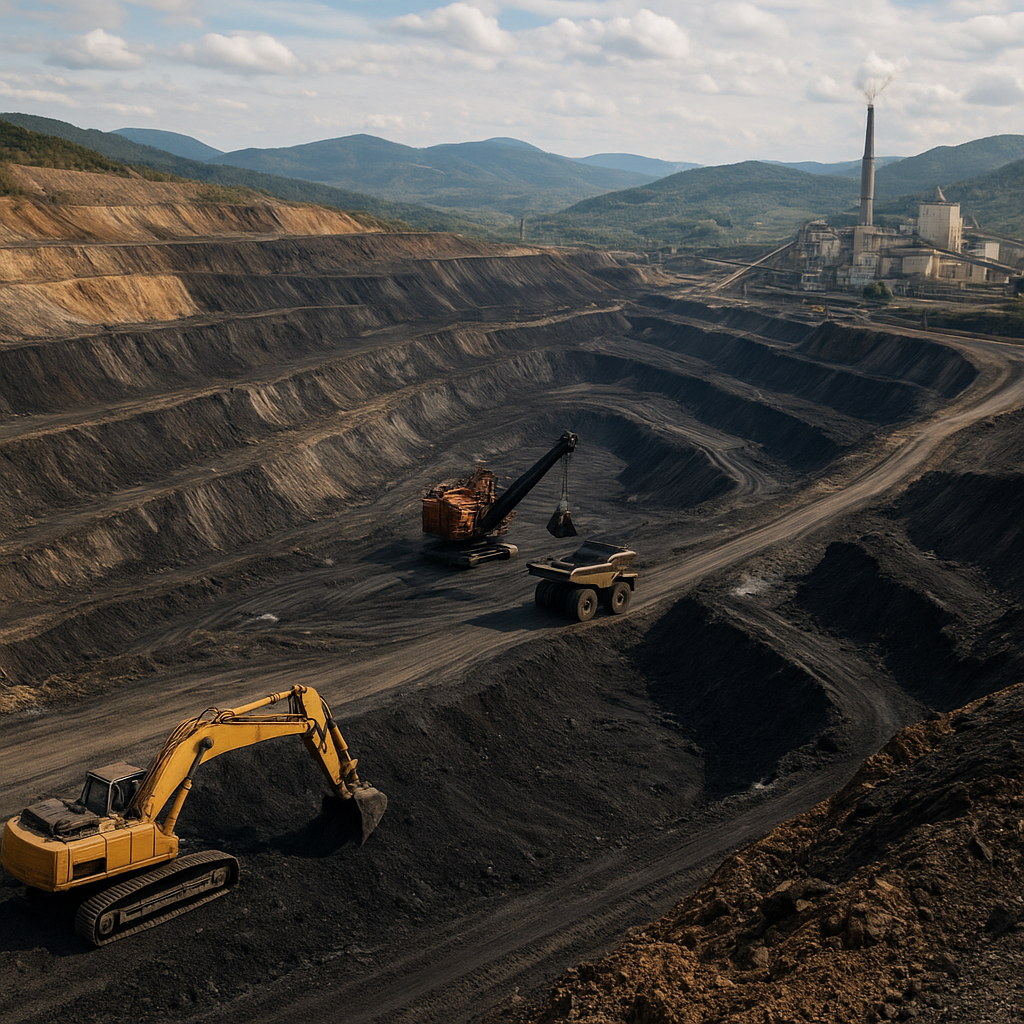
The Leeuwpan Mine, situated within South Africa’s prolific coal-producing region, is a notable component of the country’s coal industry. This article examines the mine’s location, geological setting, the types of coal produced, operational characteristics, economic and industrial importance, environmental and social considerations, logistics and markets, and prospects for the future. The aim is to provide a comprehensive picture of Leeuwpan’s role in the national energy landscape and regional economy while placing it in the broader context of South Africa’s coal sector.
Location and Geological Setting
Leeuwpan Mine is located in the **Mpumalanga** province, within the Highveld coalfields of northeastern South Africa. This region, often referred to as the **Witbank** (Emalahleni) coalfield, is one of the country’s primary basins for coal mining and has supplied fuel for South Africa’s industrial growth and power generation for more than a century. The geology of the area is characterized by Permian-age sedimentary sequences containing multiple coal seams of variable thickness and depth.
The coal seams in the Witbank/Highveld region typically display the following features:
- Rank: predominantly medium- to high-volatile bituminous coals suitable for **thermal coal** applications;
- Calorific value: commonly in the range of about 18–30 MJ/kg depending on seam and washing/processing;
- Ash and sulfur: variable, with washing plants used to reduce ash content and improve product quality;
- Seam depths and continuity: seams range from near-surface outcrops suitable for opencast mining to deeper seams accessed by underground methods.
These geological characteristics make the area highly versatile for different mining methods and end uses.
Mining Operations and Coal Types
Leeuwpan Mine produces primarily **thermal coal**, which is burned in power stations to generate electricity. Thermal coal from the Witbank region is a mainstay for South Africa’s dominant utility, Eskom, as well as for domestic industrial users and export markets. Depending on the seam and processing, products from mines such as Leeuwpan can include raw run-of-mine coal, washed coal with reduced ash and improved calorific value, and blended products tailored to specific power station specifications.
Mining techniques in the area vary with geology and economic factors. Common methods include:
- Opencast (surface) mining where the seams are shallow and economically recoverable with removal of overburden;
- Underground mining (bord and pillar, room-and-pillar, or longwall in some operations) where seams are deeper and opencast becomes uneconomic;
- Coal processing via wash plants to reduce ash, improve calorific value and produce market-specific grades;
- Stockpiling and blending operations to optimize consistency for both domestic and export customers.
A mine such as Leeuwpan may employ one or more of these methods depending on the seam geometry, environmental constraints and commercial targets.
Economic and Industry Significance
Coal remains central to South Africa’s energy and industrial sectors. Mines in the Mpumalanga region supply the bulk of feed coal to thermal power stations that constitute the backbone of the national grid. Leeuwpan contributes to this supply chain and to the local economy by providing **employment**, generating royalties and taxes, and supporting secondary industries such as rail transport, equipment maintenance, and local services.
Key economic functions of a coal mine like Leeuwpan include:
- Direct employment of miners, engineers, geologists, plant operators and administrative staff;
- Indirect employment through local contractors, suppliers and service providers;
- Fiscal contributions in the form of royalties, corporate taxes and municipal rates;
- Support of energy security by providing feedstock to base-load and peaking power stations;
- Contribution to export revenues where coal is sold overseas, typically through the Richards Bay Coal Terminal.
These roles highlight the mine’s multifaceted economic importance to both the regional and national levels.
Statistics and Production Context
While production figures for individual mines can vary year to year and depend on operator reporting, it is useful to place Leeuwpan within the broader statistical frame of South African coal mining. South Africa consistently ranks among the world’s major coal producers and exporters. In recent years the country’s annual coal production has been on the order of a few hundred million tonnes, with the Mpumalanga province accounting for a significant share—often above 70% of national production.
Specific production metrics, if publicly reported for Leeuwpan in particular years, typically include:
- Annual run-of-mine (ROM) tonnage and saleable coal tonnage after processing;
- Grade specifications such as calorific value (MJ/kg), ash percentage, moisture and sulfur content;
- Reserves and resources reported under applicable reporting codes (e.g., SAMREC in South Africa), indicating measured, indicated and inferred tonnages;
- Employment numbers and local economic impact statistics.
Public reporting cycles, company annual reports and regulatory filings are the usual sources for mine-specific figures. In the absence of a single definitive public source in this article, Leeuwpan’s production is best understood in relation to the medium-sized to large operations typical of the Witbank field, where annual saleable production at individual collieries commonly ranges from several hundred thousand to multiple million tonnes depending on mine scale and life of mine planning.
Infrastructure, Logistics and Markets
Logistics are central to coal mining viability. Coal from Leeuwpan is typically moved by a combination of road and rail to domestic power stations or export terminals. The regional rail network connects Mpumalanga collieries with Eskom power stations and with the transshipment nodes leading to the **Richards Bay Coal Terminal** (RBCT), South Africa’s principal export gateway for coal. RBCT services international markets in Asia, Europe and elsewhere.
Market dynamics affecting mines like Leeuwpan include:
- Domestic demand driven by power generation (Eskom) and industrial users;
- International demand and pricing, influenced by seaborne benchmark indices (e.g., API coal indices) and regional freight rates;
- Contractual arrangements such as long-term supply contracts with utilities versus spot market sales;
- Quality specifications required by customers, which drive washing and blending strategies to meet calorific value and ash requirements.
Reliable transport infrastructure—particularly rail capacity and port throughput—directly affects a mine’s ability to access markets and realize full value for its product.
Environmental, Social and Regulatory Aspects
Coal mining carries significant environmental and social responsibilities. For Leeuwpan and similar operations, major concerns include:
- Water management: handling of mine water, prevention and mitigation of acid mine drainage (AMD), and protection of local watersheds;
- Air quality: control of dust and particulate emissions during mining, processing and transport;
- Land rehabilitation: progressive re-contouring, topsoil management and post-mining land use planning governed by regulatory requirements;
- Biodiversity: minimizing impacts on habitats and implementing offset or restoration programs where necessary;
- Community relations: local employment, procurement from local suppliers, and investment in social development projects such as housing, education and health;
- Health and safety: implementation of occupational health management, mine safety protocols and monitoring programs to reduce accidents and long-term health risks.
South African legislation requires environmental impact assessments, mining permits, closure plans and financial provisions for rehabilitation, which ensure that mines maintain environmental standards and provide for closure liabilities.
Socially, coal mining has historically been a major employer in Mpumalanga, but it also poses challenges such as boom-and-bust employment cycles, labor disputes, and community expectations around benefit sharing. Modern operations increasingly emphasize local procurement, training programs and community development initiatives to enhance social license to operate.
Technological Practices and Safety
Contemporary mining at operations in the Witbank area, including Leeuwpan, typically adopts a combination of mechanization and process optimization to improve productivity and safety. Practices include:
- Deployment of heavy earthmoving equipment and modern underground mining machinery where applicable;
- Use of computerized mine planning, geological modeling and fleet management systems to improve extraction efficiency;
- Environmental monitoring systems for air, water and noise;
- Strict occupational health and safety programs with monitoring for respirable dust, hearing protection and mechanized safety systems.
Technological improvements have also targeted wash plant efficiency to maximize saleable coal recovery and reduce reject tonnages, thereby improving economic returns while lowering environmental footprints.
Challenges and Future Outlook
The coal sector in South Africa faces several structural and long-term challenges that affect mines such as Leeuwpan:
- Energy transition pressure: global decarbonization trends and pressure to reduce coal-fired generation create market uncertainty for thermal coal over the medium to long term;
- Domestic energy policy: the pace of integrating renewables, demand-side management and potential retirements of older coal-fired plants determine local demand trajectories;
- Regulatory and environmental tightening: increased expectations around emissions, water stewardship and post-mining land use can raise costs and require capital investment for compliance;
- Logistics constraints: rail reliability and port capacity remain key limitations for export-focused operations;
- Social license: community expectations and labor relations require ongoing management to avoid disruptions and ensure equitable benefits.
In response, mines are exploring diversification strategies such as supplying higher-grade coals to niche markets, improving washing to meet stricter environmental standards, investing in carbon mitigation measures where feasible (including efficiency improvements and potential future carbon capture projects), and planning for orderly closure and land rehabilitation.
Interesting Historical and Regional Context
The Witbank coalfield, in which Leeuwpan sits, has been central to the industrialization of South Africa. Coal from the region fueled early power stations, industrial processes, and later, export markets. The pattern of settlement, rail development and industrial expansion in Mpumalanga has long been tied to coal discovery and mining activity.
Other notable aspects include:
- The development of coal beneficiation technologies in the region, which improved coal quality for both domestic and export use;
- The establishment of rail corridors and coal transfer hubs to link inland mines to coastal export terminals;
- Evolution of mining safety standards and mechanization over decades, contributing to higher productivity and lower incident rates in modern operations;
- Local initiatives for biodiversity rehabilitation and post-mining land conversion to agricultural or recreational use in some rehabilitated areas.
These historical threads illustrate how coal mining has shaped both the physical and economic landscape of Mpumalanga.
Concluding Perspective
Leeuwpan Mine exemplifies the characteristics of a coal operation embedded in one of South Africa’s most important coal provinces. Its contribution to local employment, energy supply and regional infrastructure underscores its ongoing importance. At the same time, the broader transitions affecting the global and national energy systems create a complex environment in which economic viability, environmental stewardship and social responsibility must be balanced.
As South Africa navigates the twin objectives of maintaining energy security and reducing greenhouse gas emissions, mines such as Leeuwpan will play a role in near- to medium-term energy supply even as stakeholders plan for a longer-term shift in the energy mix. Effective rehabilitation planning, community engagement, and investment in cleaner, more efficient mining and processing technologies will be central to ensuring that the legacy of coal mining contributes positively to regional development while adapting to future realities.