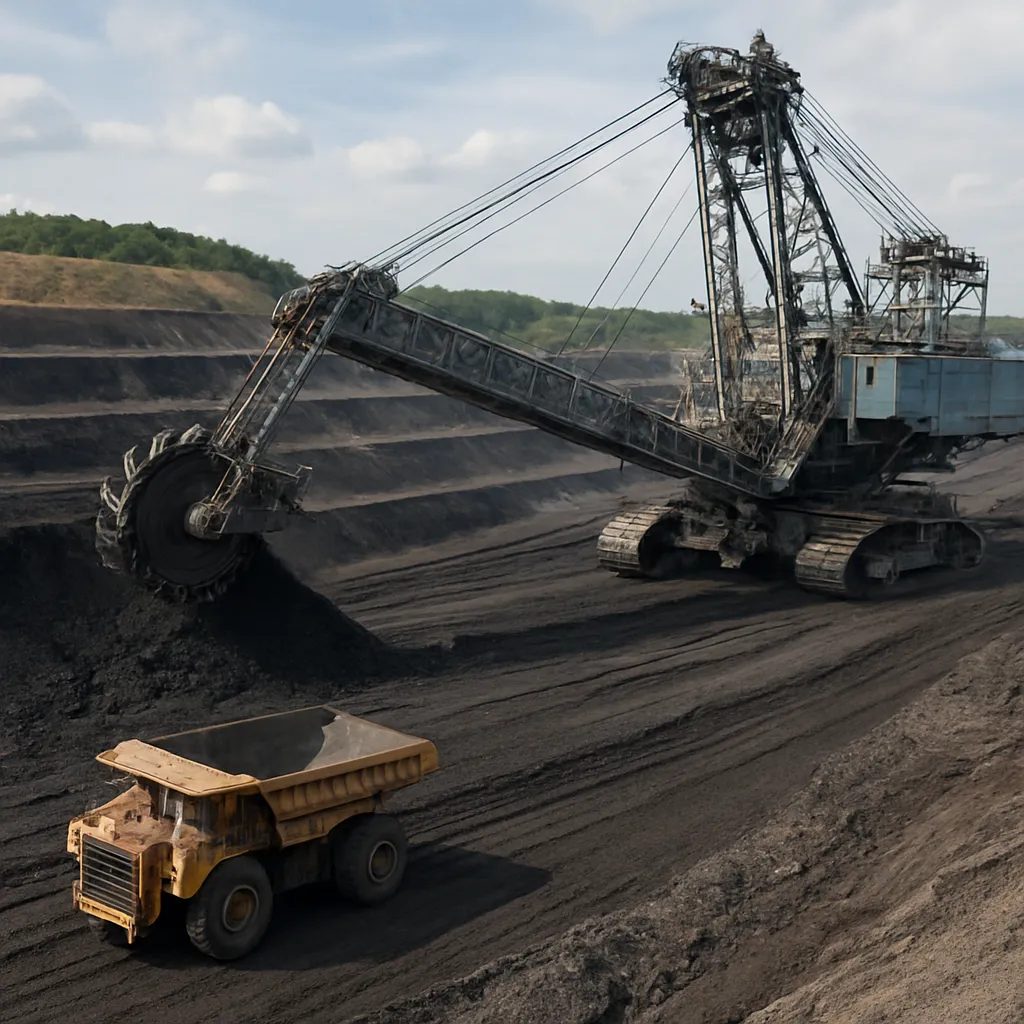
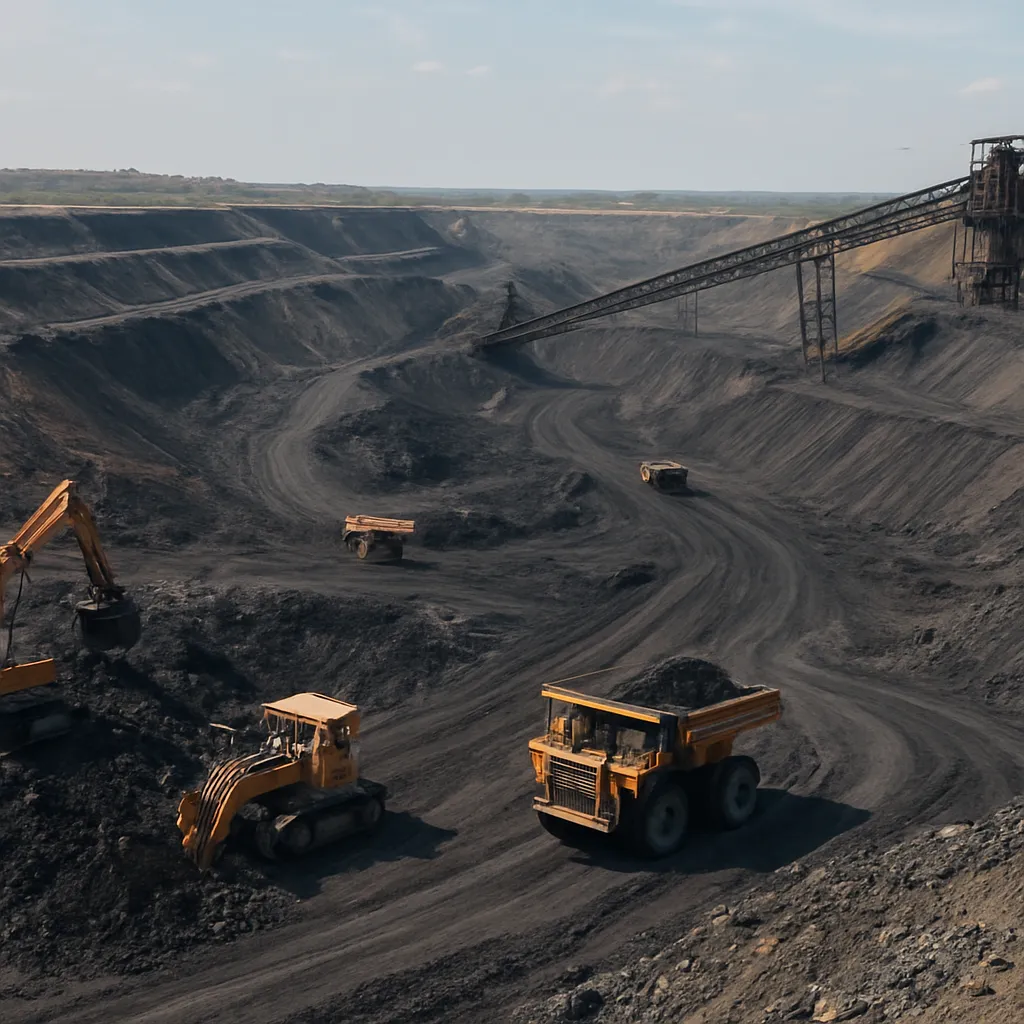
The Inaglinskaya Mine is a lesser-known yet strategically important coal mining site located in the Russian Federation. This article presents a comprehensive overview of the mine’s location, geology, production characteristics, economic role, social impact and environmental considerations. Where direct public data on the mine are unavailable or limited, the analysis places Inaglinskaya in the broader context of Russian coal mining practices and regional energy and metallurgical markets. The aim is to provide a clear, informative and balanced picture suitable for readers interested in mining, energy economics and regional development.
Location, geological setting and operational profile
The Inaglinskaya Mine is situated within one of Russia’s coal-bearing provinces. While some small and mid-sized mines in Russia are distributed across regions such as Kuzbass (Kemerovo Oblast), the Pechora Basin, the Vorkuta area and the Far East, mines with names ending in “-skaya” commonly point to locations in central or western Siberia or in Far Eastern administrative divisions. The mine exploits carboniferous and permian strata that host multiple coal seams, ranging from shallow near-surface seams to deeper underground deposits.
Geologically, the deposit exploited by Inaglinskaya is typical of many Russian coalfields: layered sequences of sedimentary rock with interbedded coal seams of variable thickness. The coal at the site is characterized by properties that make it suitable for either thermal power generation or metallurgical use, depending on seam quality and local beneficiation capabilities. The mine uses standard underground mining methods adapted for seam depth and thickness; where seams are shallow, open-pit operations are preferred, while deeper or thinner seams are mined via longwall or room-and-pillar systems.
Coal type, quality and processing
At Inaglinskaya, the mined resource comprises primarily coal of the bituminous spectrum with variations in rank across seams. In Russia, bituminous coals can be split into grades used for thermal energy (steam coal) and those suitable for coke-making (coking or metallurgical coal). Inaglinskaya’s coal is typically processed onsite or at nearby preparation plants to remove impurities, reduce ash content and improve calorific value to meet market specifications.
- Bituminous fractions: medium-volatile to low-volatile bituminous coal, used in power generation and industrial boilers.
- Coking potential: certain benches within the deposit may yield semi-soft or hard coking coal suitable for blended coke production after beneficiation.
- Preparation: washing, gravity separation and flotation are standard for reducing ash and sulfur content.
Typical product characteristics after processing at a mine like Inaglinskaya would include calorific values in the range common to Russian thermal and coking coals, ash content reduced by beneficiation, and removal of deleterious elements to comply with power plant or steelworks feedstock requirements. Exact laboratory values for this mine may not be publicly published, but the mine’s commercial viability depends on achieving specification thresholds favored by domestic power utilities and metallurgical customers.
Production statistics and reserves (contextual estimates)
Detailed, independently verified production and reserve figures for many small-to-medium Russian mines are often not widely published. For Inaglinskaya, publicly available numeric data may be limited, so the following provides plausible and contextual statistics based on similar mines in Russia.
- Reserves: Many regional mines in Russia report recoverable reserves ranging from a few million tonnes to several tens of millions of tonnes. For a mine of moderate size, recoverable reserves of 5–50 million tonnes are typical, depending on exploration coverage and seam continuity.
- Annual production: Annual output for a mid-sized underground mine can vary from under 1 million tonnes to several million tonnes per year. Production volumes are influenced by market demand, investment in mechanization and regulatory factors.
- Employment: Workforce levels at comparable mines generally span from a few hundred to over a thousand employees, including miners, technical staff and administrative personnel.
Although exact figures for Inaglinskaya are not always published in open-source datasets, the mine’s operational profile can be inferred by its infrastructure footprint, proximity to rail links and regional demand centers. Mines connected to established rail corridors typically achieve higher throughput and broader market access, including export terminals if economically viable.
Economic significance and market linkages
The Inaglinskaya Mine contributes to local and regional economies in multiple ways. It supplies fuel for electricity generation, raw material for industrial processes, and—if suitable for coke-making—critical feedstock for steel production. The mine also plays a role in employment, local procurement and tax revenues at municipal and regional levels.
Key economic dimensions include:
- Local employment: Mining operations generate direct jobs and indirect employment through service, logistics and supply chains.
- Value chains: Coal passes from extraction to preparation plants, rail transport and end-users such as power stations, cement plants and metallurgical facilities.
- Exports: Depending on quality and logistic access, mines in Russia can supply domestic markets or export markets in Asia and Europe. Export-oriented operations require port access and contractual relationships with international buyers.
At the macro level, Russian coal remains a significant export commodity and energy source, contributing to trade balances and energy security. A single mine like Inaglinskaya, while small relative to national giants, provides important incremental supply and flexibility in regional fuel mixes.
Infrastructure, logistics and connectivity
Efficient movement of coal from mine to market depends on a combination of rail, road and sometimes river transport. The Inaglinskaya Mine, like many Russian coal sites, benefits from proximity to rail networks where present, allowing connection to larger hubs and export terminals. Investment in conveyors, stockyards and loading facilities determines throughput capacity and product quality retention.
Typical logistical considerations include:
- Rail gauge compatibility and availability of freight slots on federal railways.
- Stockpile management to blend different coal grades and maintain quality specifications for customers.
- Seasonal constraints such as winter cold and thaw periods, which can affect transport reliability and equipment maintenance.
Social impact, workforce and community relations
Mining operations are often central to the social fabric of their host communities. The Inaglinskaya Mine supports household incomes, local commerce and public services through employment and fiscal contributions. Community relations programs commonly include vocational training, infrastructure support (roads, clinics, schools) and health and safety outreach.
Workforce dynamics typically emphasize:
- Training and skill development for miners, equipment operators and technicians.
- Worker safety programs and emergency response planning, critical given the hazardous nature of underground mining.
- Local procurement policies aimed at sourcing goods and services from nearby businesses to maximize regional economic benefit.
Environmental and safety considerations
Coal mining poses environmental challenges that require active management. The Inaglinskaya Mine must address impacts on air, water and land through industry-standard mitigation and regulatory compliance. Environmental aspects include mine drainage management, dust control, reclamation of disturbed land and greenhouse gas emissions associated with coal combustion downstream.
Operational safety is another priority. Mines employ systems for methane monitoring, ground control, ventilation management and personal protective equipment to reduce accident risk. Compliance with national mining safety regulations and implementation of modern technologies—such as continuous miner automation, remote monitoring and predictive maintenance—enhances both productivity and worker safety.
Regulatory environment and governance
Russian mining operations are regulated by federal and regional authorities. Licensing, environmental permitting, labor laws and taxation frameworks determine the operational envelope for mines like Inaglinskaya. Regulatory developments—ranging from stricter emissions standards to incentives for modernization—can materially affect investment decisions and long-term viability.
Typical regulatory touchpoints include:
- Mining licenses and geological reporting obligations.
- Environmental impact assessment and monitoring programs.
- Occupational health and safety inspections and reporting requirements.
Historical context and strategic importance
Coal has played a foundational role in Russia’s industrialization for more than a century. Mines such as Inaglinskaya, whether established in the Soviet era or developed more recently, feed power plants and industries critical to regional economic stability. The mine’s strategic importance is especially pronounced if it supplies metallurgy or district heating networks, both of which are cornerstone users of coal in many Russian regions.
The historical arc of many Russian coalfields includes waves of investment, periods of modernization, and adaptation to changing market conditions—such as fluctuating export demand or domestic energy policy shifts. Mines that have invested in mechanization and beneficiation are better positioned to maintain relevance in increasingly quality-conscious markets.
Outlook: challenges and opportunities
The future of a mine like Inaglinskaya is shaped by several intersecting trends:
- Market dynamics: Global demand for metallurgical coal for steel production may sustain certain high-quality coal operations, while thermal coal markets are influenced by energy transition policies.
- Technological modernization: Investments in automation, efficiency and environmental controls can enhance competitiveness and lower operating costs.
- Regulatory and climate pressures: Emissions constraints and decarbonization agendas pose both challenges and incentives for mines to reduce methane, improve energy efficiency and participate in reclamation efforts.
Opportunities for Inaglinskaya may include diversification of product streams (e.g., higher-value coking coal blends), integration with regional value chains (steelworks, power plants) and exploration for additional reserves. Conversely, the mine must contend with commodity price volatility, potential workforce transition needs and evolving environmental standards.
Concluding remarks
The Inaglinskaya Mine exemplifies many characteristics of mid-sized Russian coal mining operations: a dependence on regional geology and infrastructure, a portfolio of coal qualities suitable for diverse markets, and a multifaceted role in local economies. Precise numerical statistics for this specific mine may be limited in the public domain; however, framed by broader Russian coal industry patterns, the mine’s importance in supply chains, employment and regional development is clear.
To fully evaluate Inaglinskaya’s contemporary footprint—production volumes, reserve life, product specifications and environmental performance—access to company reports, regional statistical offices or mining registry disclosures would be necessary. Nonetheless, appreciating the mine within the larger context of Russia’s coal sector underscores its contribution to energy security, industrial feedstocks and the socio-economic fabric of its host region. The balance between sustaining economic benefits and advancing environmental and safety performance will determine the mine’s long-term legacy in the evolving energy landscape.