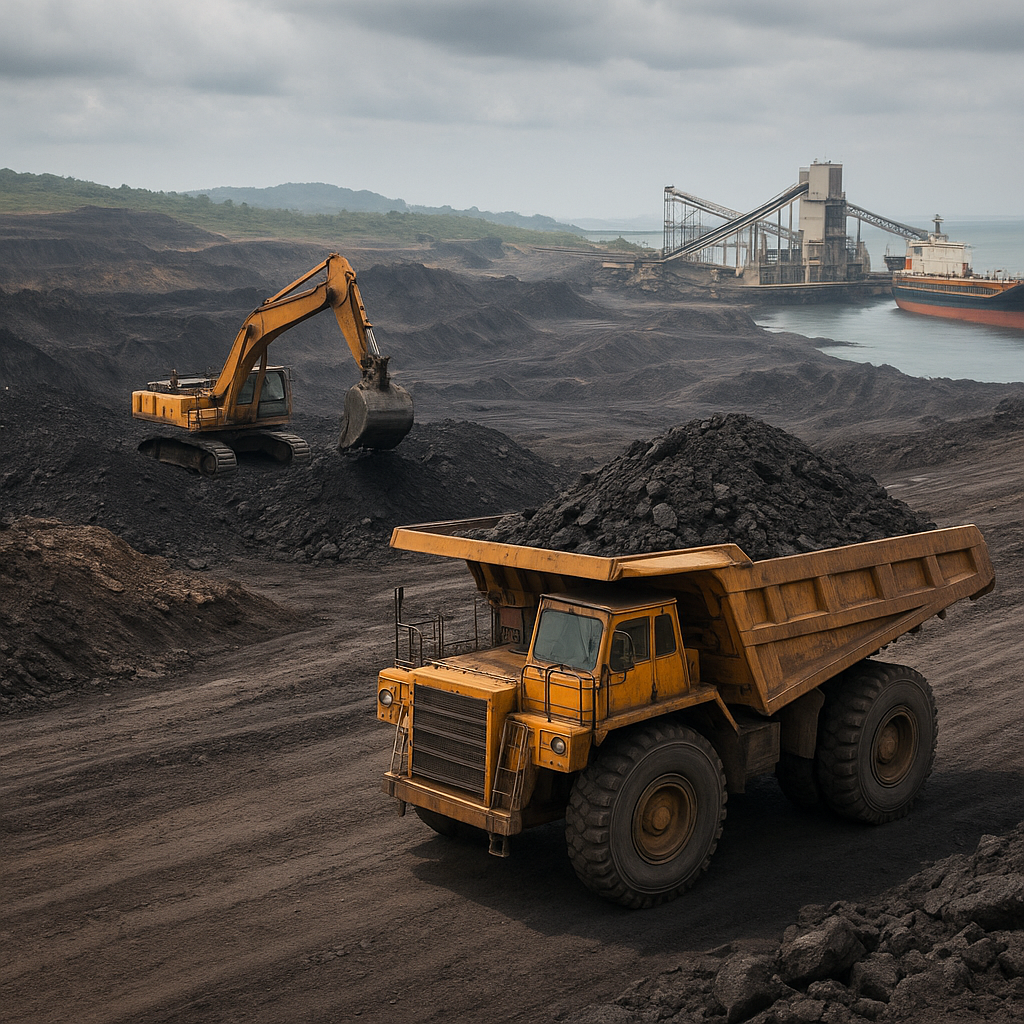
Coal has long powered industries, heated homes, and driven national economies. As one of the most abundant fossil fuels on Earth, its influence stretches from mining towns to global trading floors. This article explores the fundamentals of coal, the rise of Indonesia as a dominant exporter, the volatility of global stock markets related to coal, and the critical environmental debates shaping its future.
Coal Fundamentals and Key Classifications
Understanding the basic properties of coal is essential before delving into trade dynamics or stock valuations. This sedimentary rock, formed from plant remains over millions of years, comes in several grades defined by carbon content, moisture, and energy output.
Types of Coal: Thermal vs Metallurgical
- Thermal Coal: Also known as steam coal, primarily used for electricity generation. High calorific value and low ash content make it ideal for boilers.
- Metallurgical Coal: Also called coking coal, critical in steel production. Its ability to form coke under high heat drives the global steel industry.
- Anthracite: The highest grade with over 90% carbon content, offering exceptional energy density but harder to ignite.
- Sub-bituminous and Lignite: Lower grades with higher moisture and volatile matter. Often used in local power plants near mining sites.
Key Characteristics
Several factors determine the market value of coal:
- Calorific Value (CV): Measured in kilocalories or British Thermal Units, CV indicates the energy potential per unit mass.
- Volatile Matter: Impacts combustion behavior and emissions.
- Ash Content: Higher ash requires additional waste handling, raising costs.
- Sulfur Content: Influences environmental compliance and flue-gas desulfurization needs.
The Indonesian Coal Boom
Since the early 2000s, Indonesia has transformed into one of the world’s leading exports powerhouses. Rich reserves in Kalimantan and Sumatra, coupled with strategic policy reforms, propelled the nation from a regional supplier to a top global contender.
Policy Drivers and Infrastructure Development
- 2004 Mining Law Revisions: Opened the sector to foreign investment and eased export regulations.
- Port Expansions: New deep-water terminals reduced shipping bottlenecks and cut transit times to key markets like China and India.
- Rail and Conveyor Systems: Integrated mine-mouth developments minimized handling costs and improved reliability.
Domestic vs Export Consumption
While Indonesia maintains significant local consumption for power generation, over 60% of its coal output moves overseas. Major destinations include:
- China: The largest single buyer, driven by relentless industrial growth.
- India: Seeks affordable thermal energy to fuel rapid urbanization.
- Japan and South Korea: Depend on Indonesia for high-quality metallurgical grades.
Domestic power plants operate under regulated pricing, often less profitable than exports. That disparity fuels continuous emphasis on international markets.
Global Coal Stock Markets and Pricing Dynamics
The financial world tracks coal through commodity exchanges, futures contracts, and company stock listings. Price swings reflect supply disruptions, policy shifts, and macroeconomic trends.
Major Coal Benchmarks
- API2 and API4: European thermal coal indices quoted in Rotterdam and Amsterdam.
- Newcastle Coal Futures: Traded on the ICE exchange, representing Australian export prices.
- Platts Indices: Provide price assessments for various grades and delivery points worldwide.
Price Drivers
Several forces shape coal market values:
- Global energy demand: Economic expansion or contraction swiftly alters consumption patterns.
- Geopolitical Events: Sanctions, trade disputes, and conflicts in major producing regions can trigger sharp price spikes.
- Currency Fluctuations: Producers priced in local currency face margin volatility against the US dollar.
- Regulatory Changes: Stricter emissions standards or export restrictions can depress supply and lift prices.
Investing in Coal Stocks
Equity investors scrutinize coal majors and independent miners for growth potential. Key considerations include reserve life, cost of production, environmental liabilities, and dividend policies. While some see coal stock as a steady income play, others view it as a declining sector facing headwinds from renewables.
Environmental Impacts and Emerging Technologies
Coal’s reputation is inextricably linked to its environmental footprint. Balancing energy security with sustainability demands innovation and rigorous oversight.
Emissions and Climate Concerns
- Carbon Dioxide: Coal combustion accounts for roughly 40% of global CO₂ emissions.
- Air Pollutants: Sulfur oxides, nitrogen oxides, and particulate matter endanger public health.
- Water Use: Cooling processes and ash disposal impact local water resources.
Clean Coal and Carbon Capture
Technological solutions aim to mitigate environmental damage:
- Carbon Capture and Storage (CCS): Captures CO₂ emissions at the plant and stores them underground.
- Advanced Combustion Techniques: Ultrasupercritical boilers improve efficiency by operating at higher temperatures and pressures.
- Coal-to-Liquids (CTL): Converts coal into cleaner-burning synthetic fuels, though with its own carbon footprint challenges.
Transitioning to Renewable Energy
Many nations pledge to reduce coal dependence, shifting towards wind, solar, and hydro. Despite declining share in the energy mix, coal’s affordability and reliability make it hard to phase out completely, particularly in emerging economies.
Outlook for Coal in a Changing World
While environmental priorities and decarbonization efforts challenge the traditional coal industry, demand persists in regions where energy access remains a critical development goal. Innovations in mining efficiency, emissions control, and global trade agreements will shape the next decade of this centuries-old fuel’s journey. Investors, policymakers, and communities alike must navigate the balance between economic growth, investment returns, and the urgent need to protect our planet’s environment.