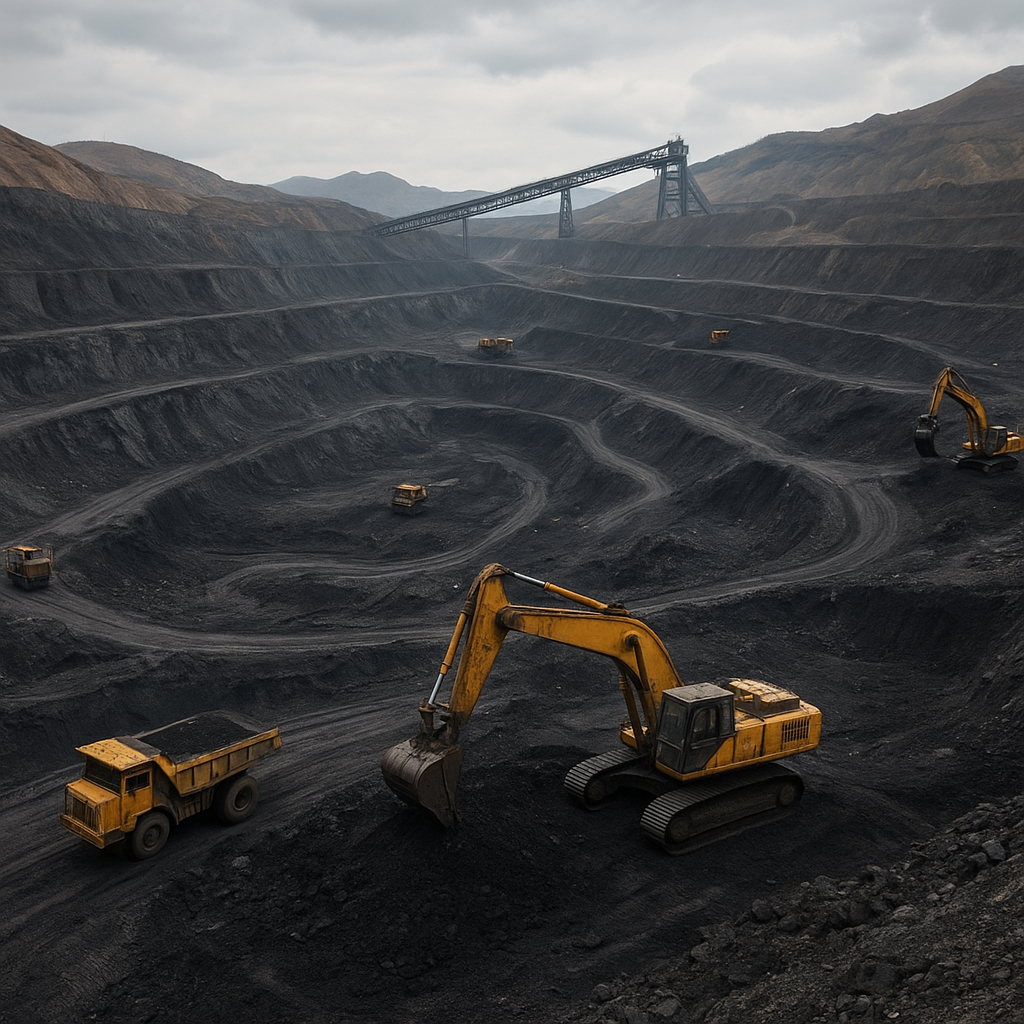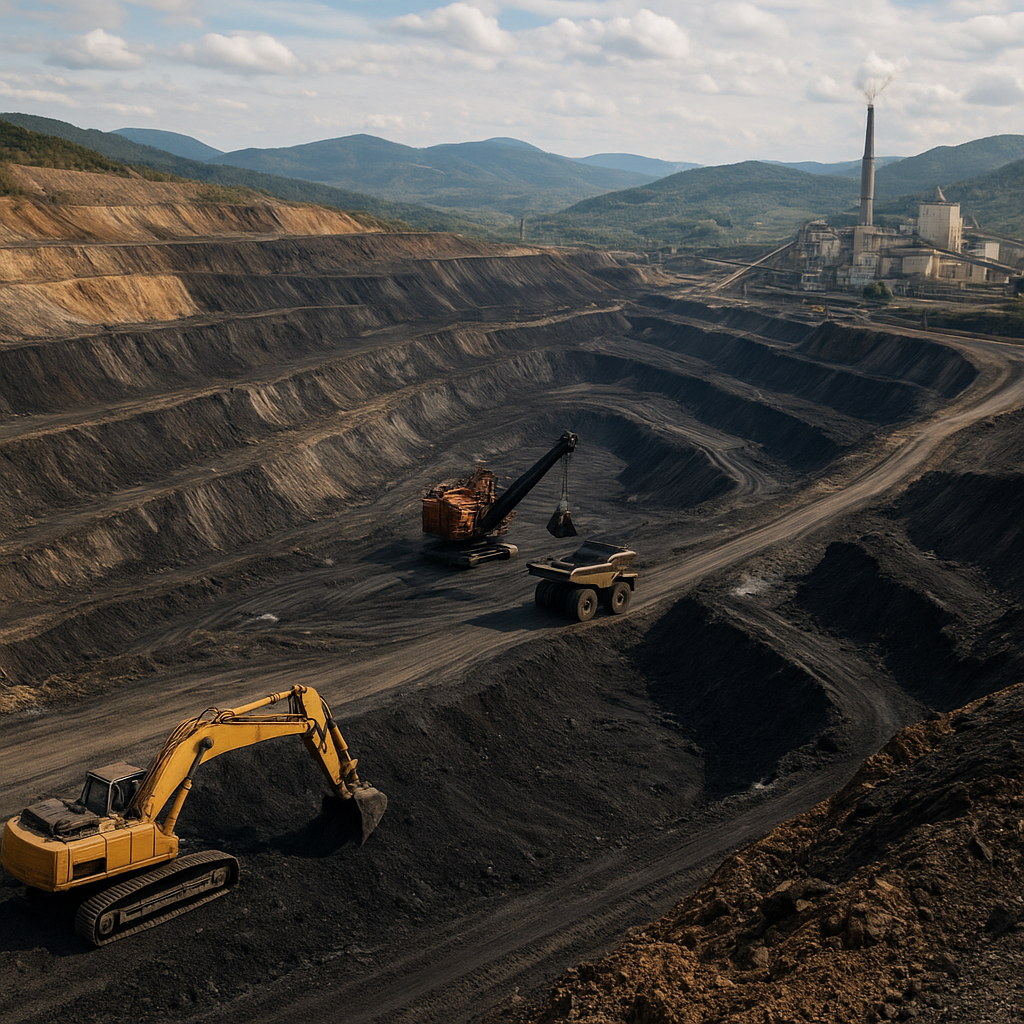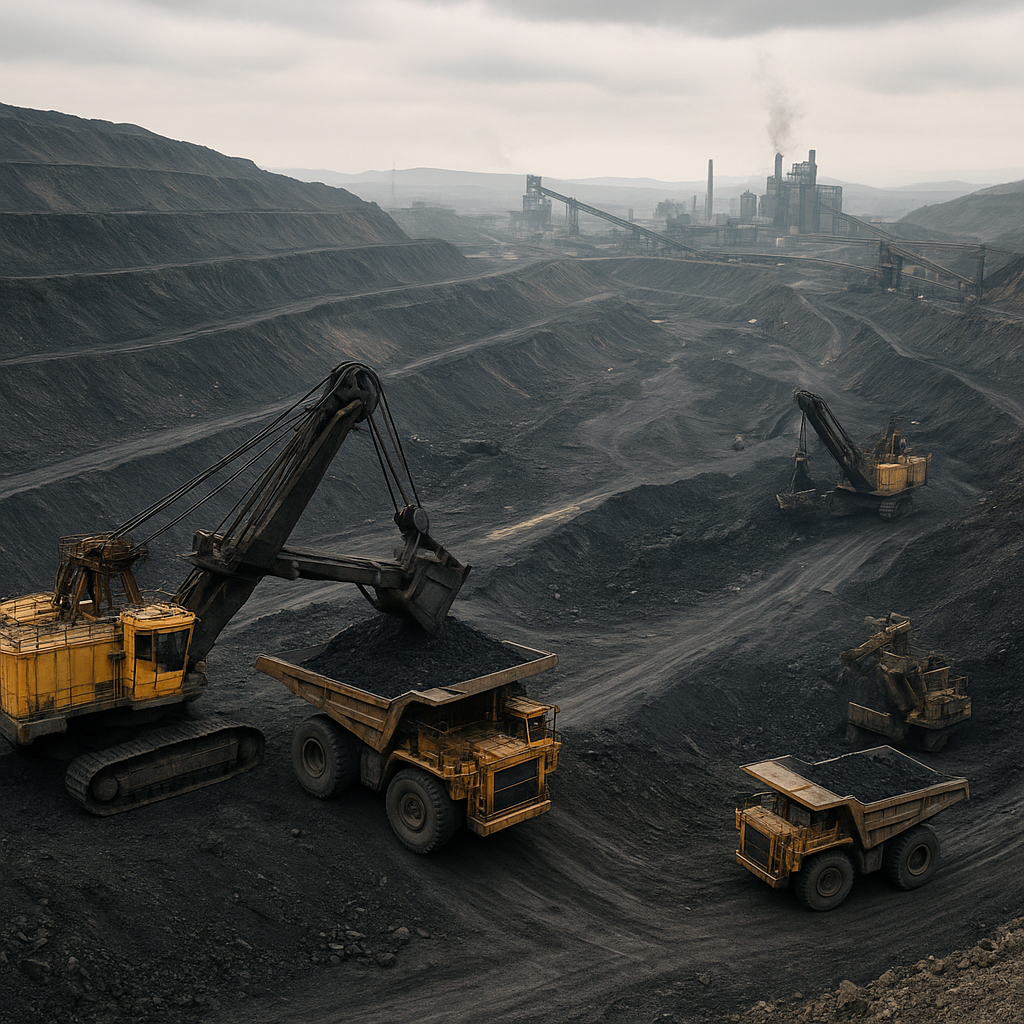
The Heidaigou Coal Mine is one of the many important coal-producing operations in northern China. Located within the coal-rich northern provinces, it has played a significant role in supplying coal for power generation, industrial use and regional economic development. This article provides a comprehensive overview of Heidaigou: its geographical setting and geology, the type of coal extracted, mining methods and production characteristics, economic and industrial significance, environmental and social aspects, and likely future developments. Where precise public statistics for the mine itself are limited, the discussion places Heidaigou in the context of regional and national coal industry figures.
Location and geological setting
Heidaigou is situated in the north of the People’s Republic of China, within the broader coal-bearing areas of northern China. These regions—especially the Inner Mongolia Autonomous Region and the adjacent parts of the Ordos Basin and surrounding basins—are among the country’s largest coal-producing zones. The mine lies within this geologically favorable territory where thick Permian and Carboniferous coal seams occur, often overlain by sedimentary sequences that make them accessible to both underground and surface mining techniques.
The coal deposits in the Heidaigou area typically belong to coal-bearing strata that formed during the late Paleozoic era. Stratigraphically and geologically, these seams are commonly characterized by multiple benches of variable thickness and continuity. Coal rank in this part of China ranges from sub-bituminous to medium-high-volatile bituminous types, depending on burial depth and thermal history. That geological context underpins both the mining methods chosen and the commercial uses of the coal extracted.
What is mined — coal quality and classification
The principal commodity at Heidaigou is, unsurprisingly, coal. The deposit is generally exploited for both local power generation and industrial feedstock. The coal type most commonly reported in similar mines of the region is thermal bituminous coal suitable for electricity generation, though portions of the resource may present qualities that are useful for metallurgical (coking) coal markets if coking properties are present after washing and blending.
- Typical calorific values for the region’s coal range from roughly 4,500 to 6,500 kcal/kg (air-dried basis), with ash and sulfur contents varying by seam. Higher-quality benches are preferred for steelmaking after processing.
- Coal seams in the area often require washing to reduce ash content and improve calorific value. Washed coal is more competitive in both power and industrial markets and reduces pollutant emissions per unit of energy.
- Methane content and spontaneous combustion potential are practical mining concerns in bituminous coal seams of northern China, and Heidaigou would address those through standard gas drainage and monitoring practices.
Mining methods, infrastructure and technology
Operations at modern Chinese coal mines in this region typically combine mechanized underground extraction with extensive surface infrastructure. Heidaigou is developed using contemporary mining technology adapted to local geology:
- Longwall and fully mechanized face equipment are commonly used where seam geometry and depth permit — longwall is efficient for continuous production and is the backbone of many large Chinese underground mines.
- Belt conveyors, high-capacity crushers and centralized coal handling plants support high-throughput operation. Mines in the region typically integrate on-site coal washing and sorting facilities to upgrade product quality for different markets.
- Rail and road links: the mine is connected to regional rail networks that move coal to nearby power plants, industrial consumers and, when relevant, to port facilities for further transport. Rail connectivity is a critical logistic advantage for mines serving distant customers.
- Modern safety and environmental systems — such as methane drainage, ground control monitoring and water management — are standard. In recent years, the industry has also adopted increased levels of automation and digital management (remote monitoring, predictive maintenance and process optimization).
Production scale and statistical context
Publicly available, mine-specific annual production figures for Heidaigou vary by source and can change year to year. Many mines of this regional class in northern China operate at an annual output that ranges from a few million tonnes to more than ten million tonnes depending on reserves, investment and mine life stage. Rather than attributing a precise figure without authoritative source confirmation, it is useful to place Heidaigou in the context of provincial and national coal production:
- China’s total coal output in recent years has been on the order of approximately 4 billion tonnes annually (rounded), making it the world’s largest coal producer and consumer.
- The northern mining provinces and autonomous regions — particularly Inner Mongolia, Shanxi, Shaanxi and Xinjiang — contribute a very large share of this production. Inner Mongolia alone has accounted for roughly 25–30% of national output in some recent years due to its extensive coal basins and large-scale mining projects.
- Given this context, a mid-to-large scale mine like Heidaigou would typically contribute several million tonnes per year to regional totals, and its reserves could be measured in the tens to hundreds of millions of tonnes depending on the extent of the coal seams and the defined economic resource.
These broad figures illustrate why individual mines located in major basins have significant aggregate impact on energy supply and regional economies even if each mine supplies a fraction of national totals.
Economic and industrial significance
Heidaigou’s value derives from several interrelated economic roles:
- Energy security: Coal remains a central pillar of China’s electricity generation mix. Mines such as Heidaigou supply fuel to thermal power plants that provide baseload generation, supporting households, industry and public services.
- Industrial feedstock: Coal is also an essential input for steelmaking, cement and chemical industries. If parts of Heidaigou’s production are suitable for coking or coal-to-chemicals processes after processing, that further enhances local industrial integration.
- Employment and local income: Mining operations create direct jobs in extraction, processing and maintenance, and indirect employment via services, transport and equipment supply. Wage income, royalties and local spending contribute to municipal or regional GDP.
- Transport and logistics: Coal flows from mines generate demand for rail and road freight services, which in turn encourages investment in logistic infrastructure and provides revenue for rail operators and local authorities.
- Fiscal contributions: Taxes, fees, and royalties from coal production are significant income sources for provincial and local governments and often finance public services and infrastructure projects in mining regions.
Environmental and social considerations
While economically important, coal mining also creates environmental and social challenges, many of which are relevant for Heidaigou and its neighbors:
Land disturbance and reclamation
Both surface and underground mining alter landscapes. Surface operations remove vegetation and soil horizons and require subsequent reclamation. Modern operations are expected to prepare progressive reclamation plans and restore land for agriculture, forestry or other uses after mining ceases.
Air quality and emissions
Burning coal is a major source of CO2 and, if high-ash coal is used untreated, increases particulate emissions and other air pollutants. Upgrading coal through washing and using emissions controls at power plants reduce these impacts. On-site dust control and covered transport reduce local pollution exposure.
Water use and pollution
Coal washing, dust suppression and mine dewatering require water management systems. Acid mine drainage and suspended solids risk require treatment before discharge. Modern mines apply closed-loop water systems and treatment plants to mitigate impact.
Mine safety and occupational health
Mining in China has seen dramatic safety improvements over decades, driven by regulation and technology. Ventilation, gas monitoring, remote operations and rigorous training programs address risks. Ongoing emphasis on safety culture continues to be a priority.
Social and regional development impacts
A mine like Heidaigou stimulates local economies in several ways:
- Direct employment and training opportunities for local workforces.
- Demand for housing, retail and services around mining towns.
- Funding of local infrastructure (roads, hospitals, schools) through taxes and community programs.
- However, social challenges can include boom-bust cycles linked to commodity prices, uneven distribution of benefits, and pressures on local services and the environment.
Innovation, modernization and mitigation efforts
In recent years, Chinese coal mining industry trends provide a glimpse into Heidaigou’s likely technological trajectory:
- Automation and digitalization: Remote-controlled longwall systems, automated conveyors, and digital process control improve efficiency and safety. Predictive maintenance reduces downtime and increases equipment life.
- Methane capture and utilization: Coalbed methane is both a hazard and a resource. Capturing methane from the mine or adjacent seams can supply natural gas or be used to generate electricity, reducing greenhouse gas emissions relative to uncontrolled venting.
- Coal quality improvement: Advanced washing, flotation and blended product strategies produce higher-quality coal tailored to power plants or metallurgical customers, improving combustion efficiency and reducing emissions.
- Carbon reduction technologies: Although coal remains carbon-intensive, there is growing interest in carbon capture, utilization and storage (CCUS) at power plants and industrial sites as part of broader emissions reduction strategies.
Regional and global context — why Heidaigou matters
Heidaigou is one of many mines that together underpin China’s industrial capacity. Its significance can be understood in several dimensions:
- Supply chain role: Mines like Heidaigou supply local power plants and factories, reducing dependence on long-distance supply and supporting regional industrial clusters.
- Macroeconomic contribution: By contributing to stable energy supplies and providing jobs, coal mines contribute to economic stability in regions that might otherwise struggle with limited employment alternatives.
- Strategic energy policy: Even as China expands renewables and nuclear, coal continues to be a key reliability source for the power system. Mines with significant production and logistics links therefore remain strategically important.
Challenges and outlook
The future of Heidaigou will be shaped by multiple, sometimes conflicting drivers:
- Policy pressures to reduce carbon emissions and improve air quality encourage slower growth or phased reductions in coal use, but energy security concerns and industrial demand sustain coal’s role in the near- to mid-term.
- Technological improvements in mining productivity and emissions controls can extend mine life and reduce environmental footprint, but they require investment and strong regulatory oversight.
- Market dynamics — including coal prices, alternative fuels, and domestic demand for steel and chemicals — will influence production levels and investment decisions.
- Social license and community expectations: meaningful community engagement, fair benefit-sharing and strong environmental management will be critical to maintaining operations and enabling a socially responsible transition planning for mine closure and post-mining land use.
Interesting facts and additional observations
- Mines in northern China have been at the forefront of rapid mechanization in the coal sector; Heidaigou’s operations reflect the industry’s shift toward higher productivity and stronger safety standards.
- The presence of integrated facilities (washing plants, power plants nearby, and rail links) often amplifies a mine’s economic importance because processing and transport capacity enable more reliable market access.
- Heidaigou’s operational choices—such as combining underground longwall faces with enhanced methane capture—mirror broader industry trends where hazard control and resource optimization proceed in parallel.
- Reclamation and land-use planning after mining can convert former mining areas into agricultural land, industrial parks or ecological reserves, depending on local priorities and rehabilitation investment.
Concluding summary
Heidaigou is representative of the economically significant coal mines in northern China that supply large quantities of coal for electricity generation and industry. Operating in a geologically favorable part of the country, its extraction focuses on bituminous, predominantly thermal coal, with portions potentially suitable for metallurgical use after processing. While specific mine-level statistics can vary by year and reporting source, the mine’s importance lies in its contribution to regional employment, fiscal revenues, and the energy supply chain. At the same time, Heidaigou faces environmental, safety and social challenges common to coal operations. Its near-term future will likely involve continued mechanization and improvements in gas management and emissions controls, while longer-term prospects will be shaped by China’s energy transition policies, market demand and technological advances in cleaner coal use and carbon mitigation.
Key terms emphasized in the text: Heidaigou, coal, Inner Mongolia, longwall, reserves, production, thermal, metallurgical, rail, automation.