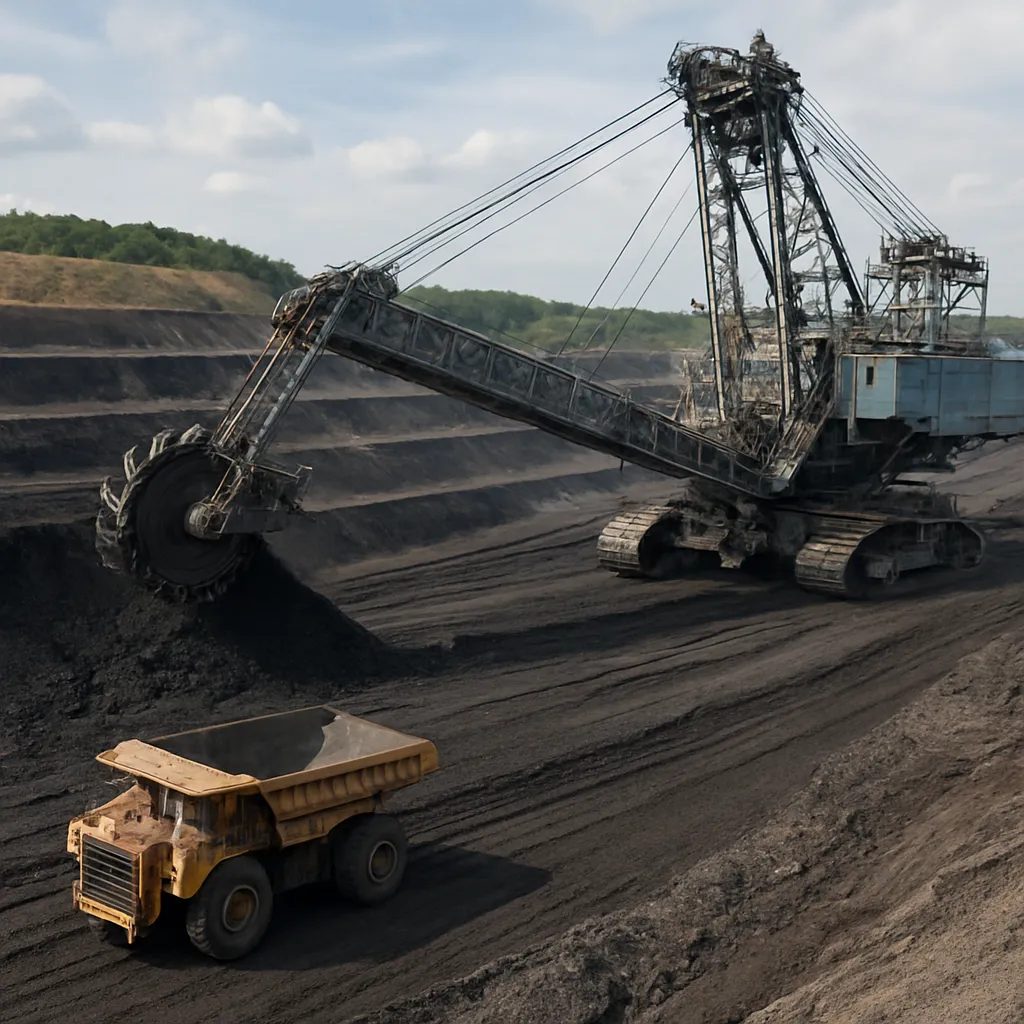
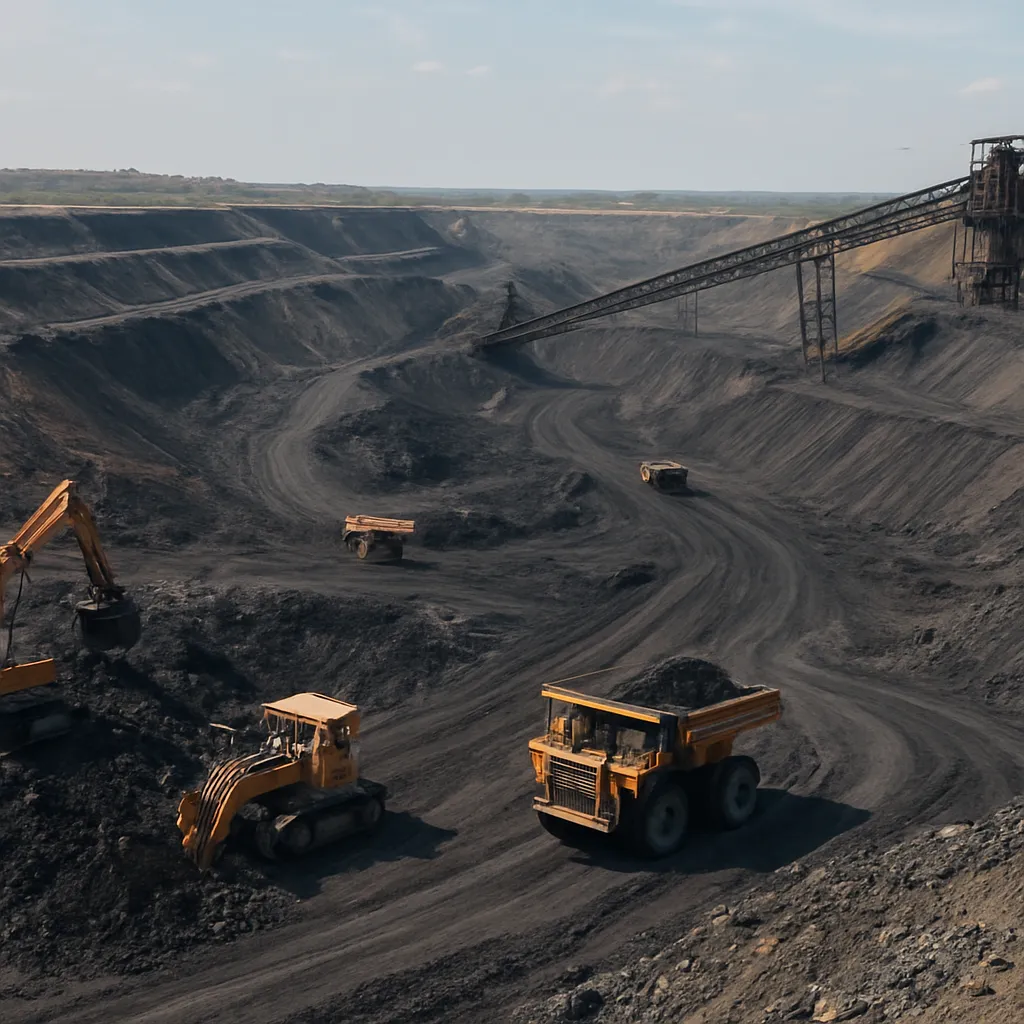
The Donkin coal mine, located on Cape Breton Island in the province of Nova Scotia, is one of the most discussed contemporary coal projects in Atlantic Canada. Its development, short operational history, and the debates around its economic and environmental implications make Donkin a useful case study in modern resource extraction in a region with deep historical ties to mining. This article examines the mine’s location and geology, operational history, production and reserve estimates, economic and social impacts, environmental and regulatory context, and prospects for the future.
Location and geological setting
The Donkin mine is situated near the community of Donkin and close to the town of Cape Breton’s former coal towns on the eastern side of the island, in northeastern Nova Scotia. The coal deposit lies within the Sydney Coalfield, a geologically distinct basin that has supported mining for more than a century. The field is characterized by Carboniferous-age sedimentary sequences in which multiple coal seams occur at shallow to moderate depth.
Geologically, the Donkin deposit is part of a sequence of coal-bearing strata developed in a coastal-plain to deltaic environment during the Carboniferous period. Coal from this region is typically classified as bituminous to medium-grade thermal coal, with variable properties depending on seam and depth. In many public descriptions the coal at Donkin has been characterized as suitable for electricity generation (steam or thermal coal) and, in some portions, as having properties that can be attractive to metallurgical or coking coal markets after blending or processing.
Key geological points:
- The deposit is accessible by underground methods rather than large open pits because seams are relatively deep in many places.
- The coal seams in the area have been historically mined and are well mapped; modern exploration confirmed continuity of coal horizons near Donkin.
- Coal quality varies by seam, with sulphur and ash content typically low-to-moderate compared with some other global basins, an advantage for certain markets.
History, ownership and development
Mining has shaped Cape Breton’s communities for more than a century, and Donkin is part of a long lineage of coal activity in the region. The modern Donkin project represents renewed interest in the Sydney Coalfield after periods of closure and decline in the late 20th century. The project was advanced in the 2000s and 2010s by private companies and development groups focused on reopening and modernizing access to local coal resources.
The site was developed as an underground mine with a significant capital investment by a private operating company. Operations at Donkin began in the late 2010s after permitting, financing, and construction. The mine was operated by a company that marketed coal domestically and for export, utilizing regional port infrastructure in Nova Scotia to reach international markets. In the course of its recent history, Donkin attracted attention because of its potential to create jobs in a region that had experienced industrial decline, and because of broader debates about the role of fossil fuels in a decarbonizing world.
Ownership, corporate structure and development financing have included:
- Private equity and coal-industry investors who funded the mine’s development and equipment purchases.
- Local contractors and service companies employed for construction, road and rail works, and site services.
- Engagement with provincial and local authorities for permits, environmental assessments and community consultation.
Mining method, infrastructure and production
The Donkin operation was designed as an underground coal mine, taking advantage of modern mechanized underground mining equipment. Typical methods for similar deposits include room-and-pillar and longwall extraction. The precise combination of methods used in Donkin depended on seam geometry, safety, and economic considerations.
Surface infrastructure for Donkin included:
- Mine portals, declines or shafts for worker and equipment access.
- Coal handling and processing facilities such as crushers, conveyors and stockpiles.
- Rail or road connections for transport to regional ports—most commonly the Port of Sydney or other Nova Scotia terminals—for export or domestic delivery.
Production figures for Donkin have varied with market conditions and operational decisions. Early-stage output targets set by developers and operators were conservative and intended to ramp up as the mine settled into stable operations. Publicly reported estimates and media coverage described initial production in the low hundreds of thousands of tonnes per year during active periods, with the potential to increase if market conditions justified higher throughput. Recoverable reserves quoted in various documents and presentations have varied considerably depending on assumptions about seam continuity and economic cutoffs, with reported figures often described in terms such as “several million tonnes of recoverable coal.”
Reserves, coal quality and markets
Reserve estimates for Donkin depend on the technical definitions—measured, indicated and inferred—and on the cut-off price assumed for economically recoverable tonnage. Various public statements over time described the mine as hosting recoverable reserves sufficient to sustain operations for several years at the projected production rates, though precise publicly confirmed numbers have varied.
Coal quality at Donkin can be summarized as follows:
- Typical classification: bituminous/medium-volatile coal, often marketed as thermal coal for power plants but with certain seams amenable to other uses.
- Heat content: moderate to good—competitive with many Atlantic-coast coals.
- Impurities: sulphur and ash contents are generally moderate to low, making the product attractive in markets with emissions or quality considerations.
Markets targeted by the mine included domestic utilities and industrial customers, and international buyers via Atlantic Canadian ports. Export buyers often come from Europe, Latin America, or Asian markets where shipping economics and coal specifications align with Donkin’s product. The Port of Sydney and other regional handling facilities provide the logistical link between mine and market; the port’s ability to handle Panamax and Handymax shipments makes it a strategic asset for exports.
Economic and social impacts
The Donkin mine has had multiple types of economic and social effects on Cape Breton and the wider Nova Scotia economy. A working mine brings capital investment, employment, and indirect benefits to local businesses that supply goods and services. In a region that experienced job losses in traditional industries during the late 20th and early 21st centuries, the potential for long-term mining jobs and associated training programs was politically and socially significant.
Main economic impacts include:
- Employment: At active stages the mine employed a workforce composed of miners, technical staff, engineers, maintenance crews, and administrative personnel. Public reports and employer statements commonly referenced direct employment in the low hundreds, with additional indirect and induced jobs in service sectors and among contractors.
- Capital investment: Development of the mine and its associated infrastructure required tens to low hundreds of millions of Canadian dollars in capital expenditure—covering underground works, equipment, buildings, and transport links.
- Local procurement: Local contractors for construction, haulage, and services benefited from supply contracts, boosting municipal tax revenues and small business income.
- Taxes and royalties: The operation contributed to provincial revenues through corporate taxes, property taxes, and mining royalties as prescribed by Nova Scotia’s fiscal framework for mineral resources.
Socially, Donkin’s presence renewed community conversations about mining heritage, workforce re-skilling, and intergenerational continuity in mining towns. The mine also served as a focal point for public debate between those emphasizing local economic revival and those concerned about environmental and public-health implications of new coal production in a warming world.
Environmental considerations and regulatory framework
Environmental reviews and community consultations were part of Donkin’s permitting process. As with any modern mineral development, the mine faced scrutiny over potential impacts on water resources, air quality, biodiversity, and climate. Key environmental issues included:
- Surface water and groundwater protection from contact with mine drainage or processing areas.
- Air emissions including particulate matter and potential fugitive dust from stockpiles, handling, and shipping.
- Noise and traffic impacts associated with mine operations and transport to ports.
- Greenhouse gas emissions associated with coal combustion at the point of use and with the mine’s own energy consumption and transport.
Regulatory oversight was provided at multiple levels:
- Provincial regulators (e.g., the Nova Scotia Department of Natural Resources and Energy) for mineral permits, mines safety and environmental approvals.
- Municipal and regional authorities for local permits, road use agreements and community requirements.
- Federal agencies in cases of marine shipping, fisheries interactions, or interprovincial trade and export where federal jurisdiction applies.
Mitigation measures implemented or proposed included water treatment systems, dust-control programs, progressive reclamation plans for disturbed areas, and monitoring programs designed to detect any unexpected impacts on wildlife or fisheries. The mine’s environmental management system was intended to align with provincial requirements and industry best practices, though local advocacy groups and independent scientists sometimes requested more stringent monitoring and public reporting.
Statistical snapshots and publicly reported figures
Numbers reported about Donkin have tended to be presented by company releases, provincial statements, and media reporting. Commonly cited or referenced figures in various public documents include:
- Employment: direct employment often cited in the range of about 150–300 people during active production phases, with additional indirect employment in supporting industries.
- Production: early-stage annual production reported in the low hundreds of thousands of tonnes, with development plans and feasibility work that referenced possible scaling depending on market demand.
- Capital costs: development capital described in public materials as being in the tens to low hundreds of millions of Canadian dollars, reflecting underground mine construction, surface infrastructure and equipment.
- Reserves: public and technical summaries variably reported recoverable reserves in terms of several million tonnes, though exact figures vary by source and classification.
Because reserve and production statistics depend on operational decisions, commodity pricing, and regulatory approvals, readers should interpret any single-number estimate as provisional. Companies and regulators periodically update these figures as exploration, mining, and market conditions evolve.
Role in the regional and national energy/industrial context
Donkin occupies a particular niche in Canada’s coal sector. While Canada has major coal-producing provinces in the western Prairies (notably British Columbia and Alberta) focused on metallurgical and thermal coal, the Sydney Coalfield and Donkin represent a smaller, regionally important source of Atlantic coal. The mine’s strategic relevance includes:
- Supporting regional energy and industrial needs where locally mined coal can displace imported supplies.
- Providing export tonnage that contributes to Nova Scotia’s trade activity, using local port infrastructure such as the Port of Sydney.
- Demonstrating how modern, mechanized underground coal production can be pursued in Atlantic Canada with a focus on community employment and operational safety.
At the same time, Donkin illustrates tensions between short- to medium-term economic benefits from resource extraction and long-term policy goals for decarbonization. Governments, companies, and communities must weigh immediate social benefits against the global push to reduce reliance on fossil fuels.
Community response, labour and social license
Local reaction to the Donkin mine has been mixed, reflecting the complex social landscape of a region where coal mining formed the backbone of many community identities. Supporters emphasized job creation, local investment, and continuity with regional mining heritage. Skeptics and opposition groups raised concerns about environmental impacts, global climate commitments, and potential health effects from coal dust and air emissions.
Labour dynamics included engagement with unions, vocational training programs to develop a skilled mining workforce, and efforts to ensure safe working conditions aligned with provincial mining safety regulations. The mine’s social license depended on transparent communication, tangible local benefits, and a record of environmental compliance.
Challenges, market forces and interruptions
Like many coal projects worldwide, Donkin has been sensitive to global market cycles, transport logistics, and regulatory changes. Key challenges encountered or reported included:
- Fluctuating global demand for thermal coal, particularly as many large buyers shift to low-carbon alternatives or impose stricter environmental criteria.
- Shipping cost variability and competition for tonnage on shared port infrastructure.
- Community and environmental scrutiny that can slow permitting or require additional investment in mitigation.
- Operational interruptions when market or regulatory conditions necessitate scaling back production.
These factors led to intermittent periods of higher activity and reduced operations. For regional planners and investors, such cyclicality highlights the importance of diversification and contingency planning in resource-dependent communities.
Future prospects and strategic considerations
The future of Donkin will depend on a combination of market demand, regulatory decisions, company strategy, and community support. Strategic considerations include:
- Whether the mine can secure long-term contracts that justify investment in higher production rates and employee retention strategies.
- How provincial and federal energy and climate policies evolve, especially if policies accelerate the shift away from thermal coal.
- Potential for product diversification or value-added processing that could open new markets (e.g., specialized coal blends or beneficiation to meet metallurgical quality requirements).
- Investment in emissions-control technologies, reclamation and biodiversity programs to strengthen the operation’s environmental performance and social license.
Opportunities also exist for local economic spillovers: training programs that equip workers with transferable skills, partnerships with research institutions to improve environmental management, and leveraging port and rail infrastructure for other commodities if coal demand declines.
Interesting facts and broader context
Several points make Donkin noteworthy beyond the immediate technical and economic details:
- Historical continuity: Donkin sits within a coalfield that has been mined for over a century, linking modern operations to a deep industrial heritage.
- Regional significance: even though production volumes are modest relative to major global coal basins, Donkin’s impact is amplified in a regional economy that has fewer large-scale natural-resource projects today than in the past.
- Logistical advantage: proximity to Atlantic shipping routes gives Donkin a potential export edge compared with interior coal producers in terms of direct sea access to Europe and the Americas.
- Demonstration value: Donkin provides a case study on how small-to-medium-scale underground coal operations can be structured in the 21st century, including modern safety and environmental practices.
Conclusion
The Donkin coal mine illustrates both the persistent local importance of coal in certain regions and the broader global transition challenging the economics of thermal coal. With underground mining methods, regional port access, and a workforce drawn from Cape Breton communities, Donkin has delivered tangible local economic benefits when in operation. At the same time, market volatility, regulatory pressures, and environmental concerns have constrained and complicated its trajectory.
For stakeholders—companies, governments, workers and residents—Donkin highlights the balancing act between leveraging natural resources for regional development and adapting to a changing energy landscape that increasingly values low-carbon pathways. The mine’s medium-term future will hinge on market contracts, policy settings, and the ability of operators to demonstrate strong environmental performance while delivering reliable economic benefits to the local community.