The following article provides a comprehensive overview of the Dipka mine in India, covering its location, geology, the type of coal produced, operational and economic roles, social and environmental impacts, and its place in the broader Indian coal industry. Emphasis is placed on practical information for readers interested in mining, energy supply chains, regional development, and sustainability challenges. The text synthesizes commonly available industry knowledge and cautious interpretations of public data; where precise year-by-year statistics vary, ranges and contextual indicators are used to reflect typical conditions at Dipka and comparable mines in the Korba region.
Location, Setting and Geological Context
The Dipka Mine is located in the Korba district of the Indian state of Chhattisgarh, within one of India’s most important coal-bearing regions. Korba lies in the northeastern part of Chhattisgarh and forms a core of the country’s thermal coal production corridor. Dipka is one of several large open-pit operations in the Korba-Katghora coalfield system, which also includes well-known mines such as Gevra and Kusmunda.
Geologically, the mine exploits coal seams of the Gondwana sequence. The coal in this part of central India is typically of Permian–Carboniferous origin and belongs to the series of deposits that form India’s major inland coal basins. These seams are generally laterally extensive but can vary in thickness and quality. The coal produced at Dipka is primarily used for thermal power generation, and it typically exhibits characteristics common to many Indian Gondwana coals: appreciable ash content and moderate to high moisture, with calorific values often suitable for large-scale steam and power applications after standard beneficiation or direct use by proximate power plants.
Mining Method, Operations and Infrastructure
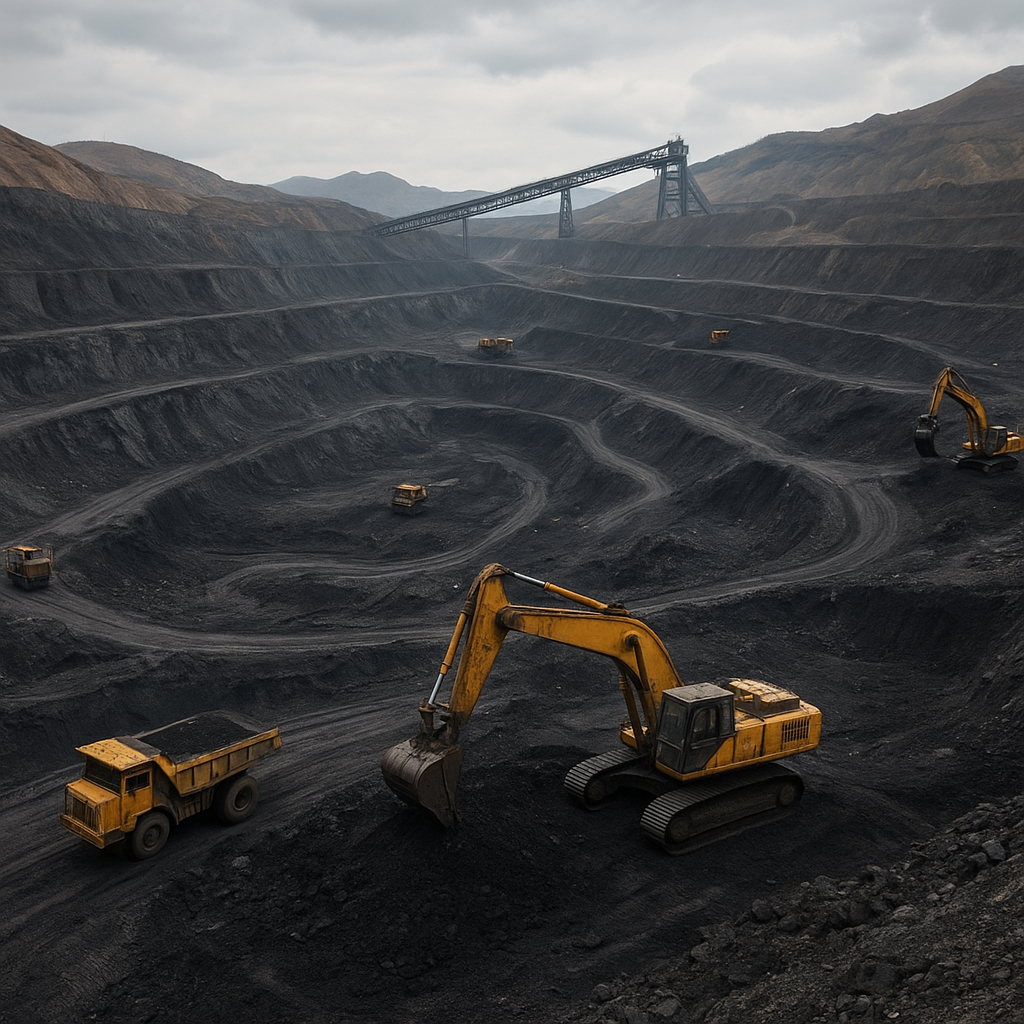
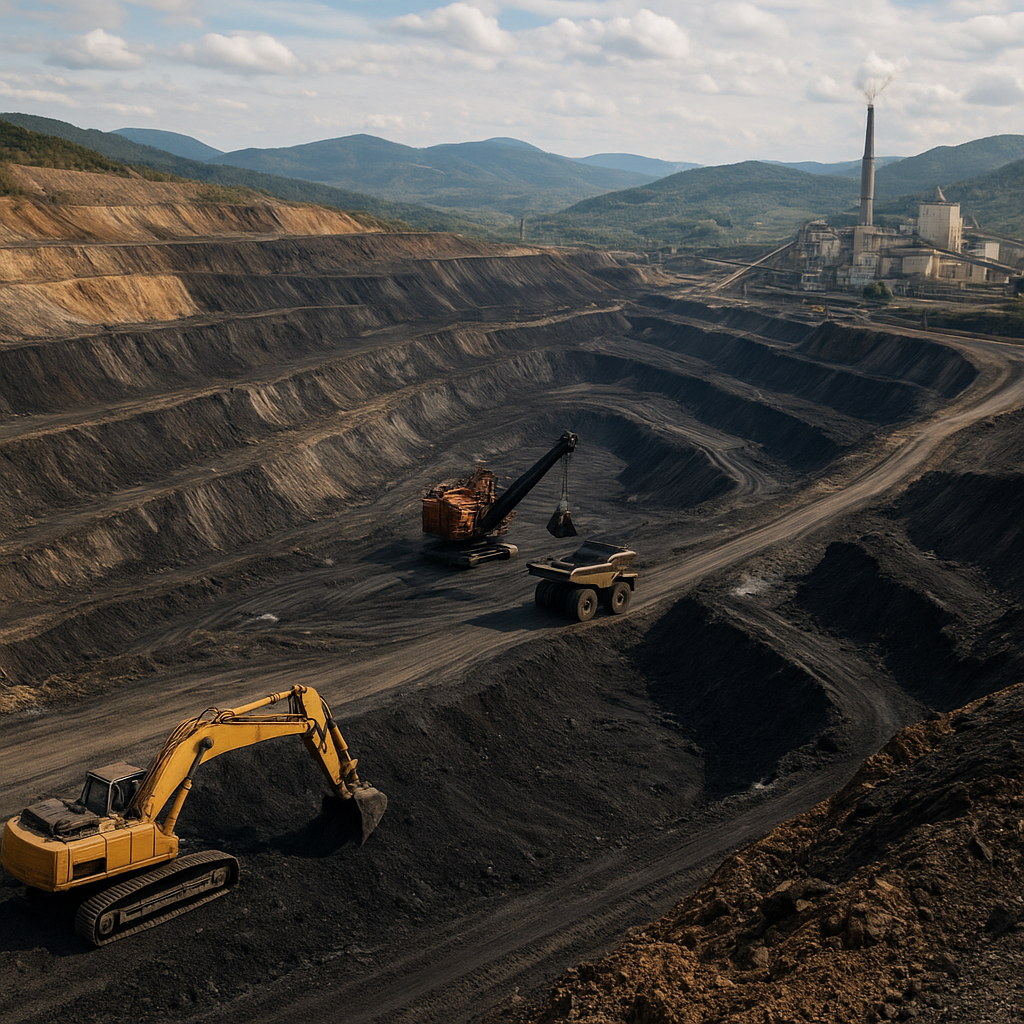
Dipka operates primarily as an open-cast (open-pit) mine, employing surface mining techniques that include topsoil stripping, overburden removal, drilling, blasting, loading and hauling using heavy earthmoving fleets. Open-cast methods are preferred in the region because the coal seams lie at shallow to moderate depths, allowing cost-effective mechanized extraction at relatively high rates compared with underground mining.
Key operational elements
- Overburden management and progressive rehabilitation of mined-out areas.
- Large-scale use of hydraulic excavators, shovels, dump trucks and dozers to maintain continuous production flows.
- On-site coal handling and processing: screening, crushing and in some cases simple beneficiation to reduce impurities before dispatch.
- Dedicated rail and road links that connect the mine to nearby thermal plants and national rail networks for onward transport to other industrial users.
Infrastructure supporting the mine includes workshops, fuel and lubricant depots, on-site laboratories for quality control, weighbridges, and water management systems for dewatering and dust suppression. For safety and operational efficiency, the mine follows modern practices in pit geometry, slope stability monitoring and controlled blasting schedules.
Coal Quality and End Uses
The coal extracted at Dipka is predominantly thermal coal (non-coking coal) intended for electricity generation and other industrial steam processes. Typical quality parameters for Korba-region thermal coal, applicable to Dipka in general terms, include:
- Rank: sub-bituminous to bituminous (Gondwana coal), depending on seam.
- Calorific value: generally in the mid-range for Indian thermal coals (commonly a few thousand kcal/kg; actual values vary by seam and washability).
- Higher ash content relative to many imported thermal coals — ash can be significant and often necessitates blending or beneficiation prior to firing in thermal power plants.
- Moisture and volatile matter typical of coal used for pulverized combustion; sulfur levels are usually moderate to low, but ash characteristics dominate environmental and handling concerns.
Major end users are large thermal power stations located with the Korba industrial complex and other regional power utilities. Because of proximity, Dipka coal offers logistical advantages for local power generation, reducing transportation distances and costs compared with imported coal or coal sourced from distant basins.
Ownership, Management and Historical Background
Dipka mine is part of the broader coal production system in central India. Historically, mines in Korba have been developed under public-sector firms, principally companies associated with Coal India and its subsidiaries, most notably South Eastern Coalfields Limited (SECL) which manages a substantial portfolio of opencast and underground mines in Chhattisgarh and neighboring states. Over the years, operational models have combined central planning, state coordination and supplier contracts with major power utilities.
Development of the Dipka site followed regional expansion of coal extraction in the late 20th and early 21st centuries to meet rapidly growing power demand. Project implementation typically included phased expansion of mine capacity, land acquisition and resettlement programs, and investments to integrate mine output with nearby power plants via rail sidings and conveyor systems.
Production, Reserves and Statistical Notes
Precise production figures for the Dipka mine change year to year and are reported periodically by company and government publications. Annual coal output from an opencast mine of Dipka’s scale typically falls in the range of several million tonnes per year, though actual values depend on the sanctioned capacity, working plan phases, seasonal constraints (e.g., monsoon impacts), and operational interruptions. The Korba region as a whole contributes a substantial fraction of the state and national thermal coal production.
Reserve estimates for coal mines are normally classified under national reporting standards (proven, probable) and can change due to exploration, re-evaluation of seam quality, and changes in economic cut-offs. Dipka’s mineral inventory has historically supported multi-decade operations at prevailing extraction rates, but like many Indian mines, longevity depends on phased mining plans and environmental clearances. Because official, up-to-date reserve and annual production figures are published by the operating company and government bodies, readers seeking precise year-specific statistics should consult the latest annual report of the relevant mining company or the Ministry of Coal’s statistical releases.
Economic and Industrial Importance
Dipka plays a multifaceted role in local and regional economies. Its immediate economic contributions include direct employment, procurement of goods and services from local suppliers, and inflows of royalties and taxes that support state revenues. More broadly, the mine is a critical link in the fuel supply chain for thermal power generation in the Korba complex — a major electricity-producing hub that powers industries, urban centers and contributes to grid stability in central India.
Key economic contributions:
- Reliable fuel feedstock for coal-fired power plants, supporting baseload generation and industrial operations.
- Creation of direct and indirect jobs across mining, transport, maintenance and supply services.
- Regional development through infrastructural investments — roads, rail spur lines, and utilities associated with the mine.
- Fiscal revenues in the form of royalties, taxes and lease payments to state and central governments.
At a national level, mines like Dipka underpin energy security by providing domestic coal that reduces dependence on imports for thermal power stations. This has both macroeconomic and strategic value for India’s growing energy needs.
Social, Environmental and Regulatory Considerations
Large opencast mines such as Dipka inevitably raise significant environmental and social questions. Key concerns include land acquisition and displacement, loss of forest and agricultural land, air and water pollution, and impacts on local livelihoods. In the Indian regulatory context, mining projects must comply with environmental clearances, which require environmental impact assessments (EIAs), public consultations, plans for resettlement and rehabilitation (R&R), and commitments to progressive mine closure and land restoration.
Environmental issues commonly observed
- Airborne dust from blasting, excavation, and haulage — controlled by dust suppression (water spraying), green belts and enclosed conveyors where possible.
- Water management challenges — dewatering of pits, management of mine runoff, potential impacts on groundwater and surface water quality.
- High ash generation from combustion where coal is used; ash disposal and ash pond management become regional environmental management tasks.
- Loss of biodiversity in initially forested or ecologically sensitive areas, requiring compensatory afforestation and conservation measures.
Social issues include fair and timely compensation for landowners, livelihood restoration programs, employment and training for displaced communities, healthcare and education initiatives funded by mining companies, and ongoing community engagement forums. Effective implementation of R&R plans and corporate social responsibility (CSR) initiatives remain central to maintaining social license to operate.
Safety, Technology and Modernization
Safety management at opencast mines focuses on controlling slope stability, ensuring safe blasting practices, vehicle movement management, and continuous monitoring of equipment and personnel. Modernization efforts often include fleet telematics, use of higher-capacity shovels and trucks, beneficiation and washery facilities to improve coal quality, and digital solutions for dispatch and logistics optimization.
Best practices increasingly adopted in Indian opencast mines include predictive maintenance using sensor data, remote monitoring of critical parameters, deployment of CCTV and zone-based entry controls, and environmental technology adoption such as flue gas desulfurization on consumer plants (which shapes demand for certain coal quality specifications).
Logistics, Market and Price Dynamics
Coal from Dipka typically moves via rail and road to proximate power stations and industrial consumers. The presence of rail sidings, loop lines and linkages to Indian Railways networks is essential for transporting multi-million-tonne annual volumes. Market pricing for domestically produced coal is governed by contractual allocations, index-linked pricing mechanisms for notified grades, and periodically updated government policies affecting linkage coal supply to power utilities and the commercial sale of coal.
In recent years, India’s coal market has seen policy reforms to increase commercial mining, private sector participation, and improved auction frameworks for captive and commercial coal blocks. Such reforms influence the broader market context in which mines like Dipka operate, shaping supply patterns and long-term investment decisions for both mining firms and power producers.
Rehabilitation, Closure and Future Prospects
No open-cast mine operates forever; planning for closure and post-mining land use is a legal and environmental necessity. Progressive backfilling, contouring, soil replacement, plantation and creation of water bodies are standard closure activities. When successfully implemented, rehabilitated mine lands can support agriculture, forestry, aquaculture, or recreational uses, depending on local planning and ecological suitability.
Future prospects for Dipka are tied to several factors:
- The remaining reserve base and the pace at which economically extractable coal can be produced.
- Demand from nearby thermal power plants and the broader national energy transition trajectory.
- Regulatory and environmental constraints, including emissions control and land-use policy determinations.
- Technological upgrades to reduce environmental footprint and improve washability and coal quality.
As India expands renewable energy capacity, the role of coal will evolve — but in the medium term, domestic thermal coal will continue to be a backbone of electricity supply. Mines like Dipka will therefore remain relevant for grid stability and energy security while needing to adapt to higher environmental standards and potential shifts in coal demand patterns.
Interesting Facts and Wider Context
Several broader points put Dipka into context:
- The Korba area is one of India’s densest industrial clusters for power generation; the proximity of coal mines and thermal plants has historically reduced logistical costs and stimulated regional industrialization.
- Open-cast mining in central India has been a significant driver of employment and infrastructure development in rural and semi-urban areas, though it has also necessitated large-scale social adaptations.
- Technological advances in mining equipment and automation have increased productivity per worker but have also shifted the nature of required skills toward equipment operation, maintenance and safety oversight.
- Policy shifts toward cleaner energy and emissions reductions are prompting investments in coal washery capacity, ash utilization (e.g., cement blending), and mine reclamation projects to minimize long-term environmental liabilities.
Concluding Perspective
The Dipka mine exemplifies many of the opportunities and challenges inherent in large-scale opencast coal operations in India. It provides essential fuel for thermal power generation, supports local economies, and underpins energy security; at the same time, it raises pressing environmental and social management responsibilities. The ongoing balance between maximizing economic benefits and minimizing environmental and social costs will define the mine’s legacy. For readers seeking precise and up-to-date statistical data on reserves, production volumes, employment and financial metrics for Dipka specifically, the most reliable sources are the operating company’s annual reports, state and central government mining statistics, and periodic disclosures by the Ministry of Coal.