The Dhanbad–Jharia coal mining area is one of the most historically important and industrially significant mining regions in India. Located in the heart of the state of Jharkhand, this coalfield has powered decades of Indian industry, particularly steel production and heavy manufacturing. At the same time it presents one of the most challenging examples of the environmental and social costs of coal extraction: long-running underground fires, severe land subsidence, widespread health impacts, and complex resettlement issues. This article reviews the geology and location of the coalfield, the types of coal produced, its economic and industrial importance, environmental and social concerns, and prospects for the future.
Location, history and geological setting
The Dhanbad–Jharia coalfield lies within the Dhanbad district of the state of Jharkhand in eastern India, near the border with West Bengal. The city of Dhanbad has long been called the “coal capital of India” and serves as the administrative and operational hub for coal industries operating across the region. The coal-bearing Gondwana formations that host the seams date to the Permian–Carboniferous periods and contain multiple coal seams of variable thickness, depth and quality.
Commercial mining in the Jharia area began in the late 19th and early 20th centuries under British colonial management. Over the decades the region grew into the most important source of high-quality coking coal in India. After nationalization of the coal industry in 1973, most of the coal operations in the area became part of Coal India Limited (CIL) subsidiaries responsible for coking-coal mining and management. The dominant company operating Jharia mines is Bharat Coking Coal Limited (BCCL), which manages many of the legacy underground and open cast operations.
Geologically, the Jharia field is characterized by multiple contiguous seams, with high-rank coals including high-volatile bituminous and semi-bituminous types. The stratigraphy includes sandstone, shale and interbedded coal seams, often subject to faults and structural complexity, factors that have historically complicated safe extraction and contributed to geotechnical instability in some zones.
Coal types, quality and production
The Jharia coalfield is especially prized for its deposits of coking coal—a variety of coal that, when heated in the absence of air, yields coke used in metallurgical processes such as pig iron and steel production. In addition to coking coal, the field contains non-coking bituminous coals used for power generation, industrial heating and other energy applications.
- Metallurgical value: The coking coals from Jharia are central to the domestic steel industry because of their carbon content, suitable volatiles and coke strength characteristics. These properties make the coal excellent for blast-furnace coke-making.
- Grade variation: Seams in Jharia include low-ash high-volatility bituminous coal but also seams with higher ash and sulfur in places. Consequently, selection of seams for different industrial purposes is an important operational consideration.
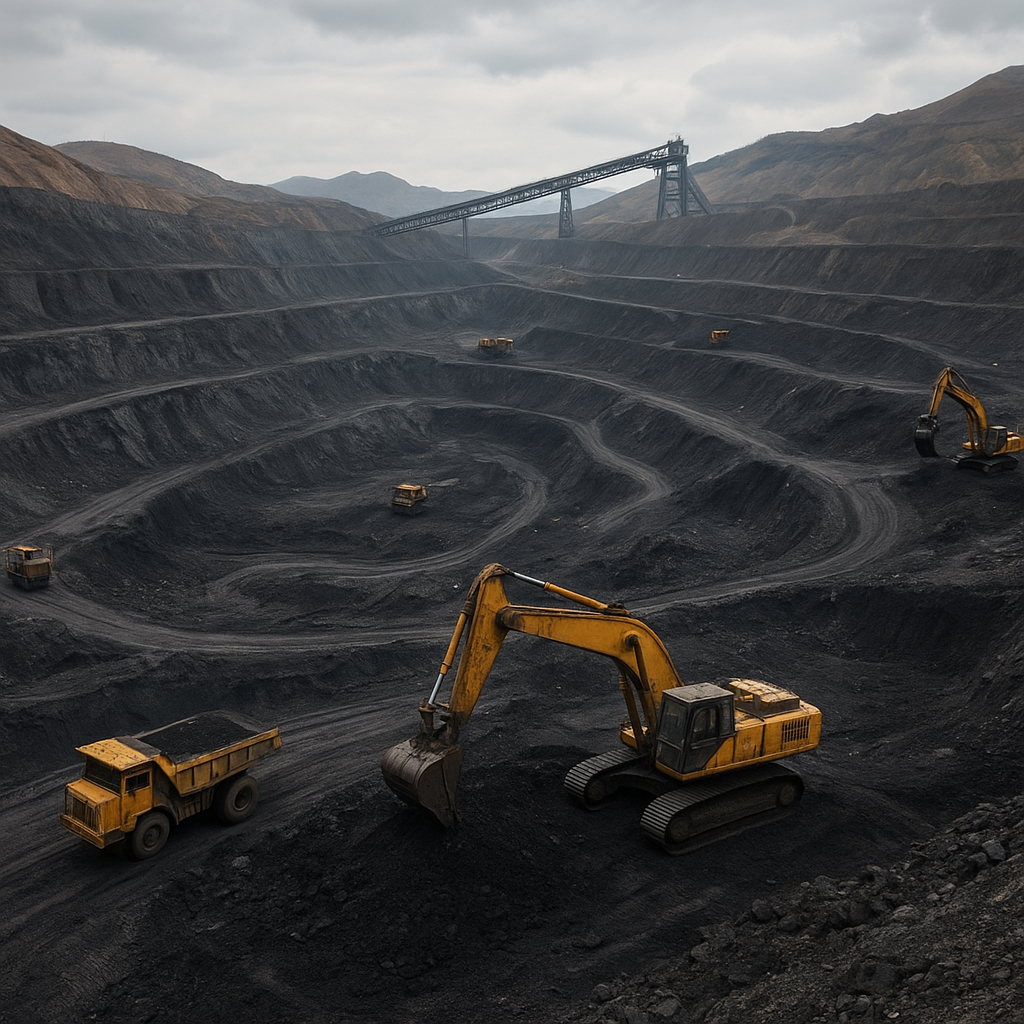
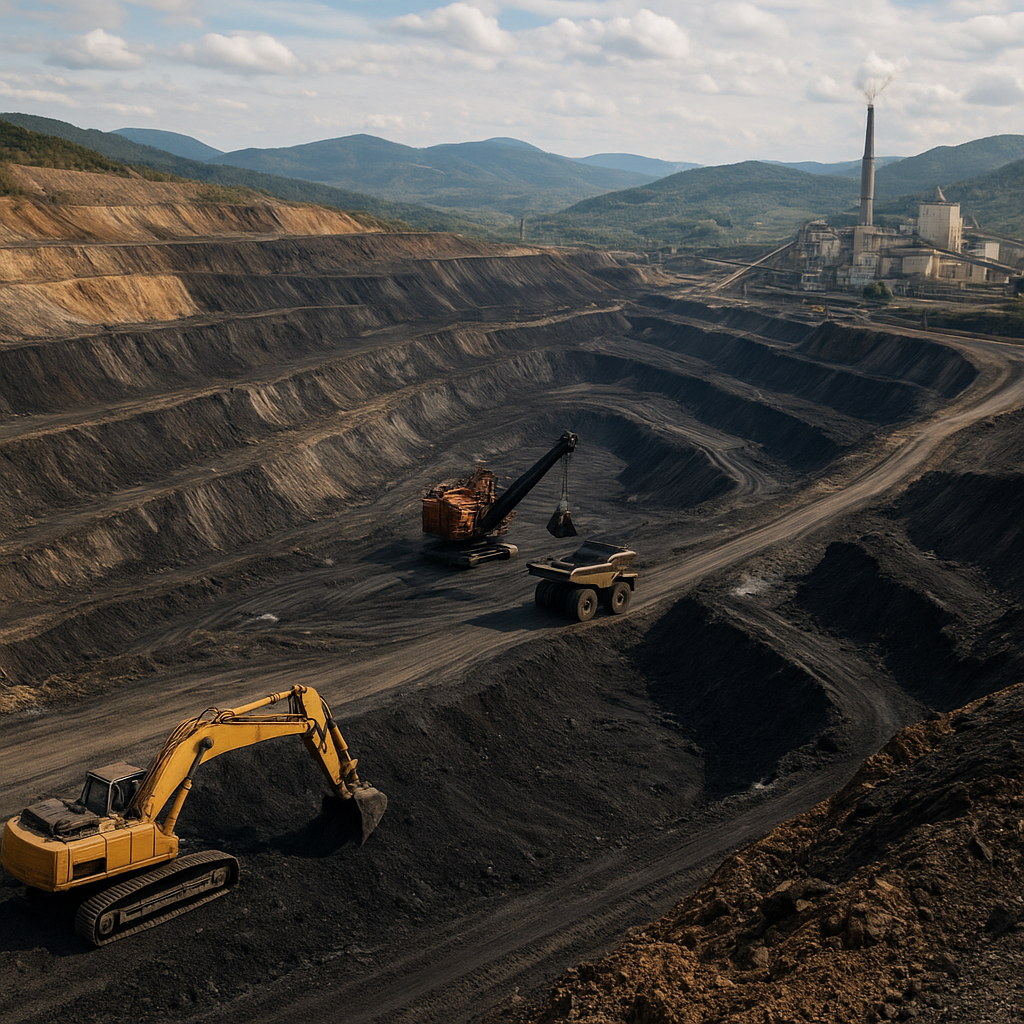
- Mining methods: Historically dominated by underground mining, the region has seen a progressive shift toward mechanized open-cast operations in many areas because surface mining can be more efficient and safer where seams are near surface; however, open-cast mining also exacerbates surface disruption and environmental impacts.
In terms of reserves and production, Jharia ranks among India’s largest coking coalfields. Reserve estimates vary by source and depend on classification (proved, inferred, indicated), but public figures often place total in-place coal resources for Jharia in the order of tens of billions of tonnes (commonly cited estimates indicate roughly around 15–20 billion tonnes of in-situ resources, though accessible and economically mineable quantities are lower). Annual production from the Jharia area and nearby Dhanbad fields has fluctuated over time with market demand, mining policies and the operational constraints imposed by fires and subsidence. Historically, the Dhanbad–Jharia region contributed a sizeable share of India’s coking coal output and supplied many major steel plants across the country.
Economic and industrial importance
The strategic importance of the Jharia coalfield to the Indian economy cannot be overstated. Its coal is indispensable for domestic steel production and thereby central to heavy industry, construction, infrastructure and defense applications. Several key points of economic significance include:
- Steel feedstock: Jharia’s coking coal supplies feedstock for major steel plants such as Tata Steel (Jamshedpur), Bokaro Steel Plant, IISCO Steel Plant and Bhilai Steel Plant through internal allocation or market channels.
- Employment: Thousands of employees work directly in mines run by BCCL and other companies; indirectly the coal industry supports many more jobs in logistics, equipment manufacturing, rail transport and ancillary services. The Dhanbad region’s local economy is tightly coupled to coal operations.
- Revenue: Royalties, taxes and company revenues from coal extraction contribute to local, state and national government coffers. Coal continues to be a major contributor to national energy security and industrial growth.
- Infrastructure linkages: Rail and road networks radiating from Dhanbad are designed to move coal to steel plants, thermal power stations and export points. The region’s rail termini are among India’s busiest for bulk freight.
Historically, much of the coal from Jharia supported India’s post-independence industrialization drive. Today, despite the global push toward lower-carbon energy sources, Jharia remains pivotal because metallurgical coal has few near-term substitutes for traditional blast furnace steelmaking; thus domestic availability of coking coal influences competitiveness and import dependence.
Environmental challenges and the persistent underground fires
One of the most serious and long-standing problems in Jharia is the occurrence of underground coal seam fires. These fires, which may ignite due to spontaneous combustion, mine accidents or exposure of seams, have been burning in places for many decades—some accounts trace continuous burning in parts of Jharia back more than a century. The consequences are severe:
- Ground subsidence: Burning underground coal and the collapse of mined-out voids cause sudden and progressive sinking of the surface, destroying homes, roads and mine infrastructure in affected neighborhoods.
- Air pollution: Fires emit smoke and hazardous gases including carbon monoxide, carbon dioxide, nitrogen oxides and volatile organic compounds. These emissions contribute to local and regional air quality degradation and health problems.
- Health impacts: Residents in fire-affected areas commonly report respiratory ailments, skin problems and other health issues linked to prolonged exposure to fire-related emissions and dust from mining operations.
- Loss of resource: Underground fires consume coal in situ, rendering otherwise valuable deposits unrecoverable and thereby reducing long-term resource availability and economic returns.
Efforts to control and extinguish the fires have included isolation and sealing of burning seams, filling and backfilling of mine voids, and in some cases, relocation of entire settlements. However, complete control of the fires has proven extraordinarily difficult because of the extent of burning, complex geology and continued human interactions (illegal mining, surface excavations) that breach sealed areas.
Social consequences, displacement and rehabilitation efforts
The human cost of decades of mining activity and underground fires in Jharia is significant. Large numbers of households live in areas at risk of sudden subsidence and exposure to toxic fumes. Many communities have experienced loss of property, uncertain land tenure, declining quality of life and health problems. A few notable aspects of the social situation:
- Relocation programs: The government has instituted rehabilitation and resettlement programs to move residents from high-risk zones. The Jharia Rehabilitation and Development Authority (JRDA), created in the 2000s, is tasked with planning and implementing large-scale relocation and redevelopment projects. Progress has been gradual and contentious, with disputes over compensation, land entitlement and the adequacy of resettlement sites.
- Illegal and small-scale mining: The presence of small-scale, informal coal recovery operations and illegal mining is common in parts of the coalfield. While these activities provide livelihoods for some local residents, they increase safety risks and complicate fire-control efforts.
- Urbanization pressure: Dhanbad’s urban growth and demand for housing have led to settlements encroaching on abandoned or marginal mining lands, raising exposure to risk. At the same time, mining companies and state agencies face challenges in acquiring safe land for resettlement close to existing social networks and employment.
Operational, technical and legal measures
Mining in a legacy coalfield like Jharia presents complex technical and managerial challenges. Key responses and ongoing strategies include:
- Mine closure and safety remediations: Sealing of dangerous mine openings, stabilization of subsidence-prone areas, and controlled infill or reclamation of mined-out areas where feasible.
- Fire control technologies: Use of inertization (injection of nitrogen or other inert gases), isolation trenches, surface sealing, and water flooding where geology allows; these methods are often expensive and only locally effective.
- Modernization: Mechanization of safe open-cast operations, improved ventilation and monitoring systems in underground mines, and better mine planning using remote sensing, geotechnical modeling and gas monitoring to minimize risks.
- Legal and regulatory frameworks: Strengthening of mine safety oversight, environmental clearances, and rehabilitation policy frameworks aimed at balancing resource recovery with community protection and environmental management.
Statistics, governance and institutional actors
Key institutions involved in governance and technical management of the Jharia coalfield include BCCL (a subsidiary of Coal India Limited), the Government of Jharkhand, the Ministry of Coal (Government of India), the JRDA for resettlement projects, and technical agencies such as the Central Mine Planning and Design Institute (CMPDI) and national research organizations. Statistical figures depend on the reporting period and definitions used, but a few indicative points (figures rounded and presented as estimates) are:
- Estimated in-situ coal resources for the broader Jharia area are commonly cited in the range of approximately 15–20 billion tonnes; economically mineable reserves are a smaller subset and depend on depth, seam continuity and safety constraints.
- At its productive peak, the Dhanbad region (including Jharia and adjacent fields) accounted for a substantial portion of India’s coking coal output; while precise annual output varies, the broader Dhanbad–Jharia complex has produced tens of millions of tonnes of coal per year across multiple mines and companies.
- Large-scale demographic impacts: thousands of families live in or adjacent to high-risk zones; rehabilitation plans have targeted the relocation of tens of thousands of people over multi-decade programs, though progress lags in many areas.
Because public reporting varies and the coalfield comprises many individual pits, seams and administrative units, absolute numbers should be treated as indicative rather than definitive. For rigorous project-level planning or investment decisions, current data from BCCL, CIL, JRDA and state geoscience agencies should be consulted.
Other interesting features and historical notes
Beyond raw economics and environmental problems, Jharia is notable for several historical and cultural features:
- Industrial heritage: The region’s mining history dates back to colonial times and has shaped local culture, labor movements and settlement patterns. Mining communities around Jharia developed distinct identities with multi-generational ties to the coal economy.
- Research and technical innovation: Due to its complex problems, Jharia has been the focus of technical research on mine fire control, land reclamation and mine safety. Innovations and pilot projects developed here often inform practices in other fire-affected coal basins.
- Strategic constraints: As one of the few Indian fields with substantial coking coal, Jharia’s operational state affects national policy on imports of metallurgical coal. Any long-term decline in Jharia output influences steel-making costs and import dependence.
Future outlook — decarbonization, transition and local development
The long-term outlook for Jharia intersects with several global and national trends: the drive to decarbonize energy systems, the continued need for metallurgical coal in steelmaking, and policy commitments to sustainable development and community welfare.
- Metallurgical coal demand: While there is growing attention to low-carbon steelmaking technologies (direct reduced iron, hydrogen-based reduction, electric arc furnaces using scrap), current and near-term steelmaking still relies heavily on coke. Therefore, Jharia’s high-quality coking coal remains strategically important in the medium term.
- Green transition pressures: Climate policies that reduce coal use for thermal power will not eliminate demand for metallurgical coal immediately. However, long-term shifts to alternative steelmaking could affect the economics of Jharia, underscoring the need for economic diversification in the Dhanbad region.
- Remediation and redevelopment: Successful long-term management requires coordinated action across mine closure, fire control, health interventions, and economic redevelopment. Investments in site remediation, safe reclamation and reskilling of local workforces will be essential to provide alternatives for communities dependent on coal.
- Technological role: Improvements in monitoring (satellite thermal imaging, ground gas sensors), remote mine planning, and more effective insulating or inertization approaches offer some hope for better fire control at lower cost than previous methods.
Conclusion
The Dhanbad–Jharia coalfield occupies a central place in India’s industrial landscape: a source of high-quality coking coal that has supplied the nation’s steel industries while also embodying the social and environmental complexities of coal extraction. The field combines immense economic value with persistent hazards — underground fires, subsidence and public health challenges — that have demanded sustained technical, institutional and social responses. Going forward, balancing the immediate economic imperatives of metallurgical coal supply with the urgent need to protect communities and restore fragile environments will define policy and industry choices. The story of Jharia is thus both a record of industrial achievement and a cautionary tale about the long-term costs of resource extraction when safety, planning and rehabilitation are not integrated from the start.
Key terms emphasized in this article: Dhanbad, Jharia, coalfield, coking coal, Bharat Coking Coal Limited, underground fires, subsidence, rehabilitation, metallurgical, Coal India Limited.