The Cerro Largo Coal Mine in Colombia represents one of the many lesser-known but regionally significant coal operations that contribute to the country’s status as a major coal producer and exporter. While detailed public data about Cerro Largo specifically can be limited, examining its likely location, geology, production characteristics, and economic and social role within Colombia’s coal sector allows a comprehensive portrait. This article synthesizes available regional information, industry patterns and likely mine-level features to describe Cerro Largo’s place in Colombian coal mining, its **economic** impact, environmental considerations and future prospects.
Location and geological setting
Cerro Largo is situated in Colombia, a country whose coal deposits are concentrated primarily in two broad provinces: the Cesar-Ranchería Basin (including the departments of Cesar and La Guajira) and the Middle Magdalena Valley. Exact public coordinates and administrative details for the Cerro Largo operation are not widely published in international databases, which is common for many small- to medium-sized mines in Colombia. Nonetheless, typical mines named with “Cerro” are often located on or near elevated terrain associated with coal-bearing formations.
The Colombian coal basins that likely host Cerro Largo are characterized by layered sedimentary sequences of the Cretaceous to Paleogene periods. Coal seams in these basins are associated with fluvial and deltaic facies, interbedded with sandstones, siltstones and shales. Important geological features relevant to Cerro Largo-type deposits include seam continuity, thickness variability, dip angles and the presence of partings or impurities within seams.
Key geological attributes for Cerro Largo likely include: seam thicknesses ranging from thin to several meters, moderate lateral continuity permitting open-pit or small underground workings, and association with transport and washability characteristics that define product quality.
Coal type, quality and mineralogy
The Colombian coal complex predominantly produces **thermal** coal used for electricity generation and industrial heat. Colombia’s coal ranks vary from high-volatile bituminous to sub-bituminous, often noted for relatively low sulfur and low ash content compared with many international coals. For Cerro Largo, the most probable coal product would be **thermal** coal with characteristics attractive to export markets: moderate calorific value, low sulfur and acceptable ash levels after beneficiation.
Coal quality parameters typically reported for Colombian operations include gross calorific value (kcal/kg or kJ/kg), moisture content, ash percentage, sulfur content and volatile matter. Although specific analytic results for Cerro Largo are not widely reported, a representative range for similar regional operations might be:
- Gross calorific value: approximately 5,500–7,000 kcal/kg (22–29 MJ/kg)
- Ash content: commonly 6–18% depending on raw seam quality and processing
- Sulfur: often low, frequently under 1% (beneficial for emissions and compliance)
- Moisture: variable, sometimes 8–15% raw, reduced after washing
Coal mineralogy typically includes vitrinite-rich macerals with inertinite and liptinite components; mineral matter comprises clays, quartz and sulfide phases that necessitate washing/beneficiation in many operations.
Mining method, operations and infrastructure
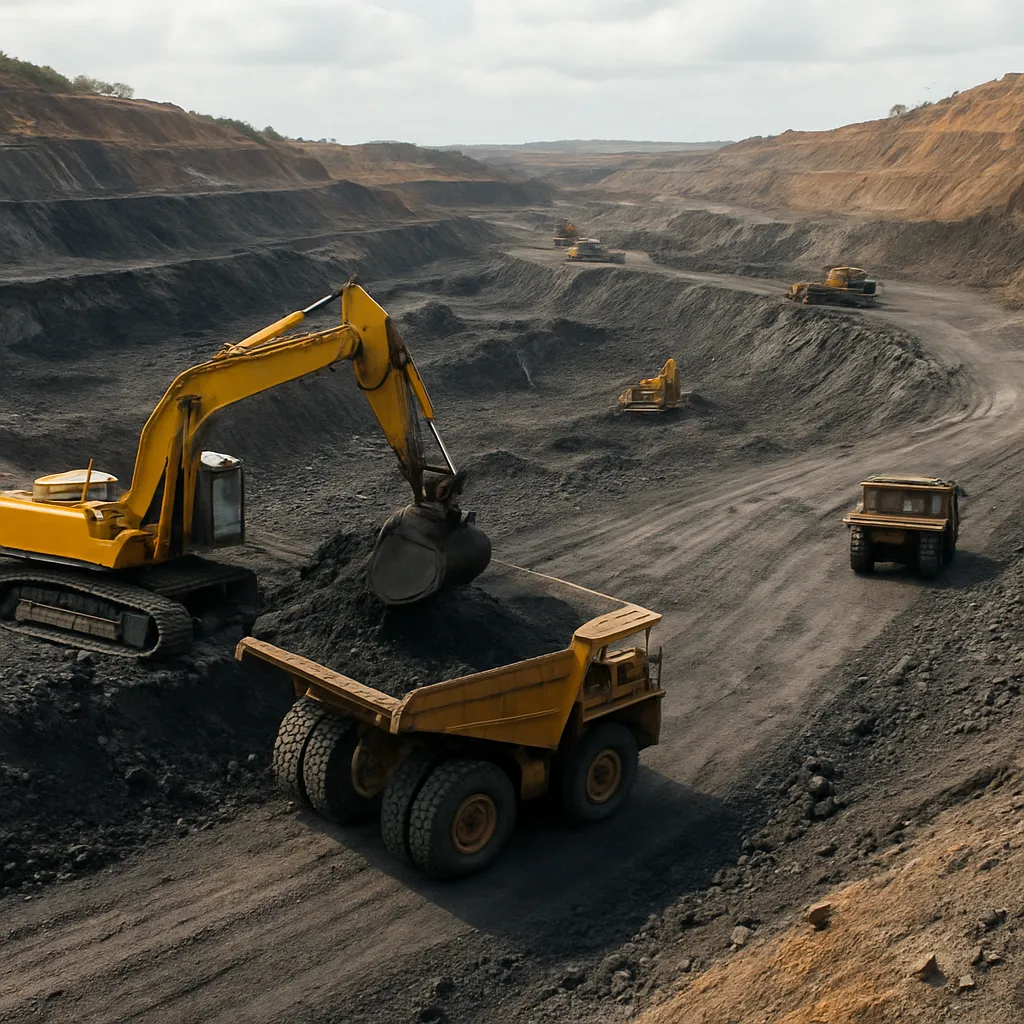
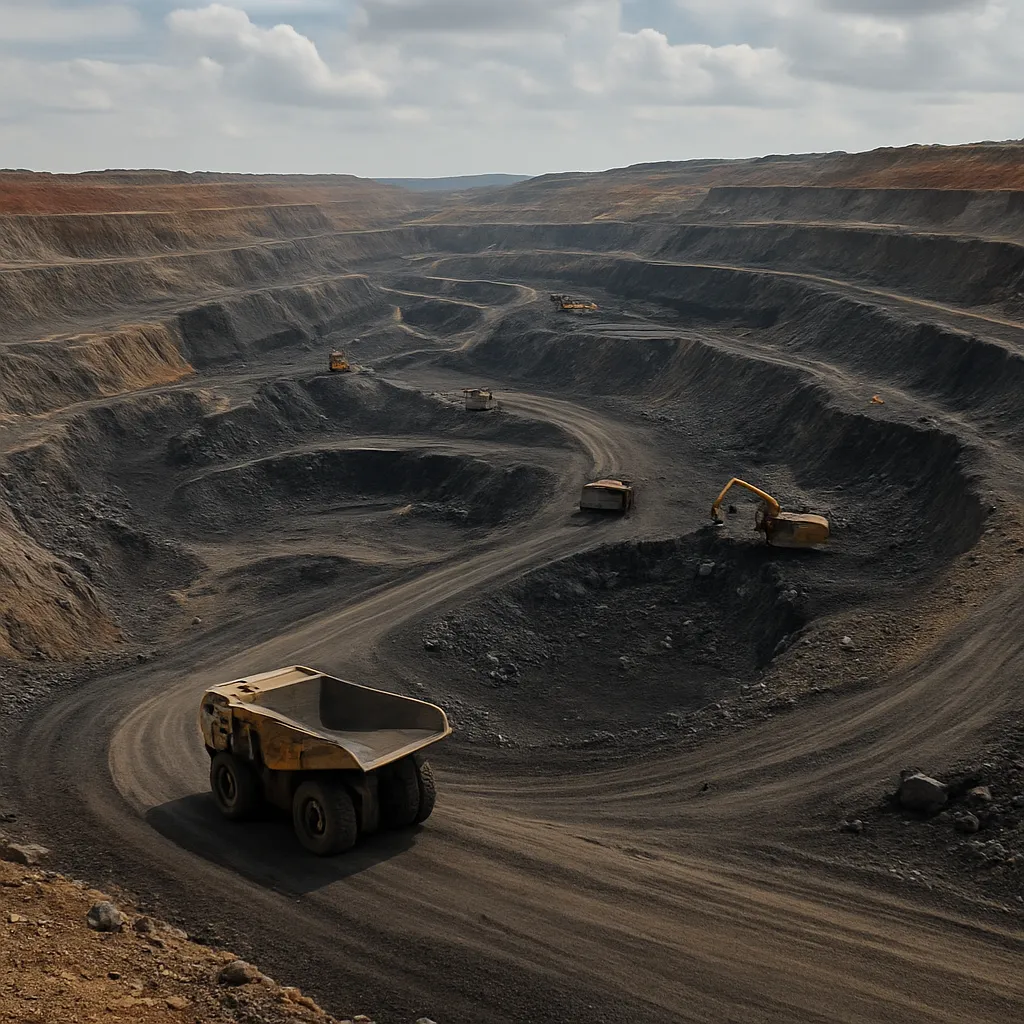
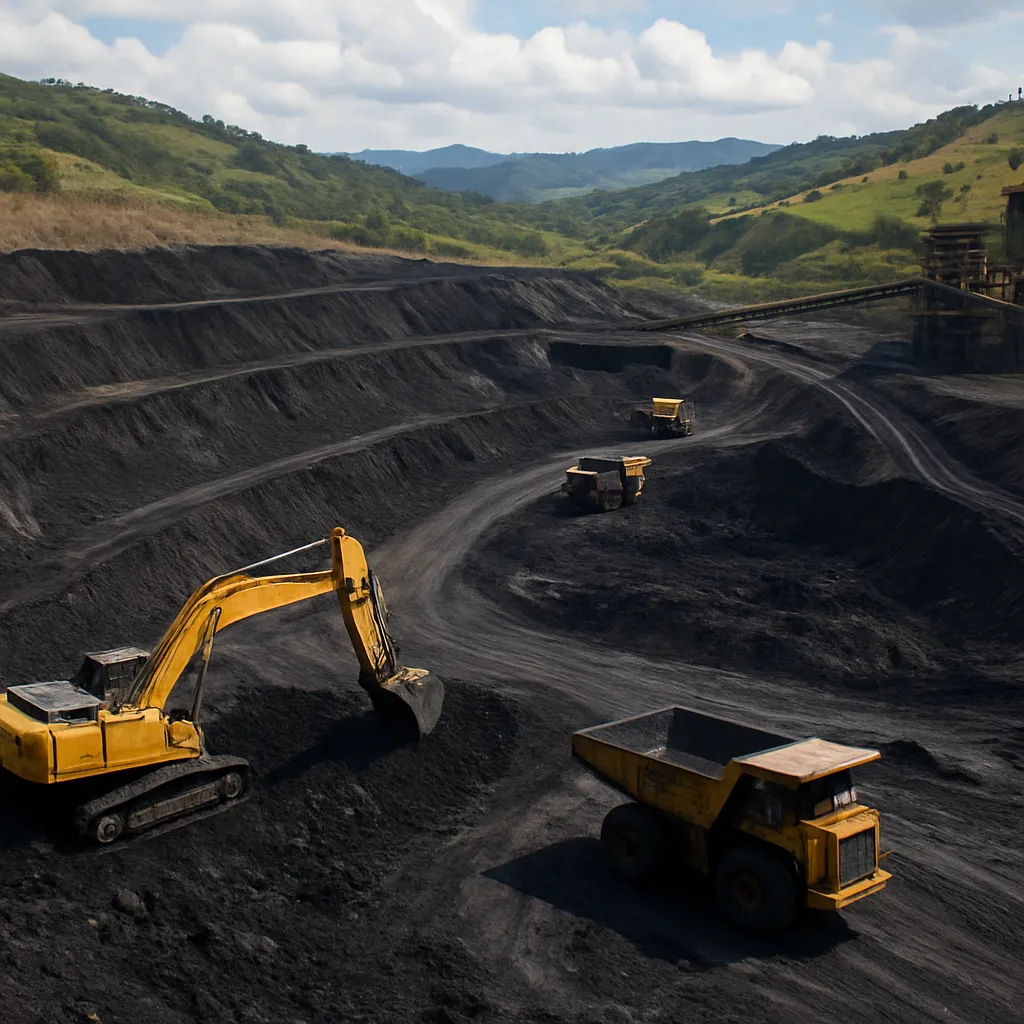
Cerro Largo’s extraction method would depend on seam depth, thickness and overburden — in Colombian basins, **open-pit** mining is the dominant method where seams lie near the surface and permit economical removal. Smaller or deeper seams may be worked by **underground** methods, though these are less common for large-scale thermal coal in the Cesar and La Guajira basins.
Typical operational components for a mine like Cerro Largo include:
- Open-pit benches, large shovels, haul trucks and loading infrastructure
- Coal processing plant (crushing, screening, dense media or water washing) to reduce ash and improve marketability
- Stockyards and load-out facilities linked to rail or road transport
- Access roads and often a dedicated or shared rail spur to coastal ports
In northern Colombia, major export routes use ports such as Puerto Bolívar (La Guajira), Puerto Brisa and Santa Marta. For Cerro Largo, transport logistics and proximity to port infrastructure determine competitiveness. Where rail is available, it lowers unit transport costs significantly; in more remote settings, truck haulage increases operating expenses.
Ownership, production and economic role
Ownership of Colombian coal assets ranges from large multinational mining companies and trading houses to domestic firms and joint ventures. Cerro Largo may be operated by a regional mining company or as part of a portfolio of a national operator. Publicly available ownership registries sometimes omit smaller operations, which complicates direct attribution.
At the national level, **Colombia** is consistently among the world’s noteworthy coal producers and exporters. A substantial share of production is destined for export markets, especially in Europe, the United States, and increasingly to Asia. Coal exports are a significant source of hard currency for Colombia and contribute to trade balances and regional employment. For mines such as Cerro Largo, the principal economic contributions include:
- Direct **employment** for miners, plant operators and contractors
- Indirect jobs in transport, services and local supply chains
- Local and national tax revenues, royalties and community investment obligations
- Stimulus for related infrastructure—roads, power, water management
Because precise production figures for Cerro Largo are not widely published, it’s prudent to view estimated local production scales: small- to medium-sized operations in Colombia commonly produce from a few hundred thousand to several million tonnes per year. Larger regional mines reach tens of millions of tonnes annually. The economic footprint of Cerro Largo will therefore depend on its production scale, level of mechanization and integration into export logistics.
Statistical context and available data
Publicly available, reliable mine-level statistics for Cerro Largo are limited. However, placing Cerro Largo within the national and regional statistical context clarifies its probable significance:
- Colombia’s annual coal production in recent years has typically ranged within a band that places it among the top 10–15 coal-producing countries globally. Annual production variability depends on global demand, prices and local operational factors.
- A substantial fraction of Colombia’s production is exported; exports historically have accounted for the majority of mined coal tonnage, underpinning foreign exchange earnings.
- Regional employment in coal-producing departments such as Cesar and La Guajira supports thousands of direct and indirect jobs, although automation and mechanization have changed labor dynamics over time.
For Cerro Largo, industry observers often must rely on company disclosures, local government permits and environmental impact assessments to obtain precise figures. Where such documents are absent or limited, estimates come from satellite imagery of mine area (indicating pit size and stockpiles) and regional production trends.
Environmental and social considerations
Coal mining in Colombia brings notable **environmental** and social challenges that are relevant to Cerro Largo and similar operations:
- Land-use change and habitat fragmentation caused by open-pit extraction and waste-rock dumps
- Water usage for washing and dust suppression, and potential contamination risks to groundwater and surface water from runoff
- Air emissions: dust, particulate matter and greenhouse gas releases during extraction, transport and combustion of coal
- Impacts on local **communities**, including displacement, health concerns and disruptions to traditional livelihoods
Colombian law mandates environmental impact assessments (EIAs), community consultation processes and the establishment of mitigation measures (reforestation, water treatment plants, compensation funds). Yet implementation and enforcement can vary, and many communities report ongoing grievances related to noise, dust, limited access to water and insufficient economic benefits.
Economic benefits versus environmental costs
For policymakers and stakeholders, the Cerro Largo case illustrates the broader trade-off between short- to medium-term economic advantages and long-term environmental costs. On the benefit side, mining generates **revenue**, creates jobs and supports regional infrastructure development. On the cost side, there are potential losses in ecosystem services, agricultural productivity and public health that may impose long-run burdens on local populations and public budgets.
Mitigation strategies that improve the balance include rigorous environmental management, investments in reclamation and biodiversity offset programs, transparent benefit-sharing agreements, and the development of local skills to diversify economies beyond mining.
Importance for industry and market dynamics
Even if Cerro Largo is not among the largest Colombian mines, its product contributes to the overall supply portfolio that meets both domestic fuel requirements and international buyers’ needs. Colombian coal is favored in many markets for its calorific characteristics and low sulfur content. Mines like Cerro Largo help maintain **supply diversity**, provide feedstock for power generation and industry, and stabilize local economies dependent on extractive activities.
Market dynamics that affect Cerro Largo include global thermal coal demand (influenced by power sector fuel-switching, environmental regulations and economic growth), freight rates for transport to overseas buyers, and competition from other coal-producing nations. Additionally, policy shifts such as emission controls, carbon pricing or a move to renewables can alter the long-term outlook for thermal coal producers.
Community relations and social license to operate
Maintaining a social license to operate is essential. Successful strategies that mines in Colombia deploy — and which Cerro Largo would need to adopt or continue — comprise community engagement, transparent sharing of environmental monitoring data, vocational training programs, and concrete local development investments (schools, clinics, clean water projects).
Conflicts often arise over land rights, the impacts on indigenous and Afro-Colombian territories, and perceived inequities in benefit distribution. Proactive negotiation, participatory planning and legal compliance are crucial for reducing disputes and fostering long-term coexistence with host communities.
Future prospects and transition risks
The future of Cerro Largo, as for many coal operations worldwide, must be assessed against a backdrop of evolving energy markets and climate policies. Key scenarios include:
- Continued demand for thermal coal over the near term, sustaining operations and regional incomes
- Gradual contraction in coal demand driven by decarbonization, increasing renewables and shifts in international finance and insurance policies away from coal projects
- Potential for mine-site repurposing: after closure, former pit lakes, industrial parks or renewable energy installations (for example, solar farms on rehabilitated land) could provide alternative uses
Transition planning—financial provisioning for mine closure, community economic diversification and upskilling of labor—will be important for minimizing social disruption when operations wind down.
Interesting practical and technical aspects
Several technical and operational aspects of the Cerro Largo-like operations are noteworthy:
- Use of satellite and drone remote sensing for monitoring pit expansion, stockpile volumes and environmental compliance
- Progressive reclamation approaches that reduce reclamation liabilities and restore native vegetation faster
- Water treatment and reuse technologies that minimize freshwater withdrawals in semi-arid zones like parts of La Guajira
- Coal beneficiation innovations that improve product quality while reducing waste generation
Adoption of such practices enhances both environmental outcomes and the economic efficiency of mines, making them more resilient to regulatory and market pressures.
Summary and concluding observations
While publicly available, mine-level statistics specifically for the Cerro Largo Coal Mine in Colombia are limited, assessing it within the broader Colombian coal industry context clarifies its likely characteristics and importance. Cerro Largo is expected to produce **thermal** coal of decent export quality, operate with open-pit methods if seams are shallow, and contribute to local employment and regional economic activity. At the same time, environmental and social challenges—water use, dust, land impacts and community relations—are central concerns that demand robust management.
Colombia’s coal sector continues to play a strategic role in national exports and regional economies, yet faces long-term transition risks from the global shift toward decarbonization. For Cerro Largo, the path forward will hinge on market conditions, regulatory frameworks, community engagement and the operator’s commitment to environmental stewardship and sustainable closure planning. Strengthening transparency in mine-level reporting, environmental monitoring and benefit-sharing would increase stakeholders’ ability to evaluate and support responsible mining outcomes across Colombia, including for operations like Cerro Largo.