The following article provides an in-depth look at the Bhatgaon mine and its place within India’s coal-mining landscape. It covers location and geology, the types of coal extracted, methods of extraction and infrastructure, economic and industrial significance, social and environmental impacts, and prospects for the future. Where precise published figures specific to the Bhatgaon site are scarce in the public domain, broader regional and national data are used to provide context. The text highlights important themes such as resource Bhatgaon, energy generation, and sustainability in modern mining practices.
Location, geological setting and historical background
The Bhatgaon mine is part of the broad coal-bearing regions in central-eastern India. While many individual mines in this area belong to the states clustered around the Chhota Nagpur and related Gondwana basins, the name Bhatgaon is most commonly associated with mining activity in the central Indian state of Chhattisgarh. These basins formed during the Permian and Carboniferous periods and host thick sequences of coal-bearing strata.
Geologically, the coal-bearing sequences in and around Bhatgaon are typically part of the Gondwana formations. These formations are characterized by multiple seams of Permian-age coal interbedded with sandstones, siltstones and shales. The seams can vary in thickness and depth, which in turn influences the choice of extraction methods—ranging from open-cast (surface) mining where seams are near the surface to underground methods where seams are deeper or where overburden removal is not economically feasible.
Historically, coal mining in central India expanded rapidly during the 20th century to feed a growing industrial base and the expanding power generation sector. Mines with names such as Bhatgaon were developed to exploit locally accessible deposits and to supply regional power stations, cement plants and metallurgical processes. Over time, access roads, rail links and local settlements grew around mining hubs, creating integrated coal-mining communities.
Coal type, quality and reserves
The coal extracted from mines in this region, including Bhatgaon, is generally classified as thermal coal used mainly for electricity generation and industrial heat. The coal is typically high in ash content compared to some high-grade metallurgical coals (coking coal), which makes it more suitable for combustion in coal-fired power plants rather than steelmaking without further beneficiation.
Typical coal characteristics in these Gondwana basins include:
- Moderate to high ash content (often in the range of 25–40% in many seams, though values vary by seam and location)
- Lower to medium fixed carbon compared with prime coking coals
- Calorific values suitable for power generation after blending and, where applicable, washing or beneficiation
- Presence of multiple seams that permit staged mining but can complicate seam-to-seam operations
Concrete, independently verifiable figures for the reserves and annual yield of the Bhatgaon mine are not always publicly detailed in accessible databases. For context, India’s total coal reserves and production are substantial: as of the early 2020s the country ranked among the top coal producers globally, extracting on the order of several hundred million tonnes annually. The coal-rich states of Chhattisgarh, Jharkhand, Odisha and West Bengal are major contributors to national output. Bhatgaon’s contribution should be viewed within this regional production framework—important regionally, particularly for local power plants and industry, but typically modest compared to the largest individual mines or mining complexes in India.
Mining methods, infrastructure and logistics
Extraction techniques
Mining techniques at Bhatgaon-style coal sites depend primarily on seam depth and thickness, geological stability and economic considerations. The two broad classes are:
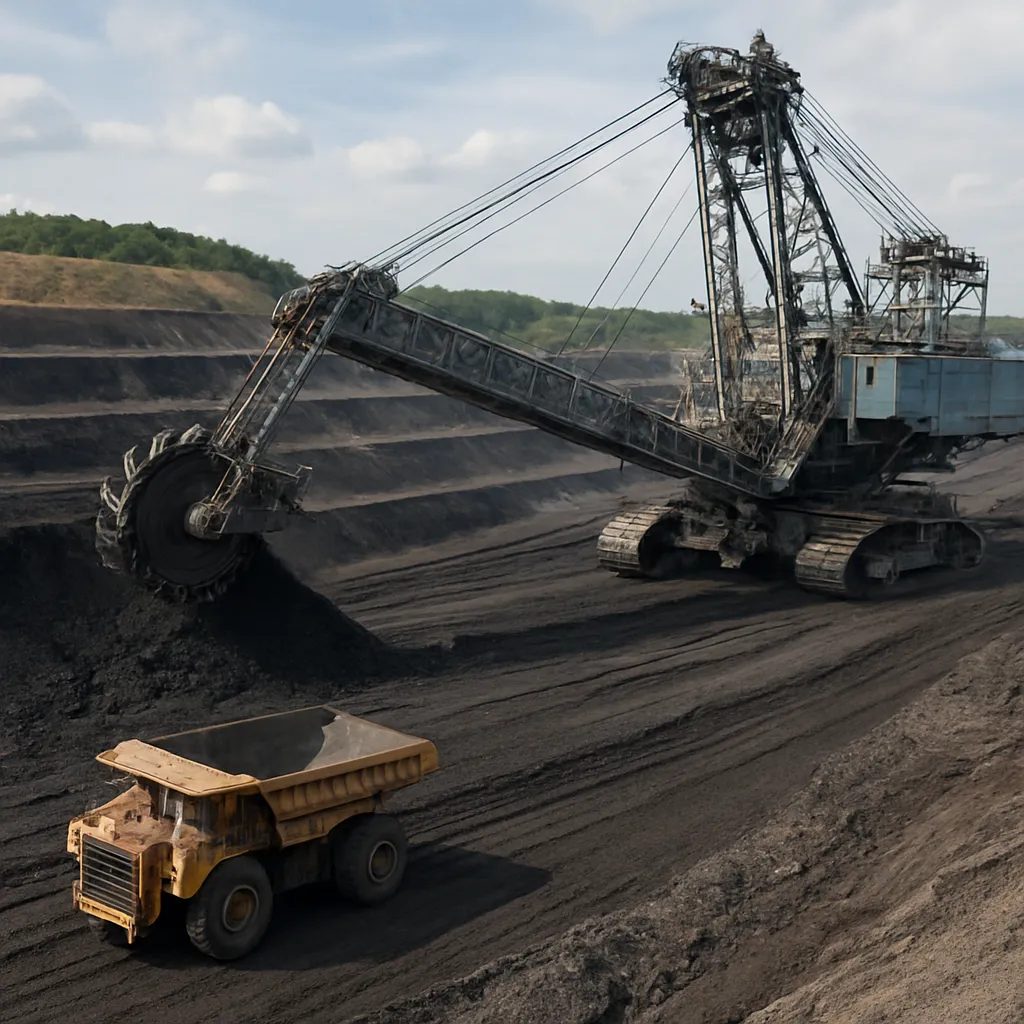
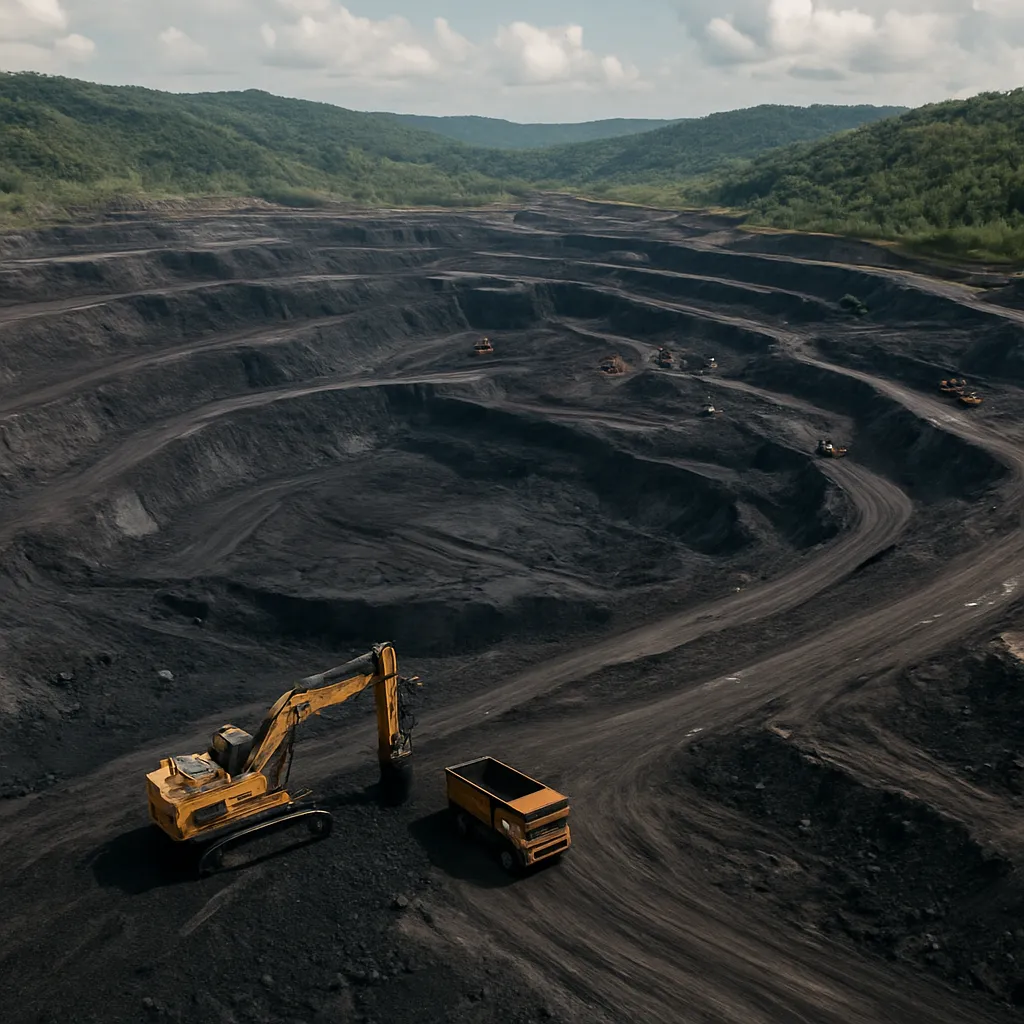
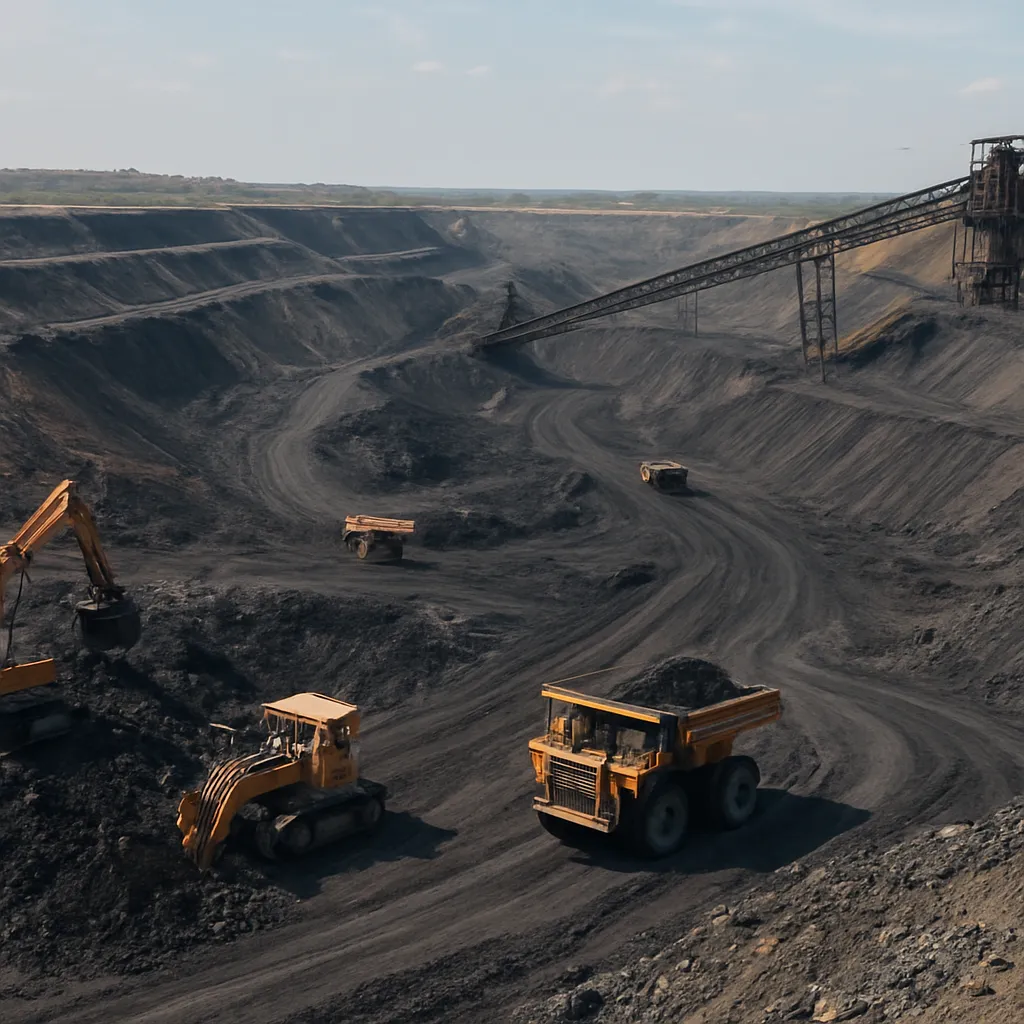
- Open-cast mining: Employed where coal seams are near the surface and removal of overburden is economical. This method enables high production rates and lower operating costs per tonne, but it has a larger surface footprint and greater immediate environmental impacts.
- Underground mining: Used for deeper seams or where environmental/social constraints limit surface disturbance. Underground methods reduce the surface footprint but are more labor- and capital-intensive and entail different safety and ventilation requirements.
Transport and processing infrastructure
Efficient transport infrastructure is crucial to the economic viability of coal mining. Typical facilities that support a mine like Bhatgaon include:
- Roadways connecting the mine to regional highways
- Rail sidings or links to mainlines for bulk dispatch to power plants, ports and industrial users
- Coal handling and washing units (where beneficiation is feasible and economical) to improve calorific value and reduce ash content
- On-site workshops, power supply, water management systems and administrative facilities
The proximity of coal users—particularly thermal power plants—has a major influence on logistics. Mines sited close to power stations reduce transport costs and line losses and often form part of integrated coal-to-power value chains.
Economic and industrial significance
The economic role of a coal mine such as Bhatgaon can be considered at several levels: local, regional and national.
Local economic impacts
- Employment: Mines are direct employers of technical staff, machine operators, drillers, drivers and administrative personnel. Indirect employment arises in transport, maintenance, suppliers and local services (shops, health and education).
- Local government revenues include royalties and taxes which support infrastructure and services in mining districts.
- Development of ancillary industries such as equipment servicing, logistics and small-scale manufacturing.
Regional and national roles
At the regional level, coal mines supply fuel for power generation and industry, enabling economic growth, industrialisation and energy security. Nationally, coal remains central to India’s energy mix and industrial activity. While the country has been expanding renewable energy capacity, coal-fired generation continues to supply baseload power to support manufacturing, services and households.
Some indicative points for context (approximate and for broad orientation):
- India’s coal production in the early to mid-2020s was in the order of several hundred million tonnes annually, ranking the country among the world’s largest producers.
- Coal contributes a majority portion of India’s electricity generation mix, even as renewable sources and natural gas sources grow.
- Regional coal production, including that from central Indian mines, plays an outsized role in supplying nearby thermal power plants and energy-intensive industries like cement and steel.
Because precise, authoritative statistics for the Bhatgaon mine itself are not always readily available in the public domain, analysts typically consult official reports from the Ministry of Coal, state mining departments or Coal India Limited and its subsidiaries for up-to-date production, reserve and economic data for specific leases and blocks.
Social dimensions: communities, employment and corporate responsibility
Mining operations affect local communities in multiple ways. Positive impacts include job creation, improved local infrastructure and increased market activity. Challenges often relate to displacement, land-use change, health impacts from dust and pollution, and stresses on water resources.
Modern mining projects are increasingly expected to implement Corporate Social Responsibility (CSR) programs and community development plans. Activities commonly include:
- Investment in local health clinics, schools and vocational training
- Provision of water supply schemes, electrification and road improvements
- Programs to support agricultural productivity and livelihood diversification for families affected by land acquisition
Transparent stakeholder engagement and clear mechanisms for grievance redress, compensation and rehabilitation are critical for sustaining community consent and social license to operate.
Environmental footprint and mitigation measures
Coal mining has well-known environmental impacts: landscape alteration, habitat loss, water table changes, dust and particulate emissions, and potential contamination of surface and groundwater from mine effluents. In the case of open-cast mining, the sheer scale of earth-moving is a major consideration.
Typical mitigation and remediation measures include:
- Progressive reclamation of mined-out areas with topsoil management and re-vegetation
- Installation of dust suppression systems (water sprinkling, covers on conveyors, green belts)
- Effluent treatment and management structures to control run-off and contaminated water
- Methane management and monitoring in underground mines to reduce greenhouse gas release and explosion risk
- Biodiversity conservation measures and compensatory afforestation where clearance affects forest lands
Environmental regulations in India mandate clearances and environmental impact assessments (EIA) for major mining projects, and mines are required to follow conditions stipulated in environmental clearances. Compliance and enforcement remain central challenges to ensuring that environmental safeguards are actually implemented on the ground.
Safety, technology and operational best practices
Safety is a paramount concern in coal mining. Best practices include rigorous training programs, regular equipment maintenance, real-time monitoring systems for gas and ground stability, and emergency preparedness plans.
Recent decades have also seen increased adoption of mechanisation and digital technologies in Indian coal mines—automation of draglines and shovels in open-cast operations, fleet management systems, and remote monitoring of equipment performance. These technologies improve productivity and safety but require skills development and investment.
Future prospects: energy transition, diversification and rehabilitation
The future of coal mines such as Bhatgaon will be shaped by two main forces: ongoing domestic demand for reliable power and the global and national push toward decarbonisation and cleaner energy mixes. Key aspects of future prospects include:
- Role in energy security: In the near to medium term, coal will likely remain a significant part of India’s energy portfolio due to existing thermal capacity and demand patterns.
- Transition strategies: Mines and operators are exploring measures to reduce emissions intensity—improved beneficiation, better combustion technologies, co-firing with biomass, and more efficient logistics to reduce transport-related emissions.
- Land-use transition: Post-mining land reclamation can enable new land uses such as agriculture (after soil remediation), forestry, renewable energy installations (solar farms on reclaimed land) or water bodies used for fisheries and groundwater recharge.
- Economic diversification: Local economies historically dependent on mining are being encouraged to diversify into manufacturing, services and sustainable agriculture to reduce vulnerability to future coal demand shifts.
Successful long-term outcomes depend on coordinated planning among central and state governments, mining companies, local communities and financiers to manage the socio-economic impacts of a changing energy landscape.
Key challenges and considerations
- Balancing energy needs with environmental imperatives: ensuring energy availability while reducing emissions and local environmental harm
- Securing fair and transparent compensation and rehabilitation for displaced communities
- Investing in skills and technology to shift from labor-intensive practices to safer, more efficient, and less polluting operations
- Ensuring robust monitoring and enforcement of environmental and safety standards
- Planning for post-mine economic landscapes that offer sustainable livelihoods to former mine-dependent populations
Conclusion
The Bhatgaon mine sits within a network of coalfields that have powered regional development in central India for decades. While site-specific numerical data on annual production and reserves are not always publicly detailed, the mine’s role can be understood in terms of the common attributes of regional coal operations: provision of thermal coal for power and industry, significant contributions to local employment and infrastructure, and substantial environmental management responsibilities. Moving forward, the challenges for Bhatgaon and similar sites will be to reconcile continuing energy and economic needs with the demands of sustainability, environmental rehabilitation and a broader energy transition that increasingly emphasizes lower-carbon alternatives and diversified local economies.