The Baruun Naran Mine, one of several coal-related sites referred to in Mongolian exploration and mining literature, sits within the broader context of Mongolia’s rapidly evolving coal industry. This article examines the mine’s geographical setting, the nature of the coal it produces, the mining and logistical arrangements commonly associated with similar Mongolian coal projects, and the broader economic, environmental and strategic importance of coal mining in Mongolia. Where direct, verifiable statistics specific to Baruun Naran are publicly available they are noted; where such data are limited, the discussion draws on industry-typical figures and national-level context to provide a realistic picture.
Location and geological setting
Regional placement within Mongolia
The name Baruun Naran translates roughly as “Western Sun” in Mongolian and is applied to several localities across the country, but in the context of coal mining it typically refers to a deposit or mining site located within Mongolia’s coal-bearing basins. Mongolia’s primary coal basins include the South Gobi (home to major operations around Tavan Tolgoi and Nariin Sukhait), the Dornod and Khentii regions in the east, and central basins near Ulaanbaatar (Baganuur, Sharyn Gol). The Baruun Naran site is best understood as part of this network of deposits that together underpin Mongolia’s coal industry.
Geology and coal formation
Coal deposits across Mongolia are generally of Late Paleozoic to Mesozoic age, formed in fluvial and lacustrine environments that favored the accumulation of peat and its subsequent burial and coalification. The coal at Baruun Naran, consistent with many Mongolian occurrences, is likely associated with sedimentary basins where peat layers were compressed under pressure and heat to form bituminous or sub-bituminous coal. Local geological mapping and borehole data (when available) determine seam thickness, depth, and quality. Structural controls such as faulting and folding influence seam continuity and mineability.
Typical seam characteristics
- Seam thickness: Varies widely, from thin beds (<1 m) to thicker seams (several meters), which determines the choice of mining method.
- Depth: Ranges from near-surface, suitable for open-pit mining, to deeper seams requiring underground methods.
- Coal rank: Mongolia hosts thermal and coking coal; Baruun Naran is typically reported in literature as containing marketable coal of thermal grade suitable for power generation and heating, though specific occurrences can include higher-rank coal.
Mining operations and technical aspects
Mining methods commonly used
Operational choices at Baruun Naran-like sites depend on seam geometry and surface conditions. Two main approaches dominate:
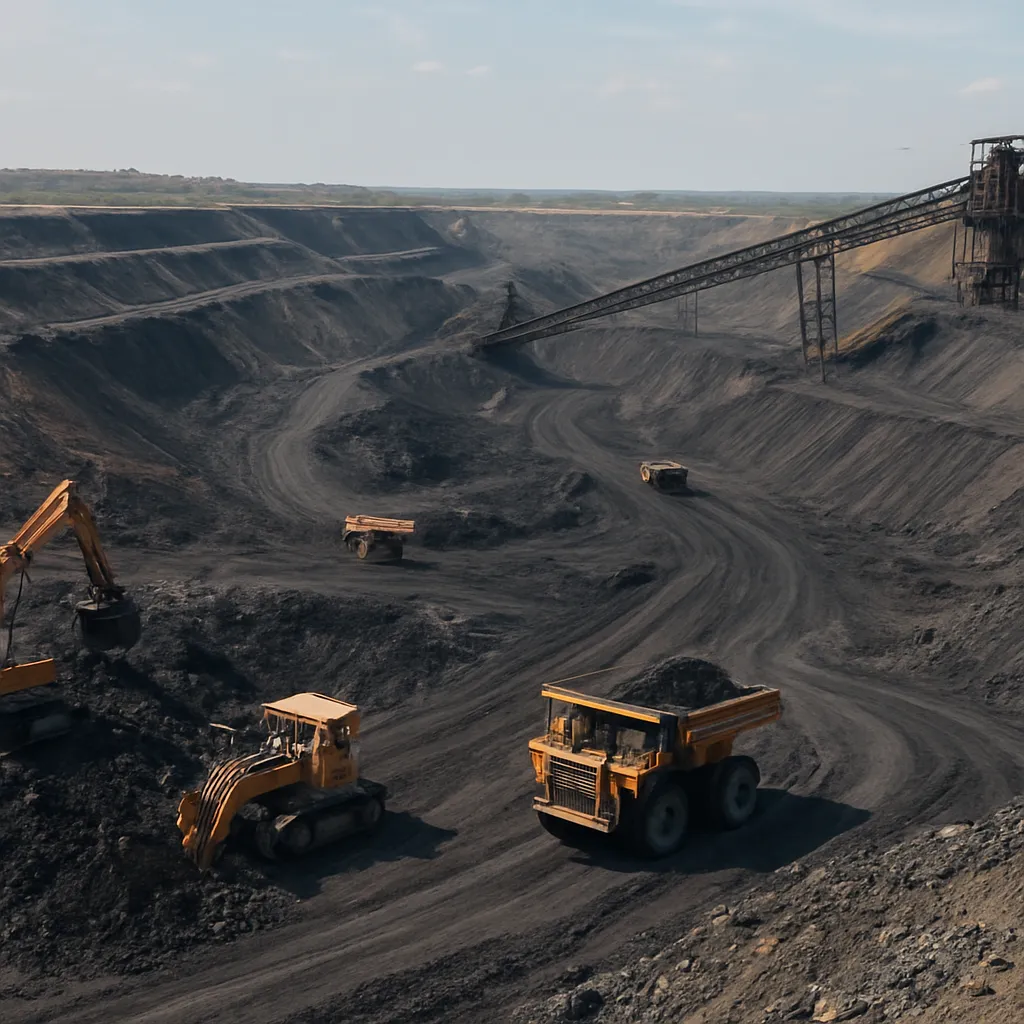
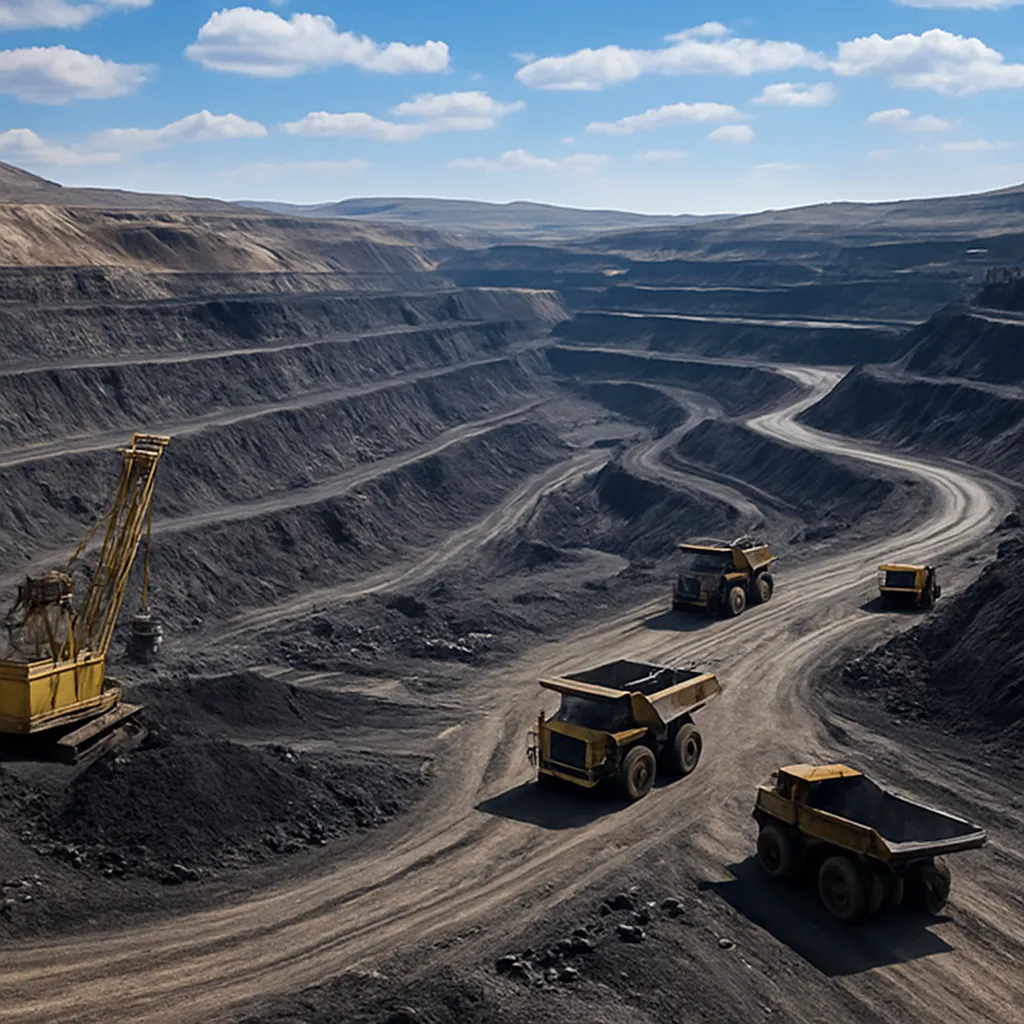
- Open-pit mining: Employed where seams are near the surface and continuous. It allows high extraction rates with lower unit costs but has greater surface disturbance.
- Underground mining: Selected for deeper or structurally complex seams. Although capital- and labor-intensive, it reduces surface footprint.
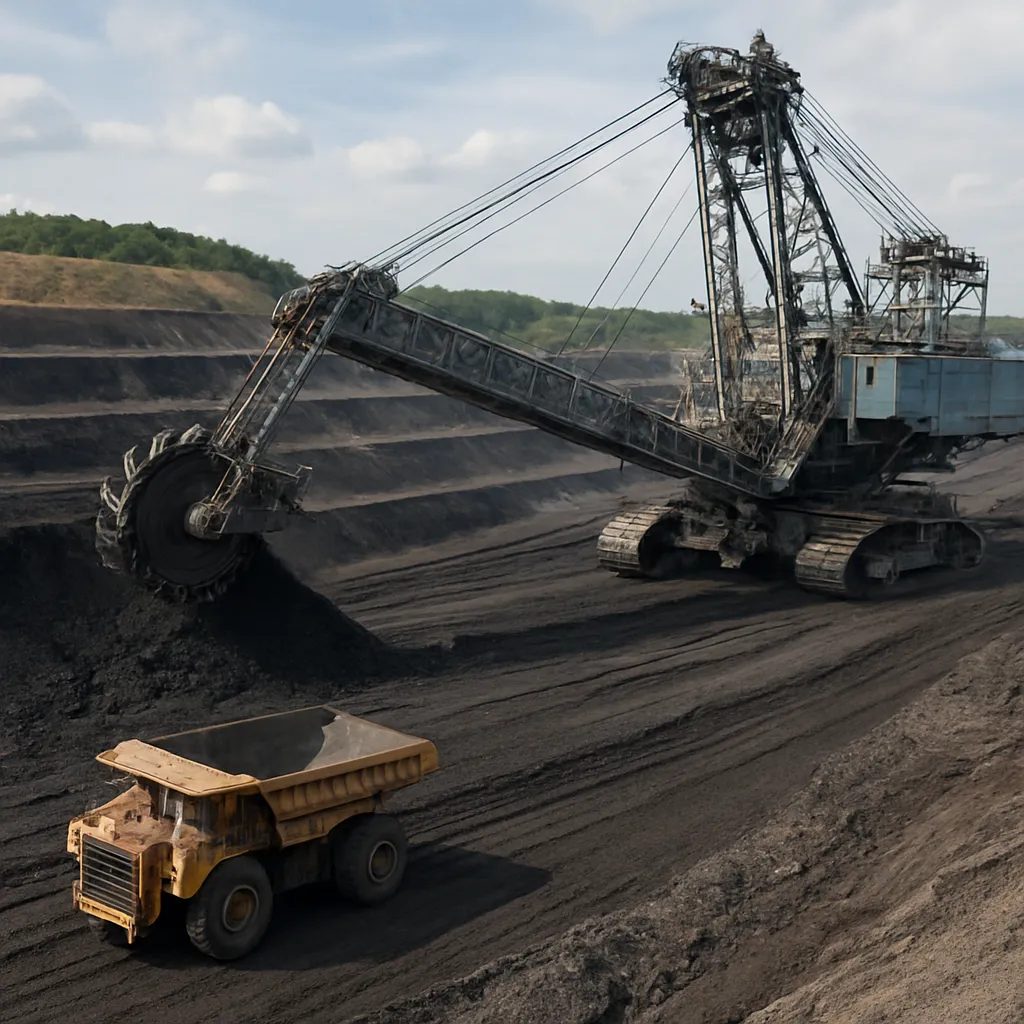
Associated infrastructure includes overburden removal systems, haul roads, conveyor belts, crushers and stockpiles, often complemented by mobile equipment such as excavators and dump trucks. The presence of permafrost or seasonal water can require additional engineering measures.
Processing and quality control
Coal from Baruun Naran-type operations is routinely sampled and analyzed for moisture, ash, volatile matter, sulfur and calorific value (energy content). Simple screening and crushing can produce marketable size fractions; where higher quality is required, washing plants (coal preparation plants) are used to reduce ash and sulfur content and to increase calorific value, enabling the product to meet export or domestic power-plant specifications.
Logistics and transport
Transport is a critical factor in the economic viability of mines in Mongolia. Key logistics elements include:
- Road infrastructure: Many mines rely on all-weather roads or seasonal tracks; dust management and maintenance are ongoing concerns.
- Rail connectivity: Access to rail provides lower-cost, high-volume export routes. Major coal export corridors link southern Mongolian mines to China’s border railheads.
- Border crossings and customs: Export to China requires coordinated transport, customs clearance and transshipment facilities. For domestic supply, trucking routes to power plants and urban centers are crucial.
Coal type, quality and uses
Types of coal encountered
Mongolia’s coal output is broadly categorized into:
- Thermal coal: Used primarily for electricity generation, district heating and industrial boilers. It generally has lower carbon content and higher moisture than metallurgical coal.
- Coking coal: Also called metallurgical coal; used in steelmaking. It requires specific volatile matter and carbon characteristics.
At many smaller or mid-sized localities like Baruun Naran, the economic focus is often on supplying thermal coal to domestic power plants or local heating markets, as well as contributing to export flows to industrial regions across the border.
Quality indicators
- Calorific value (kcal/kg or MJ/kg): Determines how much energy the coal yields per unit mass.
- Ash content (%): Higher ash reduces heating value and increases handling costs.
- Sulfur content (%): Impacts emissions and compatibility with environmental regulations.
- Moisture: High moisture reduces effective energy per tonne and increases transport costs per delivered energy unit.
Economic and industry significance
Contribution to local and national economy
Coal mining, including operations like Baruun Naran, plays a significant role in Mongolia’s economy by providing export income, powering domestic energy needs, and creating employment. At the national level, coal is one of Mongolia’s largest export commodities by volume and has historically been a primary source of foreign currency revenues. Locally, mines stimulate service sectors — transportation, equipment maintenance, fuel supply, and food services — and often become focal points for regional development.
Employment and social impact
Direct employment at a mine includes miners, technicians, engineers and administrative staff. Indirect employment occurs in logistics, catering, housing and local commerce. Mines may contribute to community infrastructure such as roads, clinics and schools through company social programs or government agreements. However, managing the social impacts — seasonal work patterns, influx of migrant workers, changes to traditional livelihoods such as herding — requires careful stakeholder engagement.
Revenue and taxation
Revenue from coal is collected through royalties, corporate taxes, export duties (if any), and value-added taxes. Specific fiscal terms vary by contract and by whether a mine is operated by a private company, a joint venture with foreign partners, or state-owned enterprise. Revenue-sharing agreements between central and local governments influence how much of the direct mineral rent becomes local public investment.
Statistics and production context
National production trends (contextual)
While publicly available, up-to-date production figures for Baruun Naran itself may be limited, Mongolia’s national coal production provides useful context: over the past decade Mongolia’s annual coal production has fluctuated significantly, influenced by global commodity prices, Chinese demand cycles, infrastructure constraints and domestic policy. Production in Mongolia has been reported in some years at levels in the tens of millions of tonnes, with exports to the People’s Republic of China accounting for the majority of exported volume.
Typical mine-scale metrics
For a site comparable in scale to Baruun Naran, developers and analysts often use the following indicative metrics:
- Reserves: Small-to-medium deposits may report measured and indicated reserves from a few million to several tens of millions of tonnes; larger deposits can exceed 100 million tonnes. The precise classification depends on exploration density and geological confidence.
- Annual production: Many mid-sized operations aim for annual outputs in the range of 0.5–5 million tonnes depending on market access and capital.
- Employment: A mid-scale open-pit mine might employ several hundred workers directly, with a further multiplier effect in local services.
Because site-specific figures for Baruun Naran are often company-reported or included in exploration filings, readers seeking precise numbers should consult the mine operator’s technical reports, national mining cadastre entries, or competent person reports filed with regulators.
Environmental, social and governance (ESG) considerations
Environmental impacts
Coal mining has inherent environmental footprints:
- Land disturbance and habitat loss from open pits and waste dumps.
- Water use and potential contamination of surface and groundwater from mine drainage.
- Dust and particulate emissions from mining and transport activities.
- Greenhouse gas emissions when coal is burned for power or heat, contributing to national carbon footprints.
Best-practice mitigation includes progressive rehabilitation of disturbed land, dust suppression measures, water treatment systems, and careful design of spoil heaps. In colder regions of Mongolia, permafrost or seasonal thaw can exacerbate erosion and stability issues requiring additional engineering.
Social and cultural factors
Mining operations can affect traditional herding routes, water access and grazing lands. Companies operating at Baruun Naran-like sites typically carry out social baseline studies and engage with local communities to establish benefit-sharing mechanisms, compensation frameworks, and livelihood diversification programs.
Regulatory and governance framework
Mongolia’s legal framework for mining covers licensing, environmental assessment, royalties and local content. Compliance with environmental impact assessments (EIAs), land-use permits and social agreements is mandatory. International investors and lenders frequently require adherence to global ESG standards and independent audits.
Strategic importance and market dynamics
Export markets and demand drivers
China is by far Mongolia’s principal coal customer, driven by demand for power plant fuel, heating, and industrial uses. Proximity to Chinese industrial regions gives Mongolian coal a logistical advantage despite infrastructure constraints. Market prices, Chinese import policy, border controls, and transport capacity are key determinants of revenue for mines in Mongolia.
Domestic energy security
Within Mongolia, coal fuels power plants and district heating, particularly during harsh winters. Mines like Baruun Naran contribute to domestic fuel security by supplying thermal coal to local power stations and heating facilities, reducing dependence on imported fuels.
Investment and financing
Financing for coal projects comes from a mix of domestic capital, foreign direct investment, and commercial loans. Lenders increasingly apply environmental and social criteria to coal investments, affecting the cost and availability of financing for new mine development or expansion.
Challenges and future prospects
Operational challenges
Key operational challenges include variable weather, remote logistics, limited rail access, and fluctuating demand. Seasonal blockages at border crossings and variations in Chinese policy can cause sudden changes in offtake and price.
Market and policy risks
Global decarbonization efforts and China’s own energy transition policies introduce medium- to long-term uncertainty for thermal coal producers. However, short- to medium-term demand for thermal coal in the region may persist due to existing power-plant fleets and the gradual nature of energy transitions.
Opportunities for diversification and value addition
Mines can enhance resilience and value by:
- Improving coal quality through washing and processing to reach higher-priced market segments.
- Investing in logistics to reduce transport bottlenecks and better access export markets.
- Integrating with local power or industrial users to secure stable offtake agreements.
- Exploring downstream opportunities, such as coal-to-chemicals or coal briquetting for cleaner domestic heating.
Interesting facts and practical observations
- Baruun Naran-style operations often spring from exploration campaigns that combine remote sensing, geological mapping and drilling programs to refine resource estimates.
- Community relations matter: many mines run vocational training programs for local youth to supply skilled labor and reduce friction with pastoral communities.
- Seasonality is a real operational constraint — winter logistics and extreme cold require specialized equipment and maintenance regimes.
- Technological adoption, including fleet telematics, autonomous haulage (in larger operations), and more efficient processing plants, gradually improves productivity in Mongolia’s coal sector.
- Environmental remediation is increasingly part of mine planning; some operators design post-mining land uses such as grazing land restoration, managed wetlands or industrial parks.
Practical guidance for researchers and stakeholders
Where to find reliable site-specific data
For precise and current statistics regarding Baruun Naran specifically, consult the following sources when available:
- Technical reports and resource statements published by the operating company or project developer.
- National mining cadastre and geological survey records held by Mongolian government agencies.
- Environmental and social impact assessment (ESIA) documents filed with regulators.
- International project databases and commodity market reports that track Mongolia’s coal projects.
Key indicators to evaluate a coal project
- Measured and indicated reserve quantities and seam continuity.
- Calorific value and major contaminants (ash, sulfur).
- Access to cost-effective transport (road or rail) and proximity to markets.
- Regulatory approvals, land access agreements and community support.
- Financial metrics: production cost per tonne, capital expenditure requirements, and projected revenues under realistic price scenarios.
Conclusion
Baruun Naran, as a representative coal site in Mongolia, highlights the intricate balance between geological potential, operational constraints, market dynamics and social-environmental responsibilities. While specific verified statistics for the mine should be consulted through official reports and operator disclosures, the broader picture is clear: coal remains a cornerstone of Mongolia’s extractive economy, serving domestic energy needs and export markets, particularly in China. At the same time, transitions in energy demand, stricter environmental standards, and logistical challenges will shape the future role of Baruun Naran-style operations within Mongolia’s evolving mining landscape. Understanding the mine’s geological attributes, production practices, and socio-economic footprint is essential for stakeholders planning investment, community engagement, or regulatory oversight.