The Baorixile Coal Mine is one of the notable coal production sites in northern China, situated within the broad coal-bearing provinces of the country. This article outlines the mine’s location and geological setting, the types of coal extracted and mining methods employed, its economic and industrial significance, environmental and safety concerns, statistical context where available, and prospects for the future. The account emphasizes the mine’s role in regional energy supply and industry, and highlights key technical and socioeconomic features of the operation.
Location and geological setting
The Baorixile Coal Mine lies in the northern reaches of the People’s Republic of China, within the vast steppes and forest-steppe zones of the Inner Mongolia region. The mine forms part of a larger group of coalfields that stretch across northern and northwestern China, which include both ancient Paleozoic basins and younger Mesozoic basins where coal formation occurred under varying climatic and depositional conditions.
Geologically, coal deposits in the region typically occur in multi-seam stratigraphic sequences. The broader region hosts coal of varying rank — from lignite and sub-bituminous coals in some northern basins to higher-rank bituminous seams closer to central basins. Baorixile’s seams are generally associated with relatively shallow overburden in parts of the mine area, favoring surface mining methods in many extraction zones, while deeper or structurally complex portions may require underground workings.
The presence of multiple seam layers has implications for mining design and resource recovery. Coal seams are often interbedded with mudstones, siltstones and occasional sandstones, and the mine’s geology determines both the quality of coals produced and the choice of mining and processing technology.
Coal types, quality and mining methods
Baorixile produces coal primarily intended for energy generation, with a focus on thermal coal for power plants and local industrial consumers. In many northern Chinese coalfields, the dominant product is thermal-grade coal, although pockets of higher-grade coal suitable for coking or chemical feedstock can occur. At Baorixile, typical product streams include:
- Thermal coal — bulk shipments to power stations and heating plants
- Washed or beneficiated coal — processed to reduce ash and sulfur, improving calorific value
- Smaller volumes of higher-rank coal — where particular seams reach bituminous quality and may supply metallurgical or chemical markets
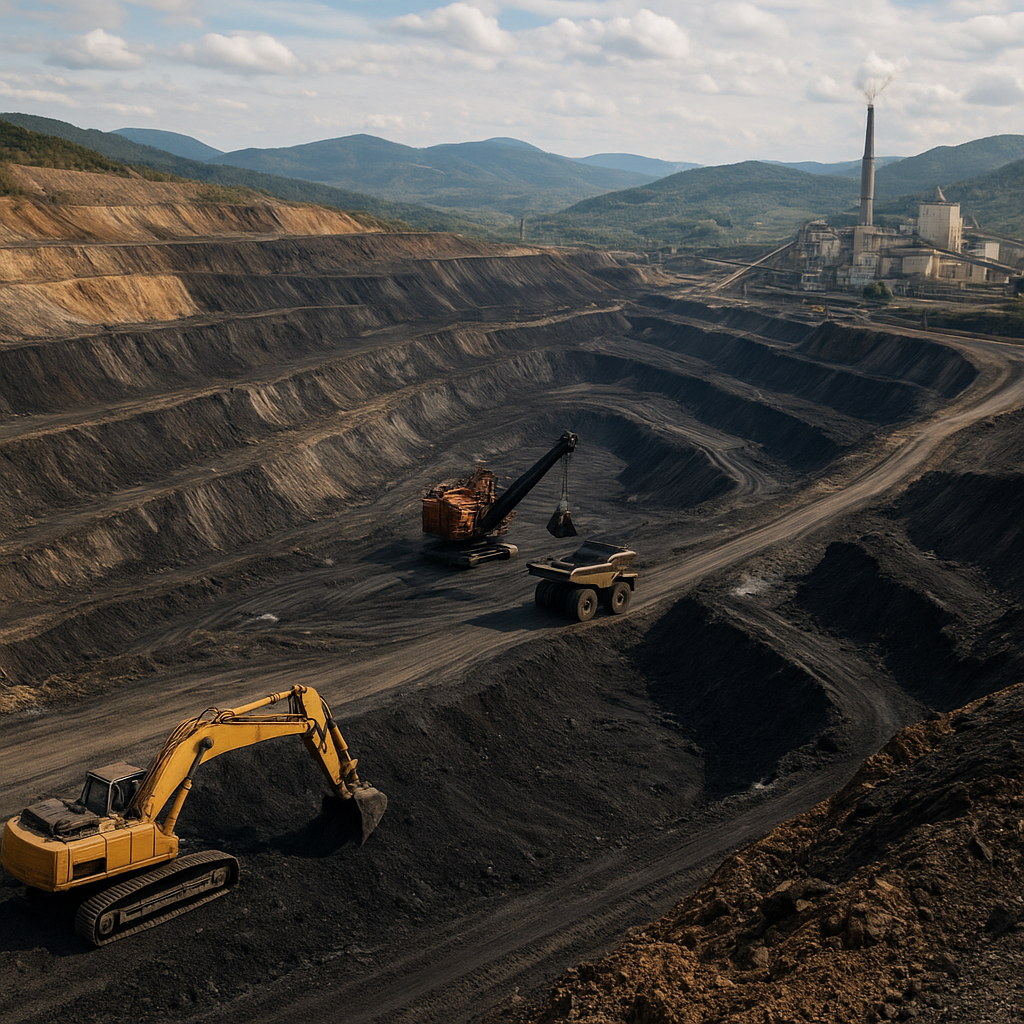
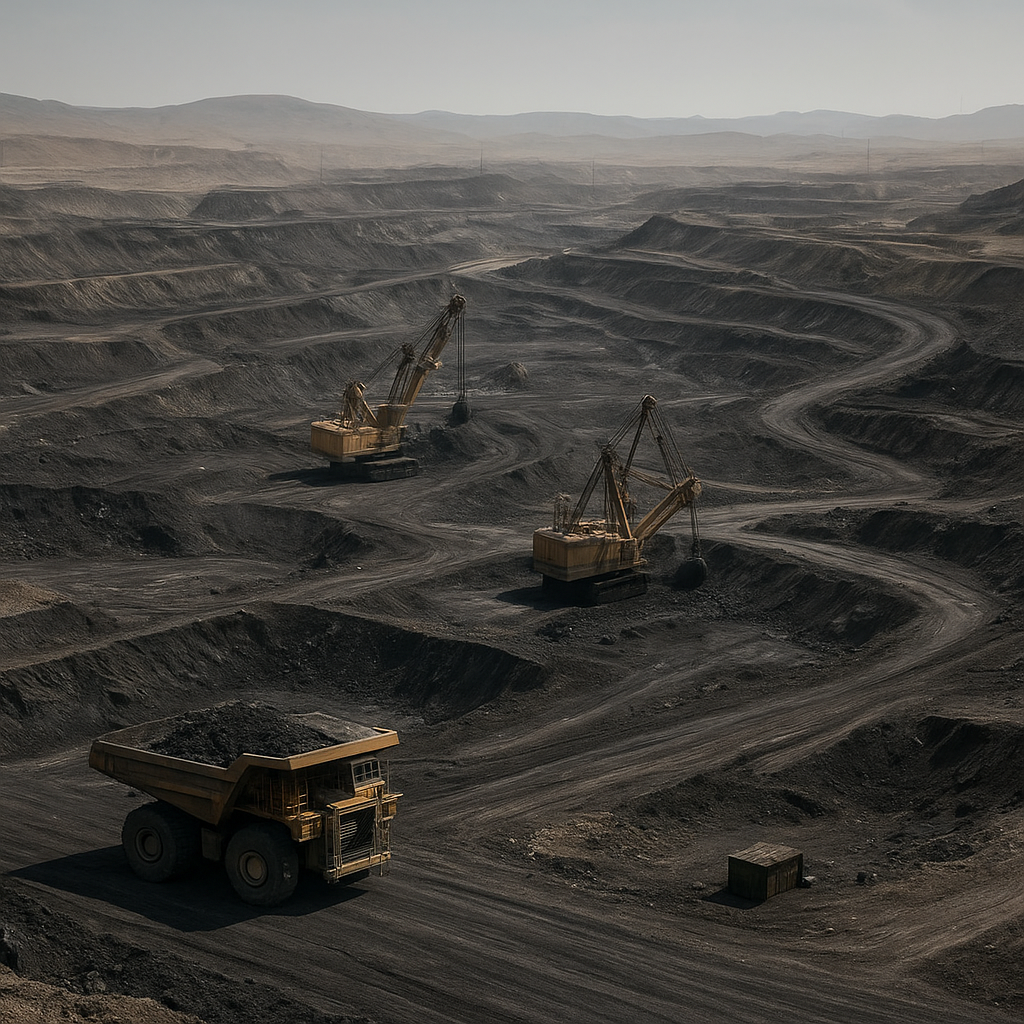
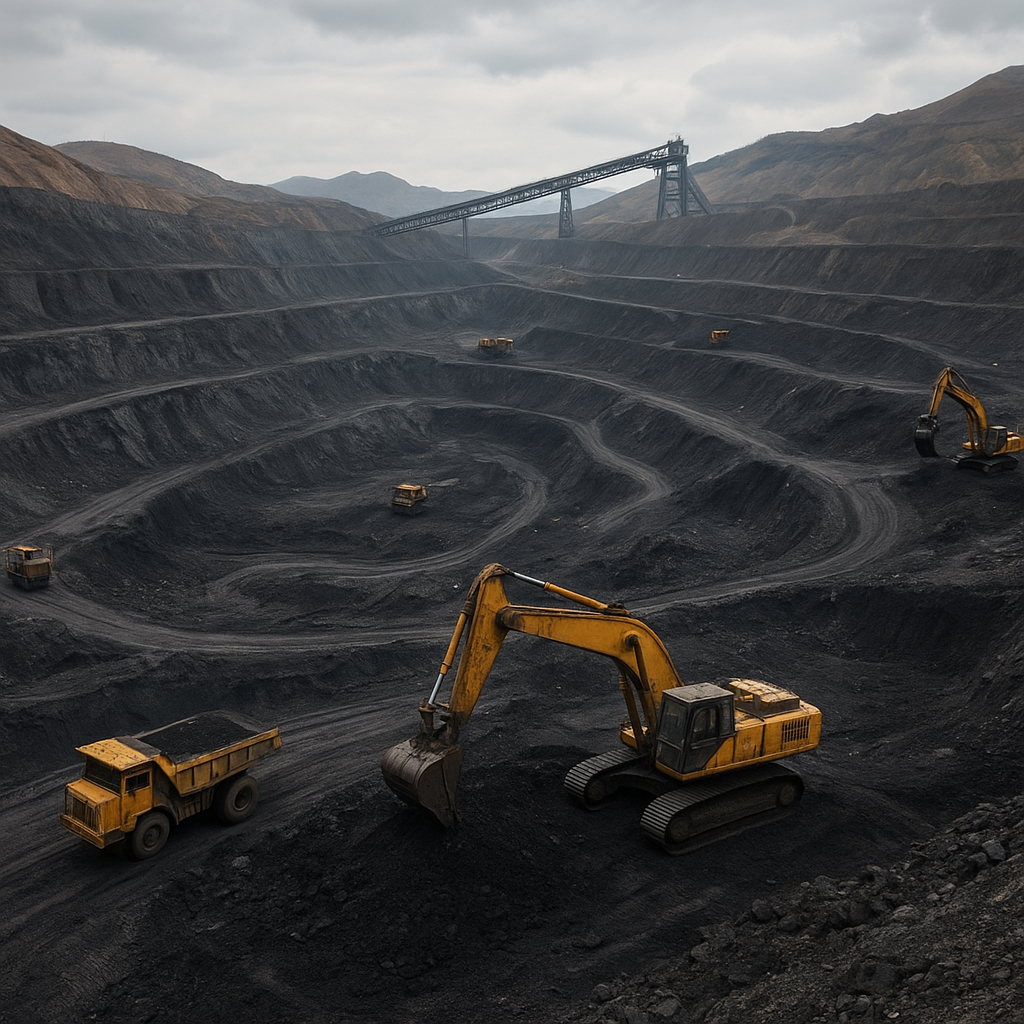
Mining at Baorixile combines open-pit and selective underground techniques depending on seam depth and geometry. Open-pit operations are common where the overburden-to-coal ratio is low, allowing efficient large-scale removal of material with draglines, shovels and haul trucks. Underground workings are deployed in deeper zones or where preserving overlying land use is important.
Post-extraction processes include coal washing and size classification to meet market specifications. Washed coal reduces ash content and increases calorific value, making shipments more competitive in domestic power and industrial markets. Railhead and road links connect the mine to regional distribution networks.
Economic and industrial significance
Coal mining remains a central pillar of the regional economy in many parts of Inner Mongolia, and Baorixile contributes to local employment, municipal revenues, and energy provisioning. Key aspects of its economic significance include:
- Employment: The mine and related services (transport, processing, maintenance, contracting) provide direct and indirect jobs to local communities, frequently supporting several thousand livelihoods in the surrounding counties and towns.
- Regional GDP: Coal royalties, taxes and corporate spending form a material portion of local government revenue in coal-producing areas. Revenues support infrastructure projects, public services and social programs.
- Energy security: As part of China’s vast coal supply chain, Baorixile helps meet demand for grid electricity generation and district heating, reducing reliance on long-distance transport from more distant basins.
- Industrial feedstock: Coal also feeds local industrial processes, including cement, chemicals and potentially coal-chemical conversion projects where coal-to-liquid or coal-to-chemical investments exist.
At the national level, coal continues to account for a majority share of China’s primary energy consumption, and mines such as Baorixile play a role in the raw material supply for power and industrial sectors. The continued operation of these mines underpins manufacturing and household energy use in the northern provinces, particularly during high-demand winter months when heating demand spikes.
Production volumes, reserves and statistics
Precise mine-level data for Baorixile (such as annual tonnage, proven reserves and seam-by-seam quality analyses) may not always be publicly disclosed in detail outside company reports or local government statistics. Broadly, the Chinese coal sector is characterized by enormous scale: China’s annual coal production has ranged around 3.7–4.0 billion tonnes in recent years, making it by far the world’s largest coal producer and consumer.
Inner Mongolia is one of China’s largest producing regions, accounting for a significant share of national output. Recent regional figures (depending on the reporting year) have placed Inner Mongolia’s annual production in the order of several hundred million to over a billion tonnes. Within that context, a mid- to large-sized mine in the region may produce several million tonnes per year, while the largest complexes exceed tens of millions of tonnes annually.
Reserves: regional coalfields often contain hundreds of millions to billions of tonnes of coal in-place, though recoverable reserves depend on seam thickness, continuity, mining method, and economic cutoffs. Baorixile’s in-situ reserves would therefore typically be reported in the millions to tens or hundreds of millions of tonnes range, depending on the scope of the concession and the degree of geological exploration undertaken.
Market flows: coal from Baorixile is likely distributed via local rail and road networks to nearby power plants and to regional hubs for onward shipment. Pricing is influenced by calorific value, ash and sulfur content, and national coal market conditions, including demand from the electric power and industrial sectors.
Infrastructure and logistics
Efficient logistics are essential for the economic viability of any large coal mine. Baorixile benefits from:
- Rail links — connection to regional railway lines that enable bulk coal transport to power plants and coastal ports for further distribution.
- Road networks — heavy-duty highway access for shorter-haul deliveries and equipment movement.
- On-site processing and stockpiling facilities — washing plants, coal yards and blending stations to meet contract specifications.
- Ancillary services — maintenance workshops, power supply, water treatment and workforce housing, often maintained by the operating company or local authorities.
Investment in logistics and handling reduces volatility in delivery and helps maintain long-term contracts with utility and industrial customers. In some instances, mines in Inner Mongolia have been integrated into broader energy corridors that connect northwestern coal resources to eastern industrial regions.
Environmental and safety considerations
Coal mining carries well-known environmental and social impacts; Baorixile is no exception. Key challenges and mitigation measures include:
- Land disturbance: Open-pit operations alter surface topography and vegetation; progressive reclamation and post-mining land-use planning are essential to restore productive uses or ecological function.
- Water management: Mining can affect surface and groundwater regimes through dewatering, discharge from processing plants, and potential contamination. Treatment of effluents and careful water accounting are required in semi-arid regions.
- Air quality: Dust from mining, haulage and stockyards, together with emissions from coal combustion downstream, poses public health and regulatory concerns. Dust suppression, covered conveyors and vegetation barriers are common mitigation measures.
- Greenhouse gases: Coal extraction and combustion contribute to methane and CO2 emissions. Methane capture from underground workings and energy-efficiency measures can reduce the greenhouse impact.
- Mine safety: Both open-pit and underground operations must adhere to strict safety protocols. Modern mines implement mechanized extraction, real-time monitoring, emergency response training and safety audits to reduce accident risk.
Chinese authorities have tightened environmental and safety regulations in recent years. Operators at Baorixile are expected to implement technologies and practices that align with national standards for emissions control, land reclamation and worker safety.
History and development
The development of Baorixile mirrors broader trends in China’s coal sector: progressive ramp-up of capacity during industrial expansion, adoption of mechanized mining methods, and integration with regional energy networks. Early phases of development often involved smaller-scale extraction; over time, investment in large-scale open-pit equipment and beneficiation plants enabled higher throughput and improved product quality.
Local and national investment cycles, commodity prices and policy shifts (including environmental regulation and transportation infrastructure upgrades) have influenced the mine’s growth trajectory. Modernization typically includes replacing manual labor-intensive processes with mechanized fleets, improving wash plants, and adopting digital monitoring systems to optimize production and safety.
Industry context and strategic importance
While global attention increasingly focuses on decarbonization, coal remains central to China’s energy mix for the near to medium term. Mines such as Baorixile contribute to strategic objectives:
- Ensuring stable domestic supply for power generation and industrial demand, especially during peak heating seasons in northern China.
- Supporting local economies in less-developed regions where mining offers one of the few large-scale employment bases.
- Providing feedstock for coal-chemical industries and metallurgical sectors where higher-grade coal is available or where coal-to-chemicals projects exist.
For national planners, balancing energy security with environmental goals means that established coal mines are likely to operate under increasingly stringent environmental governance while also investing in efficiency and emissions reduction technologies.
Future prospects, modernization and transition
The outlook for Baorixile will be shaped by several overlapping trends:
- Operational modernization: uptake of automation, digital mine management (real-time fleet and process control), and more efficient washing and blending plants to maximize product value and reduce environmental footprint.
- Emissions management: implementation of methane capture where economically feasible, and integration of cleaner combustion or co-firing technologies at downstream power plants.
- Rehabilitation and land-use planning: progressive reclamation to enable agriculture, forestry, or other post-mining uses, combined with biodiversity restoration where appropriate.
- Policy-driven change: national energy transitions and carbon-intensity targets could gradually shift the mine’s market focus, with potential diversification into non-coal economic activities supported by local development plans.
Innovation such as carbon capture, utilization and storage (CCUS) at downstream power or chemical facilities could extend the operational life of coal supply chains while reducing greenhouse gas impacts, although widespread deployment remains a policy and investment challenge.
Interesting facts and local impacts
Beyond raw production, mines like Baorixile often have broader cultural and social significance for local communities. Examples of notable considerations include:
- Workforce development programs: many mines sponsor vocational training, safety education and community development projects to raise local living standards.
- Seasonal demand patterns: northern China experiences strong seasonal variation in coal demand due to winter heating needs, creating pronounced peaks in production and transport activity.
- Local partnerships: mine operators commonly enter into agreements with municipal authorities for infrastructure upgrades—roads, power lines and water systems—that benefit both mining and non-mining residents.
- Wildlife and landscape: in some Inner Mongolian regions, mining areas border important grassland and forest ecosystems, which necessitates coordinated conservation measures and landscape-scale planning.
Concluding remarks
The Baorixile Coal Mine exemplifies many of the structural characteristics of coal operations in northern China: substantial resource endowment, mixed-method extraction, and integration into regional energy and industrial systems. While precise mine-level statistics may be proprietary or reported selectively, the mine’s role is clear in supporting local economies and national energy needs. Moving forward, Baorixile’s management choices regarding modernization, environmental mitigation and community engagement will determine its long-term sustainability and compatibility with China’s evolving energy and climate policy framework.