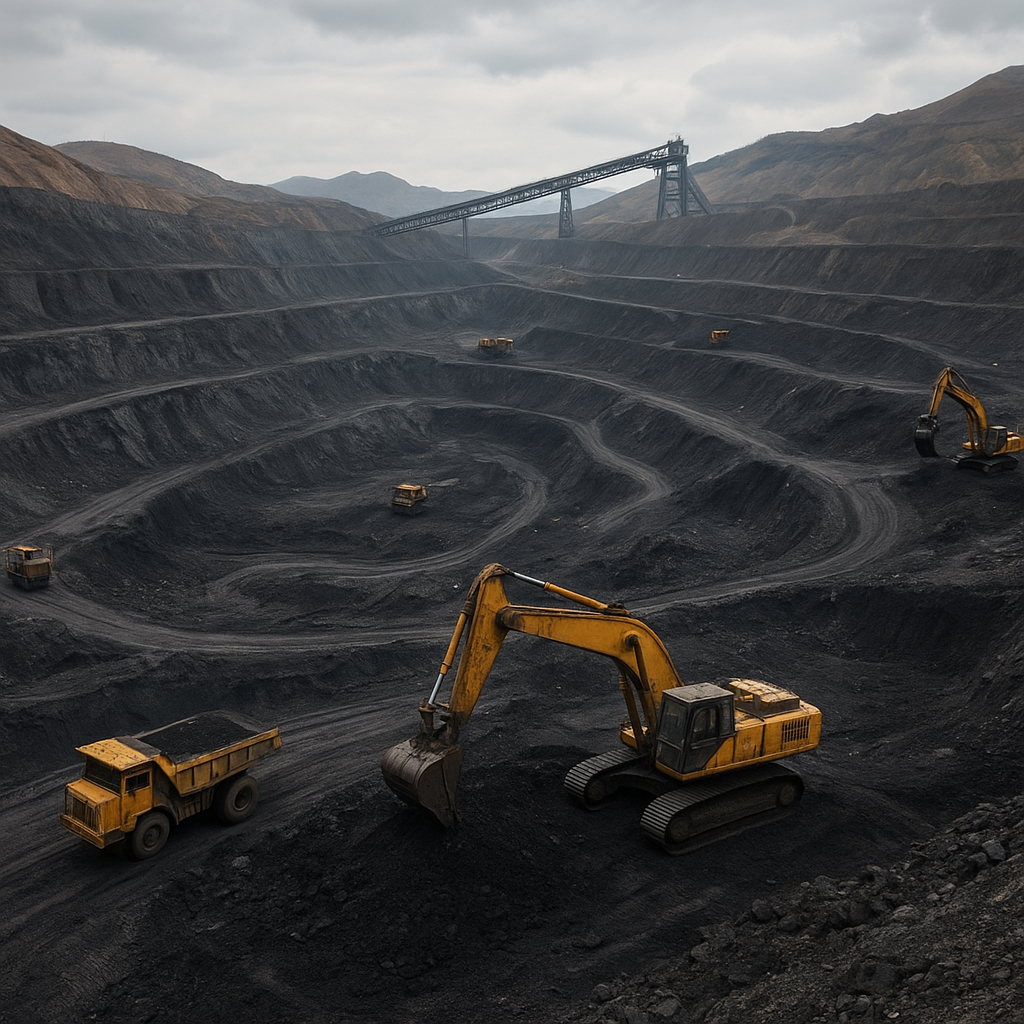
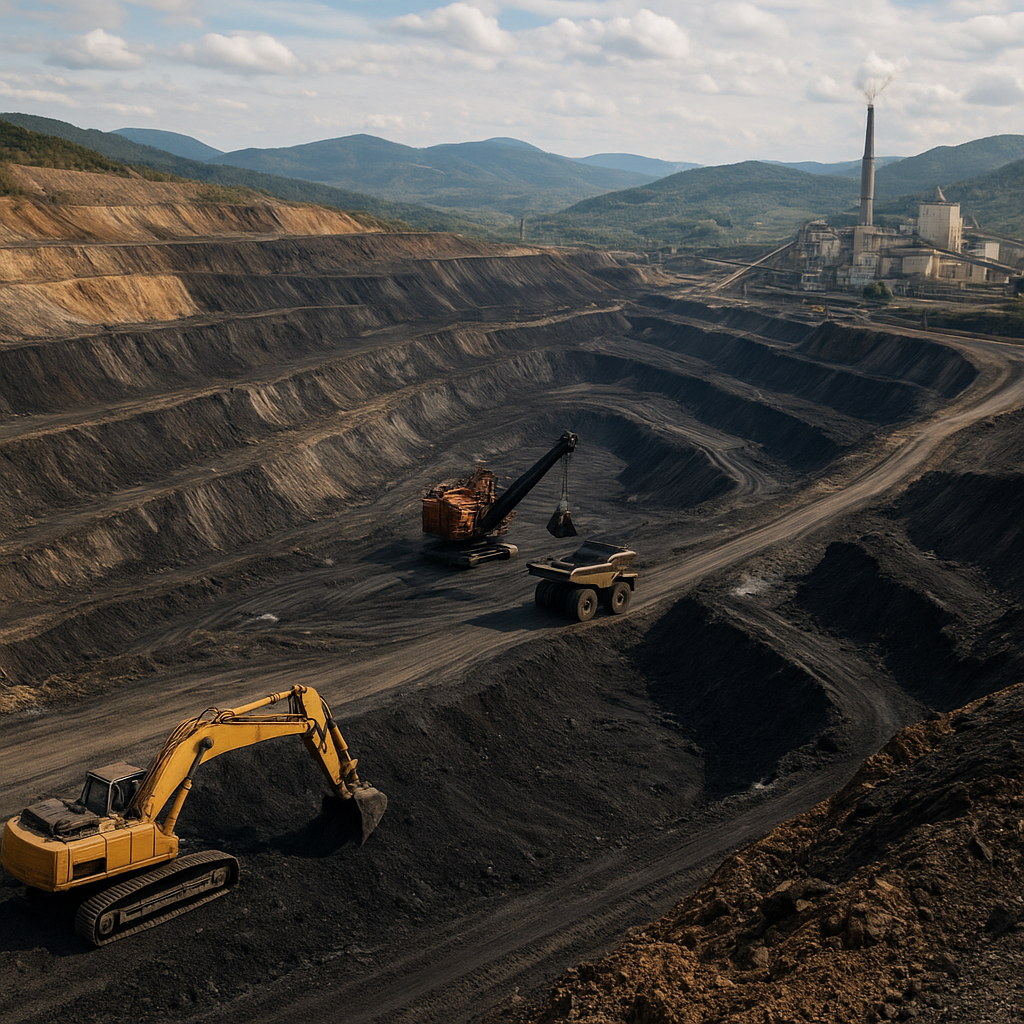
The Balkanabatskaya Mine, located in western Turkmenistan, represents one of the country’s lesser-known but strategically relevant coal mining sites. Although overshadowed by Turkmenistan’s dominant oil and natural gas sectors, this mine and similar deposits within the Balkan region serve local industrial needs, contribute to regional energy resilience, and illustrate the challenges and opportunities of developing coal resources in a country focused primarily on hydrocarbons. The following article outlines the mine’s location, geology, operational characteristics, economic role, and broader significance, and highlights environmental and social aspects associated with coal extraction in this part of Central Asia.
Location and geological setting
The Balkanabatskaya Mine is situated in the vicinity of the town of Balkanabat in the Balkan Province of Turkmenistan, in the western part of the country near the eastern shore of the Caspian Sea. The surrounding landscape is characterized by semi-arid steppe and desert plains punctuated by scattered hills and salt flats. Balkanabat is a regional administrative and industrial center, and coal deposits in its district are part of a set of small-to-moderate coal-bearing basins distributed across western Turkmenistan.
Geological characteristics
- The coal-bearing formations in the Balkanabat area are typically of Tertiary age, often containing lignite to sub-bituminous ranks of coal. These deposits formed in fluvial and lacustrine environments and are interbedded with clays, silts and local sandstones.
- Coal seams in the region are generally of limited lateral extent and moderate thickness (commonly less than a few meters to several meters), which makes them suitable for small-scale and medium-scale surface or shallow underground mining methods depending on the overburden depth.
- The mineralogy and chemistry of Balkanabat coals typically reflect relatively low carbon content and elevated moisture and ash compared to higher-rank coals. This influences calorific value and determines most appropriate end-uses (often local thermal power and industrial heating rather than metallurgical applications).
Reserves and exact seam parameters for Balkanabatskaya are not widely published in international geological databases. Publicly available information from Turkmen state sources and regional geological surveys tends to be limited or general. Independent and academic sources suggest that reserves at individual mines in the Balkan region are relatively modest when compared to major coal-producing countries, but together they represent a meaningful national resource for local consumption.
Mining operations and coal quality
Mining at Balkanabatskaya combines traditional approaches with some mechanized equipment, typical for regionally important mines that do not operate at very large scale. The exact method—open-pit versus underground—depends on seam depth, thickness and local geology. Where seams are shallow, open-pit (surface) mining is often economically preferred, while slightly deeper seams may be worked by room-and-pillar or small-scale underground techniques.
Coal quality and classification
- Rank: Predominantly lignite to sub-bituminous. These coals have lower calorific values compared with bituminous coal or anthracite.
- Calorific value: Typical ranges for Balkan-region lignites are in the lower end of thermal coal spectra, commonly around 6–16 MJ/kg on a as-received basis depending on moisture content (estimates may vary by seam and seasonal moisture).
- Moisture and ash: Higher inherent moisture and moderate to high ash content are common, affecting combustion efficiency and handling.
- Sulfur: Sulfur content tends to be low to moderate, which can make local combustion less problematic for SOx emissions than certain higher-sulfur coals, though other pollutants and particulates remain concerns.
Because Balkanabatskaya’s coal is lower rank, its primary use is typically for thermal energy: fueling local heat plants, small power stations, and some industrial processes such as brickworks or lime production. Use in electricity generation requires appropriate boiler design and sometimes fuel blending to ensure efficient combustion and acceptable emissions performance.
Economic and industrial significance
In Turkmenistan’s economy the hydrocarbon sector—particularly natural gas and, to a lesser extent, oil—dominates exports, government revenue and the energy mix. Nevertheless, domestic coal deposits including Balkanabatskaya play several important economic and regional roles.
Local energy and industrial use
- Security of supply: Coal from Balkanabatskaya provides a local fuel source that can support district heating, municipal power generation and small industries, helping reduce dependence on long-distance gas or imported fuels for specific applications.
- Industrial feedstock: Small-scale industries in the Balkanabat area benefit from access to affordable solid fuel for kilns, steam generation and other thermal processes.
- Employment: The mine supports local employment directly (miners, engineers, transport and administrative staff) and indirectly through service and supply chains.
Production volumes and statistics
Transparent, detailed production statistics for Balkanabatskaya specifically are sparse in international sources. Turkmenistan’s national statistics on coal have historically been less emphasized internationally compared with oil and gas data. Available public sources indicate that Turkmenistan’s overall coal production is relatively small in global terms—often cited as a fraction of a million tonnes to a few hundred thousand tonnes per year in various external reports—however, these numbers vary by source and year.
Independent observers and regional analysts estimate that production at individual mines like Balkanabatskaya is likely in the range of tens to low hundreds of thousands of tonnes per year, depending on market demand and seasonal factors. Such figures would support local power and industrial needs without suggesting large-scale export-oriented mining. It is important to treat specific quantity estimates cautiously until corroborated by up-to-date official disclosures.
Economic value and fiscal impact
- While coal does not rival hydrocarbons in export value or fiscal contribution, it supports local economies by allowing municipalities and industries to operate more cost-effectively where gas pipeline infrastructure or imports are impractical or undesired.
- Investment in mechanization, processing (e.g., drying or briquetting) and logistics can add value to low-grade coals, improving combustion properties and reducing transport costs per unit of useful heat.
- Potential for small-scale value-added activities (coal briquettes, pelletized fuels) exists but requires capital, technology and market development.
Infrastructure, logistics and markets
Transport and processing infrastructure strongly influence the economic viability of Balkanabatskaya. The proximity to Balkanabat town and road/rail links to regional centers is an advantage, but limited export capacity and competition from cheaper fuels constrain market expansion.
- Transport: Coal is typically moved by truck or short spurs of rail to local power plants and industrial consumers. Export by rail or road to neighboring countries is possible in theory but rarely competitive against larger, higher-quality coal supplies from regional exporters.
- Processing: On-site or near-site drying, screening and beneficiation can modestly improve quality and reduce transport of inert material, but such facilities depend on economies of scale.
- Market: Primary market is domestic—municipal heating, industrial boilers—and any surplus may be stockpiled or sold to nearby regions. International markets are unlikely without major investment to upgrade coal quality and transport logistics.
Environmental and social considerations
Coal mining, even at moderate scales, brings environmental and social impacts that require management. In the semi-arid landscapes of western Turkmenistan these issues are accentuated by water scarcity and fragile ecosystems.
Environmental impacts
- Land disturbance: Open-pit mining alters landscape, impacts soils and can expose saline or contaminated layers. Proper reclamation is essential to restore land for grazing, agriculture or other uses.
- Air quality: Dust from mining and transport, as well as particulate emissions from combustion of low-rank coal, are local air quality concerns. Dust suppression, covered transport and emission control at combustion sites mitigate these risks.
- Water resources: Lignite processing and dust control may require water, competing with other local uses. Additionally, disturbance of saline groundwater or brine layers can pose long-term management challenges.
- Greenhouse gases: Combustion of lignite produces CO2; although Turkmenistan’s energy sector is gas-dominated, any expansion of coal use has implications for national and regional greenhouse gas emissions. Mitigation could include efficiency improvements and, where feasible, combined heat and power (CHP) systems to maximize energy from fuel.
Social impacts
- Community livelihoods: Mines provide employment and local economic stimulus but can also create boom-bust cycles if markets change or resources are depleted.
- Health: Exposure to dust and pollutants can affect worker and community health. Occupational safety and community health programs are important but their implementation varies.
- Resettlement: Large open-pit operations can require land acquisition; careful planning and fair compensation are necessary to maintain social stability.
Industry significance and strategic context
Although modest in size, Balkanabatskaya and similar mines have strategic relevance for Turkmenistan’s internal energy diversification and regional development priorities.
- Energy diversification: Relying primarily on natural gas, Turkmenistan nonetheless benefits from domestic coal reserves as a complementary fuel for local grids and industries, enhancing resilience against supply disruptions or seasonal constraints.
- Regional development: Coal mining supports economic activity in western regions where hydrocarbon development may be concentrated in different basins or require specialized infrastructure.
- Industrial policy: Government decisions regarding investment in local fuel infrastructure, environmental regulation, and transport connections will determine whether coal’s role remains marginal or grows through modernization and value-added processing.
Future prospects and challenges
Prospects for Balkanabatskaya hinge on several technical, economic and policy factors.
Opportunities
- Modernization: Investment in mechanization, beneficiation and emission controls could improve productivity and environmental performance, making the coal more useful to a wider set of consumers.
- Local energy projects: Development of small-scale CHP plants or industrial boilers optimized for low-rank coal could increase efficiency and reduce emissions per unit of useful energy.
- Value addition: Coal briquetting and pelletizing could allow better handling, storage and higher effective calorific value, opening possibilities for niche markets.
Challenges
- Market competition: Cheap and abundant natural gas in Turkmenistan, plus imports and other regional coal suppliers, limit market expansion for low-grade local coal.
- Environmental constraints: Air quality, water scarcity and greenhouse gas considerations create regulatory and societal pressure that may restrict unconstrained growth of coal use.
- Data transparency: Limited public data about reserves, production and environmental performance complicates planning by investors and international partners.
Concluding observations
The Balkanabatskaya Mine exemplifies how modest coal deposits can serve local economic and energy functions even in countries dominated by hydrocarbons. Its coals, generally of lignite and sub-bituminous rank, are best suited to thermal applications—district heating, small power generation and industrial uses—rather than metallurgical purposes. While the mine does not drive national export revenues in the way gas and oil do, it contributes to regional employment, energy security and industrial activity.
Key constraints include limited published statistics on production and reserves, the lower calorific quality of the coal, and environmental considerations in a water-scarce, ecologically sensitive region. Nevertheless, targeted investments in processing, transport and efficient combustion technologies could enhance the value of Balkanabatskaya’s output. Policymakers balancing energy needs, economic diversification and environmental obligations will determine whether such mines remain niche local assets or are modernized into more substantial regional contributors.