The Astaka Dodol Mine is a name that appears in discussions of Indonesian coal mining sites, but public, detailed records specific to this mine are scarce. This article summarizes what is known or reasonably inferred about Astaka Dodol, and places the site in the broader context of Indonesia’s large and strategically important coal sector. It covers likely location and geological setting, the types of coal generally extracted in the region, typical mining and logistics arrangements, economic and statistical context at local and national levels, environmental and social considerations, and the broader industrial significance and future outlook for coal operations in Indonesia.
Location and geological setting
Direct, verifiable information about the exact coordinates or operator of the Astaka Dodol Mine is not widely published in accessible international sources. Many Indonesian coal sites carry local names (often reflecting villages, geographic features, or local products), and “Dodol” is a common local word referring to a traditional sweet, which may be used in toponyms. In the absence of specific public documentation, it is useful to situate Astaka Dodol within the general geological and regional framework where most Indonesian coal mining occurs.
The principal coal-bearing regions in Indonesia are the islands of Kalimantan (Indonesian Borneo) and Sumatra, with smaller deposits in Sulawesi, Papua, and other islands. Most commercially exploited deposits are hosted in Neogene-aged sedimentary basins (typically Miocene to Pliocene), where peatification and burial under deltaic and coastal plain sediments produced extensive seams of low- to medium-rank coal. Coal seams in these basins are commonly laterally extensive but variable in thickness and quality, and they are often overlain by unconsolidated sediments that facilitate large open-pit operations.
Typical basin features relevant to sites like Astaka Dodol include:
- Shallow to moderate burial depths, favoring open-pit extraction over underground methods;
- Multiple seam horizons within the same stratigraphic package, enabling phased mining;
- Associated alluvial and deltaic sediments that affect drainage, water management, and reclamation;
- Proximity to rivers and coasts that influence logistics (barge or coastal shipping).
Coal type, quality and reserves (generalized)
Although site-specific assay data for Astaka Dodol are not publicly documented in major international databases, coal mined across Indonesian basins tends to fall into the category of thermal coal used primarily for power generation and industrial heat. Typical quality characteristics of Indonesian thermal coal are:
- Calorific value broadly in the range of ~3,500 to 6,200 kcal/kg (GAR basis), though many Kalimantan coals cluster between ~4,000 and 5,500 kcal/kg;
- Variable moisture content—lignite-like coals on the lower end, higher ranks elsewhere;
- Generally low to moderate ash content (but can be higher in some deposits), which influences washability and product quality;
- Relatively low sulphur content compared with many international coals, which is attractive to importers concerned about SOx emissions;
- Often sub-bituminous to high-volatile bituminous in rank, making them suitable principally for steam generation rather than metallurgical coke production.
Reserves and resource estimates for any particular mine depend on exploration work (drilling, sampling, geophysical surveys). For smaller private and contractor-operated pits, formal public reserve statements may not be issued; for larger concession holders, reserve figures may appear in corporate disclosures. Because specific reserve or production figures for Astaka Dodol are not widely available, it is prudent to treat any precise capacity claims as unverified unless published by the mine owner or by an authoritative government agency.
Mining methods, processing and logistics
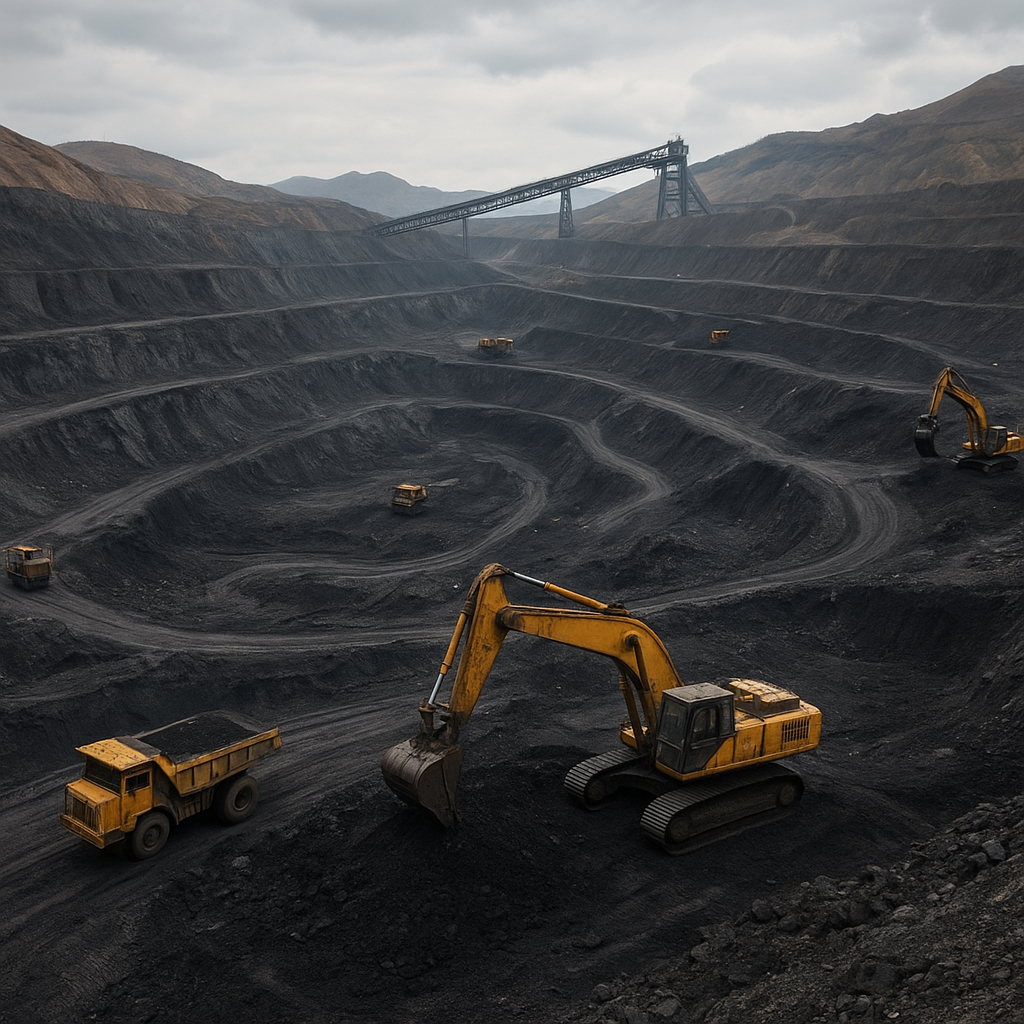
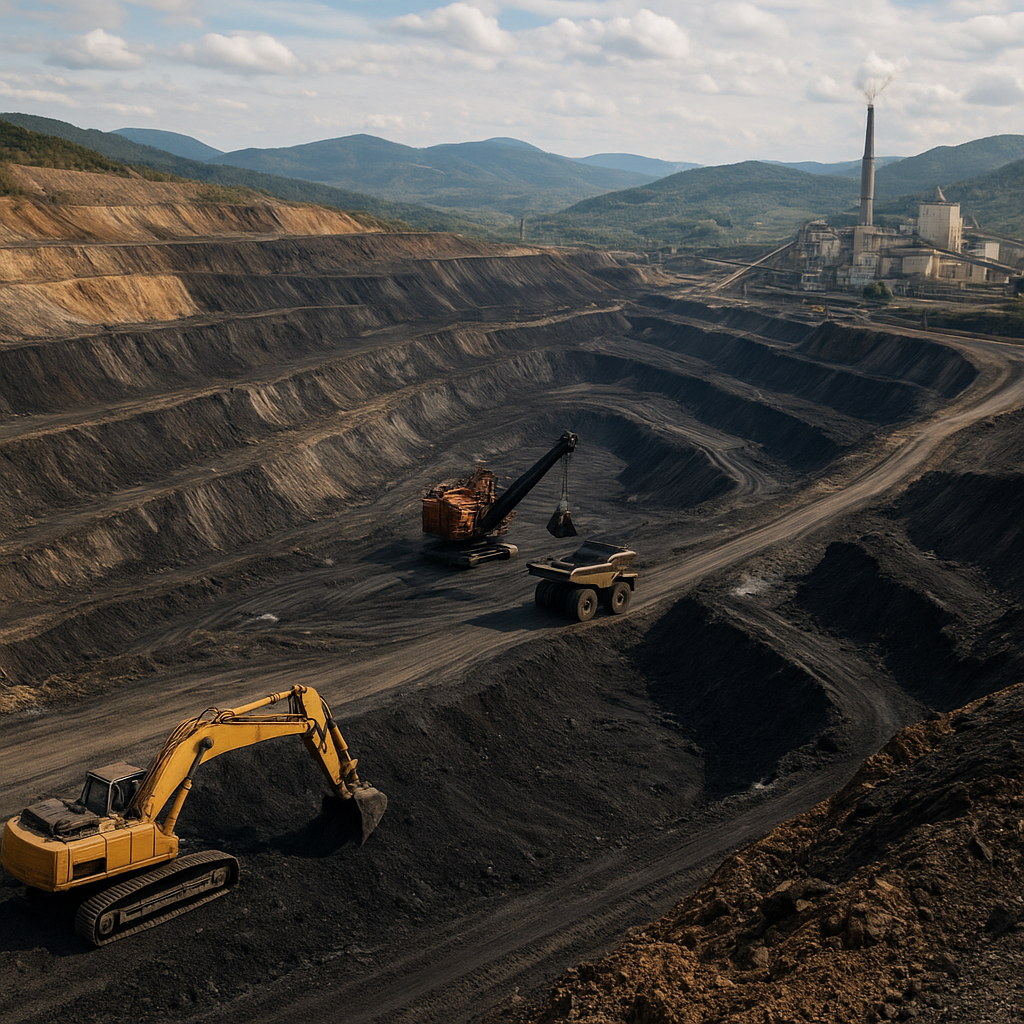
Coal operations in Indonesia are dominated by mechanized surface mining. If Astaka Dodol follows standard regional practice, its operational characteristics are likely to include:
- Open-pit mining with progressive stripping of overburden using hydraulic excavators, wheel loaders, and large haul trucks, or in some cases, continuous miner systems on gentle benches;
- On-site or nearby coal handling and preparation plants (CHPP) for simple sizing and washing to remove high-ash fractions and improve calorific value where markets demand higher-quality product;
- Stockpiling and blending yards to meet contractual calorific specifications and manage seasonal variability;
- Water management systems (settling ponds, silt traps, pumping) to control runoff and support washing operations;
- Transport chains typically involving road haulage to rivers or railheads, followed by barging and coastal shipping to domestic power plants or export terminals; some mines are connected directly to coastal load-out jetties.
Key infrastructure components that determine mine economics include the distance to a port or barge-loading facility, road and bridge quality, availability of power for processing, and the presence of rail links. Mines closer to deep-water ports or main river arteries enjoy cost advantages for export-oriented production.
Economic role and statistical context
Specific economic statistics for Astaka Dodol—such as annual production (tonnes), direct employment, capital expenditure, royalty payments, or export volumes—are not widely published in international datasets or global company reports under that mine name. In lieu of mine-level figures, the following national- and regional-level information helps illustrate the likely economic backdrop in which Astaka Dodol would operate.
Indonesia is a major player in the global coal market. Key economic facts about Indonesian coal (contextual):
- Indonesia is among the world’s largest producers and exporters of thermal coal, supplying significant volumes to markets across Asia (notably India, China, Japan, South Korea, and Southeast Asia);
- Coal is a meaningful contributor to national export revenues and provincial economies where mining occurs—mining regions rely on royalties, taxes, and local employment generated by coal concessions;
- Operational mines contribute through wages, contractor payments, local procurement, and infrastructure investment (roads, ports, power); many concession agreements include social and community development obligations;
- Royalty regimes, production sharing, and mining licence frameworks vary by province and are subject to national mining law and ministerial regulations; royalties and domestic market obligations can materially affect mine-level profitability.
Although concrete numbers for Astaka Dodol are unavailable in open international sources, comparable small-to-medium coal mines in Kalimantan and Sumatra often produce from several hundred thousand to a few million tonnes per year depending on concession size and investment. Larger corporate mines can exceed 10 million tonnes per year. The mine-level economic footprint will be a function of production rate, product quality (price realizations), operating costs (stripping ratios, labor, fuel), and logistical access to buyers.
Environmental, social and regulatory considerations
Coal mining in Indonesia—whether at sites like Astaka Dodol or elsewhere—faces a complex set of environmental and social challenges, many of which shape permitting, operating costs, and community relations.
- Land use and biodiversity: Open-pit mining requires clearing of vegetation and modification of landscapes, which can affect local ecosystems, forest cover, and wildlife corridors. Operators are often required to carry out environmental impact assessments (EIA) and implement mitigation plans.
- Water resources: Dewatering, discharge from settling ponds, and potential contamination from runoff can affect local rivers and groundwater. Effective water management systems and monitoring are critical.
- Air quality and dust: Blasting, haulage, crushing and coal handling generate dust; controls such as water sprays and covered conveyors are commonly used to reduce particulate emissions.
- Greenhouse gases: Coal mining emits methane (CH4) and CO2 through fuel use and fugitive emissions. There is growing regulatory and commercial pressure to quantify and reduce emissions through methane capture, more efficient equipment, and reporting.
- Social impacts: Mining can bring jobs and infrastructure but can also lead to displacement, changes in livelihoods (e.g., loss of agricultural land or fisheries), and local conflicts over land rights. Community engagement, benefit-sharing agreements, and grievance mechanisms are increasingly standard expectations.
- Rehabilitation and closure: Indonesian regulations typically require mine closure plans and financial assurances; rehabilitation of post-mining landscapes (reforestation, reworking of tailings) is an important long-term obligation.
Operators who align with international Environmental, Social, and Governance (ESG) expectations often invest in progressive rehabilitation, community programs (health, education, local business development), and transparent reporting to secure long-term social license to operate.
Significance in the industry and market linkages
Whether small or large, mines such as Astaka Dodol play roles that ripple through both local economies and the broader coal market:
- Domestic power supply: Indonesian thermal coal supports a significant share of national electricity generation through state-owned utility PPAs and independent power producers. Domestic market obligations can prioritize local supply, stabilizing demand for nearby mines.
- Export earnings: Export-oriented mines contribute to national foreign exchange through sales to overseas utilities and traders; price movements in international seaborne coal markets directly affect operational margins.
- Employment and upstream services: Mines support suppliers (equipment, heavy machinery maintenance, fuel, explosives) and local contractors, fostering regional economic activity.
- Technological adoption: Industry trends include mechanization, autonomous trucks and drills, digital fleet management, and improved coal washing to enhance product value. Adoption of these technologies can materially change productivity and cost structures.
Regulatory and market pressures shaping the future
The future for individual coal mines in Indonesia is shaped by intersecting forces:
- Energy transition: Global moves toward decarbonization reduce long-term demand for thermal coal in some markets, while near- to medium-term demand in developing Asia remains substantial. Mines that can deliver low-ash, low-sulfur, and reliable supply may retain market advantages.
- Domestic policy: Indonesia’s own energy planning includes coal in the near term even as renewables expand; policy shifts on domestic coal use, export regulations, or royalty structures could impact operating environments.
- Investor and buyer expectations: Financial institutions and major buyers increasingly require traceability, emissions reporting, and social due diligence. Mines that cannot meet ESG criteria may face financing or market-access constraints.
- Operational resilience: Climate risks (heavy rains, floods, sea-level changes), labor availability, and commodity price volatility mean that operational adaptability is valuable.
Interesting operational and cultural notes
Beyond technical and economic aspects, a few cultural and operational features are noteworthy when considering mines like Astaka Dodol in Indonesia:
- The name “Dodol” reflects a local cultural touch—dodol is a sweet rice-based confection popular in many parts of Indonesia. Place names with cultural resonance are common across the archipelago.
- Many mining operations in Indonesia employ significant numbers of local workers and contractors, and some run vocational training programs to build local capacity in machinery operation, maintenance, and safety.
- Community investment programs often include funding for schools, clinics, water and sanitation projects, and small enterprise development, which can be central to a mine’s social license to operate.
- In several Indonesian basins, smallholder or artisanal coal mining occurs alongside larger concessions; this mix can complicate regulation and enforcement but is part of the local mining landscape.
Availability of statistics and recommended next steps for verification
Specific, verifiable statistics for the Astaka Dodol Mine—such as annual production tonnage, reserve estimates, ownership, and employment figures—are not readily available in major public databases or international corporate disclosures under that precise name. For a website or publication that requires mine-level accuracy, recommended steps to obtain reliable data include:
- Consulting the Indonesian Ministry of Energy and Mineral Resources (or regional provincial mining offices) for concession records and licensed mining operators;
- Reviewing corporate reports and press releases from companies operating in the relevant province or district—many operators publish production and reserve data where they manage major concessions;
- Contacting local government (regency/city) offices or chambers of commerce for community-level employment and economic data;
- Examining satellite imagery (commercial providers and public platforms) to identify active pits, stockpiles, and transport links, which can be useful for production estimates and verification;
- Engaging independent geological or mining consultancies for technical reporting where investment or due diligence is intended.
Summary perspective
Astaka Dodol Mine, while not extensively documented in internationally accessible sources under that specific name, fits within a dynamic and strategically important Indonesian coal sector characterized by thermal coal production, open-pit mining methods, and export-oriented logistics. The mine’s economic value will depend on resource quality (calorific value, ash, moisture), logistical access to ports and buyers, and compliance with evolving environmental and social expectations. To obtain accurate mine-level statistics, direct engagement with Indonesian regulatory authorities, the concession holder, or local government offices is recommended. In the broader picture, operations like Astaka Dodol continue to play a prominent, if contested, role in Indonesia’s energy mix and regional economies while facing rising pressures from market shifts and sustainability imperatives.